

I take calls from land owners on a weekly and at times a daily basis. These calls often resemble a doctor fielding calls from medical patients. The land owner tends to call me with an issue that they have been having on their hunting property. They often are looking for my advice on how to remedy it, much like a doctor would do for a patient. I often rattle off a series of questions and gather as much information as possible, to come up with a likely diagnosis, (or a series of them). I do this in order to come up with a prescription to fix the issue(s). The statements I often hear are, “Matt we just aren’t seeing any rabbits on the farm, or man we can’t ever get a buck to reach 140”. A few other common ones are, “These fields won’t grow anything, the dirt here is just helping to hold the earth together”. Or even, “The turkeys will be here in the fall, but as soon as it gets close to the hunting season, they are gone.”
What I’ve learned after all of my years of consulting and managing properties, is that you can almost always answer the ultimate question of “Why?”, after hearing statements like that, if you know how to read the signs and analyze all the symptoms that the property and wildlife lay out in front of you. More often than not, a simple cruise of the property can reveal those key signs that will allow you to put on your “habitat doctor” hat. Then you can diagnose the key symptoms that will lead to the proper prescription of habitat management techniques. These techniques will ultimately lead to the “the cure” of more wildlife, in both quality and quantity.
One great aspect of managing a wildlife farm is that management tactics that are great for certain species, such as deer, can often benefit many other species, such as rabbits, turkeys, and other non-game animals. This article will walk you through some commonly seen symptoms and help you get in the mindset of a habitat doctor. You then will be able to diagnose problems on your farm, in effort to increase its ability to hold and produce quality wildlife.
A common statement I hear is that land owners aren’t seeing good amounts of rabbits on their farms. More often than not, the lack of decent rabbit numbers is merely a symptom of lack of quality cover on the property. If I end up taking a look at the farm, I can normally find scenarios that include blocks of mature hardwood timber that have little to no vegetation growing at ground level, or even thick stands of pines that are blocking out the vast majority of the sunlight and have covered the forest floor with a thick mat of pine needles. Both of these ultimately lead to a lack of plant growth on the forest floor. I also often see fields of mowed, cool season grasses or other mixed grass and weed fields that are mowed regularly and would have a hard time hiding a mouse, much less a rabbit. In areas of Ag country, it’s common to see vast fields of wheat, corn, soybeans, or even tobacco. Depending on what stage of growth these are in, they often provide very little cover for rabbits, and certainly do not do so year-round. Having a good balance of briars, brush piles, young regenerating forest, warm season grasses, and even older timber, makes perfect areas for rabbits to hide. Add in some year-round green food sources, such as perineal clover plots, and you will provide an ideal habitat for rabbits to thrive.
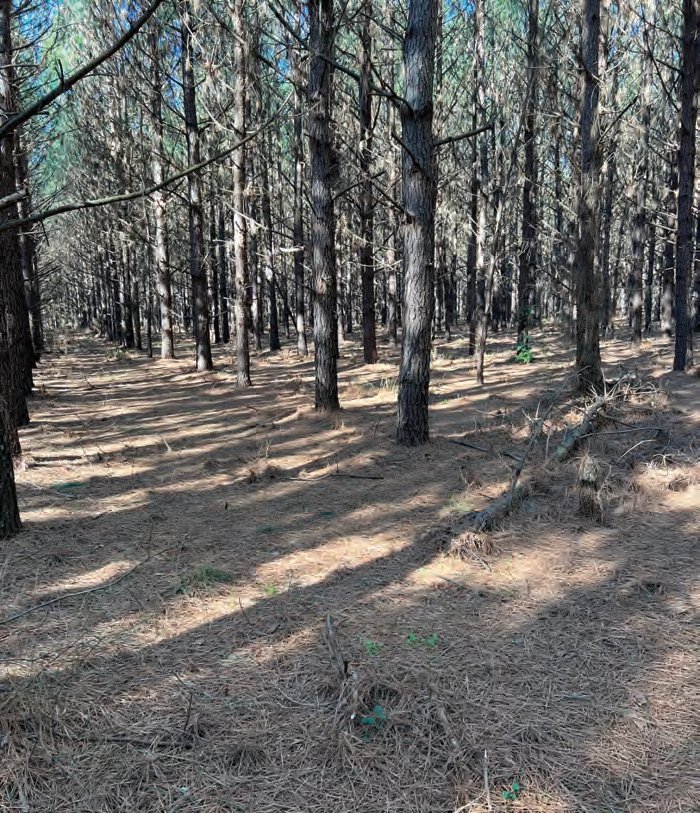
Speaking of hiding, the next potential issue I look to diagnose is do we have a predator problem? With small game and rabbits in particular, that’s often a land owner or new wildlife manager’s first instinct to blame predation for a lack of small game. Predation is certainly an issue, and I’ve seen many cases where it can become extreme. This can be due to completely unchecked populations of predators. More often than not though, if we address the cover aspect of the habitat, and provide small games, like rabbits, plenty of places to avoid predation, we will always have a great population. A population that will continue to regenerate and even outpace predation. A couple of quick stories to further support this point of view, I experienced this this past rabbit season. Every year the NC rabbit season goes out on the last day of February. For the past 6-7 years a group of friends that are mainly retired, all get together on my small 36-acre home farm to rabbit hunt on the last Saturday of the season. I take my two young daughters, family, and some of my wildlife guys and we have a day full of fellowship. This fellowship is made of listening to a pack of beagles run rabbits, eating deer burgers, telling old stories, and picking on each other for missing. It is always a day that we look forward to each year. The older retired guys in the group get to hunt 30-40 days each season, and they tell me that my little place is the best hunt of the season year after year. They always talk about how many rabbits are concentrated in such a small area and how we can hunt all day, and kill 10 rabbits each year while never stepping foot off my small place. They mentioned this year how they had gotten permission on a 300-acre farm, and could hardly jump a rabbit on the whole property. I know the farm they are referring to and it’s mainly composed of mature hardwoods, having very little vegetation at ground level. Conversely, my farm consists of young pines, mature timber along the creek banks, thinned mature timber, and areas of naturally regenerting forest. It’s managed with fire and TSI methods to maximize sunlight’s ability to reach the forest floor. This creates plentiful vegetation at ground level. My farm has roughly 10% of the acreage of the large property but provides almost 1000% more rabbits in a day’s hunt, versus what was yielded from that larger farm. The reason is simply because it was managed to produce cover that’s excellent small game habitat for rabbits to thrive.
Another experience I had this year at my place was with common predators of rabbits. Specifically, a grey fox and a pair of coyotes. When you have a property that has the right conditions to create large numbers of game you are always going to have predators on the landscape. Even if you are trapping regularly, new populations of predators will be constantly looking to colonize and prey on the game that is there. I can often drive from the start of the property on the main trail to the back of the farm and see 6-10 rabbits in the plots and paths on a consistent basis. This fall I noticed a grey fox and coyote pair cruising the same path surely hunting the rabbits I was used to seeing. I noticed my rabbit sightings starting to slow and called one of my friends that traps, and another that hunts predators. I put them both to work. They ended up catching one of the coyotes, (the female) but the male coyote and grey fox proved to be elusive. They still use the farm regularly. What I noticed this year while rabbit hunting is that we only jumped rabbits in areas well off the paths and in the thick areas of cover. The areas of thinner cover, smaller patches of cover, or areas closest to paths, held fewer rabbits this year compared to years past. What I attribute this to was the coyotes and foxes regularly cruising these paths and preying on the rabbits that frequented them, and likely also having better success catching rabbits in that thinner cover. It could also be that the rabbits seek out the heavier cover in order to avoid this predation. Regardless of which one I noticed a measurable reduction in the overall total of rabbits, and a shift in where we found them. The only variable that I singled out were the coyotes and foxes using the farm regularly, and our inability to remove them quickly this year.
Ok so why all the time spent on rabbits and not on more prestigious wildlife species like quail, deer or even turkeys? The reason being, is that rabbits can be a great measuring stick for habitat quality. Chances are if you can produce and retain lots of rabbits then you have the proper habitat for both game and non-game species alike. If I see a farm with great rabbit cover and populations it means I have great fawning cover, great nesting cover for turkeys, and often brooding cover as well. If the farm is kept in a consistent state of early succession, I can often have excellent conditions for quail also. So just by putting our habitat doctor hat on and looking at the symptom of “No rabbits”, we can diagnose the issue as lack of cover or predation, (among others) and come up with a prescription of a timber harvest, prescribed fire, TSI, trapping, etc. Ultimately curing the issue and alleviating the symptom.
Another common statement I hear is, “We can’t get anything to grow in this plot”. Don’t get me wrong, not all soil is created equal. Some soil simply performs better than others. For example, I will take a nice bottomland field adjacent to a large river or creek any day over a high ground field of sandrock/clay to plant a food plot in. The bottom land dirt tends to be loamy organic matter, rich soil that holds moisture and nutrients well. These soils tend to have great fertility naturally due to years of periodic flooding and years of dead plant material build up. On the other hand, a high ground sandrock/clay soil can often be very droughty in the growing season, becomes compacted easily, and can suffer from lower percentages of organic matter.

When it comes to diagnosing the symptoms of poor food plot growth, the first step in my play book is to consider the field site. Is it an area that is full sun and well drained? How about a shaded bottomland area that always holds moisture a bit too well? From there I’m checking the soil type. Heavy clay? Sand? What am I working with? I will typically then take a soil sample and interpret the results to see if there is an issue with low Ph or poor fertility. From all the information gathered I then figure out a planting strategy to then build up the soil and get in its proper condition to grow healthy “target” crops that benefit wildlife.
Let’s say I had the sandrock/clay soil, in full sun to deal with. It’s on a hill that has a fair slope to it, and between the slope and the nature of the ground, it doesn’t hold moisture well. I’ve sent off my soil test and it’s come back as a 5.3 Ph. The test is calling for two tons of lime per acre to hit the 6.5-7.0 Ph range and is requiring a fair amount of nutrients to grow any crop. Let’s say I’m coming into spring and want to get this plot dialed in for a food plot in the fall. The first thing I will do is get my lime out. If the land is super compacted, I will incorporate the lime through tillage in an effort to alleviate compaction, and get a crop growing there. If the land is not too compacted I will no-till a crop with the planter, and simply apply the lime on top of the ground. A crop of grain sorghum, buck wheat, cowpeas, and sunflowers is perfect for poor land like this. Especially grain sorghum, it does a great job of plunging roots into compacted soil, handling low Ph, and creating lots of organic matter that helps with moisture and nutrient retention. I would follow that up with a heavy dose of cereal rye, turnips, radishes, and annual clover that fall to help to continue to break up the compactions with brassicas. Add the organic with rye and fix nitrogens with the clovers.
After the first year, I will test soil again, assess my past crops performance, and see if the field is ready for a more sensitive crop. Or if it might require more time in the soil building planting. A perfect example of this was a farm I grew up hunting as a kid. It had a sandrock/sandy type soil on it that tended to yield poor crops and overall wildlife. All the bucks taken on the farm were always spindly racked and tended to have 7 points or less, often with no brow tines. The farmer that farmed this place often complained of “poor soil” and eventually gave up on planting it. My good friend got the farm to hunt and called me to see if the fields were even worth planting knowing the history of poor crops. I followed my normal routine of soil testing and soil building plantings the first 1.5 years and planted clover the second fall. I have managed the farm for 5 years now and have some of the best-looking clover plots on this farm of any of the farms I manage. What I found was, these fields had super low Ph and very low organic matter due to constant tillage. I limed the plots, planted the soil builder plantings to address low organic matter, kept the crops in no-till planting, and added nutrients to the soil fixing the low fertility issues. Two years later, we had excellent food plot crops. Coupling this with managing deer density, timber, and succession through fire, and we have quality deer there now. My buddy killed a high 130’s 3.5-year-old buck there last season that could have easily broken the 150″ mark had he made it another year. The old timers couldn’t believe that buck came from the “poor soil” farm of the past! By looking at the symptom of “We can’t grow anything here”, diagnosing the issue of low Ph, low organic matter, constant tillage, and low fertility, we came up with a prescription of adding lime, fertilizer, planting soil building blends, (to address to organic matter issue), and found the cure which led to great plantings.

One I hear all the time is that, “We have never had a buck over 140″ on the farm”. This can be a more complex symptom but I start with looking at deer density. I’ve seen so many farms that have great habitat and even great food plot programs that have low quality mature bucks. More often than not you can attribute this to super high deer numbers. In areas with great habitat and food sources, deer populations can explode in growth over the course of a few short years. Unlimited food coupled with great fawning cover allows does to produce 2-3 fawns each spring and enjoy great success getting them into the adult deer population. In my area of the Mid South, 50 deer per square mile is considered a medium deer density. If the buck to doe ratio is 1:4 (let’s just say they are all adult and breeding age deer) then the forty does are all going to have at least 2 fawns and produce 80 more deer in the spring/early summer, increasing the deer population to 130 deer that fall. When you allow for 20 of these fawns to be predated on, or just killed in general, that still leaves 110 deer to deal with in the fall. If you figure that half of those remaining are 60 fawns or does, and let’s say fifty percent of those get bred their first fall and produce one fawn the next year, along with the original 40 does producing 2 fawns, you will get an additional 95 fawns the following fawning season. Obviously, there are a ton of variables to consider here. Will the doe fawns get bred, how many of the original does will get killed, etc. But you can see how quickly the population can get out of control. With super high deer numbers you will see highly selected native plants vanish from the landscape. Plants such as strawberry bush almost cease to exist on these sites. Plants such as common ragweed often don’t get over a foot tall and rarely reseed due to extreme browse pressure. Deer preferred trees such as white oaks, black gums, or even maples tend to be browsed hard. Regeneration of these trees is limited and often non-existent due to high numbers of deer combing the landscape looking to fill their bellies. It becomes very difficult to establish food plot plantings, especially those that don’t handle browse well. Crops such as soybeans, sunflowers, cowpeas, or even alfalfa become nearly impossible to get to maturity with the consistent heavy browse that they receive. There are many other factors here but ultimately the high deer density equals less food to go around to each deer. This typically leads to poor antlered mature bucks.

Also, are we high-grading the bucks we are harvesting? Meaning, are we killing the bucks with the best set of antlers at 2 or 3 years old before they reach maturity? Therefore, leaving the poorest antlered deer of the same ages to mature and be sub-par antlered mature bucks? I see this constantly with my neighbors, on some of my farms. They kill 110″ – 2 .5-year-olds that have 10 points, but will pass the same age buck that is 70″and has 6-8 points. All they have done is allowed the low-quality genetic buck to live for another season which often ends up being a lower quality mature buck. Not always mind you but often. On my farm we end up with a poor antlered mature buck every few years that the neighbors have passed over the past few seasons because he was low scoring. That buck figures them out, and ends up being very hard for them to kill. He has learned their hunting approach over the years. This buck tends to become a problem for us because he will often spend time on the neighbor’s place in daylight where he is safe but comes on to our farms at night taking advantage of our food resources and does. We had a buck doing just that this year and we eventually ended up killing him. He scores in the high 120’s which is the average score of a 3.5-year-old on our farm, even though this buck was 5.5 years old.
Also, does the farm just not have enough food in general? Whether it be in the form of food plots or even native browse. Is there no quality forage during the growing season when bucks are growing their antlers and when does are nursing fawns? Is there no winter time food when bucks are coming into their antler growing season in super poor body condition affecting their antler growth? Identify the poor antler quality in mature bucks as a symptom, diagnose the problem or variations of such, and come up with a habitat and or herd management prescription that will lead to the cure and ultimately better mature bucks.
On a recent consulting visit I was dealing with another common concern from one of my clients. He has very few mature bucks using his property. The farm is situated in an excellent area and comprises a few well-placed fields that could be used as food plots with some mature timber running through them. The back half of the farm is completely made up of mature hardwood timber. I was quick to diagnose the issues here after cruising the property and listening to how the landowners hunted the farm. The first big issue was that the food plots were suffering from low Ph and low fertility. I could easily spot this by the looks of both the planted crops and native plants in the fields. This was later confirmed by the results of the soil test. Secondly, you would have a hard time hiding a 3 lb. rabbit on the farm much less a mature buck. The third issue was that they were walking across the whole farm to reach the back corner of the farm to reach the neighbor’s tract that the deer were using heavily. The prescription was to get the fertility and Ph up by adding lime and fertilizer and planting quality food plots that overlap in production. This would provide year-round food for the deer thus giving bucks and does alike a reason to be in the plots and bedding close by. Do some TSI and selective timber harvesting to thicken up portions of the farm allowing deer to bed there, and the ability to move across the farm undetected. Mature bucks often don’t move far from their beds in daylight and it’s important that we provide them proper bedding cover on our land in order to have the ability to harvest them. Lastly, hunt the property properly in the front half and leave the back half of the farm as a sanctuary allowing mature bucks to feel safe there. Also allowing them to feel safe heading to the food plots in daylight.
Approach the wildlife management habitat issues on your farm as a habitat/wildlife doctor, and you will realize greater success. The more that you look at the symptoms and learn to read the signs the better you will be at diagnosing the issues, coming up with prescriptions, and implementing them. As hunters we all grew up reading signs that the game left behind for us and addressing habitat issues is very similar! Get out there today and be a habitat M.D. for your farm and it will be better for it.