
Land Stewardship

Love Your Sugar Shack

KS
Keith Summerour was born and raised in Alabama and graduated from Auburn University with a Bachelor of Architecture in 1987. Included in that five - year program was a year abroad studying the classical architecture in London, Paris, and Florence. Florence clearly made a huge impact on Summerour as he took an apartment there in 2004 and spent numerous months in the city for years to come. Today he still visits Italy frequently, immersing himself in the architecture, food and with the people he has met along the way. He also serves on the Board of The Florence Academy of Art. Summerour and Associates Architects was established in 1997. The firm's work can be found across the United States with a large concentration in the Southeast. There is a balance of residential and commercial work in the firm's portfolio including The Old Edwards Inn in Highlands, NC and Blackberry Farm in Walland, TN, both Relais and Chateaux properties, Institutional work for the likes of Wofford College and The University of Alabama and event venues such as the Summerour event space in Atlanta, GA and The Avenue event center in Greenville, SC. Keith spends most of his free time on his farm in Gay, GA, Towerhouse Farm, where he keeps chickens and bees, raises sheep and grows his own vegetables. His focus has turned to a healthier, mindful way of living which extends into the firm's culture. The firm currently has two monographs, Summerour, Architecture of Permanence, Scale and Proportion and Creating Home, Design for Living.

Issue: January/February 2010 · Season: Year-Round

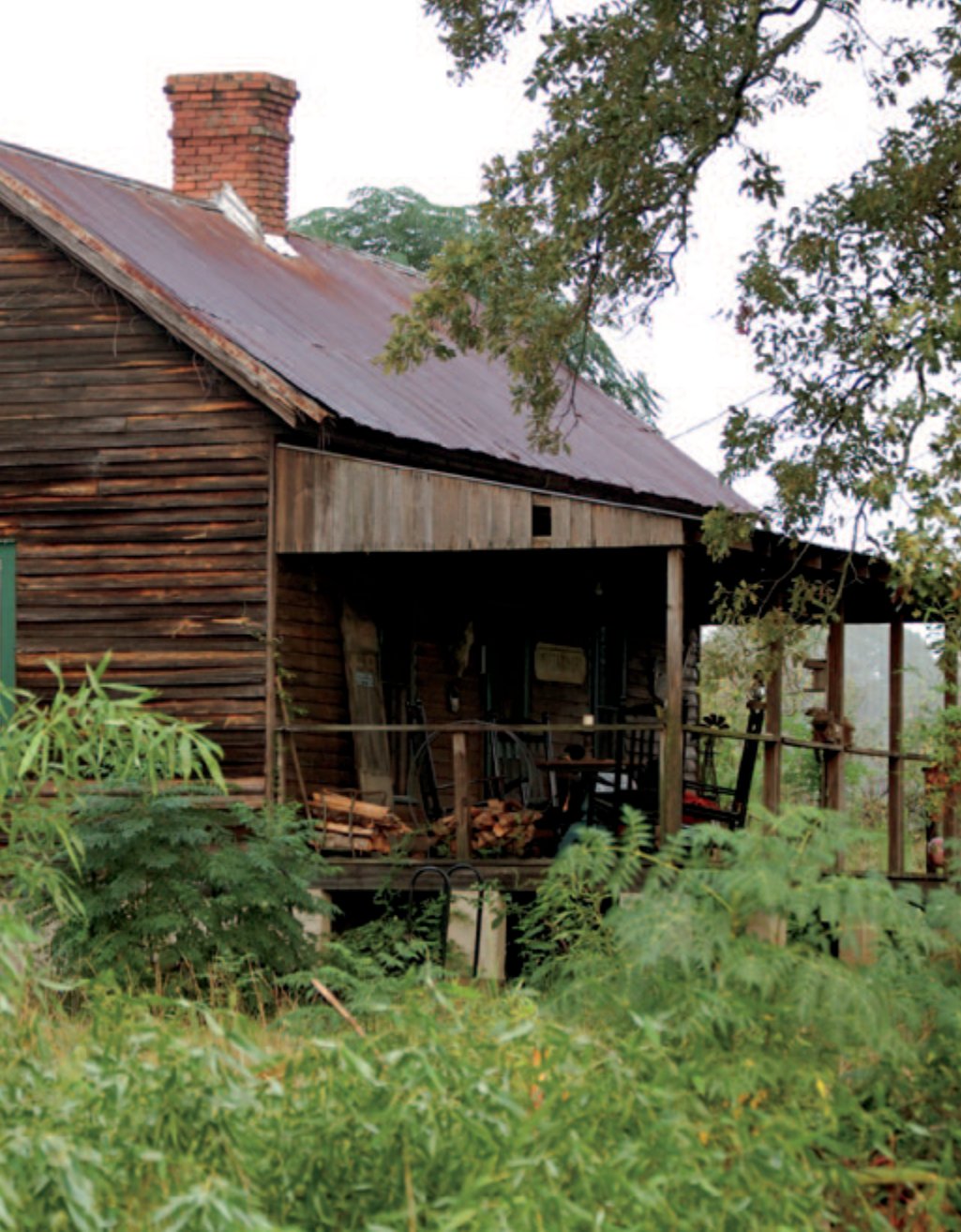
Our southern rural landscape is flavored by romantic ruins of our agricultural heritage. Lonely chimneys and two room wooden cabins mark the efforts of past tenant farmers difficult lives. Hidden within these dwellings are clues to living sustainably with what nature provides, a slumbering educator to show us how to build fireplaces that draw, buildings that stay cool in the heat of summer without air conditioning, and whose “carbon footprint” is quite small.

Unfortunately, the forces of man and nature work against these romantic structures so that some repair and dedication to their presentation is required. Besides the expected and repairable degradation by termites, storms, and encroachment of plant life such as tree roots, the largest single destructor of these shacks is county property taxes. Although often not in use as a dwelling, these buildings are taxed, thus penalizing the property owner for his preservation efforts. But even as a ruin these lonely sentinels create aesthetic interest in the rural landscape and a home for barn owls, rat snakes, bee hives and the sometimes enterprising deer hunter.
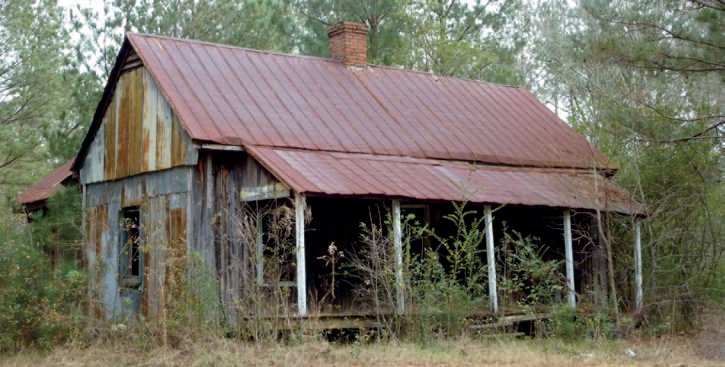
If we lose these shacks to modern indifference we will lose our anchor to the past from which we have much to learn. Generations of accumulated knowledge by trial and error will be gone with the wind, only a historical footnote. With awareness and a little effort, the next generation can wonder, contemplate, and be thankful for the early work of those who built their lives on the land.