
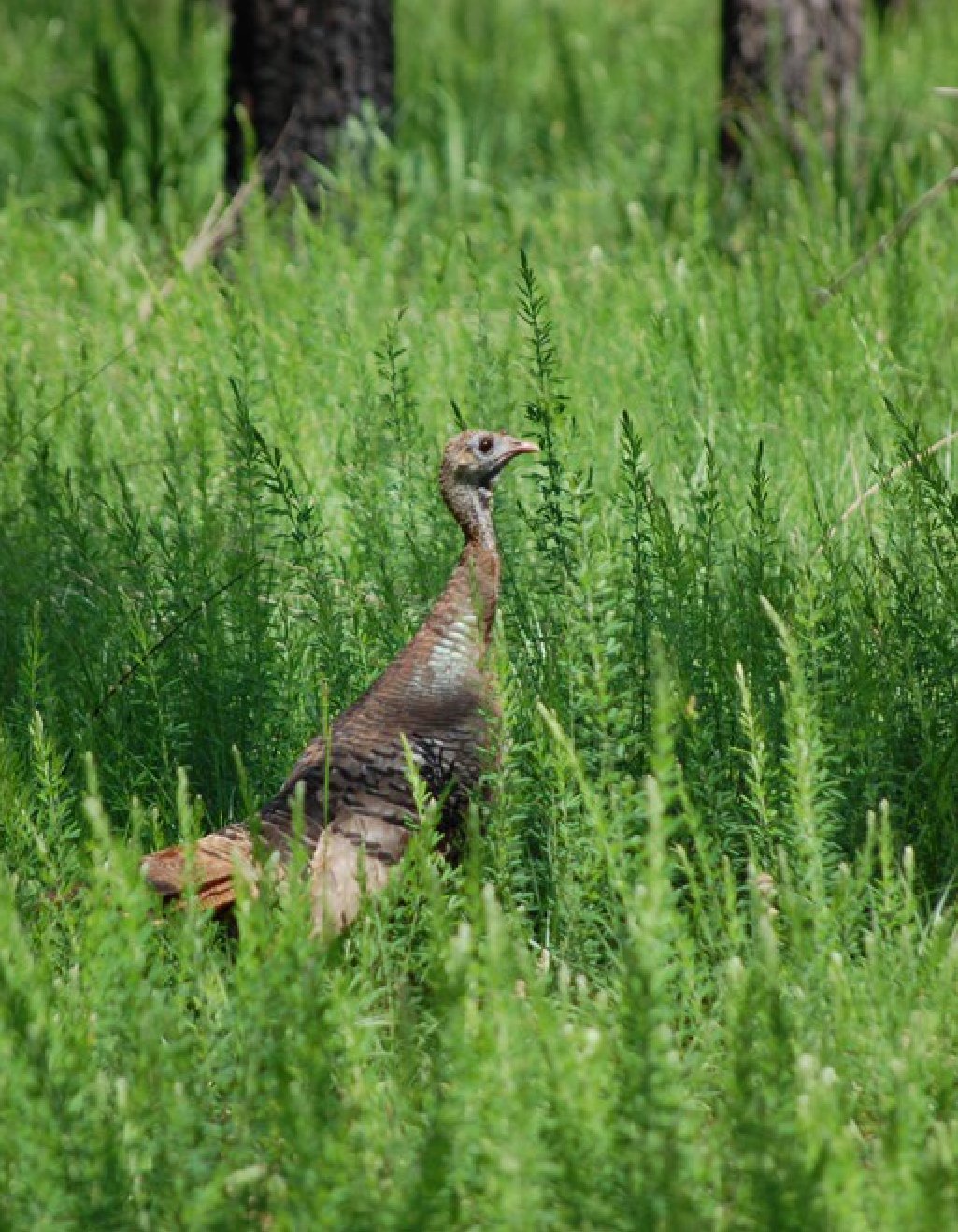
Woodlands, whether pine, hardwood, or mixed pine hardwood, are often the staple habitat for turkey hunting, but openings and plantings are usually the main focus of turkey management. However, when you look at what habitat types turkeys use most and what habitat is most important to a turkey population, woodlands get the nod. Turkeys are a woodland bird, especially in the southeast US. While they exist in the prairie states, they still are most often associated with woodlands in some form or another.
In the Southeast, turkeys require large trees for roosting and heavily utilize mast and fruits of mature trees as well. Suffice it to say, turkeys are inextricably linked to woodlands throughout the year. There are plenty of situations, however, that poorly managed woodlands are either not used by turkeys or used only seasonally. It is fairly common to begin working with a landowner on establishing timber and wildlife management priorities and find out that “we have plenty of turkeys in winter but come spring turkeys leave the property”. While many properties are not big enough to contain the full home range of a turkey population, it is still usually possible to provide plenty of seasonal habitat to maintain a huntable population. Gobblers home ranges average over 2,000 acres in spring so it takes a lot of area to manage the total needs of a turkey population,
In reality, there is only one type of Southeastern woodland that turkeys don’t use – thick ones! Pine, pine/hardwood, hardwood, cypress and gum swamps, and cedar are all examples of woodlands that turkeys will use to some extent, but if the stand is young and very thick or older with a thick shrub/sapling midstory, turkey use can be zero. So that leaves more open woods being the primary woodland type turkeys prefer.
Turkeys are hunted by various predators in all seasons and all stages of their life from eggs to adults. Therefore, they are very wary of places that they can be ambushed from thick cover. The majority of their food is also scratched from leaf litter and picked up from the ground so they need to be able to see the ground while feeding. Bottom line is they need fairly open habitats to get at their food and also be able to see around them to keep from being eaten themselves.
The amount and mixture of woodland types is very important to turkey habitat quality. The same landowners who complain of losing their turkeys in the spring are also, typically, the landowners who think that maintaining a solid hardwood forest on both uplands and bottomland is a good idea! No one habitat type is good for any species of wildlife. While oaks are excellent winter food for turkeys and winter flocks use hardwood bottoms extensively, a 500 or a 1,000 acre forest of oaks will hold few, if any, turkeys throughout the year. Just like while Partridge peas are excellent food and cover for quail, a 50 acre Partridge pea field can be considered poor quail habitat. The main reason for this is that seasonal needs change and turkeys have different requirements depending on what foods are available and what stage they are in reproduction.
It is important to realize that, while hardwoods and acorns are used extensively by turkeys and deer, they are not the only woodland type used, or even preferred by turkeys and deer. Pine and mixed pine/hardwood forests are just as important and used as extensively at certain times of year. We encounter hunters and managers regularly that only think in terms of hardwoods and acorns in wildlife management. However, turkeys respond well to a diversity of habitat types and do best when they have a variety of woodland types available to them in different seasons. A good diversity of habitat types will have both pine and hardwood as well as planted fields, fallow fields, disked fields and open grasslands. All will be used by turkeys at some point in the year.
Seasons
Seasonally then, what kind of woodlands do turkeys prefer? Let’s start out with the nesting season and the beginning of the life cycle of a turkey. Hens MUST have nesting cover to successfully lay and hatch a nest. The better the quality and quantity of cover, the better the chance that a nest will hatch a brood of poults. In addition, turkey hens are known to pack up in the spring and travel MILES to access good nesting habitat if it is not available where they wintered. Unfortunately, they will have the gobblers in tow, leading to the common problem of turkeys on the property in February and none in April!
While turkeys will occasionally nest in poor cover, the success rates of these nests is low. However, if quality nesting cover is available, turkeys will use it heavily. On average, only 50% of the nests laid will result in a hatched brood of poults. The remainder are lost, mostly to predation. Nest success is vastly increased in the best quality habitats and much lower in poor nesting habitat. Grassy areas with broomstraw and other native grasses interspersed with light shrubby cover or blackberry thickets are the most often selected and successful. While fields and field edges that have not been planted or mowed for several years characterize this habitat type, nesting cover can be created and maintained in woodlands as well. Large blocks of good habitat also result in higher nest success and narrow nesting habitat (like field edges and powerline ROW’s) usually result in lower nest success. This is due to the ability of predators to easily hunt narrow habitat types for nests. Large blocks of habitat are much harder for predators to search.
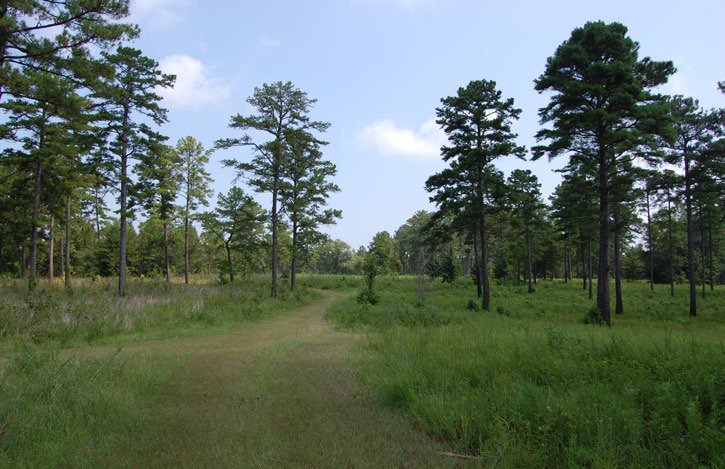
Typically, good turkey nesting cover is found in mature, open, burned pineywoods. Pine stands need to be maintained at a low basal area (low density of trees) with ample sunlight through the canopy of the trees to grow the grasses necessary for nesting. To maintain these conditions, they need to be burned on a 2-4 year rotation. Managed like this, pineywoods can offer a turkey population an abundant supply of some of the best nesting habitat available. Pine stands that are too shady will either have only sparse weed growth with little grass or nothing but pine straw on the forest floor. Pine stands that are unburned will have a thick midstory of sapling hardwood and pine shading out the good plants that grow close to the ground.
Prescribed Fire
Regular prescribed fire is the best way to maintain quality nesting cover. While to some, burning nesting cover seems counter-intuitive. Fire and turkeys, especially nesting turkeys, are closely related. Without fire, ground cover becomes too sparse for quality nesting cover and the shrub/sapling layer takes over. Regular burning maintains the grasses, forbs, and the shrub/sapling layer in a condition that is ideal for good nesting habitat. Burning on a 2-4 year rotation in pine or pine/hardwood stands is ideal to maintain this cover. Even burning during the nesting season, while possibly burning a nest or two, has a much greater positive effect on overall nesting success than not burning at all.

An excerpt from “Lightning-Season Burning: Friend or Foe of Breeding Birds?” notes Sisson et al. (1990) found that 62% of all nests occurred in mature pine forests that had been burned within the past two years. Moore et al. (2005) monitored 22 hens in areas subjected to lightning-season fires and found only two nests destroyed by the burns, and one of these hens re-nested. Similarly, for 64 turkey nests monitored in Mississippi (National Wild Turkey Federation 2006), only four were located in areas scheduled to be burned and only two nests were actually destroyed by lightning-season fires. Allen et al. (1996) also found that areas not burned within the past two years were almost entirely avoided by hens. The point here is that the best nesting cover is created and maintained with fire, even fires that may occur in the nesting season.
Once poults hatch and for the first 2 weeks of their life, they need access to abundant insect populations to fuel high body and feather growth rates. Only after reaching 2-3 weeks of age and ability to fly, do they begin to switch over to more vegetation and seeds in their diet. These first few weeks are critical in the life of a turkey and brood habitat can often make or break a fall population. While the poults are flightless, they are susceptible to predators of all sorts and suffer high rates of predation, often losing up to 75% of the chicks hatched. Because of this, brood habitat that supplies plenty of cover to hide poults while they are feeding and plenty of insects to feed on are essential.
Once again, open, burned pineywoods can provide quality brood habitat. While fields of annual weeds such as ragweed can be ideal brood habitat producing large, easy access bug populations and cover, burned pineywoods with an open canopy also provide the essentials for protecting and feeding poults. The difference, however, is that the best brood habitat in pineywoods are areas that were burned the same year that the poults hatch. Areas burned in February and March are usually greened up by April and May when nests begin to hatch and the lush growing vegetation is a natural producer of high insect populations. In addition, in a well-managed pine woodland, the stand should be broken up in burn blocks so that unburned nesting cover is immediately adjacent to good, burned brood habitat. This indicates the importance of burning some of your woods every year.
So, the bottom line for pineywoods is it needs to be open and burned! From replanted clearcut to about 3-4 years of age, there is nesting value in young stands of loblolly, shortleaf and slash pine, but as they grow out to 8-10 years old or so, are often too thick for any usage by turkeys. However, as the stands mature and become merchantable, timely and regular thinnings to a low enough density to get plenty of sun on the ground and grow lush, grassy understories are in order. Burning these stands regularly will keep the understories in good shape and promote quality plant species. Young stands of pine can be burned at 5-7 years of age and will receive a little usage by turkeys. However, they will not create good habitat until the first thinning and then only if thinned enough and not choked out by hardwood brush.
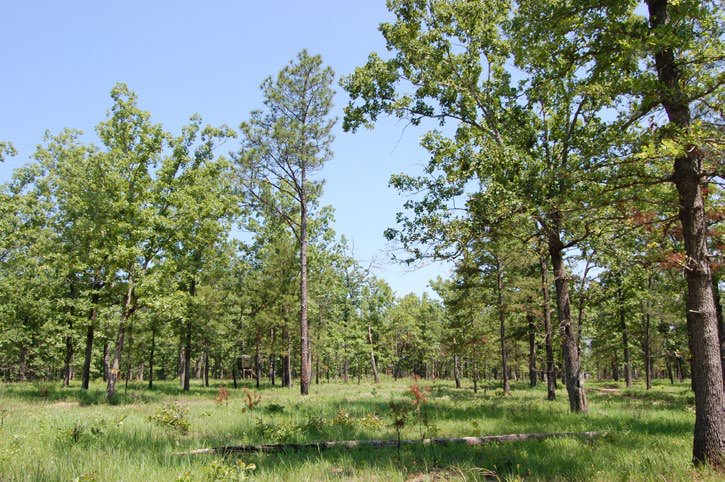
Another degrading factor in what would otherwise be good habitat, is mid story hardwoods being allowed to grow in a pine stand. Species like sweetgum, privet and other sapling hardwood need to be controlled by growing season burns, woodland mulchers and/or herbicides. The problem with these species is that they compete for sunlight, moisture and nutrients with both the overstory pine and the understory weeds and grasses you should be growing in the pine stands. While the structure of a pine stand may be perfect, (i.e. low density of trees, plenty of sunlight, thinned and burned regularly), the quality of the habitat can be ruined by allowing a thick midstory of hardwood brush, saplings and tall shrubs to shade out the ground.
Food
As turkey poults mature, family groups gather and male flocks begin to segregate through summer and fall, turkeys use a wide variety of woodland habitats. Their foods are a large mix of growing vegetation, seeds, insect and other animal life. Soft mast and fruits like persimmons, blackberry and other high sugar fruits are used when available. Since there is an abundant supply of foods, turkeys tend to forage where the feeding is easy and can be found in woodland/field transition edges, crop fields, pastures and regularly use burned areas and hardwood drains. This is the time of year when you can find turkeys in nearly any type of woodland available as long as it is open enough for turkeys to be able to see well.
Winter is the time that turkeys begin to settle in to “classic” hardwood woodlands that most people associate with turkey habitat. Large family groups and male groups move into larger hardwood bottoms and flats to feed on acorn crops. While these groups use open fields and pineywoods to some extent, large blocks of hardwood become a magnet for turkey flocks.
Hardwoods
While these hardwood and mixed pine/hardwood stands are attractive in a “natural” state, managing these woodlands to improve their quality is still possible. Hardwoods that are left to grow out without active management are often a mix of species, sizes and age classes. As larger pine and hardwood mature, they tend to fully occupy the canopy and create shady conditions on the ground which inhibits growth of saplings and understory weeds and grasses.
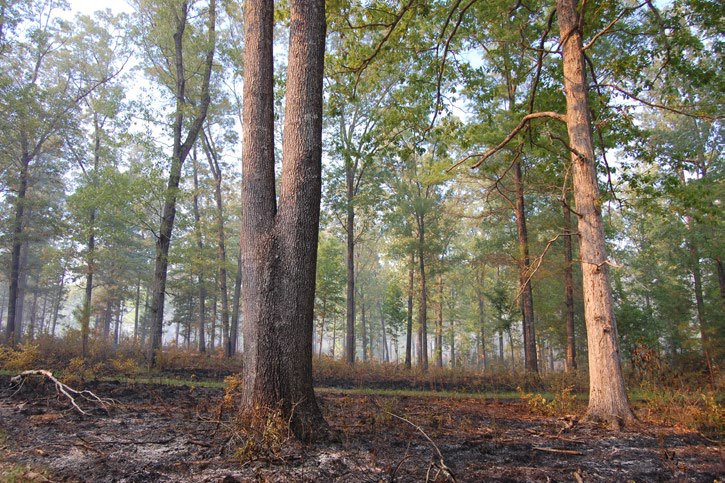
When larger trees die or suffer from windthrow, they open small gaps in the canopy which allows sapling hardwoods to fill in the opening. The problem with this scenario is that most of the species that fill in these gaps are low value hardwood like sweetgum, ash, elm and other shade tolerant species. Eventually, the stand becomes stocked with low value hardwoods with poor form. Unmanaged stands also tend to exhibit poor growth rates due to high competition between trees. While hardwood stands with a lot of “vertical diversity” and a strong under and mid-story of shrubs and saplings can be productive for various songbirds, they can often become too thick for good turkey use.
Managing these hardwood stands most often entails occasional thinning and burning. Hardwoods respond well to light, very selective thinnings. By thinning undesirable species out of the stand and removing poor quality and damaged trees, the remaining trees grow better due to less competition for nutrients and water. Thinning around oaks that have full crowns and have a history of producing good crops of acorns is productive, especially if these individual trees are fertilized every few years. While entering a stand for thinning, removing over-mature trees that are declining or getting too big for local sawmills can be accomplished to ensure the stand is productive. As long as the canopy is not opened up too much, the stand will respond positively. These thinnings also make the forest more aesthetically pleasing because an observer can see farther through and under the mature trees. First thinnings are usually the hardest because the trees are smaller and the harvesting equipment needs lots of room to move around through the stand. Thinnings in areas with lots of sawtimber sized trees is usually easily accomplished and recommended.
Regenerating quality hardwood such as oak should also be considered, especially in mature stands. Oak and other good timber species regenerate best in very open clearcut situations and do not regenerate well under the canopy of mature trees. Small clearcuts of 5-10 acres can be created to begin regeneration of the stand in pockets as well as creating the brushy habitat that nesting turkeys will use for nesting and deer will like to bed. Care should be taken when clearcutting small blocks in areas with a high deer density. Deer can and will browse oaks out of small clearcuts leaving you with only poor value and quality species regenerating in the area.
Maintaining a productive understory in a hardwood stand can be accomplished by using herbicides to control unwanted saplings and shrubs and occasional, cool burning. Even bottomland hardwoods can be burned but must be done carefully with cool, low intensity fires to prevent basal damage. However, thinned and occasionally burned hardwood stands are productive for both timber and wildlife as well as being very aesthetically pleasing.
The bottom line in managing woodlands for wildlife is that an actively managed stand is usually better than one that is not managed. Regular activities using loggers, herbicides, fire and mulchers all have a place in the management of timber stands and can be used to create ideal conditions for turkeys.
Sisson, D.C., D.W. Speake, J.L. Landers, and J.L. Buckner. 1990. Effects of Prescribed burning on Wild Turkey habitat preference and nest site selection in south Georgia. National Wild Turkey Symposium 6:44-50.
Moore, W.F., J.C. Kilgo, W.D. Carlisle, and M B. Caudell. 2005. Chapter 6. Wild Turkey. Pages 359-366 in Kilgo, J.C. and J.I. Blake (Eds.). Ecology and management of a forested landscape. Island Press, Washington, DC.
National Wild Turkey Federation. 2006. Spring fire is good for wild turkeys. On-line version: http://www.nwtf.org/nwtf_newsroom/press_releases.php?id=11901
Cox, J. and B. Widener. 2008. Lightning-season burning: friend or foe of breeding birds? Miscellaneous Publication 17, Tall Timbers Research Station, Tallahassee, FL. USA.