

Westervelt Lodge is located on approximately 12,000 contiguous, free-range acres in west Alabama along the Tombigbee River, owned and operated by The Westervelt Company (previously Gulf States Paper Corporation). The lodge has a long history dating back to 1951, when its first organized deer hunt took place on November 30. On this crisp autumn morning, 78 hunters met at the Ingram Spur around the Mule Barn. Six dogs were cast at different spots. Three bucks were taken; two that weighed 150 pounds and one trophy 8-point weighing in at 225 pounds. This was prior to the lodge going commercial which would not happen for another 24 years. A few years later, Gulf States Paper became one of the first private timber companies in the Southeast to hire a fulltime wildlife biologist, Ray Redmond. Mr. Redmond developed and refined techniques of game management including trapping and restocking game species – especially deer and turkey. He truly helped make the company’s wildlife management program a model for other timber companies.
By 1971, Westervelt Lodge was becoming renowned for the trophy white-tailed deer and wild turkeys that roamed its landscape. With its growing reputation, Gulf States began considering developing Westervelt Lodge into a premium commercial hunting lodge. Two years later in 1973, Gulf States Paper began an in-depth market study to determine the needs of hunters and how well these needs were being met. A need was discovered for a high-quality hunting reserve offering natural hunting experiences on vast acreage, trophy opportunities and great amenities. Westervelt Lodge officially opened its doors to the public in 1975, offering deer and turkey hunting on a daily fee basis. Years of planning and hard work by wildlife biologists, game managers and foresters made all of that possible. The Fred Bear Bow Hunting School was created at the Westervelt Lodge in 1975. In 1977, Westervelt’s famous Turkey School began with Ben Rogers Lee as the instructor. Colonel Tom Kelly took over as lead instructor of the turkey school in 1981 and would continue in that role until 2014. Currently, Eddie Salter leads the turkey school.


Westervelt Lodge is rich in history with some of the most prominent outdoorsman having spent considerable amounts of time there. Rather than simply describing the history of the Westervelt Lodge, this article seeks to outline how owning and managing a commercial hunting lodge can be a balancing act between maintaining a viable, profitable business and managing the wildlife resource. In addition, some of the land management practices used to maintain the landscape in a condition favorable for a host of wildlife species will be addressed.
It’s A Balancing Act
Financial and Operational Considerations
Westervelt Lodge operates as a stand-alone business within The Westervelt Company, which requires annual financial performance metrics. There are specific financial targets associated with each service offered (deer hunts, turkey hunts, wingshooting, etc.). Managers must determine the point at which financial goals can be met without compromising the resource. In other words, managers must determine how many deer hunts can be hosted without risking the harvest of too many deer and/or negatively impacting hunting quality. The lifeblood of commercial hunting operations is repeat business. If hunting quality experiences a significant decrease or customers do not see enough animals during their hunt, this will obviously impact their decision to return. These operations also rely heavily on word of mouth, and if a customer has a bad experience somewhere they will likely tell their friends and family about it.
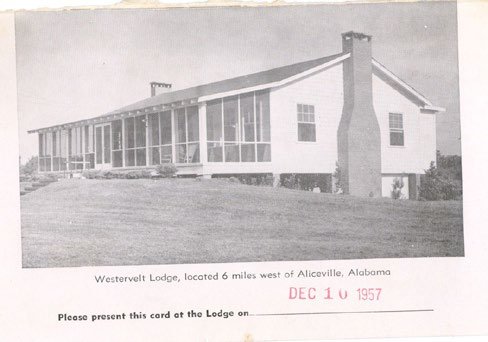
Determining financial goals is only one piece of the operations puzzle. A second piece of the puzzle is facilities and maintenance. Westervelt Lodge was constructed in 1952, and over the last 65 years there have been significant changes. While the original Lodge building remains intact, an expansion took place in the early 1980’s. Since then, there have been a number of additional upgrades. Much like the Westervelt Lodge, most operations will have some of the following facilities: rifle range, skeet/trap range, archery range, game cleaning area, pole barn for equipment storage, dog kennels and bird pens, to name a few. These facilities ultimately need maintenance of some type, and that expense should be included in long-term business plans for the lodge. In addition to facilities, commercial hunting operations need stands for customers’ use. Hunting stands can be a significant cost, particularly on a property the size of Westervelt Lodge. Another cost of operation to consider is seed. Depending on the amount of acres planted annually, this can be considerable. Most commercial operations also have equipment onsite such as tractors, disks, mowers, seed drills, etc., that will not only add more upfront costs, but also increase the cost of maintenance. Aside from facility and equipment needs, hunting lodges also require skilled employees to create the experience customers desire.

Commercial hunting operations are rarely “one man shows”. Usually it takes a team of individuals to provide a quality hunting experience. This team typically includes a lodge manager, technicians, guides and housekeeping or cook staff. Having the right people in place in each of these roles is critical. Each team member will interact with a customer at some point during their stay, and those interactions have a tremendous influence on the customer’s individual experience. Running a profitable commercial hunting business is certainly a balancing act between many pieces. However, managing the wildlife resource is another animal (pun intended) altogether.
Biological Considerations
The other side of the equation in the commercial hunting business is managing the biological component. Management of the wildlife resources must be done in a way that promotes healthy populations that are in balance with the habitat. That includes the need to set harvest objectives that keep populations at a healthy level but also provide plenty of animals to see. At Westervelt Lodge, annual antlerless deer harvest goals are established to help keep the deer population in balance with the habitat conditions. Buck harvest criteria are dictated mostly by age in that the goal is to harvest bucks that are three and a half years old or older. Beginning with the first hunt in 1951, the Lodge has collected deer harvest data. So many years of harvest data provides managers with long-term trend data to use in making harvest decisions.
In addition to deer harvest data, the lodge also conducts post-season camera surveys. Originally, the post-season survey was part of a larger in-house research project analyzing fawn survival in response to predator trapping. The Lodge was essentially split into two blocks – a control area and a treatment area. Coyotes were trapped and removed from the treatment area to determine differences in fawn survival between the two areas. The Lodge implemented the widely accepted camera survey method developed by Dr. Harry Jacobson to gather post hunting season population information such as fawn: doe ratio, adult sex ratio and buck age structure. Following intensive trapping efforts, surprisingly it became evident that there was not a large number of coyotes inhabiting the Lodge property. That discovery led to the conclusion that there was no significant difference in fawn: doe ratio between the control and treatment areas. The Lodge continues to run the post season survey to monitor any significant changes in herd characteristics. In addition to population monitoring, it’s a good practice to evaluate the bucks that survived the season that will be recruited into older age classes.
Land Management
Because Westervelt Lodge is owned by a timber company, the landscape is considered a working forest comprised of pine plantations, mixed pine-hardwood and bottomland hardwood. Annual timber management activities occur based on a 30-year management plan to ensure the timber resource is managed in a sustainable manner, but also to promote the habitat required for healthy populations of the animals desired by customers. Because the property is so large, it has been divided into timber management compartments. This helps to provide a mosaic of different habitat types and timber ages distributed across the landscape, as well as provide increased edge.
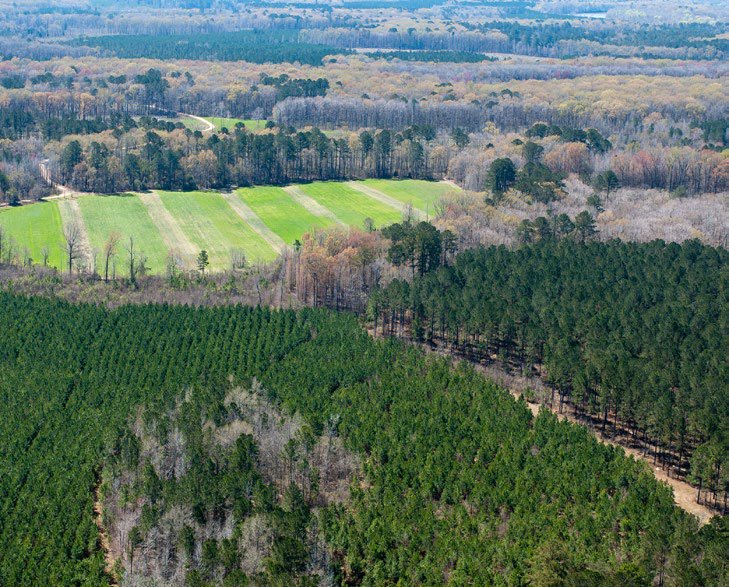
Being a working forest, there is a logical progression beginning with tree planting, usually followed by two thinnings and ultimately a final harvest. Pine stands receive a first thinning around age 15, which opens the canopy and allows sunlight to stimulate grass and forb species beneficial to wildlife.
With wingshooting being one of the primary services offered at Westervelt Lodge, careful consideration and planning is critical to ensure there is a sustainable supply of areas that meet the standards of the customer’s expectations. Future quail areas were established and will be thinned to a 60-basal area initially and then a second thin will occur five years later. These quail areas are maintained by a combination of herbicide and prescribed fire promoting native grasses and forbs. These areas are supplemented by planting a variety of millets, grain sorghum and Egyptian wheat. Over the years, Mother Nature has intervened and provided her own management practices resetting plant succession.
Hurricane Katrina and more than one tornado have paid a visit to the Lodge property in recent years. All of these events caused significant timber damage. After major weather events like hurricanes and tornadoes, salvage operations will typically only recover a fraction of the actual timber value prior to the storm, resulting in a negative financial impact. However, from a habitat standpoint, these events create openings in the forest and result in early-successional habitats. These areas begin producing valuable cover and food resources for both game and non-game species as well as visibility for hunting.
As an additional part of in-house project on fawn survival, the quality of the fawning cover present on the property was examined. Usually after timber is clearcut, the area is site-prepped using either a mechanical operation or chemical application, or a combination of both. Depending on the chemical and the application, the outcome can have a tremendous impact on fawning habitat. After collecting vegetation data on sites with varying site prep techniques, a decision was made to use a banded herbicide treatment combined with a bedding mechanical treatment. This provided a compromise that allowed for good cover between the rows of planted pines, but also removed direct competition from the young trees. Again, once the trees reach thinning age, other management options such as prescribed fire and mid-rotation release become available to increase habitat quality and the visibility in those stands.
Westervelt Lodge carries approximately 150 acres of food plots spread evenly across the property. Field size can range anywhere from half an acre to more than 20 acres. These plots are typically planted in fall annual crops such as cereal grains and clover, primarily crimson and arrowleaf. In portions of the larger fields, corn is typically planted to provide dove hunting opportunities. Additionally, in some of the Lodge’s plots with sandier soils, chufa is planted for turkeys. To preserve soil moisture and organic matter, fields are typically planted using a no-till drill. This planting method also reduces planting time significantly because only one pass over each field is required, rather than multiple passes requiring users to disk, spread seed and then come back to cover seed.
The Lodge, like most commercial hunting operations, faces challenges balancing all the different components needed to operate a successful and profitable lodge. For Westervelt, there is an added component of an annual revenue planned from timber harvests as well. This creates a landscape that is certainly ever changing and can create some logistical challenges, too. Westervelt Lodge has a long history of providing quality hunting experiences for customers as do many other lodges, but it is not as easy as lodges make it look when customers come to hunt. There is a tremendous amount of work that goes on behind the curtain to provide the experience of a lifetime and keep customers coming back every season.