
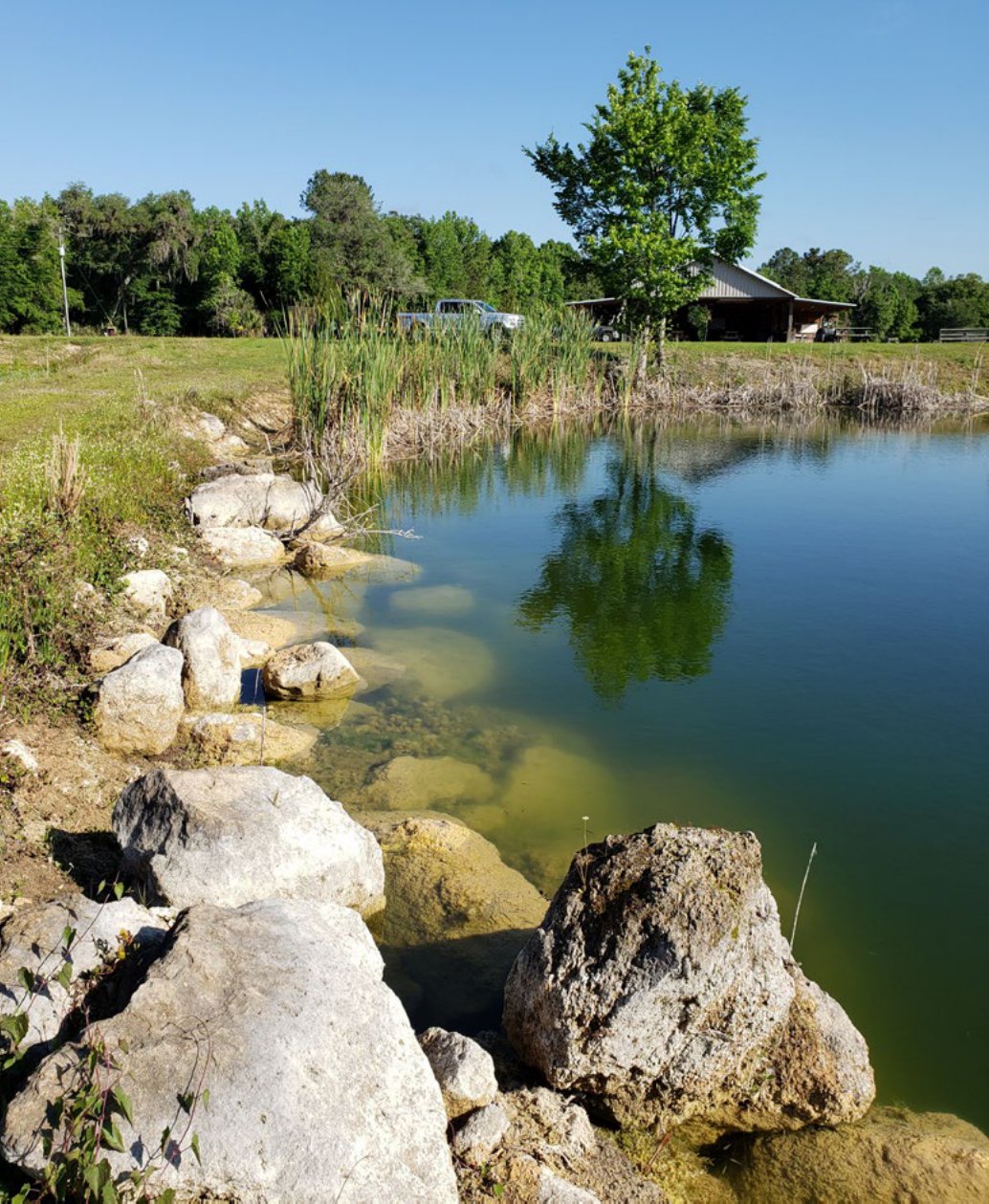
To most fish species, the shoreline of a waterbody is the most important part of the lake. This is also true for most anglers, especially those targeting bass and bream, do so along the shoreline. Most mammals and birds that frequent your waterbody are also using the shoreline habitat more than the open water. The Littoral Zone, shallower areas of a waterbody, is that area of your waterbody generally close to shore where light penetrates to bottom or near bottom. Most fish species require a good amount of littoral zone/shoreline as they may spend part of or their entire life there. This is also where most of the natural desirable habitat occurs and where the most fish and other organisms can be found living, growing, feeding and/or reproducing. The shoreline is the most important area of the waterbody for most aquatic species. The more of it, the better.
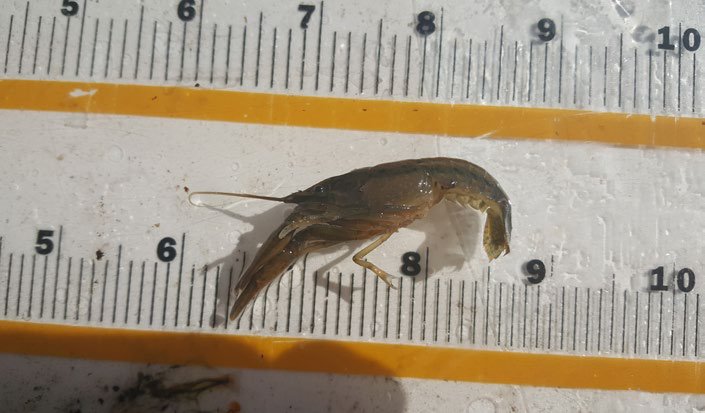
Where the light penetrates the water column, microscopic organisms called phytoplankton and zooplankton grow and hopefully thrive. These organisms, although tiny, are very important, as they are the foundation of the aquatic food chain/pyramid. Some of these organisms will free float, but certain species also attach themselves to pebbles, rocks, logs, manmade structures (docks) and vegetation where sunlight reaches. Newly hatched fish and organisms that fish feed on such as grass shrimp, crayfish, insect larvae etc. feed on the microscopic organisms. The largemouth bass is a top-level predator in the lake, however at birth and the first several days of its life, the newly hatched bass will feed only on these organisms until they move up to the next size prey, which is the other organisms previously mentioned also feeding on microscopic food.
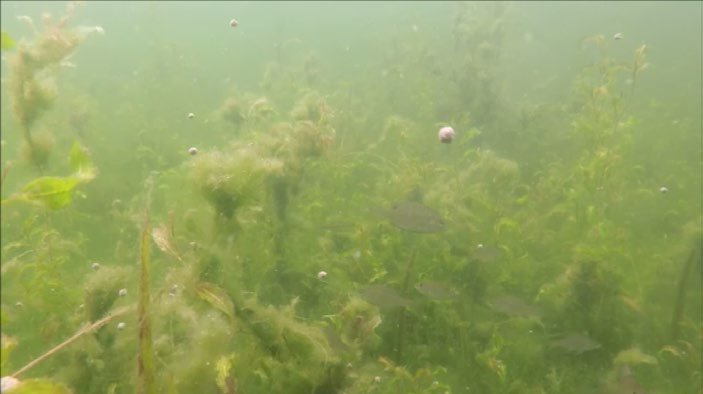
The shoreline is where we like to see a combination of shallow open water with hard sandy or small gravel bottom, and some nearby vegetation. Many species like largemouth bass and bream require water three-to-six feet deep with a non-organic bottom for spawning with nearby cover (vegetation, logs, boulders) for protection during spawning, or for newly hatched fry to migrate quickly to for protection after hatching. Therefore, we always like to see some aquatic vegetation present to improve habitat and support the target species we are managing. From one day old to 12 pounds, we want to supply largemouth bass with unlimited food, so it will grow throughout its life cycle to its full potential.

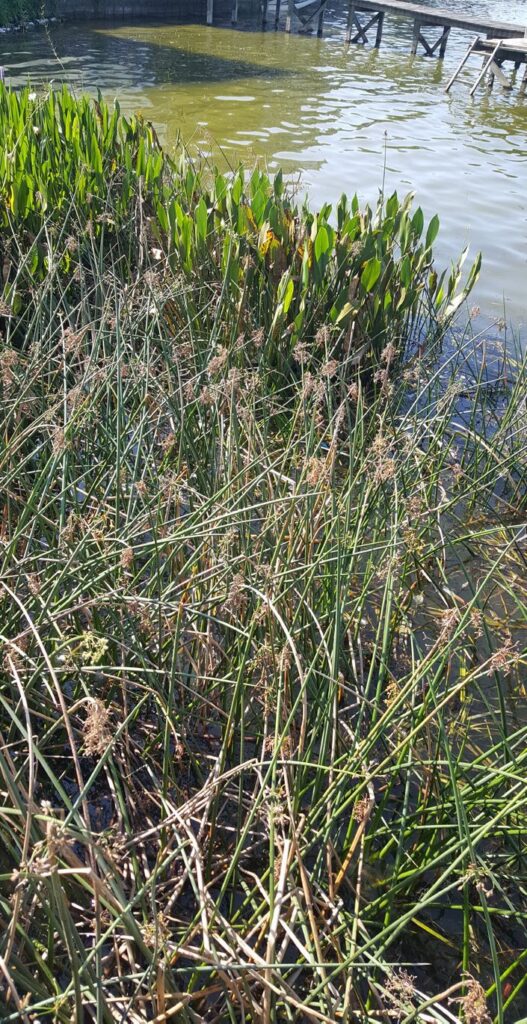
Most rooted plants will be found, depending on the water’s clarity in the shallower water depths along the shoreline. Both submerged and emergent species grow in the shallow waters where light can penetrate the water and plants benefit from it. These plants besides, supplying dissolved oxygen, provide cover for small fish and have microscopic plants and animals on them which provides food for juvenile fish. These plants may also benefit other animals such as ducks or various wildlife such as wading birds for resting or feeding areas. Some bird species will nest on/in the shoreline vegetation. Puddle ducks may feed along the shore in the water two feet deep or shallower. Allowing vegetation to grow up the bank from shore helps reduce erosion, helps filter excess nutrients from runoff and can support lots of insects that become fish food throughout the spring, summer and fall. Mowing areas to the water’s edge and/or applying herbicide to open areas up for bank angling can be performed to create lake access while leaving the majority of shoreline natural for fish to use and thrive. These areas can be 10 yds wide and 75-150 yds apart, depending on how large of a waterbody you have and the layout.
Fish species such as the largemouth bass, bluegill, redear sunfish, other bream species, minnows, etc. may spend their entire life cycle near shore or other species such as black crappie require it during certain periods of their life. If quality offshore habitat is present, both bass and bream will utilize both areas throughout the day A species like black crappie may spend most of its year in open water and along the outside edge of the littoral zone, but will come inshore to spawn in late winter and early spring, before heading back out into open water. This species definitely benefits from both quality onshore and offshore habitat related to the shoreline and open deeper water.
The shoreline water chemistry is slightly different than the open water. Particularly temperature and dissolved oxygen levels. The temperature changes quicker than deeper water. In late winter, this area becomes important as fish warm up and increase feeding activity and move closer to shore. In the fall the opposite happens, and cool nights lower the water temperature along shore and in the water column quicker than the deeper offshore water. In the peak of summer, excessively hot water along shore may have less oxygen in it than slightly deeper water. Plus, usually along shore is where more organics are built up and dead plant material is decomposing and using dissolved oxygen. But this is also where generally there is more plant life generating dissolved oxygen through photosynthesis.
When designing a new lake, create a lot of shoreline with irregular lines (not circular or four straight sides) if possible, going in and out to maximize the amount of shoreline present. Also, adding fishing fingers that jet out into the lake in a spot or two will increase the shoreline present. If you are designing a large lake, place areas where the bottom rises so water depth there will simulate the littoral zone, even though it may be far from the actual shoreline. These areas will be good for additional bass and bream spawning, and if structure and/or vegetation present nursery, loafing and feeding areas for several species of fish. Be sure to create these areas at the proper depth, not too shallow to assure they do not become vegetation problems. These plateaus can become big spawning grounds for bluegill and redear sunfish
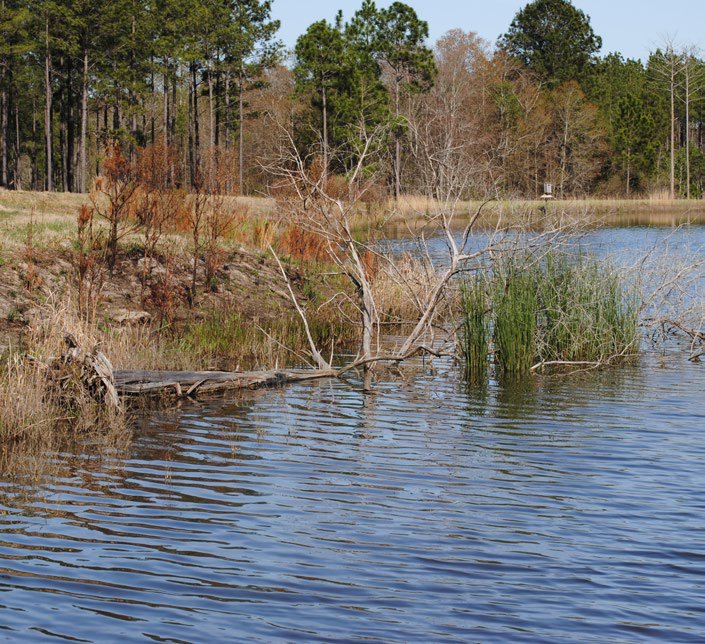
To help with vegetation control, use an aggressive slope rate on shorelines and underwater raised areas of newly designed or restoration projects in waterbodies so vegetation cannot grow excessively out from shore or on top of the underwater raised areas. Too small of a slope can cause vegetation problems requiring more herbicide use in the future than desired. A steeper shoreline slope also deters livestock from getting into the waterbody, which causes water quality issues from the extra nutrients they add from waste.
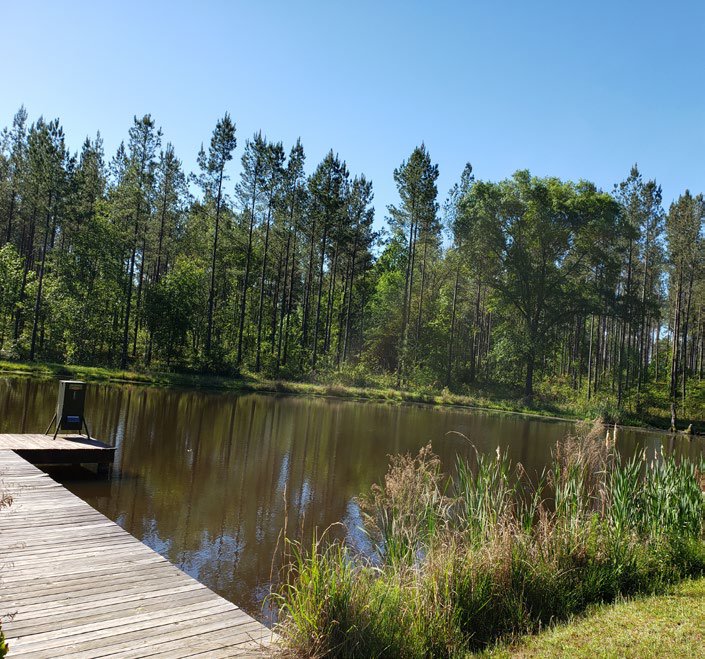
Drop trees in the lake along the shore, or drag large tress, leaving root ball intact, with the crown in water and root ball just on shore for extra habitat. Although these do not last forever, you will get 5-10 or more years of habitat (depending on size and species of tree) for fish and wildlife along the shoreline. Short artificial fish attractors can be placed along shore in water 3-5 feet deep to provide long lasting habitat for fish to hide and feed.
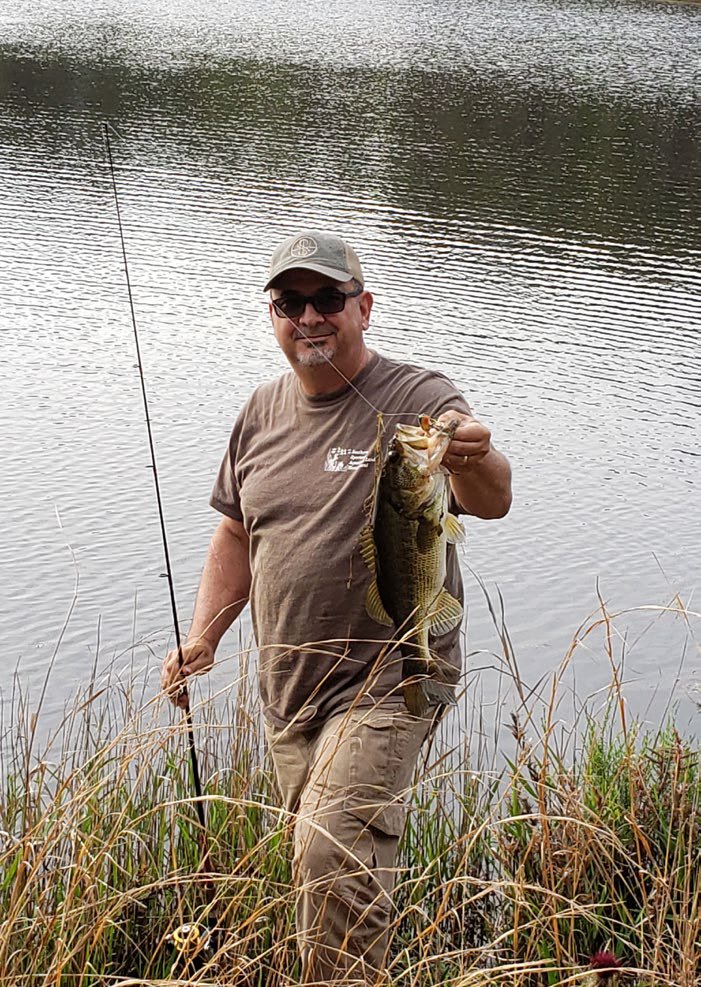
Add gravel beds along shore in lakes with high organic build up (muck) to offer spawning areas for bream and largemouth bass. Spread #57 lime rock gravel approximately 4 inches thick in water 2-6 feet deep at normal pool. This depth will allow it to be used whether water is high or low, assuring some or all of it is at a usable depth. We have observed bluegill using these enhanced spawning sites within a few days of being spread out. These are easier to build when water is low with a bobcat or front-end-loader on tractor, but can also be done with a Jon boat when water is at normal or full pool.
Plant fruit and nut trees just above the high-water line around the lake shoreline (not on either side of dam) for wildlife attractant and food for deer, turkey, birds and other mammals, and to supply shade for anglers. Planting cypress trees in groups of three-to-five along the edge or in water 1-3 feet deep also makes for an aesthetically pleasing look in the future. If cypress are planted in water, use a stake for trunk support until the trunk becomes permanently stiff. Use tree guards for all trees planted near a waterbody to protect from damage from beaver, Nutria and muskrats. Even if you have not observed any of these at your lake, it is advisable to protect your investment of time and money.
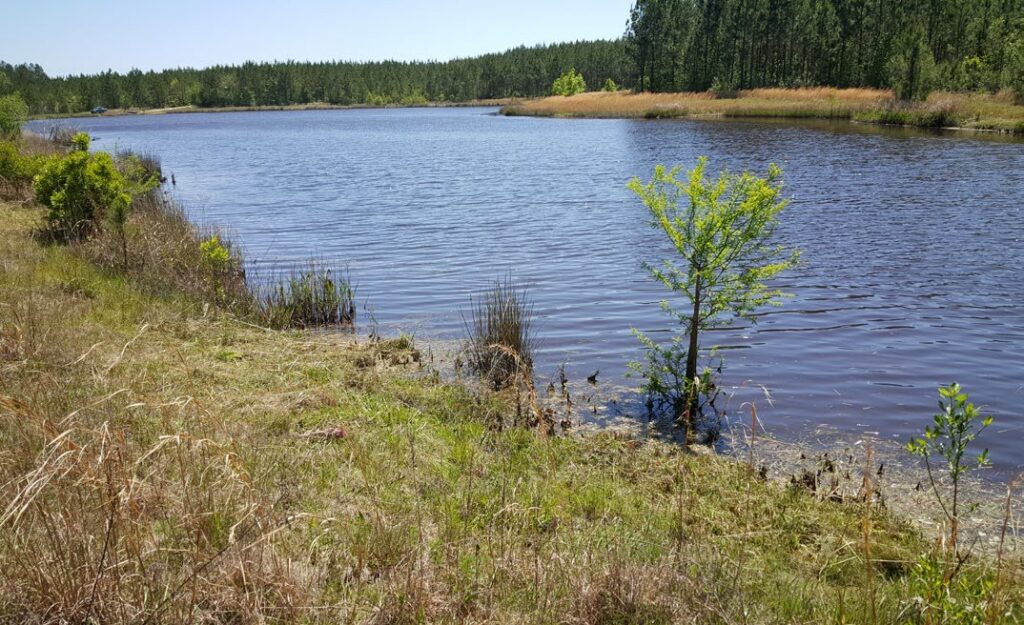
To help reduce dam erosion, line shoreline just above normal waterline and several feet below with small boulders/riprap, which will also provide habitat for many aquatic animals already mentioned. Crayfish also do well in rocky and heavily vegetated areas where they can live, reproduce and feed. A plant species rarely promoted is cattails, however they are excellent erosion control on the water side of dams. The strappy leaves and spongy root systems help hold sediment in place, protect from wind and waves, and do not damage the dam like woody plants. The remainder of shoreline should only have well controlled cattail stands or none at all. Small bi-annual herbicide treatments to keep cattails from creeping away from the dam on each can be performed with little effort or funding. Never allow woody plants to grow on either side of the dam, their roots can weaken the dam over time causing leaks and eventually causing dam failure.
Place wood duck boxes or mallard nesting tubes along shore or over shallow water. If on shore, place them close enough for ducklings to have a short distance to get to water where they are more protect from predators than on land. Place both nesting devices high enough to not get flooded during high water events and place predator guards on the poles, even if over water.
Most pond management habitat recommendations address the shoreline, which is where most fish live. You want to create a balance of cover for fish survival, with open water for spawning and angling. In my opinion, the majority of lake owners want too much of a park-like look around their lakes and are not supplying enough quality habitat for the desirable/target species, especially if they are managing for quality bream and/or largemouth bass. As one can see, the shoreline is a complicated area in your lake, from water chemistry, to lake bottom, to habitat/cover to the critters that use it above and below the water surface.