

Ensure doe harvest goals are met
Based on observations during my travels this fall, many areas of the Southeast have experienced another abundant crop of acorns.
Deer populations in these areas will have increased fawn production and survival. This means that increased harvest may be needed on some properties to maintain deer populations at desired levels. A very simple law of nature taught in college Wildlife Population Dynamics courses is that Population Growth = Births minus Deaths. Thus, with an increase in “births” (more fawns), some managers will need to increase harvest rates unless growth is desired.
Ideally, it is best to harvest does early in the season and/or before the rut. Doing so will save food resources for remaining deer and immediately improve the sex ratio for the upcoming breeding season which will conserve energy for your deer herd. An unbalanced sex ratio will result in an extended breeding season where bucks can lose up to 30% of their body weight from excessive breeding activities. Consequently, under these conditions bucks enter spring trying to recover. The highly nutritious spring food then goes towards body maintenance verses body/antler growth for the following year. The extended breeding season associated with an unbalanced sex ratio also results in poor hunting due to the lack of breeding competition. That is, there are so many does that bucks do not need to compete. In this case, hunters generally do not see much breeding activity such as chasing, rubs or scrapes. We often refer to this as a diluted rut.
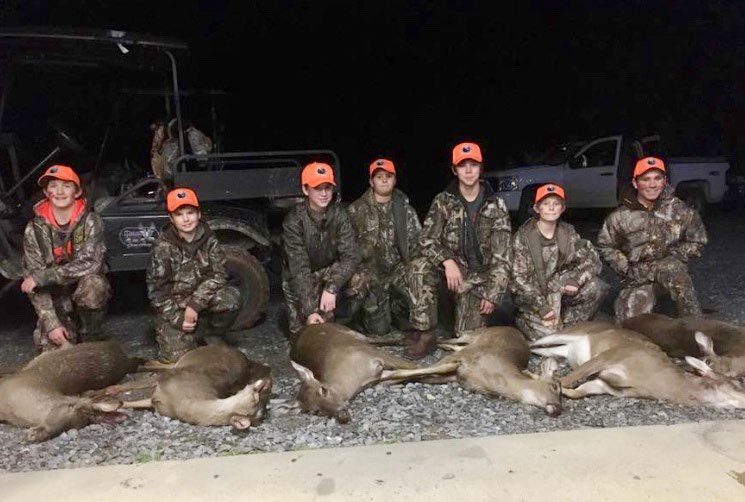
By the time you get this issue of Wildlife Trends it will be late in the hunting season in most states. If you have not met your doe harvest goals, get to work. If needed recruit the help of friends. Holding a “doe harvest weekend” is a great way to get participation from club members or friends. Make a big deal out of it by having a cook out at the camp with “awards” for those that harvest the largest doe, oldest doe, or most aggregate weight. With the associated commodore, these events can sometimes be the most memorable hunts of the year.
Collect fetal data from harvested whitetail does.
If breeding season or rut occurs in your area before or around Thanksgiving, and your hunting season extends into late December of January, you should be able to collect and measure fetuses from does harvested later in the season. Similar to human fetuses, the age of deer fetuses is determined by their length. Commercially produced fetus scales are essentially rulers that can be used to measure and ultimately determine age of the fetuses. White-tailed deer fetal scales can be obtained from the Quality Deer Management Association. Knowing the date of harvest along with the age of the fetus allows you to determine the day of conception. With an adequate sample size of fetal data, this information can provide much insight to your deer herd’s reproductive performance as well as the length and peak of the rut in your deer herd. This not only helps you determine when to put in for vacation next year (during the rut), but the length of the breeding season will shed light on the adult sex ratio of the herd. A tighter sex ratio will result in a shorter more intense rut due to increased competition for mates, while an unbalanced sex ratio will likely be represented by a long, weak rut due to less competition and length of time it takes bucks to “service” the abundant doe population. This information, along with hunter observation data, is a great and free way to help assess the status and success of your deer management program.
Tree planting activities – start planning, ordering supplies and planting.
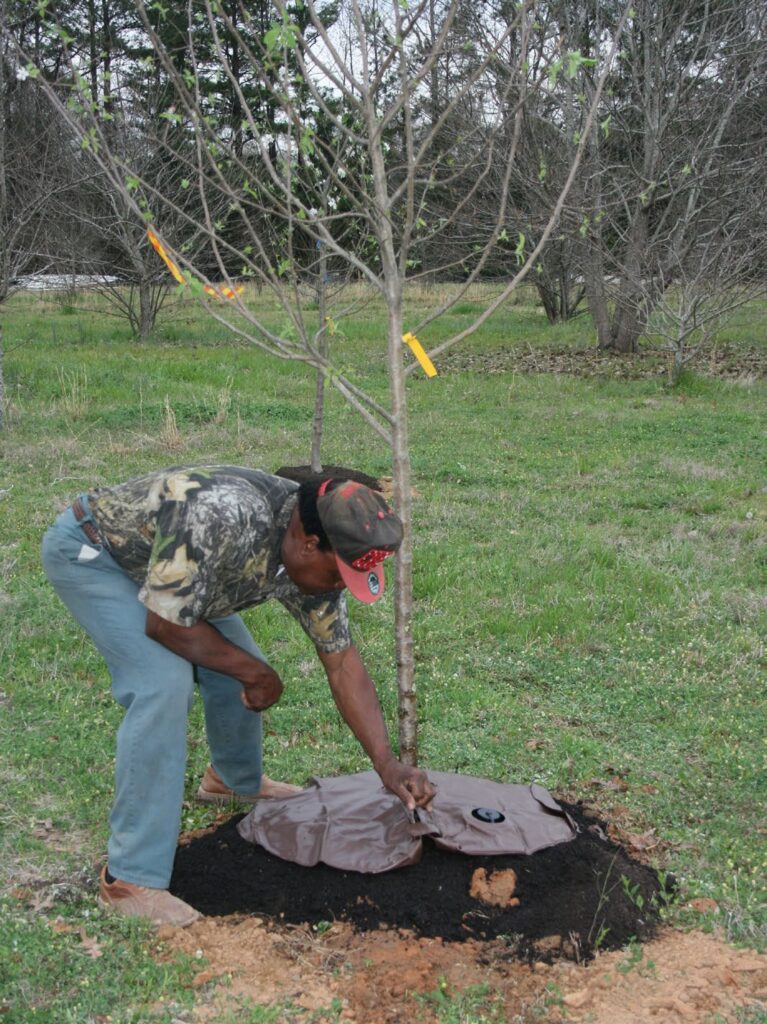
Strategically adding beneficial trees to your property adds habitat diversity, wildlife value, aesthetics, and can be a very gratifying project – especially once the trees mature and you see the value they provide. However, planting trees is more than just randomly plopping trees in the ground. For the best results plantings should be well thought out with the future in mind. Besides the obvious “where” to plant trees, you need to consider which species are suitable and do well in your soils/climate, how large they get, and future maintenance needs. Once trees are planted, they will require a bit of care to ensure good survival and growth during their first couple growing seasons. Site preparation is important to reduce competing weeds to enhance tree seedling survival during the first growing season. Depending on the situation, an initial mowing may be needed to provide a clean working area and reduce weed competition. There are many species and varieties of soft (e.g., fruit trees) and hard mast (e.g., oaks) trees available that will benefit wildlife on your property. I generally like to plant a diversity of trees that will provide various food sources throughout the year. Supplemental tree plantings not only provide additional food resources for wildlife on your property but can provide exceptional enhancements to the aesthetics. Common areas to add supplemental tree plantings include road intersections, roadside management areas, old field habitats, and in or along the edge of fields or food plots. The key is to plant them in areas that will receive sunlight. Some trees require cross-pollination to produce fruit so, if needed, be sure to plant them in small groups. I recommend contacting your tree supplier/nursery, such as the folks at The Wildlife Group, well ahead of planting time. They can help you determine which trees will grow and produce best on your property, help you develop a planting plan based on your goals, and ensure the trees and other supplies are ready when you are.
Trap and remove nest predators
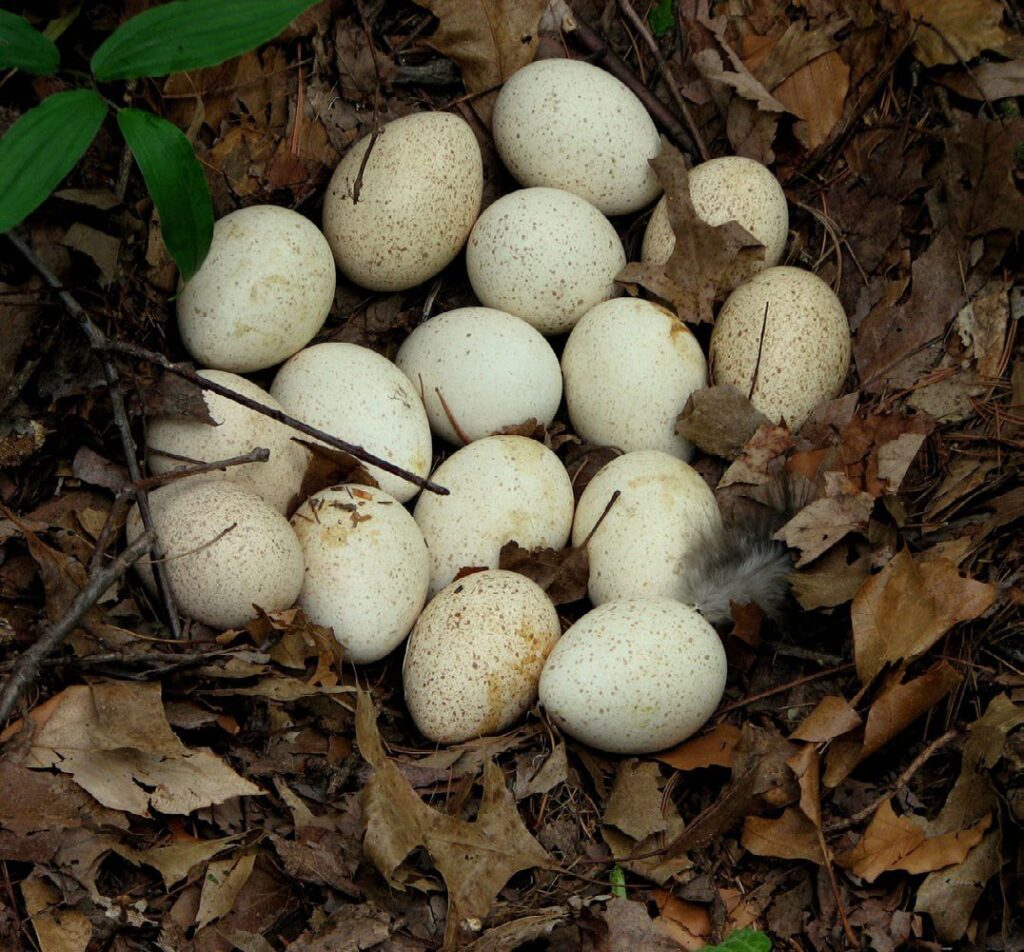
If managing for wild turkeys is a goal on the property you hunt, don’t overlook the value of removing nest predators such as raccoons and opossums. Having said this, attempting to control predators should not be a priority if you are not actively managing the land to promote quality turkey habitat. Creating and maintaining quality habitat should be the highest strategy on our list for managing turkeys. By the way, wild turkeys are a species that responds quickly to good habitat management such as thinning timber, burning, understory control, roadside management, etc. However, research has clearly demonstrated that nest predators, particularly raccoons, can significantly impact nesting success rates and thus turkey population growth. Not only will they eat the eggs, but they may even kill the vulnerable hen turkey while incubating the nest. Winter is a great time to trap and remove nest predators. This is also when hunters spend the most time at a property. Trapping offers a great mid-day management activity during a weekend at the camp. The key in being successful and efficient is to pick good trap locations. Water sources, feeders, and food plots can be good places to start. There are many effective traps available. The most common are live traps (cage traps) and steel traps (leg hold traps). If you use live traps, I recommend “soft-catch” or offset jaw traps. These traps do not damage the foot of the trapped animal in the event that you catch a dog or other non-target critter. If you have never trapped before, you will learn a lot by trial and error. I recommend doing a little homework by surfing the web and YouTube to learn effective techniques. One more thing to know is that nest predators are prolific and have relatively high reproductive rates. This means that populations can rebound quickly. To be effective in controlling nest predators and helping turkeys, you must significantly reduce nest predator populations and continue to aggressively remove them each year.
Conduct maintenance to equipment
As a land manager, quality/working equipment is essential to success. While the list of equipment used to manage hunting/recreational properties is wide ranging, most managers have, use, and need the basics such as farm tractors, tractor implements (such as harrows, mowers, grain drills, spreaders, sprayers, etc), UTVs, chainsaws, and other mechanical “hand tools”. To remain in good working order, this equipment will require proper maintenance. Without maintenance, these tools will begin to wear down until they eventually break. This can result in costly repairs and added downtime in which nothing can be done until the machinery or equipment is fixed. Nothing is more frustrating than planning a food plot planting project, getting everything ready, finally getting the right weather and soil moisture, then having a tractor or implement breakdown. There are two forms of maintenance. The first being repair maintenance, which is conducted once the equipment has started to malfunction or has completely broken down. Preventative maintenance is a program designed to prevent equipment from failure – resulting in less repair maintenance. Preventative maintenance varies depending on the equipment but generally consists of checking/replacing fluids, seals, filters, hoses, blades, batteries and/or electrical parts, screws/bolts, etc. In a nutshell, it is giving equipment some love before neglect results in breakdowns. Winter is a great time to conducting preventative maintenance on equipment. Doing so can be a relatively easy project between hunts. Of course, there’s absolutely no way to avoid breakdowns and damage in the long term. No matter how much care you give your equipment, it will ultimately breakdown. However, preventative maintenance certainly slows down functional decline but also helps keep equipment in reasonably good shape in the event that you decide to trade it in or sell for new. On larger more complicated equipment like farm tractors, skid steer machines, back hoes, etc, keep in mind that maintenance must be done properly to be effective. If you decide to do it yourself and it’s not done correctly, you are not only wasting time, but may damage the equipment. For this equipment, consider an annual “checkup” by a professional. Although hiring a professional mechanic to perform preventative maintenance and checkups will be an expense, think about all the time and money you’ll save by fixing it once instead of over and over. Part of your preventative maintenance program may include hiring a mechanic each winter to visit your “equipment shed” to perform checkups. One of my philosophies is that if you take care of your equipment, it will take care of you.

Keep notes on adjustments needed to deer stands
Although everybody makes “mental notes” of improvements needed when sitting/hunting in a particularly deer stand, these needs are often forgotten when the time comes to work on stands. I find it extremely helpful to physically keep a running list of repairs or improvements needed to deer stands. At our property we record deer stand notes in a spiral notebook that is kept at the camp. That way, everybody can add their notes right after the hunt while it is fresh on their minds. Stand repairs and improvements range from fixing a squeaky board to relocating the stand altogether. This is also where we record notes of new areas identified that need a stand. Once hunting season is over, we check our notes and go to work making repairs and adjustments as needed. Our goal is to do this work before spring green up – which also includes full-scale scouting missions to find (and install) new stand locations. By doing this work in late winter we significantly reduce the disturbance/pressure applied in preparing for the season next fall.
Prepare deer stands for the off-season.
Once deer season ends, it is a good idea to “summer-ize” them. That is, ensure they are in good working order next season there are a few things to do. Ladder and lock on stands should be loosened or removed from the tree to allow the tree to grow during summer and prevent it from absorbing the attached chain or strap of the stand. This not only protects the stand from potential damage, but is good for the tree. If the stand is not going to be removed from the woods, remove any cushions or seat straps and burlap/camo covers that may be on a stand. This will prolong their life and prevent the weather or critters from ruining them before the next season. Cushions and covers should be removed from tripods or other stands as well. Although they should already be secured, double check the tie downs and anchors of a tripod. There are two kinds of tripods – those that have blown over and those that will. Making sure they are securely anchored will reduce the chances of a tripod getting blown over. Shooting houses should be cleaned out and sealed up as much as possible. Sealing them (meaning closing the door and windows) will reduce damage by squirrels, owls, etc. It will also reduce wasp as well (notice I said reduce). Cleaning shooting houses out in late winter is much nicer than trying to do it in August! Obviously, all climbing tree stands and pop-up blinds should be removed from the woods and stored over the summer. When “summarizing” ladders and lock on stands, it is VERY important to revisit these stands just before hunting season starts again the next year to reattach the chains/straps and tighten everything up. One trick we use to identify stands that are “safe and ready to hunt” is to tie a piece of flagging onto the stand once it has been tightened and checked. Use the same color flagging for each season. For example, this year we are using yellow flagging. Next year we will use different color, say blue flagging. So if a hunter gets to a stand this season and does not see the yellow flagging, they will know that the stand may have been overlooked and/or has not been checked and secured.