
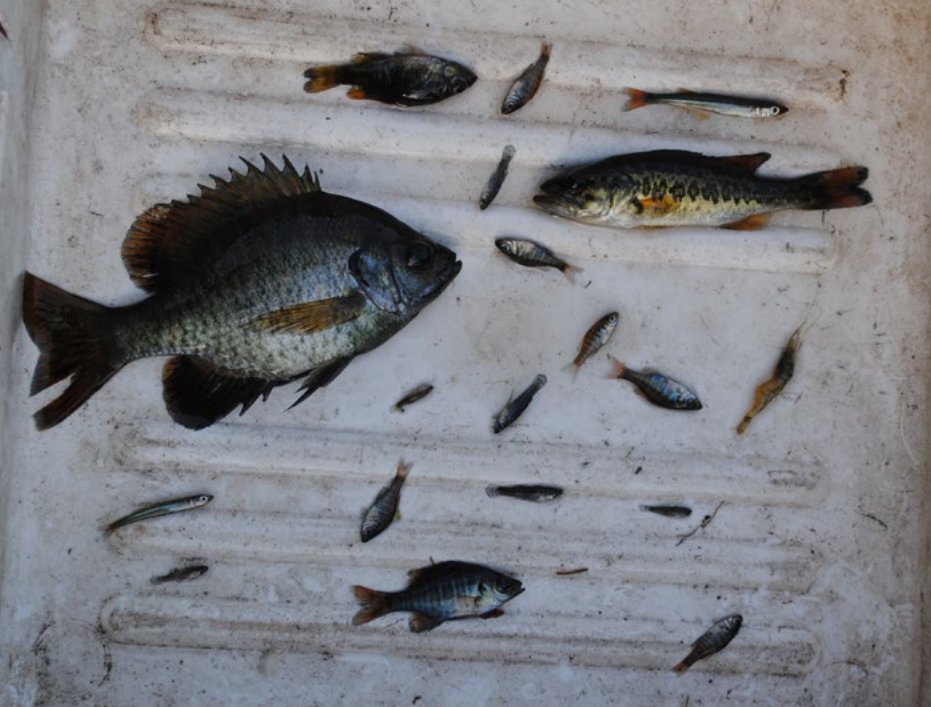
I have said many times knowing the habits of the species you are managing helps you be a better lake manager. Knowing the aquatic ecosystem also helps you be a better lake manager. Knowing what the fish in your lake eat to survive and thrive helps you be a more successful lake manager. This includes knowing the entire food chain and what is required for each species to thrive. I will cover the foods for largemouth bass and other species commonly found in small private waterbodies, along with the diets of the fish predators eat to survive and reach their full growing and reproductive potential.
Largemouth bass are the most sought-after fish in the country and most landowners want BIG bass, and lots of them to catch. However, some lake owners may desire a quality bluegill or redear sunfish pond, or be able to catch a mess of catfish to fry up for dinner. Knowing what all the fish species eat AND if they consume fish, what those fish eat helps to be the most successful lake manager you can be. We often see landowners fail at lake management because they only know part of the food chain, and do not address certain parts that can lead to less than optimal results.
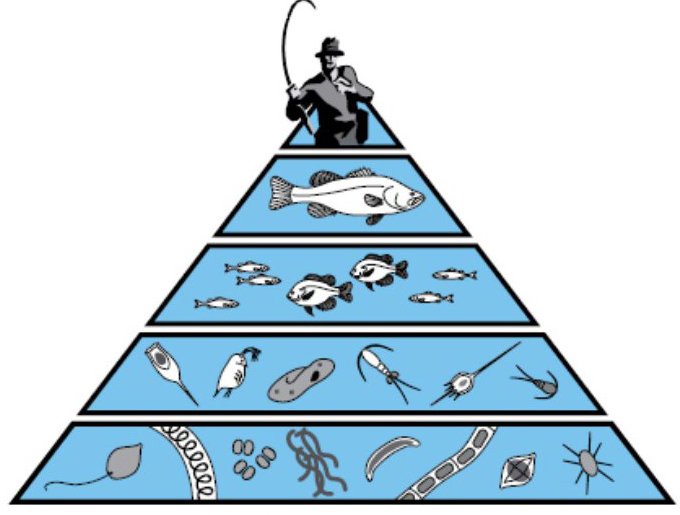
To obtain quality/trophy size largemouth bass, numbers of bass must be reduced with an abundance of forage present. The size your bass grow will max out based on length of growing season, genetics, habitat and available food. Some of these factors you cannot manipulate and some you can. Every waterbody has a carrying capacity which can be improved by improving water chemistry, habitat, harvest practices, natural forage, supplemental feeding and through supplemental stocking of forage fish.
Both bass forage (numbers and size) and current sizes of largemouth bass influence growth rates. Largemouth bass growth rates can be accelerated with the decreased numbers of bass and increased forage. One big bass needs to consume large numbers of small forage to grow, but exerts lots of energy to gather that food, so it needs even more of that food source. Larger bass exert less energy when the forage size is larger and fewer are required to obtain the same amount or more growth. Research has shown on average for a largemouth bass to gain one pound takes consuming 10-plus pounds of forage. This is important when comparing largemouth bass size to forage size present. These need to be addressed and properly matched. In other words, 10-pound bass do not get that big if they are only chasing and consuming 1-inch minnows or shad all the time. The 10-pound bass reaches that size when a steady diet of 6-8 inch and sometimes larger forage is consumed later in life. This is why electrofishing a lake is important, because all forage gaps can be identified and a proper management strategy developed addressing the entire fish assemblage and not just the top predator. Typically, a bream/panfish population with no large individuals present is the sign of a quality bass population and a quality bream population with lots of 8-10 inch or bigger bream is associated with a stunted largemouth bass population.
When creating or improving a largemouth bass diet, having multiple species in different size groups helps supply the forage required to grow trophy bass from birth. We always try to establish several species of forage for top predators. This can allow some forage species, once greatly reduced in numbers, to bounce back if the bass have started targeting something else. A forage base of minnows, bream, shad and shiners as opposed to one species is best. This ensures bass at different life stages and sizes can readily have food available. The more forage available at all life stages, the better growth rates with uninterrupted growth as they move from one forage size and/or species to the next. This translates into quicker growth and greater numbers of larger bass.
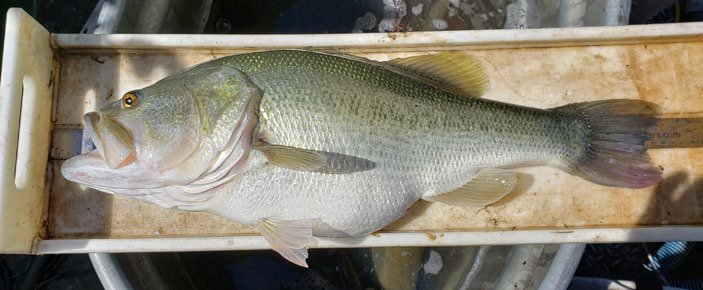
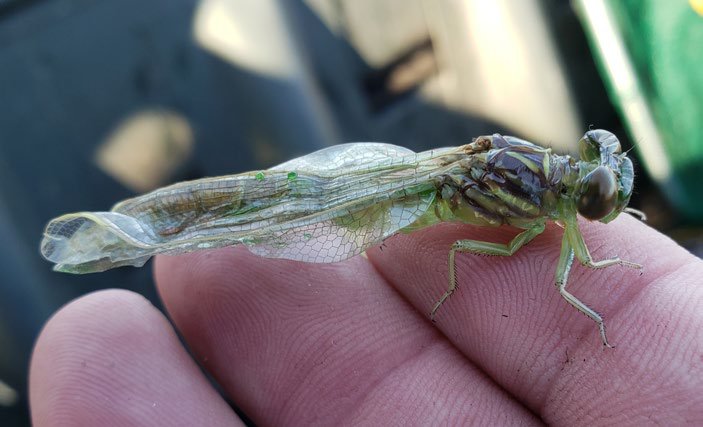
The largemouth bass is an opportunistic predator. If it fits in the mouth and the bass can catch it, the bass eats it. The first two weeks of life, largemouth bass fry will consume phytoplankton and zooplankton before moving on to tiny fish, insect larvae and insects. Once out of this stage they move on to various minnows, mosquitofish, grass shrimp, bream/panfish, golden shiners, shad (both threadfin and gizzard), Tilapia, trout, yellow perch, catfish/bullheads and crayfish. There are instances where largemouth bass have been documented with small bass (cannibalism) and crappie in their stomachs, but unless it’s a unique situation, bass and crappie are not in a largemouth bass’s regular diet nor would we normally recommend managing for or stocking those species as a forage for bass. We have seen in a large private waterbody in Central Florida where the bass are feeding regularly on armored catfish (brown hoplo) due to the lack of more desirable forage. Largemouth bass will also eat frogs, tadpoles, snakes, turtles, baby alligators and ducklings, but these are not a steady food source and will not be covered in this article as viable or practical forage that you can manipulate. These are consumed on occasion or during a short time period each year when the opportunity presents itself.
With most forage species we recommend stocking only native species that have the opportunity to survive and naturally reproduce. Sometimes these species occasionally need restocking in the future if the bass reduce their numbers to where they cannot repopulate. There are only a couple of species that can be stocked that are not native, knowing the individuals that are not consumed will perish due to water temperature changes, either rising or falling.
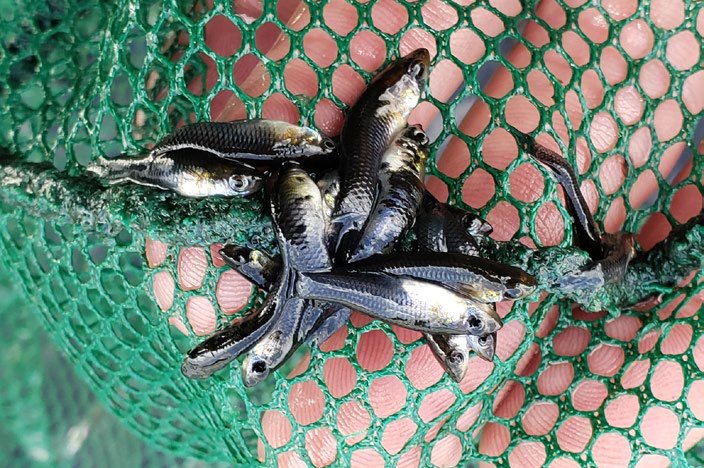
The most frequently stocked and most common largemouth bass forage is bream/panfish, and usually bluegill. Bluegills are prolific breeders and can sustain a population even under heavy predation from a quality largemouth bass population. Their growth rates and the lake’s carrying capacity can be increased through supplemental feeding. Once stocked, these species rarely need to be re-stocked, unless it is to jump start a stunted bass population with too many bass of one size, not growing into the next size class. Bluegill eat zooplankton, insect larvae, insects, grass shrimp, small crayfish, small fish and fish feed.
The second most frequently stocked largemouth bass forage is the threadfin shad. It requires fair water quality, but if you want them to live more than a few months, an algae bloom (green water) is required to keep them alive and to allow them to establish a self-sustaining population, which is the same for gizzard shad. They are filter feeders consuming phytoplankton their entire life no matter their size. If you stock threadfin shad into a clear lake they will eventually die from lack of food. If you understand they will need to be annually restocked and have the budget, they are an excellent forage for largemouth bass, black crappie and hybrid striped bass. Gizzard shad grow much slower in the North than in the South. In the South, gizzard shad can reach sizes beyond what a trophy bass can consume and become a problem quickly. If you have threadfin shad and gizzard shad 8-14 inches long, but not much larger, you have forage for all sizes of bass, including trophy (10-15 lbs) bass. I have observed 13-plus lbs largemouth bass with 15-inch long gizzard shad in their mouths. Big bass require big forage!
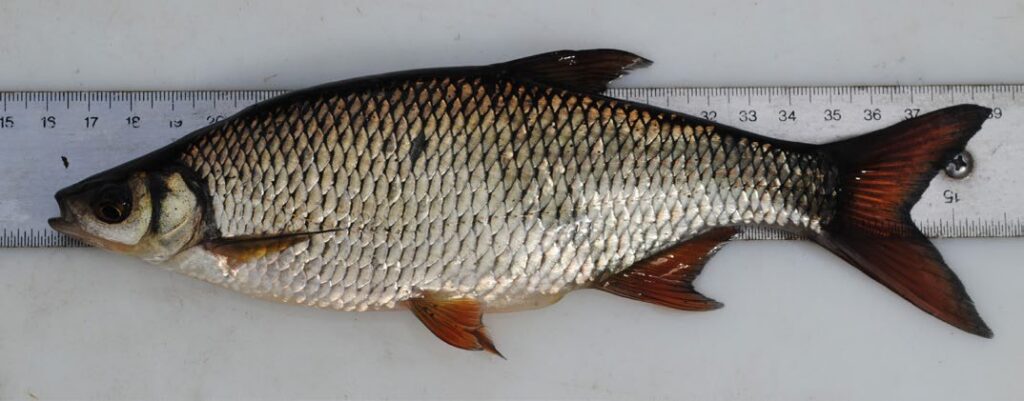
Another common self-sustaining forage is the golden shiner. Golden shiners get larger than threadfin shad and can be utilized by larger bass if a good shiner population exists. If established, golden shiners can feed both small and large bass, crappie and Hybrid striped bass if the populations remain balanced. The golden shiners consume zooplankton, insects, plants, algae, fish eggs and fish feed. They can feed at the surface, mid-water column or off the bottom and are both site and filter feeders.
Fathead minnows are a common starter forage stocked in a new pond situation for small largemouth bass or if large bream are present. Fathead minnows feed off the bottom, vegetation and woody debris eating algae, phytoplankton and zooplankton, including tiny crustaceans.
Tilapia stocking has become popular as a largemouth bass forage. High in protein, Tilapia eat detritus, insects, algae, other plant matter and fish feed. They also may consume fish eggs while bottom feeding. Tilapia are stocked in early spring, once water temperatures will remain above 55-60º F. They will grow and reproduce, until the following winter and die once water temperatures drop below 55º F. During this time, largemouth bass are on full feed and will consume many of them.
Yellow perch are also a high protein forage for largemouth bass and will not reach sizes too large for largemouth bass consumption before a spring die-off depending on how far south you are located. Yellow perch eat aquatic insects, crayfish, fish and fish feed. This may sound counterproductive competing with largemouth bass, however, the fish they eat are much smaller than the fish the bass are eating. Yellow perch will die off from warm water temperatures when it gets near 80º F.
Trout are another high protein winter forage for largemouth bass. Trout feed on insect larvae, insects, grass shrimp, small fish and fish feed. Trout will die off from warm water temperatures when it gets near 70º F in spring. Although largemouth bass feeding does slow down as temperatures decrease, they will feed throughout the winter and prior to trout and yellow perch dying off. Bass will consume many of them before switching over to another food source as they disappear, which gives time for resident forage to spawn and grow before becoming a target.
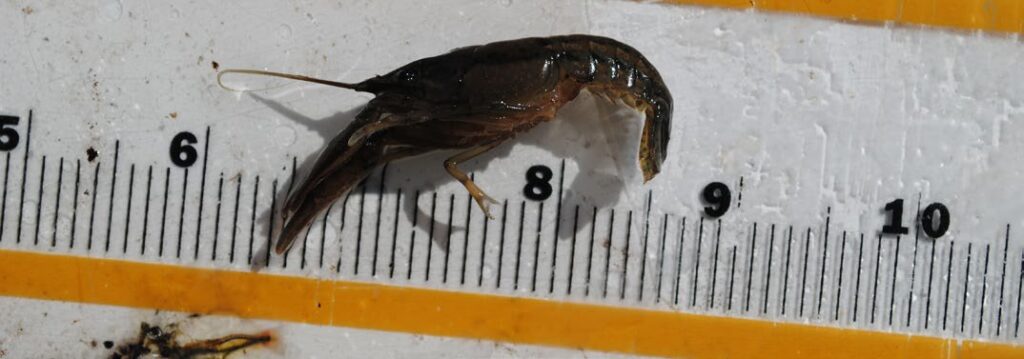
Stocking crayfish is another forage option in some areas to supplement a waterbody’s natural forage base to feed largemouth and smallmouth bass, channel catfish and hybrid striped bass. Crayfish mostly feed on decomposing animal matter or decayed leaves, and also algae, small invertebrates, small fish, and snails. Although native in most areas, their reproduction and survival rate in a quality largemouth bass fishery is poor and they do require restocking once the bass have knocked the numbers down to levels from which they cannot recover. Use only native crawfish and do not introduce species non-native to your area.
Crappie spend most of their adult life in open, deeper water, in schools, feeding on small schooling fish such as juvenile gizzard shad, threadfin shad and silversides (glass minnows). We have seen them thrive in a small waterbody on golden shiners, fathead minnows and other typical shoreline species, which does not fit their typical forage base criteria.
The most common forage for Hybrid striped bass are threadfin shad, small gizzard shad, and brook silversides (glass minnows). They will move close to shore and target bluegill, redear sunfish and golden shiners if offshore forage becomes scarce.
Channel catfish consume about anything including some plant material, insects, crayfish, mollusks, fish, small turtles, snakes, frogs, worms and fish feed. I have observed catfish stomachs full of filamentous algae, which contained high numbers of snails and mollusks. As they get larger, they shift their diet to fish such as bream and golden shiners.

There are many other species not discussed here that may be relevant in your particular waterbody to helping you achieve success managing your lake as pertaining to your specific goals. There are a few non-fish species listed here as forage, but most are items eaten as opportunities arise, not main staples of most management targeted fish species, so their diet preferences were not covered. Again, knowing something about aquatic ecosystems or your lake manager knowing some of these things helps you and/or them be more successful.
As you can see there are many options for improving the forage for many species in your waterbody. Multiple bass forage species and sizes are imperative to grow Trophy, Quality or BIG largemouth bass. Variable forage sizes are as important as the species present. The better your habitat, the more likely you are to have some of these species establish and naturally reproduce, eliminating or reducing future forage stockings. If a largemouth bass population becomes stunted, a combination of aggressive harvesting from the “bottle neck” size class combined with stocking a forage, the proper size, to jump start growth and move the bass or other predator fish you are managing into the next level should always be prescribed. Which species will work best and stocking rates for your particular waterbody should be discussed with your lake manager, county extension agent or local hatchery.