
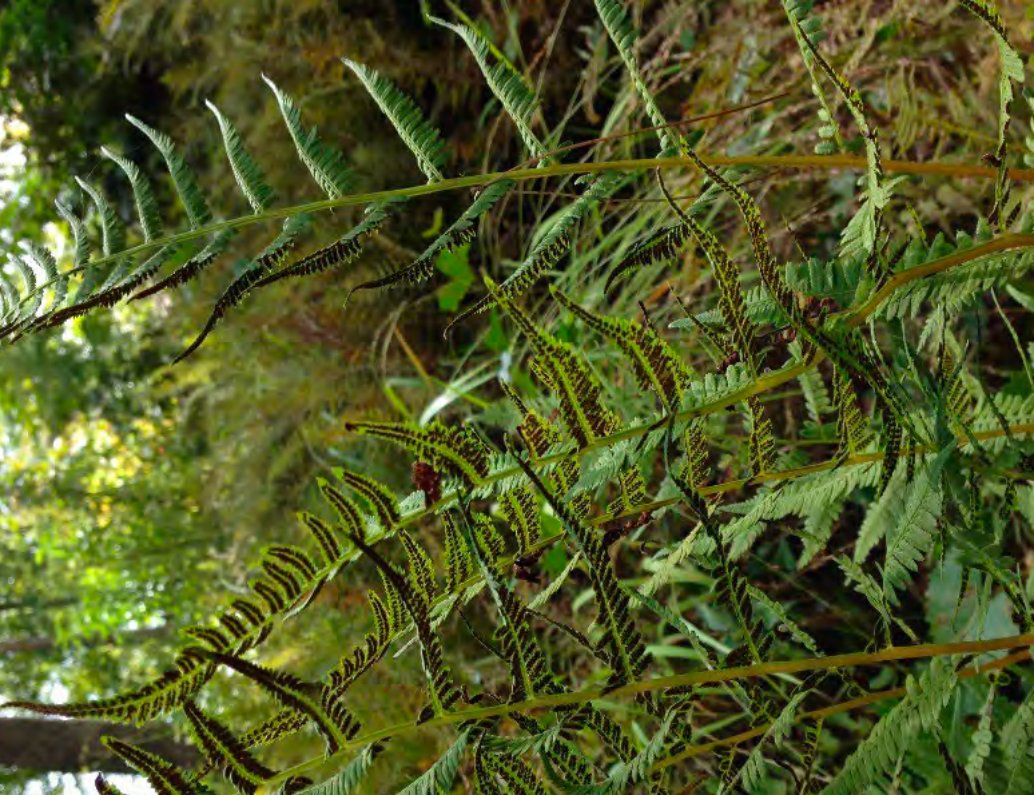
If you are reading this publication, it is likely you have some great memories of hunting or of just being outdoors in nature. If you are a bobwhite quail enthusiast for example, try to recall one of your favorite hunting moments in the field. Now visualize the scene in your mind and note your immediate surroundings. Looking back on that snapshot, I would expect many quail hunters would recall themselves standing amongst amber tufts of autumn bluestem grasses, or scratching through a patch of blackberry brambles, approaching their dogs. For the springtime turkey hunters, what does your scene look like? Are you listening from a pine ridge, surrounded by the new spring growth of lowbush blueberry? Or were you leaning against a tree in a bottom with your gun up on your knee, in a clump of lime-green cinnamon ferns whose large and elegant fronds had recently unfurled, as a spitting and drumming gobbler was drawing closer? Whatever the scene, without those natural plant communities in the picture, these memories just wouldn’t be the same. They help to create the wild and natural setting just like props on the stage of our favorite films.
The truth is the charismatic plants we see in our recollections of wild places most likely weren’t there just by chance, or solely for our aesthetic enjoyment. Wild plant communities develop in a particular location as a result of many interconnected physical, chemical, and biological factors. In other words, there is a science, and even a predictability, to their occurrence. And as we know, these plant communities are the building blocks of wildlife habitat. The native plant community of an area can even act as the primary driver of an entire ecosystem, although the specific vegetative communities are often surprisingly overlooked. When it comes to wildlife management however, whether we are talking about game species or critically rare wildlife species, there is probably no single more important consideration than the native plant composition of a site, a stand, or a landscape. Plants obviously provide food and structural cover needed by animals. But the seemingly endless services that wild plants render are very complex, and they can vary greatly depending on the species being affected. Furthermore, the composition, structure, abundance, and vigor of the community all can affect its usefulness to an animal species. For example, a single large common milkweed plant (Asclepias syriaca) might be adequate for a monarch butterfly larva to feed on before successfully molting, pupating, and morphing into an adult. However, a covey of bobwhites would typically need a more extensive botanical habitat, likely an entire stand of bluestem grasses mixed with legumes, to sustain their cover and nutritional requirements over a season. And a healthy half-acre patch of densely occurring beggarweed (Desmodium sp.) in one location may very well offer bobwhites and white-tailed deer more nutritional value than 10 acres of scattered lower-quality plant species. If the beggarweed stand should become heavily infested with an exotic sod-forming grass species like Bahia or Bermuda, however, the cast seeds may become almost completely inaccessible to quail, thus negating the potential value of the resource. These situational examples illustrate the matrix of how species composition, structure, abundance, and vigor are interconnected with regards to creating habitat.
Plants in Their Place
Just as natural plant communities can influence the presence and abundance of wildlife species in an ecosystem, soils will almost always dictate the assemblage of the plant life in a particular area. As we have discussed in previous articles, geology is one of the most fundamental factors at play regarding the vegetative capacity and botanical expression of a piece of ground. Huge differences can be found in ecosystems along drastic topographical gradients. The forests (or lack thereof) and vegetation in high mountain regions for instance is typically much different than those found at sea level in the same general regions. While altitude caused by topography is an important factor, the chemical and physical attributes of soils can also shape native plant communities, and this is the aspect we will focus on further. Soil type will determine whether a particular plant species has the ability to grow and reproduce on a particular site. Therefore, some plants are very predicable in the locations and sites they are found. Just as in wild animals, many plants are habitat generalists, and they can tolerate a range of soil particle sizes (which in turn can affect moisture and nutrient availability), mineral content, and pH levels. A common southern native plant like little bluestem (Schizachyrium scoparium) for example, can happily thrive on the poor, acidic clay soils of a dry ridge, but it is also commonly found growing in fertilized loamy pastures among exotic hay grasses. It can even persist along the open sandy streambank of a river, provided it receives adequate sunshine. Little bluestem commonly grows alongside a long list of companion plants and can even be seemingly random in its occurrence. As long as the site is sunny, and not too wet, you might expect to see this species growing there. Another southern habitat generalist plant is black-eyed Susan (Rudbeckia hirta). Again, it is commonly seen in all the open to semi-open habitats mentioned above. Although these species prefer acidic soils, they can and do sometimes occur in neutral and slightly alkaline soils. You can find both of these species randomly along the roadside from Florida to Texas, transecting dozens of soil types. Plant specialists, on the other hand, are often much more restricted in their soil habitat requirements. It stands to reason they are also sometimes rare across the landscape. The white-fringeless orchid (Platanthera integrilabia), for example, is a federally threatened plant species, also native to the Southeast, that occurs in wet, acidic environments (bogs, seeps, springs and stream sides). These specific micro-site habitats typically limit its abundance and distribution on the landscape. It can tolerate sun and shade, but in the wild it is much more limited to certain acidic soil and moisture requirements, and it is predictably found with a few predictable companion plant species like netted chain fern (Woodwardia areolata) and Sphagnum mosses (Sphagnum sp.).

In addition to the mineral properties of the soil, organic composition is also important to many plant species. Soils with high organic content are sometimes referred to as being “rich”, and these sites often contain early and ephemeral blooming species like the yellow trout lily (Erythronium americanum). This species can be found across most of the eastern US, outside of the Coastal Plain, in moist deciduous forests growing among several other companion species depending on the location and ecoregion including spring beauty (Claytonia virginica), cut-leaf toothwort (Dentaria laciniata), wild geranium (Geranium maculatum), Dutchman’s breeches (Dicentra cucullaria), false rue anemone (Enemion biternatum), wild blue phlox (Phlox divaricata), some species of wake-robins (Trillium sp.), and mayapple (Podophyllum peltatum). Members of this community together often form a green carpet of lush growth each spring. The trout lily itself has distinct leathery mottled green leaves that emerge from the ground (typically February) prior to the leaves of the canopy trees overhead, and it usually blooms in March in most areas of its range, with a single yellow flower per plant. It is almost always associated with these moist soils with high humus content and it can form colonies ranging from a few, to a few thousand, plants. These colonies spread clonally by runners and can be well over a hundred years old. The trout lily colony only blooms for a week or two before setting its fruit and seed, and then withering away to remain dormant until the following spring. In this short time however, it serves as an important pollen source for several insect species. One species of solitary miner bee (called the trout-lily mining bee; Andrena erythronii) depends heavily on this plant for its survival; collecting and feeding the pollen to its larvae in underground nests. Like many other members of the Liliaceae family, the trout lily also forms an underground corm or bulb that is high in starch content, and this resource is also utilized by squirrels, chipmunks, and other wildlife as a food source. From this example alone, one can see how a single, small, short-lived wildflower can affect the links of the ecosystem chain.

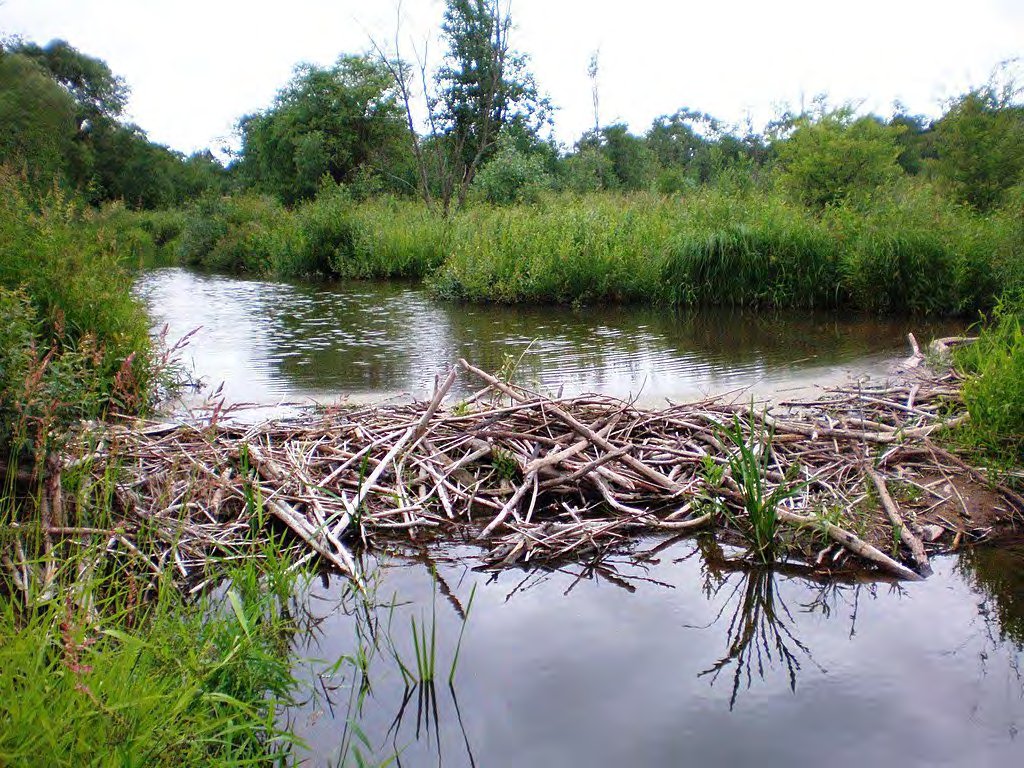
Soil moisture alone can influence plant communities, regardless of richness, and we almost always see this influence in saturated habitats like open swamp or at the edges of ponds. In fact, a big part of wetland delineation is performed by looking at the plant life on a particular a site. If there are wetland obligate species like cattails (Typha latifolia), rushes (Juncus sp.), sedges (Carex sp. Scirpus sp. and Cyperus sp.) present at a site, you can automatically predict that the soils there are saturated with water, at least for a large percentage of the year. Besides these wetland herbaceous examples, companion wetland shrubs in the Southeast typically include hazel alder (Alnus serrulata) and buttonbush (Cephalanthus occidentalis), as well as black willow (Salix nigra). Beaver dams, and the resulting hydrological changes associated with them, commonly result in the proliferation of wetland plant communities.
At the other end of the spectrum, we see plant communities that are perfectly happy on dry, poor soils where there is little to no organic content in the soil. Dry (xeric) sites like ridgetops or the upper south-facing slopes of the piedmont or ridge and valley ecoregions are generally adapted to periodic fire, since they retain so little moisture. This fire influence would often leave only the toughest, flame-resistant tree species (like longleaf pine and blackjack oak) to stand on these sites. But it would also naturally affect the structure of the forest, leaving gaps and sunny openings in the stand, where grasses and herbaceous plant communities could develop. As we stated earlier, native bunch grasses like little bluestem thrive in these situations. Companion plants at these sites often include: broomsedge bluestem (Andropogon virginicus), (Andropogon gyrans), lowbush and highbush blueberry (Vaccinium pallidum and V. arboretum), Curtiss’ milkwort (Polygala curtissii), narrowleaf silkgrass (Pityopsis graminifolia), and many other asters and composites. These plants have adapted to the low fertility and seemingly harsh conditions in these dry soils and can thrive here when others may die in a few weeks. Even farther toward the extreme are those plant communities adapted to maritime and beach dune ecosystems and even deserts. Many of these plants adopt the strategy of storing water in thick succulent leaves or stems, which are almost always coated in some kind of wax.
Open Rare Plant Communities
Sites with unique combinations of soil and hydrologic features are often occupied by one or more uncommon plant species. These special sites are referred to as rare communities. In some cases, it is the presence of the plant species itself that makes these areas significant, and in other locations it is the abundance or structure of the plants that creates a unique habitat. Researchers in the fields of botany and ecology often conduct investigations in these unique areas, and fascinating discoveries have been made regarding the physiological adaptations many plants possess. An understanding of these intricate relationships between soils, plants, and animals has significance, partly because we as humans also depend heavily on plants for our own food and cover, as well as medicine and other essential needs. There are literally hundreds of unique documented plant community types. We will focus on a few for the purposes of this article.
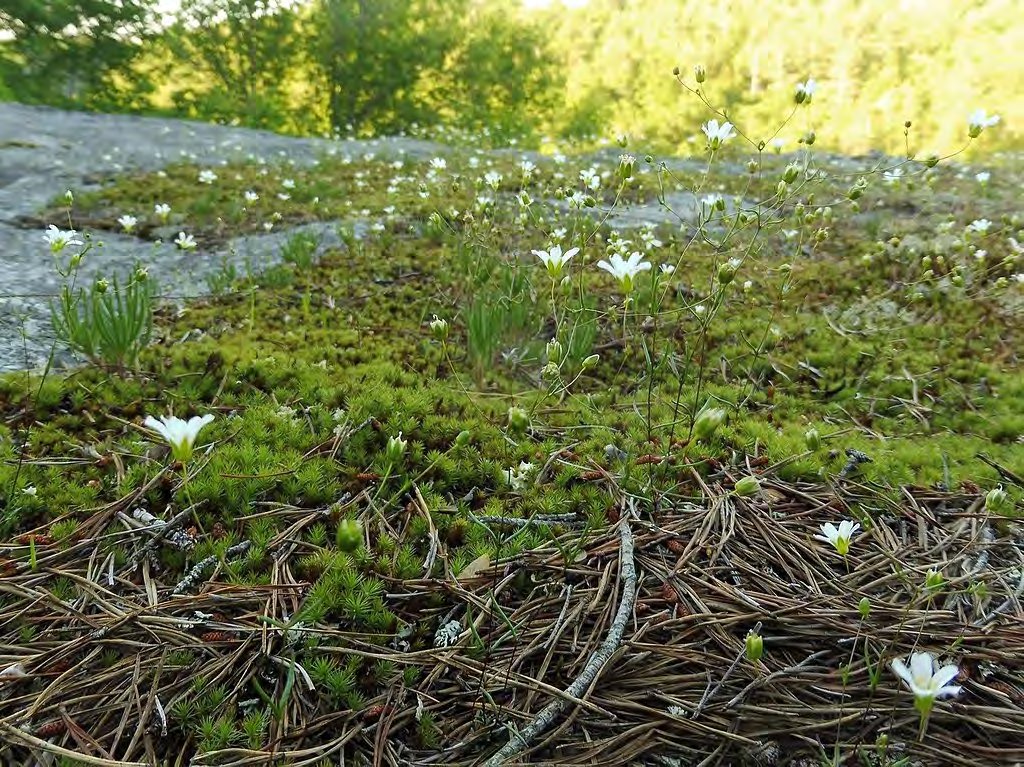
Glades, also known as barrens, are one broad example of a rare plant community type. Glades are essentially sites where the local soils are very shallow due to bedrock rising very near the surface of the ground. Glades are typically associated with areas of rock outcroppings where the soil is completely absent, also known as balds. This scarcity of soil limits most large trees and many other types of deep-rooting plants. Glades can be very wet at certain times of the year, but also extremely droughty, so the plants that thrive there must be able to cope with these extreme changes through their life cycles. Glade soils are also usually heavily influenced by the parent rock material of the location since it is so close to the surface, and therefore glade soils can vary widely in their pH range. Acidic glades are often associated with sandstone, iron, or other acidic minerals, while alkaline glades are associated with parent material like limestone or dolomite bedrocks. Glade soil composition can also be that of igneous, shale and chert parent materials. In the eastern US, most basic glades usually have Eastern redcedar growing around the perimeter. Some examples of alkaline glade plant community species include gladecresses (Leavenworthia sp.), fragrant sumac (Rhus aromatica), big bluestem (Andropogon gerardii), Schizachyrium scoparium, grama grasses (Bouteloua sp.), whorled milkweed (Asclepias verticillata), wild bergamot (Monarda fistulosa), and roundleaf groundsel (Packera obovata). A sandstone glade in the South might contain other species like Small’s stonecrop (Diamorpha smallii), Appalachian sandplant (Minuartia glabra), and Nuttall’s rayless goldenrod (Bigeloiea nuttallii).
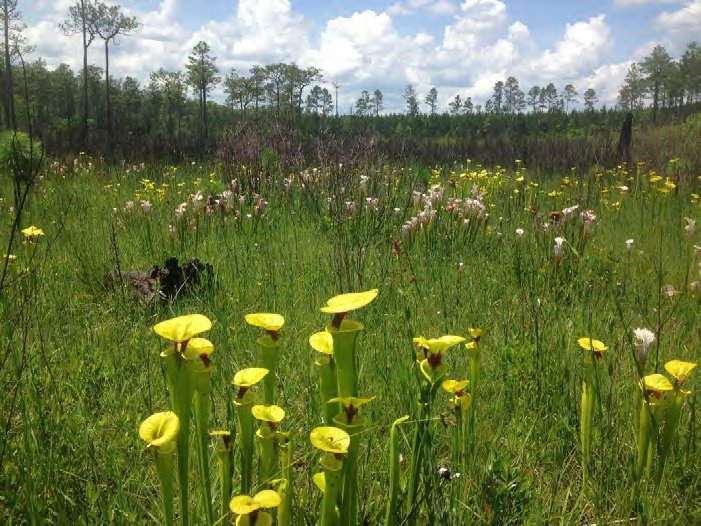
Bogs are another type of rare community. Bog soils are very wet, acidic, and low in organic nutrients. Bogs can host an extensive list of weird and uncommon plants, and they may occur in open, fire-maintained pine wetlands, at seeps, and along drains. The hostile, low fertility soils make it hard for most plants to survive here but bog plants have several strategies for thriving in these habitats. Probably the most well-known group from this community is the pitcher plant, genus (Sarracenia sp.) Most pitchers have large showy modified leaves emerging from the wet soil (growing from underground rhizomes) that form a hollow tube or “pitcher”. Each pitcher has a nectar-producing hood that attracts insects. The waxy inner tube is slippery and has downward pointing hairs that direct any insects that enter toward the bottom of the leaf. Enzymes then digest the trapped prey, and its nitrogen-rich proteins are broken down and utilized by the plant. Bogs can host several other plant species in addition to pitchers, each with its own adaptations to allow it to persist in such a nutrient-poor environment. Dewthreads (Drosera filiformis) and other sundews (Drosera sp.) are typical bog associates, and they also trap small insects with sticky sap-covered hairs on the leaves and stems. Butterworts (Pinguicula sp.) use a similar strategy and flat sticky glandular leaves. Perhaps the most curious-looking carnivorous bog plant is the Venus flytrap (Dionaea muscipula), which is native to the bogs of North and South Carolina. Other species like hatpins (Eriocaulon sp.), bog cheetos (Polygala lutea), and bog buttons (Lachnocaulon sp.) don’t trap insects, but they are physiologically adapted to cope with the conditions in peaty bogs and seeps of the coastal plain soils.
The open sunny conditions created in dry, fire-maintained pine woodlands and savannahs can create botanical assemblages that may on occasion qualify as rare plant communities, relatively speaking. These diverse grassy understories that we might think of in only the most prime bobwhite quail or red-cockaded woodpecker habitats were extremely common a few hundred years ago due to the abundance and frequency of wildfire on the landscape. However, now they occupy such a small percent of the southern forests that many on this sun-loving herbaceous community list are now quite rare. One example is the federally endangered American chaffseed (Schwalbea americana). According to the USFWS Five-year Review for this species (2019), “…only three states (NC, SC, and GA) contain more than five populations.” Schwalbea is a somewhat unassuming plant with pubescent (fuzzy) leaves and stems. It produces deep maroon flowers in spring into mid-summer depending on the location. It is a hemi-parasite that taps into the roots of other herbaceous plants including asters (Symphyotrichum sp., Aster sp.), composites (Eupatorium sp.), goldenrods (Solidago sp.), hawkweed (Hieracium venosum), and others. The diversity in these open, fire influenced systems can be incredible. According to LandScope America, “…more than 40 species have been documented in a single square meter, and as many as 170 species in 1000 square meters” in some longleaf pine stand understories.
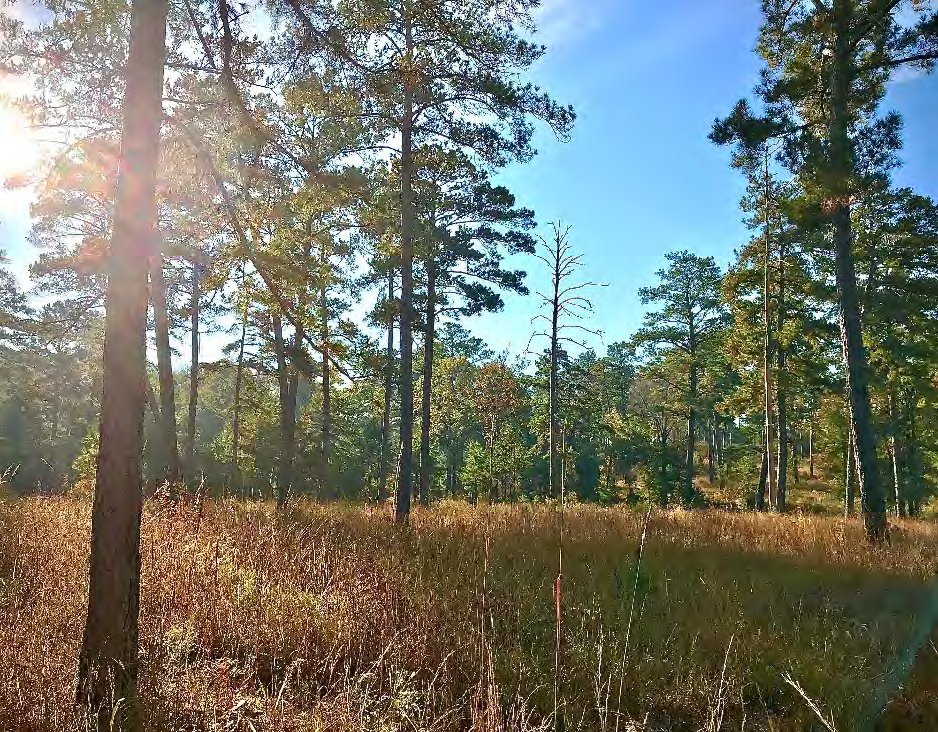
Plant communities do not have to be uncommon, or contain rare or endangered plant species, to be important. Native understories of open pine stands, consisting only of common species of bunchgrasses, legumes, and forbs, can provide excellent habitat for many of our game and non-game wildlife species. But what is the “perfect” native plant community for say, bobwhite quail, for example? I would suggest that that is probably very difficult to define, but probably very easy to know when you see it. Actually, there are so many surrogate species that play similar functional roles that quail habitat can essentially be close to perfect in many combinations and with many different plant species. A number of tall bunchgrasses (including any of the bluestems named previously, Indiangrass (Sorghastrum sp.), purpletop (Tridens sp.), wiregrass (Aristida sp.) and some others), will provide adequate cover for nesting, brood-rearing, and foraging, all while not hindering access to seeds and bare ground below. On the other hand, some composites and forbs can serve the same cover purpose if they allow for protection and access to the ground. For tough loafing cover many species of spreading shrubs, including sumac (Rhus sp.). Chickasaw plum (Prunus angustifolia sp.), or even yaupon (Ilex vomitoria), can provide this habitat function. However, for bobwhite habitat to be perfect, most biologists would argue that legumes, or at least a solid good surrogate plant, is required for high quality seed production in the stand. This will be critical in the winter months. But there is a long list of species that can adequately serve this purpose, again most of them probably being legumes (like partridge pea (Chamaecrista fasciculata), Desmodiums, and native Lespedezas,). Excellent bobwhite brood-rearing habitat is essentially produced by lush, soft-tissued herbaceous plants that attract abundant small soft-bodied insects. These insects need to be both plentiful and low to the ground (so the seasonal timing of the growth is important), and the chicks need to be able to move through the plants quickly to catch their prey, (this involves the habitat or structure of the vegetation), all while remaining hidden from avian predators above. Some plants are better at providing these elements than others. Annual pioneer plants like partridge pea, ragweed (Ambosia), and poor Joe (Diodia sp.) are known for their ability to serve as good brood-rearing bobwhite habitat. Again, it is the arrangement, proximity, and structure of an open piney woods plant community, that makes great bobwhite habitat, just as much as it is the species of plants in the community. Thankfully for us managers, periodic fire can usually sort all of this out naturally.
Cane brakes (Arundinaria gigantea) are just one more example of a fire-influenced plant community that historically occurred in vast expanses on the landscapes of the Southeast. Three subspecies of cane or bamboo are native to the US, and they are river cane (Arundinaria gigantea), switch cane (A. tecta), and hill cane (A. appalachiana). Early naturalists like William Bartram documented and described mile after mile of almost impenetrable stands of cane in some parts of the region. In the late 1700’s he describes some of them as an “…endless wilderness of canes”, also noting that some canes were as “…thick as a man’s arm”. Fires maintained these stands by killing off the tree seedlings and saplings that would otherwise shade the canes out. Some cane brakes still exist but they are typically much smaller and dissected than they once were, often occurring in slender patches along streams. Native canes spread clonally by rhizomes and flower only rarely, maybe even once in a hundred years. Arundinaria generally dies after flowering.
One of the biggest threats to open plant communities is encroachment. This phenomenon can occur in the form of woody encroachment by larger trees like redcedar and hardwoods. These woody species shade out the herbaceous plant species and can even cause their extirpation over time. Fire is obviously one of the natural disturbance elements that keeps encroachment in check, and that is why it is such an important management tool. Encroachment in rare plant communities can also be caused by exotic invasive plants that are able to out compete native plants in their own niches. We know some exotic tree species like tallowtree (Triadica sebifera) and Callery pear (Pyrus calleryana) can quickly shade out herbaceous plant communities, just like kudzu can. And as we have discussed previously, even the presence of common lawn and pasture grasses like Fescue, Bahia, or Bermuda, can drastically alter a native plant community. Most often the presence and abundance of exotics are related to the amount of disturbance that has occurred over the years on a piece of ground. Look at any typical city park or established yard in the springtime. You will almost always see the same few exotic companions coming in amongst the lawn grasses. They include henbit (Lamium amplexicaule), dandelions (Taraxacum sp.) black medic (Medicago lupulina), common plantain (Plantago sp.) and several others, and all are most likely there because it is a highly disturbed site. Some plants even have the ability to chemically inhibit the germination and growth of other species. Chinese privet, for example, has been shown to exhibit this trait.
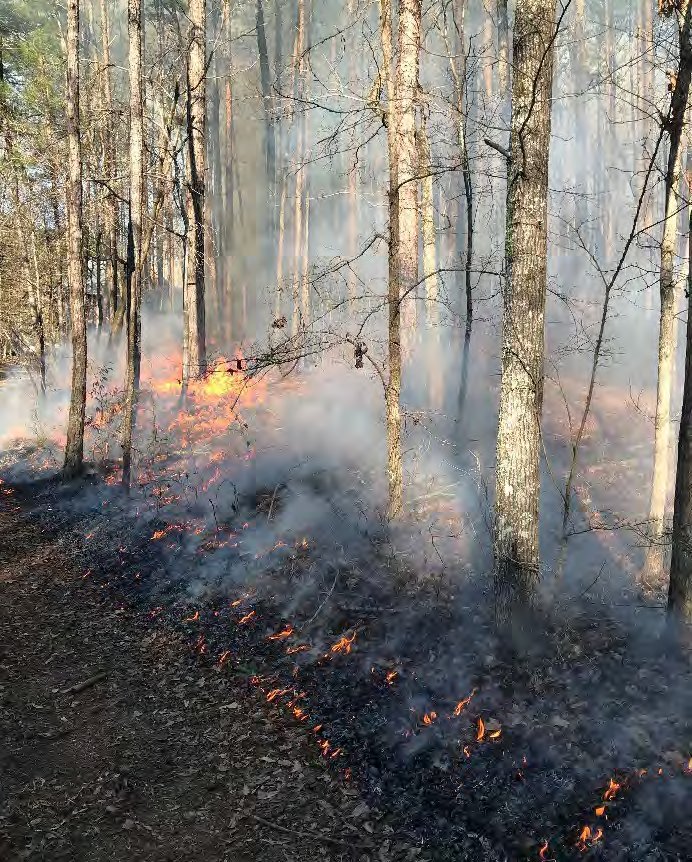
In summary, wild plant communities are the fundamental components of wildlife habitat. The interactions between plants and their local environments can be complex. However, the physical and chemical properties of a soil, as well as the hydrology of a location, can allow us to predict which species are likely to occur at a site. Natural disturbance regimes like fire can also be very important in determining the diversity and composition of a plant community. By understanding the interconnectivity between these wild plant communities and other organisms, we can be better wildlife managers and stewards of the lands we manage.