

Editor’s Note: Last issue we forgot to credit our good friend Tes Jolly, owner of Jolly’s Outdoor Visions, with the pictures in our lead article, “Create Your Own Turkey Haven”, written by her husband, Ron. Tes has provided us with many of our cover photos over the years and we regret the omission. We look forward to many more years working with her. All photos in the following article were provided to us by Tes as well.
The evolution of deer management and deer hunting during my lifetime is nothing short of revolutionary. Seventy years ago many thought whitetail deer might soon be a thing of the past. However, including all the sub species, there are an estimated 30 million whitetails roaming their natural range today.
Whitetail deer are America’s most sought after game animal. This is no accident. Intensive management and restoration efforts have brought these magnificent creatures back from the brink. In fact, in many areas, whitetail deer have reached or exceeded the carrying capacity of the land, creating new challenges for the deer and those who work for their benefit.
A little known fact among the country’s non-hunting public is that hunters are largely responsible for successes in the comeback of the whitetail deer and other wildlife species. Self-imposed legislation such as the Pittman Robertson Act has generated billions of dollars in excise taxes from firearms, ammunition, archery equipment and arrow components that are deposited into the Wildlife Restoration Trust. These funds, administered by the U. S. Fish and Wildlife Service, are apportioned and distributed to state wildlife agencies for conservation efforts such as for whitetail deer, hunter’s education, and shooting projects and programs. This is the skeleton on which modern game management is built, the backbone of funding that makes wildlife management possible, and the whitetail deer America’s most popular big game animal.
Hunters New and Old
I’ve hunted whitetail deer longer than I care to admit. Over the decades I have witnessed the steady progression in deer management practices and hunting techniques. It is astonishing how far we’ve come!
Much more is known about deer biology than ever. State wildlife agencies, universities and private consultants have led the way. Organizations such as The Quality Deer Management Association have blazed trails that lead hunters and deer managers to conclusions and strategies that greatly benefit deer and hunters alike.
When I started hunting deer in the 1960’s there were laws in place to protect deer herds. My, how those laws have changed! The average hunter today not only has better biological information at his disposal, he has infinitely better equipment to locate, hunt and harvest deer.
Back in the day, boots and binoculars were the main tools we used in the field scouting tracks, rubs, droppings, scrapes and deer sightings. Today’s hunters use tools including state-of-the-art high resolution trail cameras, remote surveillance apps, aerial topography, scent control products, attractants, mineral supplements, calls, cell phone GPS apps and manipulated food sources like food plots to put themselves in the best place to harvest deer.
Back in the day, any legal buck was the prize and shooting a doe was a big “No-No!” Now, the prize is a “mature” buck and shooting does is an accepted common practice for the good of the herd.
This shift in perception of successful deer hunting leads to the question: “Are we better off today?” The answer is a resounding, YES! We have more deer to hunt and better information on which to base our harvest decisions and goals. Manufacturers offer a veritable endless supply of cultivated forage and mineral supplement products designed to improve deer herds, deer quality and hunter success. Food plots often top the list in many modern deer forage management programs objectives. However, the importance to deer of seasonal native forage such as acorns from oaks should be remembered and included in any deer management efforts on property where they grow.
The basic elements for a successful deer hunt are: know where the deer are bedding, know what they are eating, play the wind and shoot them somewhere along that line of travel. Many hunters depend on food plots to attract the deer they want to harvest and do not realize just how important acorns are to whitetail deer. When acorns are abundant there’s usually a noticeable reduction of deer activity in food plots. You may have to give up your cozy shooting house and hunt from climbing or hang-on treestands in the timber but the rewards will be worth the effort.
Acorn Facts
Typically, in any given year there will be one species of oaks that produces well. One year the red oaks will do well and the white oaks will not. Another year the white oaks flourish and the red oaks are weak in production. Water oaks in the Black Belt region of Alabama produce to some extent annually.
One exception is a year of extreme drought. It is widely believed that severe drought is a trigger mechanism for exceptional acorn production. Many biologists believe drought stress causes the desperate production of acorns as a propagation mechanism. Another explanation is in early spring when oak trees are blooming and pollinating the lack of rainfall allows pollen to cover more blooms that grow into acorns.
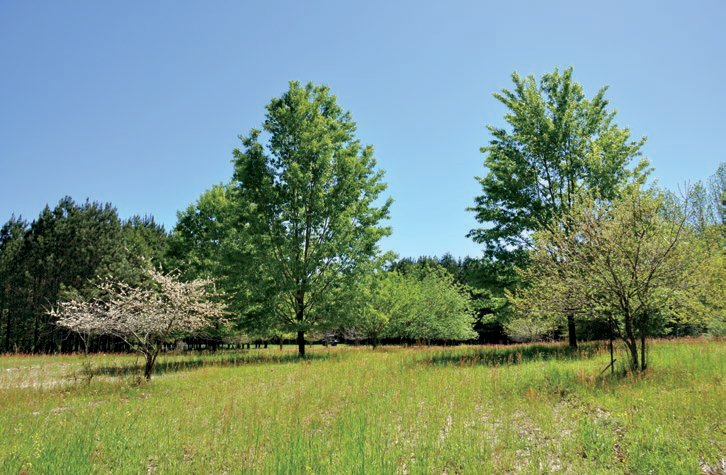
Even in normal rainfall years, acorns can be scarce the year following a heavy crop. White oaks generally produce a good mast crop every other year and a heavy one every third year. Red oaks, pin oaks, swamp chestnut oaks, and others typically produce a good crop every other year.
If severe drought persists over two years it is possible that oaks produce back-to-back heavy crops. In order to propagate the species under stressed conditions, trees put every resource towards mast production. When mature oaks that were stressed the previous year by drought have to endure that situation again, there could be a die-off. Some trees may not recover from two years of drought stress and all-out mast production effort.
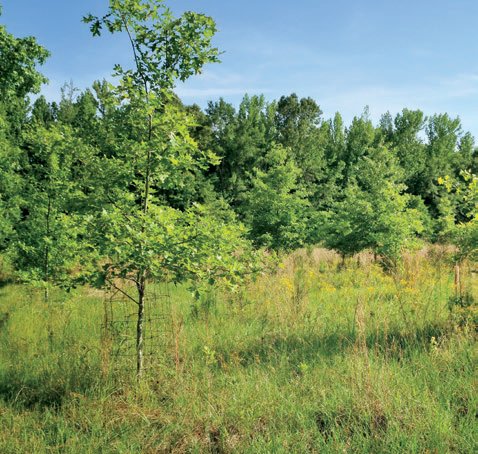
Acorns are low in protein content (6%), but high in carbohydrates (42%), and fats (52%). They are easily digested, their nutrients readily absorbed, and they are processed and passed through a deer’s body quickly. Because deer digest acorns so easily they eat lots of them each day and the sheer numbers eaten by individual deer provide the protein needed for healthy deer.
Survey native oaks throughout the year and mark the best producing ones, noting variances from normal yearly rainfall amounts and if production affected. When hunting and scouting, note which trees produce acorns that deer prefer. Record the acorn drop date range of individual trees. Much of this information can be entered into cell phone apps designed for deer management and hunting. These bits of information are invaluable tools when scouting, choosing stand placement and hunting deer throughout the long southern deer hunting season.
All Acorns Are Not Equal
Whitetail deer are opportunists. Easy food is always preferred. Acorns, when abundant, are both. They are easy for deer to find and a preferred food source. In fact acorns are THE preferred food source of whitetail deer.
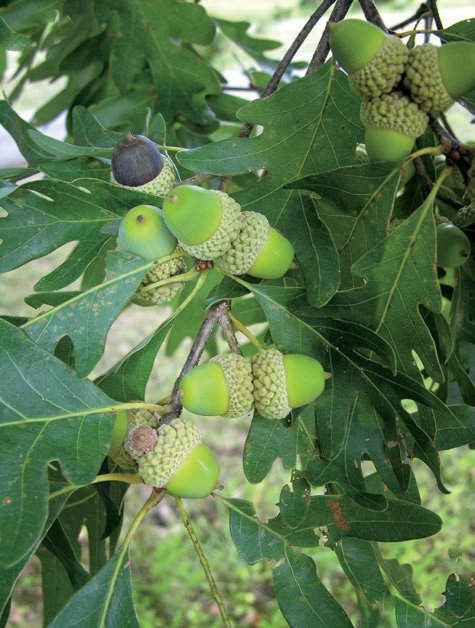
Just because you find acorns on the ground does not necessarily mean you have found a deer hotspot. Whitetail deer prefer certain varieties of acorns over others.
All acorns contain tannic acid. Deer prefer acorns with the least amount. White oak acorns contain lower levels of tannic acid and are a deer’s number one choice. Next in preference is the pin oak or water oak, followed by red oaks, black oaks, burr oaks and finally, live oaks.
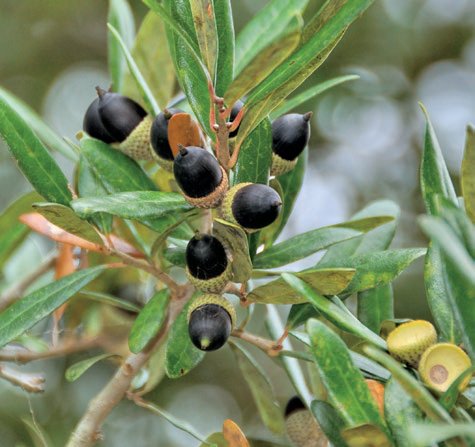
As fall season progresses deer consume white oaks, then they move on to less desirable varieties. In areas where there are no white oaks deer will key on acorns available with the least amount of tannic acid. When scouting, look for nuts and caps on the ground. If deer are feeding on acorns there will be numerous droppings and tracks on the ground. If you see rubs and scrapes nearby, you’re in business.
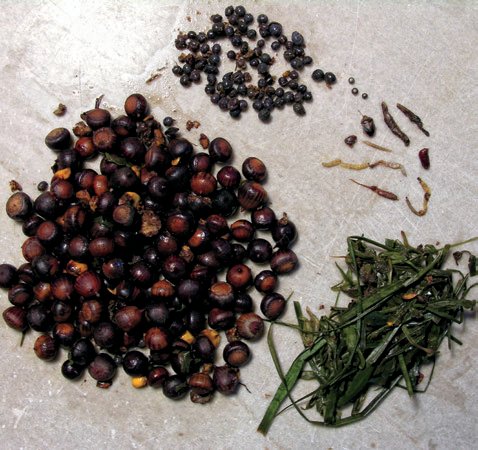
Another advantage acorns offer deer is that they fall where the deer live. Deer, especially mature bucks, are hesitant to enter open places. That is why most mature bucks are killed on green fields at last light.
Deer feel comfortable and less exposed in timber and may feed on acorns at any time of day. By hunting deer around acorn producing oaks your productive hunting time is extended.
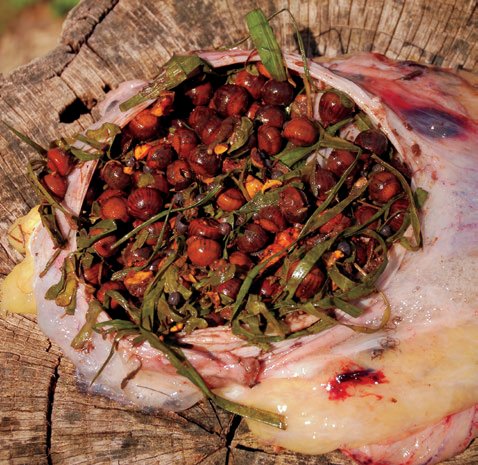
Allen Deese, nursery and marketing manager for The Wildlife Group is also an accomplished deer hunter who knows the importance of acorns to deer. “Whitetail deer, especially mature bucks, are very sensitive to hunting pressure”, says Deese. “Food plots may offer the easiest food and they may even be the most nutritious food available on your land, but pressure can cause deer to key on food sources away from the pressure. If acorns are available, deer, especially mature bucks, will key on food away from the pressure. Mature bucks will even target less desirable acorns to avoid pressure. Many times I find bucks feeding on water oaks even though there are white oaks producing in the area. This is because bucks adapt to hunting pressure.”
Diversity is the Name of the Game
Even though white oak acorns are more palatable and preferred by deer there are some drawbacks.
“Deer love white oak acorns. There is no question about that,” according to Deese, “but other acorn species are very important to deer.”
“White oaks produce a bumper crop every third, sometimes fourth year. They fall early, normally in November, and are some of the first acorns to hit the ground. Problem is, white oak acorns have what I call a short “shelf life”. By that I mean they don’t last long once on the ground. They germinate quickly or rot and don’t last late into winter. Red oak varieties fall later and are slow to germinate, often lasting well into spring.”
This longer “shelf life” provides a food source for deer through the hard months when food sources dwindle.
Long Term Investment
Naturally occurring oak timber is desirable and adds to the value of any property. Planting oak trees is a good way to enhance the value of your land as well as provide a desirable food source for wildlife. Oaks are long-lived trees that increase in value with age. Problem is, most oaks do not produce fruit until they are over twenty years old.
Allen Deese says, “Planting oak trees has many benefits but this is a long term investment. You have to realize it may be decades before those trees ever produce an acorn.”
“There are, however, some varieties you can plant that produce acorns in as few as 5-8 years. Chinkapin and live oaks are varieties that produce acorns at an early age. These trees will amaze you with the number of acorns they produce just a few years after planting.”
“One key is protecting the seedlings during the first few years. Deer love to browse newly planted trees and this can hinder tree growth and fruit production. If you use a grow tube or exclosure ring to protect any newly planted tree you will be amazed at the growth,” said Deese. “Another key is matching trees to preferred soil types. Trees that require sandy, well-drained soil will not do well in low, wet areas. Choosing trees suitable to your soil type will pay big dividends.”
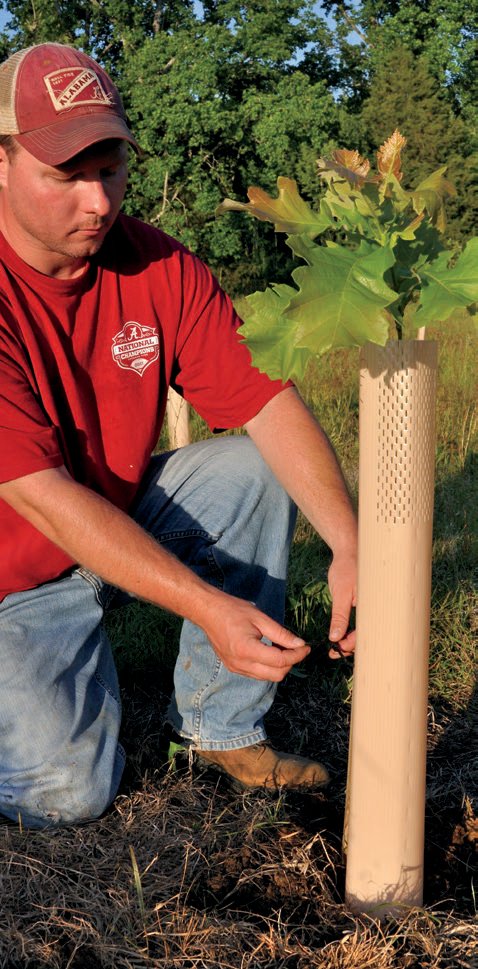
“Chinkapin oaks are a white oak variety and very appealing to wildlife. Live oaks are under rated for several reasons. Live oaks produce a crop almost every year beginning by seven to ten years after planting. They may not be as desirable as white oak varieties because of tannic acid content but they fall later than white oaks and last late into winter once on the ground.”
“Trust me,” says Deese. “Live oaks are a great deer food source for late season.”
Help Your Trees
Allen Deese offers these tips to make oak trees the best they can be:
- Make sure you match oak trees to their preferred soil type.
- Use grow tubes to protect trees and enhance gowth.
- Fertilize young trees to promote growth. Use 10-10-10 Super Rainbow fertilizer for oak trees. This type contains equal amounts of N, P and K in each granule ensuring even distribution of essential elements.
- Don’t over-fertilize acorn producing trees. This often puts trees in a vegetative growth state and causes them to shed the acorn crop.
- Mow or clear under-producing trees to eliminate competition for nutrients.
Close
Oak trees are a valuable addition to any property. Whether naturally occurring or planted, oaks produce a highly desirable, reliable food source crucial to wildlife. Oak trees are esthetically pleasing and sought by timber companies for hardwood lumber.
Oak trees are common throughout the range of whitetail deer and some variety of oak produces almost every year. When acorns are on the ground, rest assured whitetails will be there to take advantage of the bounty. Whether you hunt the mid-west, the Deep South or anywhere in between, know that deer depend on acorns as a vital food source.
If you know and understand the biology of oak trees and understand the importance of acorns to whitetail deer you will be able to put yourself in a better situation when you hunt these magnificent animals.
This fall, when your food plots are not producing sightings of deer you know are there, leave your comfortable shooting house and move into the timber where acorns are on the ground. Do the legwork and hone in on the right area and you will discover just how important acorns are to whitetail deer.