
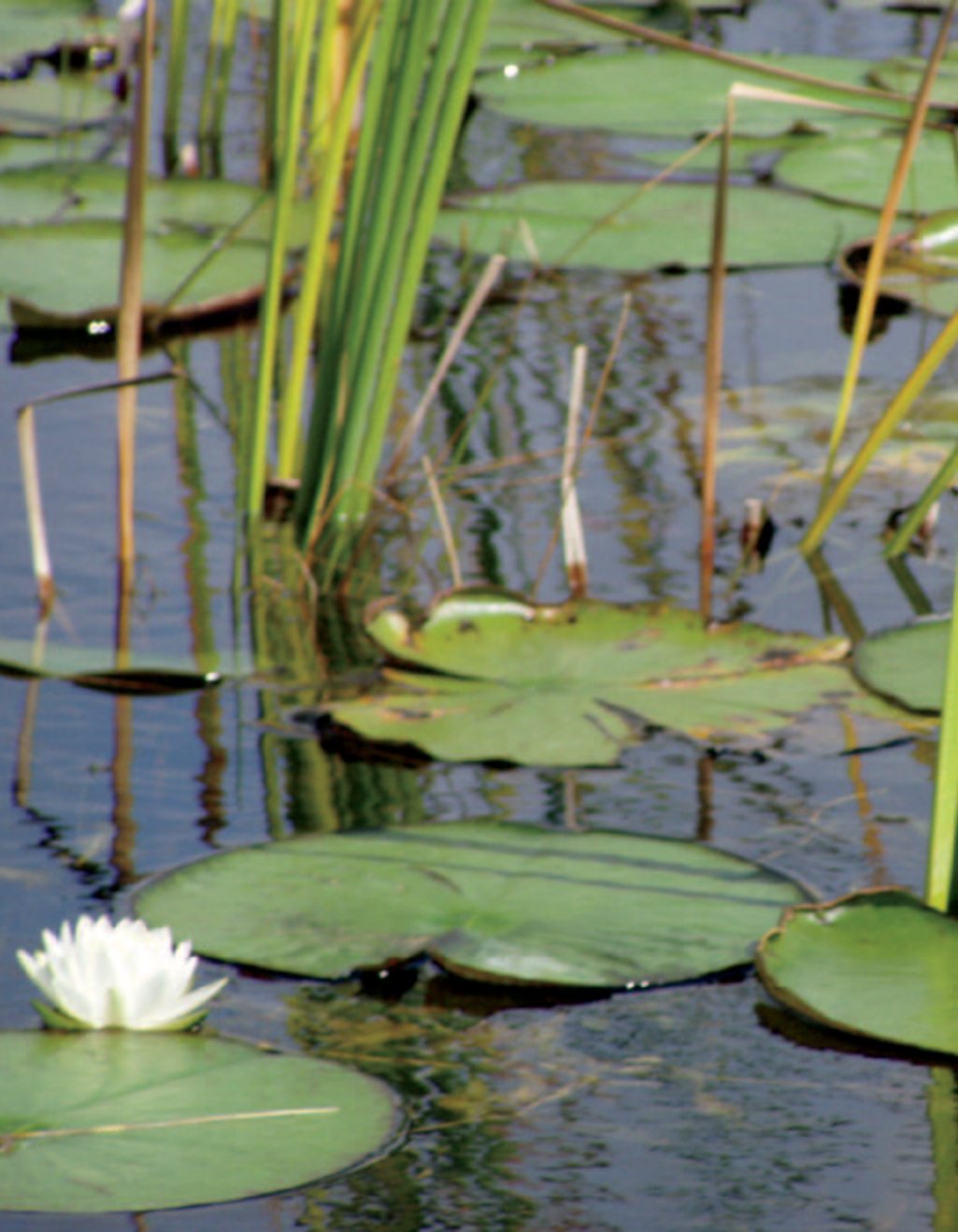
Fish like quality habitat! Our philosophy is provide an abundance of habitat and get fish species repopulating themselves so stocking expenses are reduced, while maintaining a quality fishery of whatever species your management goals are intended for. Shoreline habitat (vegetation) when planned out and managed properly reduces erosion, improves water quality, provides habitat for fish and wildlife, while also allowing access to bank fish and creates an aesthetically pleasing waterbody.
The same principal used in landscaping around your home can be performed around and in lakes and ponds, referred to as aquascaping. Besides maintaining good water quality, habitat is the next most important puzzle piece to developing a quality aquatic ecosystem that requires less maintenance and can provide both aesthetics and quality fishing for many years.
Plants in and around a waterbody help improve water chemistry. Plants filter suspended dirt particles before they enter your waterbody improving water clarity and reducing the silting in process. They also put oxygen into the water when living. Once they are treated with herbicides and die, the decomposing vegetation removes oxygen from the water.
Besides providing hiding areas for fish, an abundance of fish food forms on plants like algae, which attracts small invertebrates that small and young fish require for food. Plants also provide nesting habitat for birds, reptiles and amphibians.
If you have a new waterbody, the canvas is blank and fairly easy to paint. If you want to improve an existing waterbody, identifying current vegetation and prioritizing them from most to least desirable is required. I also dislike exotic (non-native) plant species, but on rare occasions we leave them, only because it is the only habitat in the lake. But as soon as desirable plant species begin to fill in, the exotics need to be treated with herbicides or mechanically removed. Exotic plants tend to be a problem in that they grow in excess and require more maintenance (equates to money) to keep in check. Not to say there are not some native plant species that do the same (i.e. cattails under certain conditions).
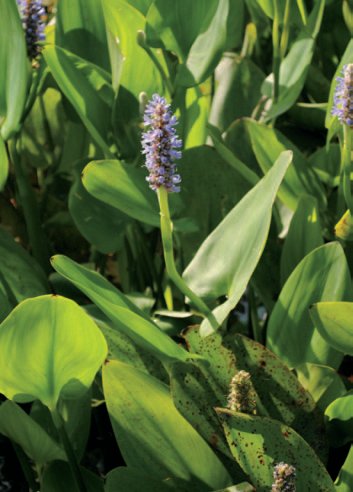
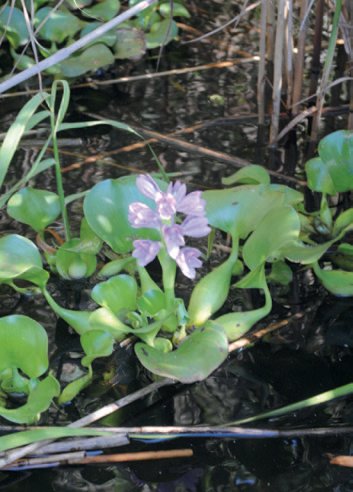
There are three types of plants we deal with; upper shoreline (usually on dry ground, but can tolerate being near or in water for short periods of time), emergent (part of the plant is underwater and part is above water, but can usually tolerate short dry or being submerged periods) and submerged plants (the entire plant remains below the surface and can rarely survive any time being on dry land and short periods partially exposed). All can contribute to fish and wildlife habitat, reduce erosion and improve water quality. In many situations we may recommend a combination of two or all three types depending on the waterbody and management objectives. Planting submerged vegetation is pretty rare unless part of the waterbody is desired to attract waterfowl and then it might be employed. I have never prescribed any floating species, like used in a goldfish pond in the garden, which is where many exotic plant species got their start in this country from water gardens and the aquarium plant industry. However, floating islands of vegetation have become popular with some pond managers in northern areas and have proven initially to be beneficial. In the south where the growing season is very long, I would advise against it.
Do not get your plants and just start planting anywhere, using any method, in any depth of water. Planning it out will allow for greater plant survival and a better layout to reduce having to go back later and cut or spray something that was planted in a spot reserved for a boat ramp, swimming hole, dock or beach. Knowing the requirements of each plant is necessary to be successful. How deep of water does it thrive? What is the deepest water it can tolerate for how long or how long can it survive on dry land? How much light is required? Some aquatic plants like full sun; while others require a lot of shade otherwise they grow slow or die. What is the pH of the water/soil? Some plant species like low pH (acidic) and others prefer higher (basic), similar to agricultural crops. Some plant species like soft water, others do better in hard water. Some species require flow, while others become uprooted or perish in flow. Think about planting multiple species together as you work your way up the bank, like tall plants behind short plants, or vise versa depending on where you are looking at them, water depth requirements of each species, or where you want which habitat. Do not plant tall plants or short trees between the house/cabin and the lake, which can obstruct your view. Never plant woody trees or shrubs on the dam or spillway, as they will compromise its integrity and can cause leaks or partial or complete dam failure over time.
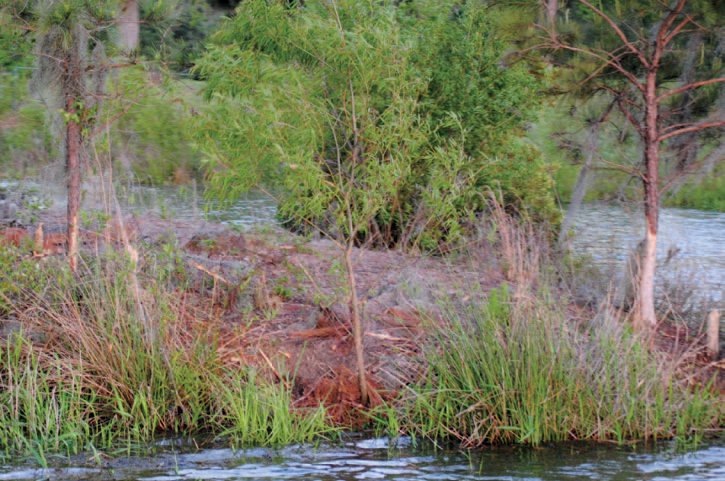
A very important observation is the current water level at planting time – flood, drought or average? If in a flood condition, you need to plant some emergent plants as far out as possible, maybe even a couple of inches underwater, but are still receiving light underwater. So when normal water levels return, the plant is in the proper water depth and the top is above water level, as it should be. If it is drought conditions and you place some emergent plants underwater that need to be above, when water levels rise, they could get shaded out if the water is green or tannin stained and all the plants will perish.
Plants can be purchased from nurseries that specialize in aquatic plants and can either be shipped or picked up. Plants can be purchased as bare root or in various sized pots. Depending on species, size area to be planted, method of planting and available funds helps determine which is best for your situation. If picking up plants yourself, make sure they are wet and covered during transport to prevent drying or death by wind. Once arriving at the site, park in shade or uncover in sunlight and keep moist so they don’t get cooked. Collecting plants from donor sites on your property or a neighbor’s is a possibility, but please check with your state Fish & Game or Agriculture departments before you do so, because each state’s rules are different on relocating vegetation. Also, make sure you know what you are planting. Some plants can look very similar, but have extremely different outcomes. I have seen many people miss-identify torpedograss (which is an evasive exotic grass-looking plant) for Maidencane, a native aquatic grass-looking species that needs a lot less work to keep in check than its exotic cousin. It is best to have a professional identify the plant species if a donor site on your property or elsewhere is available to make sure you are not moving and introducing a problem.
Planting woody species prior to the growing season (winter) and soft tissue species after the growing season begins (spring) is advised. For soft tissue plants the earlier the better once a freeze is no longer possible, so they have an entire growing season to establish good roots prior to the next winter. Some plants can be planted with a post-hole digger, some with a small shovel, some with a forked stick, and we have even used a Dibble bar (which is normally used to plant pine trees) for planting emergent plants in sandy soil. Examine the plant species and root system (is it potted or bare root?) and come up with the best planting tool and method to prevent plant damage during the planting process and for quickness if a large area is being planted. Some plants can be cut at soil level and replanted because they have roots off their stalk, which makes gathering and replanting much quicker than digging up and digging holes to replant.
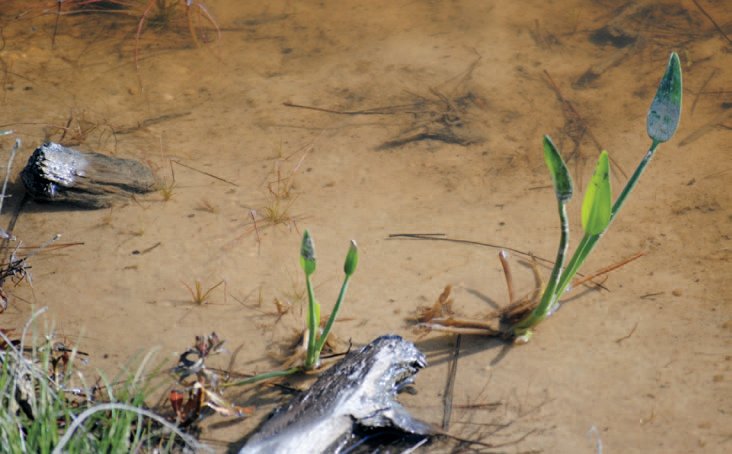
Once planted, give it some time. Various species will grow at different rates. To reduce costs I usually plant at a much lower density than recommended and allow it to gradually fill in and spread. If you plant so you have an instant filled in vegetated area, it will cost several times more in plants and labor than sparsely planting and allowing Mother Nature to do the rest. You can also create a few sites as donor sites, where you can come back to the area and transplant plants from there to other areas of the lake that species is desired, without leaving your lake or spending additional funds.
You may find out for some reason certain plants didn’t do well, or one species completely died-off, despite you doing everything right. We’ve had turtles come behind us and eat the plantings. If there are grass carp present they can consume some plantings depending on plant species, water depth and other available food. The most surprising to us was we once had deer find our pickerel weed around a lake and they literally walked the entire shoreline in a few nights and ate over 500 plantings we just put in. I didn’t see that one coming, but those deer sure loved those tender leaves and didn’t mind getting their feet wet to do it! If you see this type of activity after you plant, you may need to erect some type of temporary fencing until your plants have a chance to become established and can overcome grazing. Even if you have never observed a beaver in the lake, it is safer and cheaper to add trunk guards to the newly planted trees as opposed to buying more trees later due to depredation.
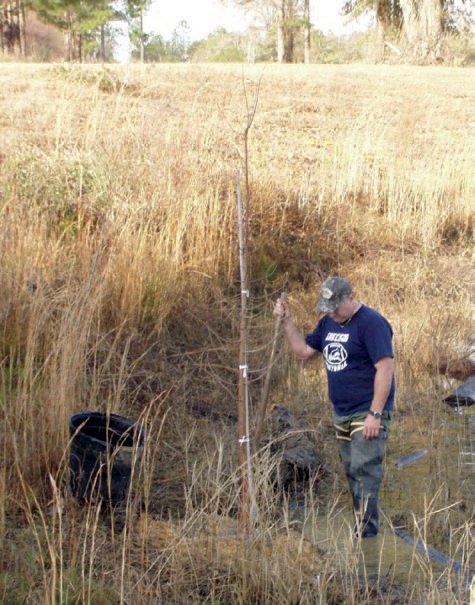
In your planting plan you can designate areas for no vegetation (other than grass to reduce erosion) for docks, boat ramp, bank fishing access points or swimming holes and keep those areas free of vegetation with mild herbicide use or manually removing plants as they begin to encroach. Leaving areas open for such activities is fine as long as the majority of shoreline has some type of habitat along and/or in the water. If all angling is done from a boat, even less shoreline can be manicured. Lake edges can be mowed in the dead of winter to knock back dead vegetation and allow for light to penetrate to begin another growing season.
Throughout the southeast, including east Texas, we recommend using a document put together by the Florida Department of Environmental Protection: Plants for Lakefront Revegetation to Identify Desirable Plant Species for Your Lake or Pond. It discusses the soil type, the amount of water and sunlight required for each species, and how far apart each plant should be planted to maximize plant survival and expedite growth. Other sources of information can be viewed at your particular state’s County Extension Office, Agriculture Department, Fish and Game Department and State Plant Society web sites. Also the University of Florida and Texas A & M University web sites are considered some of the best in the country for aquatic vegetation information, regarding both native and non-native (exotic) plant species.