
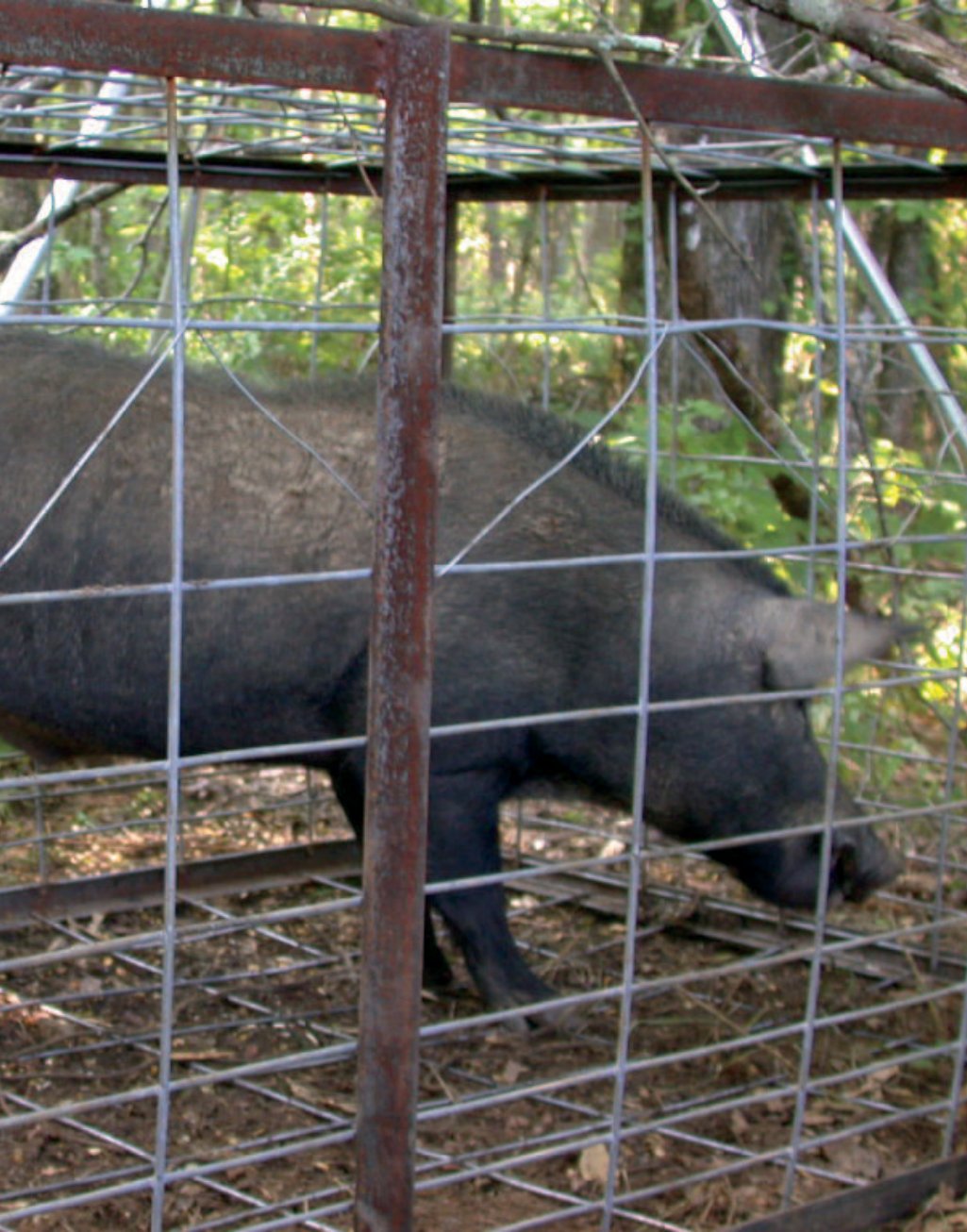
With growing populations of wild pigs across the Southeast and other regions of the country, there is an increasing demand for hard, scientific data on pig biology and pig control techniques. With this surge in pig research has come an improved understanding of those pig trapping strategies that are most effective at reducing pig populations. Two of my graduate students have spent the majority of the past four years working on wild pigs at Fort Benning, Georgia, and they have compiled a plethora of data that shed some interesting light on pig trapping. In general, what they have found indicates that, for the most part, we (myself included) have been making a lot of mistakes when trapping pigs. The following is a list of what I consider to be the 10 biggest mistakes that pig trappers make, after taking into account what my students have learned. If you will consider these issues when implementing a pig trapping/eradication program, you will improve your efficiency in trapping, reduce the amount of time and cost per pig trapped, and increase the total number of pigs removed.
MISTAKE #10 – Trapping Boars
For some reason, many of us are enamored with the idea of catching a big boar. The idea of a 350-pound boar rattling the cage and popping its teeth when we walk up to the trap is a huge thrill. We post pictures of the big boars we trap, and talk about them with everyone who is interested. I guess we all naturally feel that bigger is better when it comes to removing a pig. But, I will argue that this isn’t true in the case of pigs. Boars don’t produce piglets. Yes, they are involved in the reproductive process, but removing a boar from the population will do nothing to decrease a pig population or the rate of growth of a pig population. Considering this, I contend that any effort expended in trapping boars is wasted effort. It is difficult enough to commit the time and resources necessary to effectively reduce or eliminate a pig population, so anything that can be done to improve efficiency will increase the chances of having success.
If only boars are using a potential trap site, don’t even bother to set a trap, because you’re just wasting time and money that could be applied to females and juveniles (See MISTAKE #3 in the next issue of Wildlife Trends Journal to determine if boars are using the trap site). If you know that a sounder (group of related females and young) is using the trap site but you catch a boar, carefully consider if killing that boar is going to reduce your potential to catch the pigs. In some cases, killing a pig inside of a trap causes other pigs to become trap shy and less willing to enter the trap. In other cases it doesn’t really seem to have an impact. I believe that there is nothing to be gained by killing the boar, and it might help your cause to actually release it. In reality, the only reason you have boars in the area is because there are females (potential mates). You’ll find that if you eliminate the females from an area, there will be little use of the area by boars.
MISTAKE #9 – Door Size
One common mistake with trap design is the size of doors. We conducted a study to determine if there were differences among different classes of pigs (juveniles, adult sows, adult boars) in their willingness to enter a trap. This study involved setting up traps and monitoring the use of the traps with game cameras. While we didn’t actually collect data to compare the willingness of an animal to enter a trap relative to the size of the door, we had ample opportunities to observe large animals (both sows and boars) that exhibited considerable hesitation to enter doors that were not much taller than the top of their back. If the top of the door was considerably higher than the top of the back of a pig, there didn’t seem to be much hesitation before entering. Individual animals that previously demonstrated a willingness to enter a trap with a large, tall door often would not enter a trap with a small door. When constructing traps, be sure to do everything you can to maximize the size of the door, as this will increase the willingness of pigs to enter the trap, increase the number of pigs you catch, and decrease the amount of time it takes to catch all of the pigs using the trap site. If you already have traps with doors that are small, I wouldn’t stop using them. Just understand their limitations, and employ them more strategically. Maybe use those traps in combination (at the same trap site) with traps that have large doors. Using multiple traps at a single site increases the potential to catch an entire sounder and not leave any survivors (see MISTAKE #1 in the next issue of Wildlife Trends Journal).

MISTAKE #8 – Bait Type
There are a plethora of baits used for trapping pigs, and all can be successful. Some pig trappers keep it simple and use baits that can be easily purchased, transported into the field, and applied at the bait site, while others have homemade concoctions that have been “perfected” through years of trapping. Through the studies of my graduate students, we have learned that whole corn is about as affective as anything you can use. In one study, we compared whole corn to soured corn (often used to deter deer use of a trap site). We had hypothesized that soured corn, due to its rather strong, malodorous nature, would be much more effective at initially attracting pigs to a bait site. However, soured corn did not attract pigs to a site any faster than whole corn. But, once a group of pigs arrived at the bait site, they tended to stay at the sites baited with whole corn approximately 50% longer. The pigs were much more interested in consuming whole corn than soured corn. Considering how difficult it can be to get a pig in a trap at times, I think it’s best to use the bait type that pigs have a greater affinity like best.
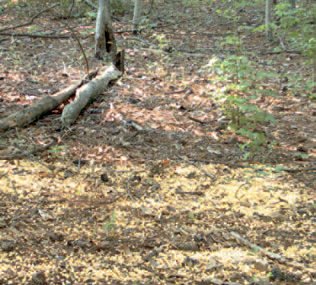
We also experimented with baits that were high in sugar content and high in protein. We had hypothesized that the addition of greater amounts of either of these nutrients to whole corn would increase the affinity of pigs for the bait. However, we found that the addition of sugar only served to increase use of the bait by fire ants, and the addition of protein had no impact. Experiments with other baits and combinations of baits did not generate positive results. When it’s all said and done, it’s tough to beat whole corn. It’s easy to purchase, easy to haul, and doesn’t require any “preparation” prior to use. But, if you’ve found something else that works for you…keep using it.
MISTAKE #7 – Trigger Type
There is definitely an art to setting a trigger when you trap wild pigs. It’s not just as simple as running a trip line across the middle of the cage or burying the trigger in a pile of corn. The type of trigger that you use should be dictated by what you are trying to catch. If you have a whole sounder coming to the trap and are trying to catch the entire sounder, the trigger should be designed so that it only gets tripped after a large group of pigs has entered the trap. This may mean burying the trigger in a hole under a pile of corn, such that the trigger is tripped only after the pigs have fed for a considerable period of time. Another approach is to put the trigger near one wall of the trap away from the central pile of corn. Then it will be triggered by pigs that come into the trap later and are spread out feeding in different areas of the trap. My point is, you don’t want to set the trigger so that it is tripped by the first pig in the trap, thus leaving a large group of pigs outside of the trap. In other cases, you want the trigger to be tripped by a lone pig. For example, if you have caught most of a sounder on another occasion, and now only have a pig (or two) that is hesitant about entering the trap remaining, you want to set a hair trigger for the trap. One method is to use fishing line attached to a mouse trap, such that when the fishing line is bumped, it trips the mouse trap and the trap is tripped.
MISTAKE# 6 – Trap Style
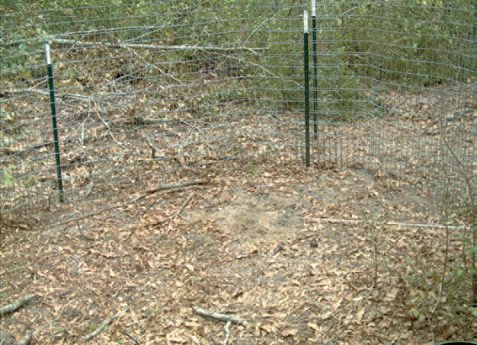
There are two primary styles of traps used for catching pigs (box traps and corral traps). Box traps typically have four sides, a bottom, and a top. They are normally constructed so that they cannot be dismantled, and typically are about the size of a bed of a pickup truck so that they can be transported easily by a vehicle. Corral traps must normally be constructed at the trap site, and are then dismantled after completion of use. They are composed of side panels (horse panels or other materials 4-5 feet in height and of considerable strength) that may vary in number from 3 to 6. The side panels are wired together (you must be sure that you wire the traps together with strong materials to be able to withstand the force of a group of pigs), and then a separate “panel” with a door is included in the construction. There is no floor or roof with this type of trap.
Corral traps are much more effective at capturing pigs than box traps. The greater internal area of a corral trap allows more pigs to enter the trap and space themselves comfortably, and usually results in a greater number of pigs being trapped at one time. This is very helpful when trying to capture an entire sounder (see MISTAKE #1 in the next issue of Wildlife Trends Journal). Because corral traps are constructed in the field of multiple panels, they can be built around trees (there is no roof to the trap) resulting in a trap set up that looks much more natural to a pig. Also, the fact that there is no floor to the trap means that pigs are not alarmed by walking on the floor of a cage (as with a box trap). Data collected by my students in their research indicate that the costs associated with catching pigs with corral traps are much less than with box traps. They found that the cost to trap pigs with box traps were approximately 5 times as great as when using corral traps, which was due to lower trap success with the box traps.
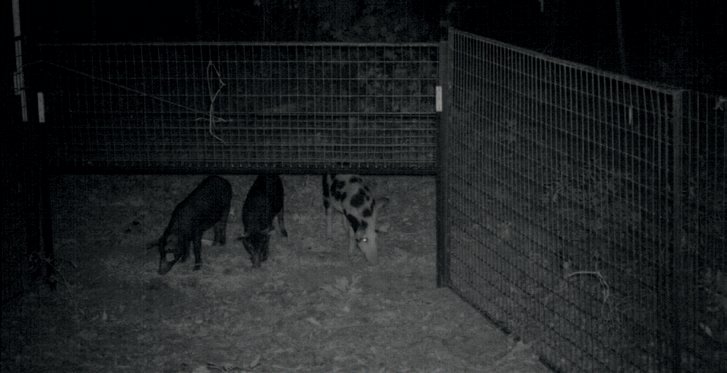
If you have the option of trap types, choose corral traps. The initial cost may be a bit more (but not necessarily), but they will pay for themselves in terms of number of pigs captured, the time it takes to complete your trapping objectives, and in dollars (money spent on gas to continually monitor traps longer than needed). If you already have box traps, use them. But, understand their limitations. You can also use box traps in combination with corral traps by using both at the same trap site, thereby increasing the number of pigs that can be captured at once.
In the Next Issue of Wildlife Trends Journal: In the next issue of Wildlife Trends Journal I will describe the top 5 mistakes made by pig trappers. Some of the topics I will describe include recent data collected by Auburn University researchers regarding myths about multi-catch doors, and methods to ensure that you don’t unnecessarily scare the pigs away before you catch them.