
One of the most fundamental and regular cycles in nature is the changing of the seasons. For almost all of the United States, significant and pronounced changes in temperatures and weather patterns cause notable changes in vegetation. Like the ebb and flow of the tides, hardwood forests senesce and release their leaves to the ground in autumn only to be restored their full green glory the following spring. As the photoperiod decreases, the once-lush summer landscape eventually turns to a dormant brown and gray scene until increasing day lengths and warmer weather returns. Some plants (including pines and a few other evergreens, along with a handful of shrubs and herbs) retain their chlorophyll (and energy) throughout the year, but for the most part winter is a time for vegetative dormancy. The significant changes in the annual cycles of plants is the primary driver for one of the most ancient and necessary portents in the animal kingdom: the phenomenon of migration. Whether from senescence caused by winter cold, browning of forage caused by annual dry seasons, or even ocean current and temperature changes which influence phytoplankton and aquatic plants, seasonal changes (and the resulting effects to the food chain) get animals moving. And migration doesn’t just involve birds.
In mammals there are many examples. The massive Wildebeest migration of Kenya and Tanzania has been called one of the greatest migration events on earth. Over two million wildebeests, gazelles, and zebras set out to brave hungry lions, leopards, and crocodiles in their journey across the Serengeti and Masai Mara plains in search of green vegetation. Others argue that the greatest migration is instead the annual trek of the ten to fifteen million fruit bats (also known as flying foxes) into the swamp-forests of Kasanka National Park of Zambia, from the Democratic Republic of Congo. They make this trip to feast on the countless tons of fruit that these forests produce seasonally. Among other mammals, wild caribous travel around 3,000 miles across the vast Yukon. In the sea, humpback whales travel over 10,000 miles from Costa Rica to Antarctica and back. In fish, migration is commonplace. Most pelagics like tuna, mahi, and wahoo all migrate to some degree and some species cover great distances. Great-white sharks have been tracked with GPS-tags swimming over 12,000 miles between South Africa to Western Australia and back. Even some insects cover large distances looking for food. Monarch butterflies can migrate a total of about 3,000 miles each year, with some single individuals covering the expanse from Canada all the way to Mexico. The globe skimmer dragonfly flies across the Indian Ocean between India and Africa, a distance of over 10,000 miles. But the champions of migration are still the birds.
The arctic tern is a serious traveler. This species logs over 49,000 miles in a single year, flying from the Arctic to Antarctica and back! Considering this species can live as long as thirty years, an arctic tern may travel the distance from the earth to the moon as many as six times in the course of its lifetime. Of the world’s 10,000 or so species of birds, roughly 4,000, or 40%, of them migrate to some degree. And of these 40% about half (2,000 species) make epic migrations over lengthy distances and inhospitable terrain. When considering particularly small species such as the ruby-throated hummingbird (RTH), it is hard to imagine them making such incredible journeys, especially that 500+ mile segment across the open Gulf of Mexico. To examine how this feat could be achieved, R. C. Lasiewski, back in 1962, conducted a physiological study with RHTs in his lab. By observing several trials and taking energy expenditure measurements from hovering individuals in metabolic chambers, he was able to determine that a male RTH (which weighed 4.5 grams) could fly for 26 hours nonstop, burning about .69 calories from fat per hour. So at an average migration flight speed of 25 mph, the hummingbird would have a range of a little over 600 miles which would indeed be enough to carry it over the Gulf in a single, nonstop migration flight. This is why it is so important for hummingbirds, as well as other long distance migrants, to build ample fat and energy reserves before they depart to ensure they have enough fuel for the trip. Some species make multiple re-fueling stops along the way while some species (especially some of the larger ones) are physiologically able to commit to the whole trip in a single flight.
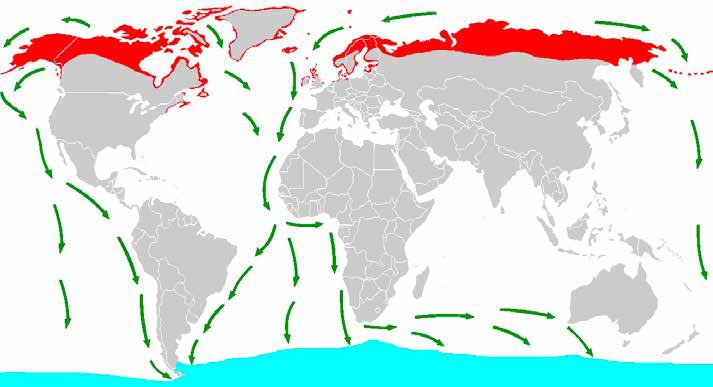
In the non-tropical latitudes of North America (including the Southeast), more species of birds are migratory than are not, with more than 350 species traveling to the tropics (primarily to Mexico, Bahamas, and Central America) each fall. Many travel for days on end, often over large water bodies as we previously mentioned, without stopping and so are quite vulnerable to unfavorable winds and bad weather. Migration can obviously be very taxing on its participants and it is not surprising that many individuals don’t survive their journeys. So why not just stay where you are? What forces cause so many birds to take to the air in search of new ground? We have at least partially answered this question already. Most of this travelling around is directly related to food, which is in turn almost always related to the availability of plants (or other autotrophic organisms) in an ecosystem. That makes perfect sense for birds leaving the Southeast in autumn. As green herbaceous biomass and vegetation becomes dormant, the insect (and other invertebrate) prey base also becomes more and more scarce. So it stands to reason that an insect-eater like a prairie warbler or a caterpillar specialist like a yellow-billed cuckoo would leave their breeding habitats in the Southeast in the fall as temperatures cool, and head on down to the tropics where there will be plentiful greenery and insect production all winter. But why not just stay down there in paradise? Why not hang out in the Yucatan all spring and summer and just wait on fall to roll back around? Why expend all that energy and take all that risk year after year heading back up north? There is more to the story indeed and the answers to all these questions relate largely to breeding-season competition.
If you have ever walked through a summer field in the Southeast or even just sat outside on your porch on a calm July evening you can attest to the fact that that we have a lot of bugs during the growing season. From mosquitoes and gnats to leafhoppers and lacewings, the available insect biomass here is incredible for seven or eight months out of the year. This biomass equates to protein (which is a critical requisite for successful nesting and brood rearing) and this valuable and abundant food resource is ripe for the taking here. In fact, for almost all of the long distance migrants that breed in the Southeast, the insect biomass of the region is so tempting that their normal life cycle has evolved to take advantage of this bountiful crop each year. If all these species stayed down in the tropics, competition would be so high (among those species as well as the resident tropical breeders) that reproduction rates would be significantly compromised, and decreased to a level that probably would not be sustainable over the long term. With all those species concentrating their breeding efforts in a limited window of time and in a finite geographical area, competition would become more of a limiting factor than the actual distresses of migration. In other words, almost all of our neo-tropical insectivorous bird species find it better to do some travelling than to deal with the crowds.
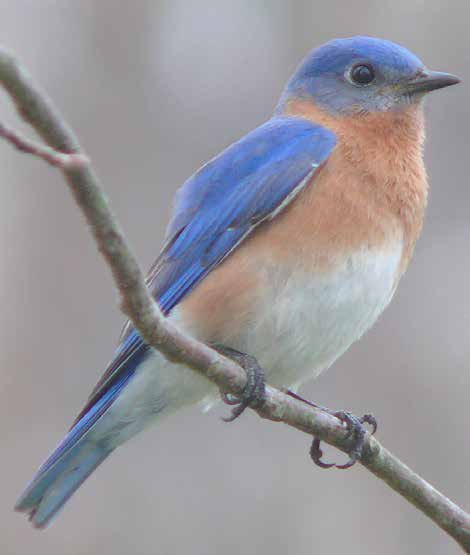
It is no surprise that the majority of the resident (non-migratory) bird species that stay to face winters in the Southeast are adept at eating something other than insects (such as seeds or fall-ripening fruits and soft mast) during the fall and winter months. And although the physiological ability to cope with at least some cold weather is often also required to winter anywhere north of peninsular Florida. Although they are basically the same size, a bird like a northern cardinal is much more cold-tolerant than say a yellow-breasted chat. Their winter plumage provides more insulation and many birds like the northern cardinal, eastern towhee, and chipping sparrow have short, stout seed-cracking beaks that allow them to exploit the seed resources on the ground during the dormant season. Almost all birds (including these seed-eaters) can and do largely switch over to insects in the spring and summer, but making a living in the winter calls for a non-insect back-up strategy. Other non-migratory residents like blue jays target water and laurel oak acorns (and others) in fall and winter. Some thrushes like brown thrashers, northern mockingbirds, and Eastern bluebirds persist until spring returns largely on the winter fruits of various trees and shrubs. Interestingly, many species (like the eastern bluebird) can be found all year in the Southeast, but only found during summer months in the harsher Northeast and Midwest. That’s why the line in the classic Christmas song “Walking in a Winter Wonderland” that says “Gone away is the bluebird, here to stay is a new bird…” may be confusing to a southerner. We have bluebirds all year long. But it is not so in the North. Actually, each species has its own specific range and migration patterns. And they can be very complex. Some species (like wood ducks and other waterfowl species) have separate populations (that often overlap) where one segment of the population migrates and the other does not. Studies have shown that there are genetic behavioral differences that dictate migration tendencies. Band recovery data suggest that about one-third of all wood ducks in the continental United States are permanent residents, and the others are migratory. Migration can be quite complicated. Changing land use over the past several decades is actually altering the migratory patterns of some bird species. One clear example of this can be seen in Canada geese. Thirty years ago it was almost unheard of to see Canada geese more than once or twice in a given year in states like Georgia and Alabama. Virtually all of the wild eastern population was migratory. Now there are resident populations everywhere, seemingly in every farm pond and city park fountain across these states. Food availability (due to agricultural and residential land use change) has undoubtedly influenced this change in behavior. As these resident geese populations reproduce, the offspring simply hang out, as the innate instinctive urge to migrate has evidently been deleted. Other interesting trends seem to be appearing in Allen’s, black-chinned, and rufous hummingbirds. These are all western species which were traditionally thought to winter in the hills of Mexico. But recent banding studies are showing more and more of these guys showing up in the Southeast during winter, especially along the Gulf Coast from Texas to Florida. Since early data for winter use along the Gulf Coast in these species are limited, it’s hard to know for sure if this is actually a new trend or if it was happening to some extent all along. Regardless, many folks in that region are now keeping their hummingbird feeders out year round to provide a supplemental food source for these “new” guys. As these trends suggest, migration patterns are not completely fixed and constant. Sometimes when food is available some species have a tendency to migrate. Some species (regarding their respective timing and distance variability) are more heavily influenced by weather conditions and other environmental factors and these obviously can vary from year to year. And then there are some species that will still migrate like clockwork regardless of the conditions.
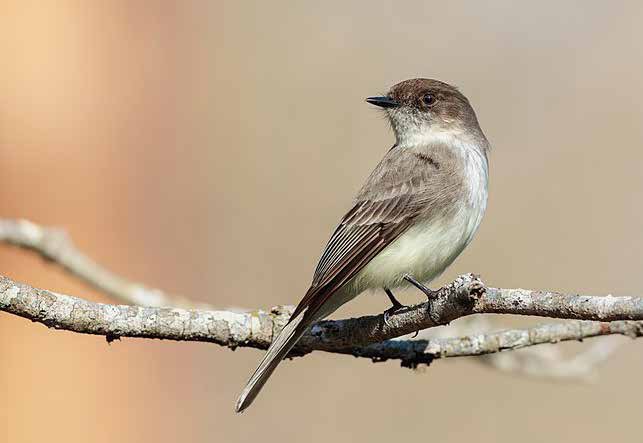
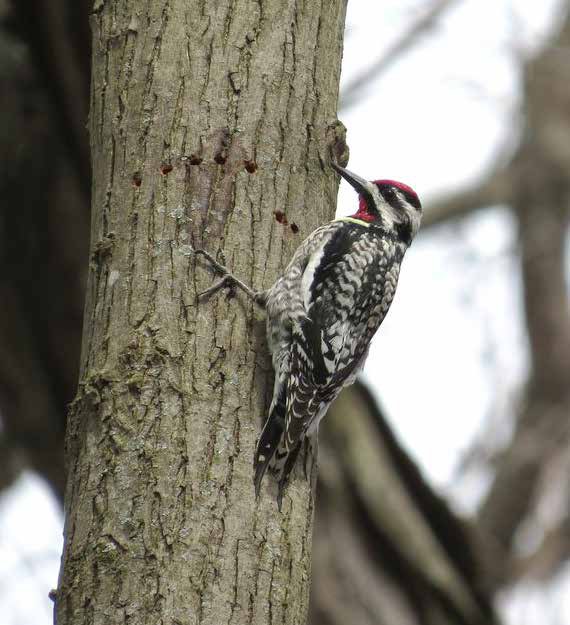
Besides waterfowl, our native game birds in the Southeast are, for the most part, year-round residents. Common snipe and American woodcock are migratory in some parts of the range but these species can be found in the southeastern states in all seasons. Wild turkey and northern bobwhite are non-migratory of course. Since they are omnivorous and can vary their diet, they almost always find enough seeds, fruits, mast, and agricultural residues to stay happy through the winter. In fact a scratching gallinaceous bird like a bobwhite living in good early successional habitat is usually able to put on ample fat stores through the winter months and is seemingly happy to roost on the ground in sub-freezing temperatures. That’s probably only because they’ve never been to Costa Rica in January where it is 80 degrees. Some bird species actually prefer the cold weather and they breed well north of the Southeast in central and northern Canada. From there they migrate down to the Southeast to spend the winter. Seed-eating species like the dark-eyed junco and white-throated sparrow are good examples. They fly down from their northern breeding grounds in late fall and are fairly common in the Southeast during the cold winter months. Both of these species prefer weedy fields and open early seral understory habitats that produce seeds from various grasses, forbs and legumes. They readily come to bird feeders and can often be seen in large mixed flocks with chipping sparrows and American goldfinches (which are permanent residents). Other common permanent residents of the Southeast include tufted titmice, Carolina chickadees, and Carolina wrens. Eastern phoebes are a migratory species but they can also be found all year long in much of the Southeast where their winter and breeding range overlaps. The eastern phoebe is an insect eater but it somehow still finds a way to persist through the colder months. Although it does eat some small fruits and berries in cooler months, there are a few insects that are out and about in the Southeast in winter too, (but nothing like the hordes seen in summer). This species has taken up permanent residence at my house in central Alabama, building its messy moss-lined nests under the porches each spring and I regularly see it taking flying insects out of the air on the intermittent mild winter days. Many insects overwinter (as adults, larvae, pupae, or eggs) under bark and inside dead trees. This allows the bird specialists who can extract them to stay and utilize the resource. Almost all of our woodpeckers for example are non-migratory species. Species like the northern flicker (or yellowhammer) as well as the downy, hairy, red-headed, red-bellied, and pileated woodpeckers all are permanent residents with fairly consistent home ranges. Even the smaller white-breasted and brown headed nuthatches (which are not true woodpeckers) can happily make it through the winter foraging on arboreal overwintering insects. The yellow-bellied sapsucker is the only true woodpecker that migrates down into the Southeast from northern latitudes. This is the bird that creates the rings of little holes (sap wells) on maples, crabapples, and various kinds of thin-barked fruit trees. These wells are visited repeatedly from year to year by sapsuckers and other species for trapped insects and the sap itself.
When it comes to management and migrants, it is much too complicated to recommend a one size fits all approach to forest management activities and treatments. As we know, the native ecosystems of the Southeast were historically diverse, and there were (and are) bird species which are adapted to using virtually all of them. It really comes down to which species your property is geared towards, and for what suite of species you want to manage. The vast majority of land managers or landowners are interested in managing for one (or both) of the following two groups of bird species; gamebirds or unique and/or uncommon non-game birds. Several previous Wildlife Trends articles have addressed the concepts and methods of how to build and maintain high quality native habitats for bobwhite quail and wild turkey, and those same habitats will undoubtedly serve dozens of migratory insectivorous species (including warblers, tanagers, and vireos) well for breeding. Some generalist bird species can make a living in many kinds of habitats. In fact, pretty much any kind of forest or field (or even a backyard) will serve as habitat for some species bird, but for the rare species we have to consider what native southeastern habitats are now uncommon on the general landscape. Those are the habitats which can play a critical role in bird conservation in modern times.
To understand which habitats are rare, let’s first look at the contrasting common forest types across the region. Loblolly pine plantations, for example, are a fairly common scene across much of the southeastern states today. For pine warblers these stands are pretty good habitat, but not many other species are consistently found in these younger forests. As a side note, the pine warbler is one of the only warblers that does not leave the United States in winter to retreat to the tropics. It relies heavily on seeds and fruits in winter in the Southeast. So dense loblolly plantations are not the highest ranked as far as bird conservation goes. The same would apply to fescue or Bahia cattle pastures. An occasional eastern meadowlark, American crow, or wild turkey can be found in a cow pasture but for rare birds this kind of common habitat is for the most part not important either. And really the same is true to some extent for dense mixed mid-rotational forest (for example a fifty year old stand of mixed hardwoods and pines). This kind of habitat is pretty common across the landscape, and although this kind of forest will typically host a large number of species, the vast majority will not be rare or even uncommon. These forest systems are important on a landscape scale and should be considered on a property for species diversity and where they serve other non-avian wildlife species, but the truth is a dense mixed hardwood-pine forest may not mean much to most rare birds.
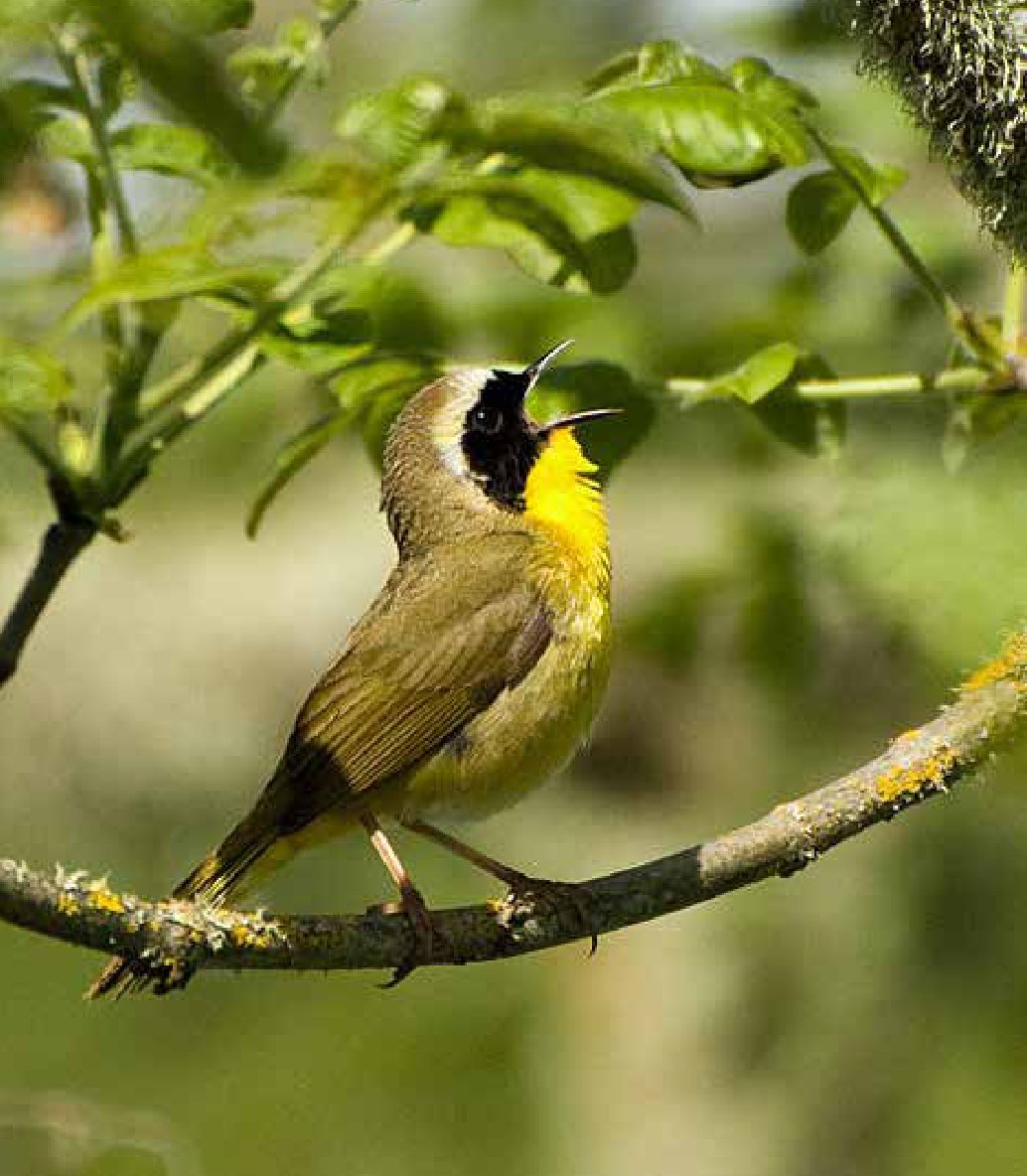
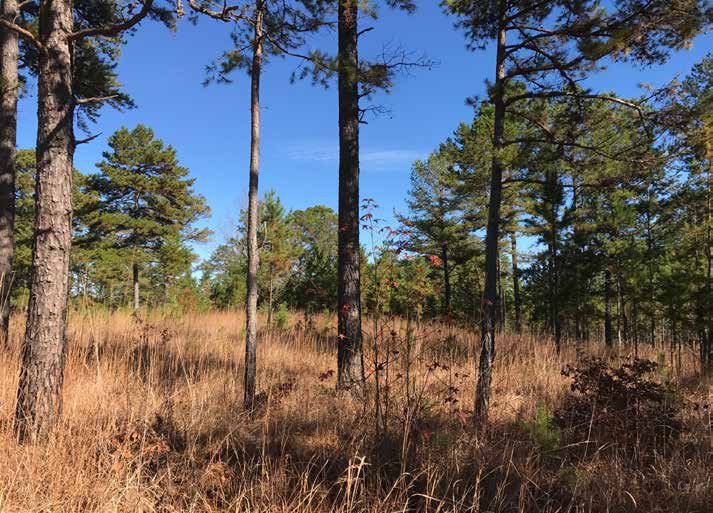
On the other hand, if you are managing for bobwhites, you are already managing for an uncommon native habitat type. Open, fire-maintained early successional habitats (with abundant grass, forb, and legume ground covers) are one of the most sought-after resources in the eyes of quail managers (and fire-adapted birds) in the Southeast. As many biologists have stated in previous articles in this magazine, these are the fundamental habitat components for successful bobwhite management. This is also true for breeding neo-tropical migrant species such as the indigo bunting, prairie warbler, yellow-breasted chat, common yellowthroat, eastern wood-pewee, blue grosbeak, and several others. In the spring as these migrants make their way northward they methodically but quickly saturate all of these available habitats across the Southeastern landscape. Not all of the migrants named above are showing population declines but many are. Open fire-maintained understories were historically important to these summer breeders but other rare permanent residents like the Bachman’s sparrow and red-cockaded woodpecker are also dependent on open forest stands with an herbaceous understory. The uncommon and declining Henslow’s sparrow comes down from its breeding range in the Great Lakes and Midwest regions to winter in these uncommon habitats as well. There has been significant conservation concern for this winter migrant and its habitat needs in the Southeast. The good news is again if you are managing for bobwhites, you are essentially indirectly managing for all of these early successional species. The main reason these “grassland” habitats are uncommon today is mainly due to the simple fact that meaningful and regular fire has been absent on such a large percentage of the landscape. Keep the forest canopy open and fire on the ground and you will be on the right track for maintaining habitats for these species. Some managers have seen an immediate (in as little as one year) response from grassland birds like the dickcissel in areas where native warm-season bunch grasses have been re-established (on former agricultural sites and pastures). This species breeds predominantly in the Midwest but its summer range also includes Arkansas and parts of Texas, Louisiana, Mississippi, Alabama, and Tennessee. It winters in southern Mexico, Central America, Venezuela, Columbia, and Ecuador. For other rare summer migrants like Cerulean warbler, large intact tracts of old growth hardwood forest is the preferred habitat type. Coastal marsh and dune habitats are another declining system in the Southeast (primarily due to development) and this trend has negatively affected many shorebird species. Unfortunately the trend of habitat loss is something that is unlikely to change as more and more rural lands are developed. However, sound management in our region should be enough to conserve many migratory species. A bigger concern in many cases is the availability of required habitats in the countries where our migrants spend the other half of the year. Species that winter in the Southeast and breed in Canada tend to be more stable than those that breed in our region and winter in the Central and South American countries. Widespread deforestation and changes in land use threaten wintering habitats for many species in the tropics, but as Southeastern land managers, the fates of those habitats are outside our borders and therefore largely out of our hands. International programs, however, such as Partners in Flight aimed at saving the habitats of migratory birds have been in place for the past couple decades and have significantly helped to conserve some of our summer breeders when they travel to their winter grounds in other countries.
In summary, migration is one of the oldest and most essential occurrences in North America, and the world. Following food resources and minimizing competition are the main reasons so many bird species commit to these annual movements and most migratory species are genetically programmed to do so. The majority of our migrants breed in the Southeast and winter in the warm tropical regions of Central and South America as well as Cuba, the Bahamas, and Mexico. Some habitats these species historically used both here and in other countries have become scarcer. With sound management however, we can do our part for bird conservation on the southeastern landscape, especially by maintaining native habitats that are uncommon today.
References
Bellrose, F. C. and Holm, D. J. 1994. Ecology and management of the Wood Duck. Harrisburg, PA: Stackpole Books.
Hepp, G. R. and Hines, J. E. 1991. Factors affecting winter distribution and migration distance of Wood Ducks from southern breeding populations. Condor no. 93:884-891.
Lasiewski, R.C. 1962. The energetics of migrating hummingbirds. Condor 64:324.Bellrose, F. C. and D. J. Holm. (1994). Ecology and management of the Wood Duck. Harrisburg, PA: Stackpole Books. Bellrose, F. C. and D. J. Holm. (1994). Ecology and management of the Wood Duck. Harrisburg, PA: Stackpole Books.
Somveille, M., Rodrigues, A. and Manica, A. 2018. Energy efficiency drives the global seasonal distribution of birds. Nature Ecology & Evolution, Volume 2, pages 962–969.