

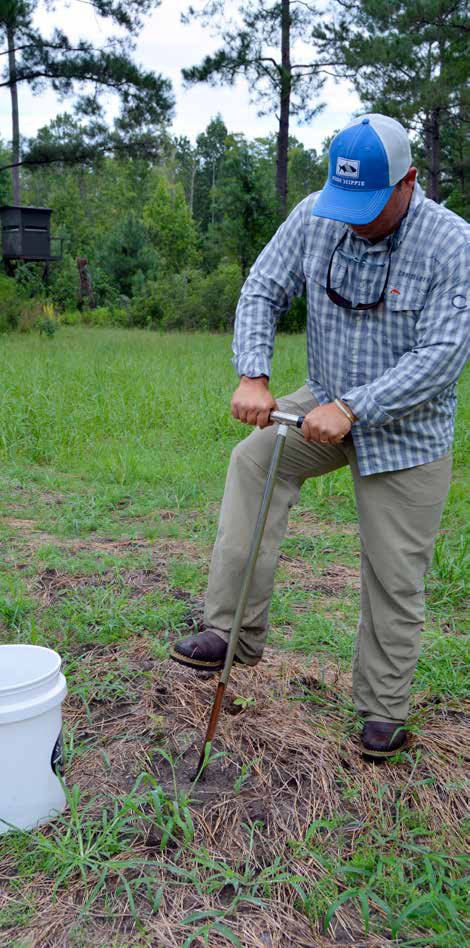
Late winter or early spring is a good time to check soil pH and apply lime to food plots if needed. To check the soil pH, simply collect soil samples and send them to a soil laboratory (see previous Wildlife Trends article on how to properly collect soil samples). Your local farmers cooperative will often have soil collection bags which normally have directions on how to collect soil samples and where you can send the soil to be tested. Although there are exceptions, most crops grow best in a relatively neutral soil pH of 6.5 – 7.0. Thus, lime is often needed to enhance the soil. Because it can take several months for lime to effectively change the soil pH, checking the soil in late winter or early spring will give lime ample time to enhance the soil before the fall planting period. Incorporating lime during late winter (Jan/Feb) will likely enhance soil pH for summer plantings. Remember, ensuring proper soil pH is often more important than what you plant or how much you fertilize. In fact, proper soil pH is essential for fertilizer to be available to the plants. Although lime can be spread any time of year, applying it at least 4-6 months before planting will allow time for it to properly enhance the soil pH to desirable levels. Lime can be broadcast directly on top of the soil where rain can work it into the growing zone of the soil, but disking it into the soil profile will speed the process up and is recommended.
Learn more about your property & scout for new deer stand locations
How many times have you heard (or said to yourself) “Those dang deer know when deer season starts – we’ve been seeing them all summer and now they have gone into lock down”? Deer do not have deer season on their calendar. Hunters are their alarm clock. It happens every year and we have all been guilty of it. The woods have been quiet with no humans walking around, no ATV’s, no chainsaws, no trucks or tractors, no loud voices or other odd noises and then a month (or week) before the season the woods are inundated with LOTS of these unnatural disturbances – Hunters busting through the woods doing lots of things associated with preparations for hunting season. This is the alarm clock that triggers deer to alter movements to avoid these disturbances and potential dangers. All these things are described by two words – disturbance and pressure. I have spent most of my career helping hunters manage for better deer and better hunting. Generally speaking, growing “big bucks” is relatively easy when hunters follow management recommendations. However, getting these bucks in front of hunters is often the most challenging task I have. One thing that I have learned and have seen play out time and time again is that hunting pressure (which is a culmination of all the unnatural disturbances described above) plays a significant role in hunting success. So, if you want to see and harvest more deer (i.e., improve your deer hunting experiences) intensively manage hunting pressure (and other disturbances) on the property you hunt. One of the best ways to reduce pressure is to be ready well before hunting season. Late winter, or just after hunting season, is one of the best times to learn more about your property, find areas that could be improved, and figure out how deer or other wildlife use your property. Learning these things will help you maximize the value and use of your property. As I have mentioned in past calendars, February and March is my favorite time to learn how deer use a property and strategize on new stand locations. Because deer have been exposed to a great deal of hunting pressure over the past few months, they are using areas that they are most comfortable in and feel safe. If you find out where they are “hiding” now, you will know where to find them next season once the hunting pressure builds and deer seem to disappear. During this time of year, buck sign such as trails, rubs and scrapes is still fresh. Erecting or relocating stands now reduces that amount of “pressure” you will need to apply just before deer season and allows deer to get used to seeing them over the summer. Although you will have to touch them up before the season starts next year, late winter is also a good time to trim shooting lanes around deer stands. Having done all this in late winter, you will significantly reduce pressure just before the season starts next year which will enhance your opportunities to see and harvest the big bucks you’ve worked so hard to grow.
Ensure deer have quality nutrition during late winter through spring green up.
Late winter through spring green up is a nutritionally stressful period for deer in most regions. Deer have spent much of the fall going through the stresses associated with breeding activities which have worn them down, does are pregnant, much of their quality food sources have dwindled, and energy demand increases with a colder climate. By ensuring deer have access to quality food sources during this period will ensure they enter spring green up in good condition. Doing so gives them a jump start as they enter the spring green up period (one of the highest natural nutritional periods due to an abundance of fresh new growth of plants). As such, deer can use the high nutrition from spring green up for body growth verses maintenance. Healthy deer entering spring results in bigger antlers, healthier does, increased fawn survival, etc. which is the goal of most deer management programs. Although this is within the February/March management calendar, strategies that ensure quality food sources are available this time of year are the result of management implemented months ago or over time. These strategies may include things such as thinning timber, managing natural habitats, including perennial crops in food plots, and properly managing deer herd conditions. Something that can be done now, however, is providing deer with supplemental feed which can certainly offer deer a quality food source. But before thinking about starting a supplemental feeding program for deer, you need to take care of the “more important” things first (such as items listed above). In other words, you cannot hang shutters if you do not have a house – and you will not grow big bucks and a healthy herd with supplemental feed alone. It is a supplement to other management strategies and activities. However, when done in combination with other core management practices, supplemental feeding can be valuable for deer. Be sure to check your local game laws before providing feed on your property. Many states do not allow the use of feed during hunting season. Ideally, providing supplemental feed throughout the year is best, but supplemental feed will be most used and most valuable for deer in late winter and late summer. These are periods when natural food availability is at its lowest. So, if you have a limited budget and cannot or do not want to feed throughout the year, provide it during the periods deer need it most.
Assess management strategies, review or develop a plan, & prepare for upcoming projects
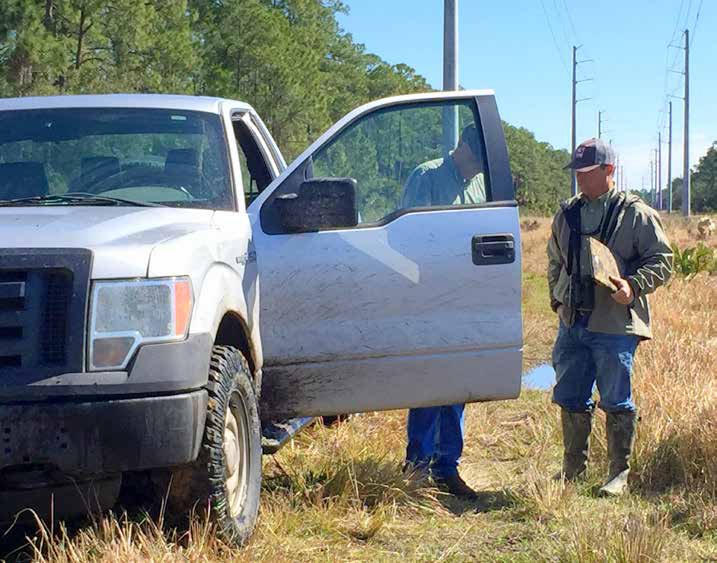
Good planning and preparation ensure you will have everything needed and be ready to initiate projects this summer. I heard a saying that has stuck with me over the years that always reminds me to plan – “People don’t plan to fail, but often fail to plan”. Planning also allows you to prioritize projects, create a budget for the upcoming year, and develop timelines for completion to help you stay on track. Many landowners simply tackle projects as they come up or as they think of them. This strategy can work, but without planning they may overlook or run out of money before addressing a more needed project. Spring is busy times for us at Tall Tines Wildlife Consultants helping landowners develop a plan of action for the coming year to improve the wildlife value and hunting on their property. We conduct what we call “property management assessments”. During this consultation, we review projects that had been completed the previous year, review harvest data or other information that provides insight to how the wildlife we are trying to manage is responding to management, re-assess progress towards goals, assess the habitat and property in general to determine its limiting factors, and develop a prioritized list of activities that need to happen to help the landowner achieve their goals. While this is a professional service we provide, it is a process that I feel all landowners should go through each year, whether they hire a professional biologist or not, to keep them on track and moving forward. Which reminds me of another saying – “Don’t keep doing the same thing and expect different results”. Now (late winter/spring) is the time to assess your management program, determine needs for improvements, and develop a plan to address these needs.
Fertilize perennial clover plots to provide a jump start for spring growth
Although I am a fan of planting annual summer crops to provide maximum nutrition through the summer months, I also like to include perennial clover plots in food plot strategies for diversity and as a year-round crop that will be available when other crops fade out or are being planted. Perennial clover plots will start growing rapidly once spring green up begins and daily temperatures exceed 65 degrees. Fertilizing clover can add a significant growth/nutritional boost to clover and other perennials. Because clover produces its own nitrogen, apply a fertilizer that does not contain nitrogen, such as 0-20-20, during early-mid spring to provide adequate nutrients for clover growth. If you add nitrogen, you are simply feeding competing grasses. Although I strongly recommend pulling soil samples and applying fertilizer accordingly, a “common” fertilizer application rate for clover in the spring is 200 lbs./acre. Once the growing season begins, monitor the plot for undesirable weeds and grass. Pre-emergent herbicides are a fantastic tool that will kill weeds before they have a chance to become a problem. If you are unable to apply pre-emergent herbicide, mowing will help reduce undesirable weeds (do not mow too low…your mower should be set to cut just over the clover). However, if weeds and grasses persist, apply selective post-emergent herbicides for control. Although herbicides are more expensive than mowing, they are often the most effective. Mowing is used to give the clover a better chance to out-compete the weeds while herbicide kills the weeds. Manage water levels in duck ponds. Although duck season is over, leaving your duck ponds flooded will benefit migrating waterfowl by providing energy rich foods for their flight back north. Pond drawdown rate and timing is important and will vary depending on your management strategy (natural moist soil management or agricultural plantings). If you are planting agricultural crops for waterfowl, leaving the pond flooded through early summer will help control weeds. Just be sure to drain the pond early enough to allow adequate drying time before planting time. However, if you are managing for natural moist soil plants, such as in a beaver pond or waterfowl impoundment, you will need to start pond drawdown in the spring to allow desirable native moist soil plants to germinate and grow. Slow drawdowns (over a 2-3-week period) are often desired because they will result in diverse emergent wetland species and invertebrate composition. Quick drawdowns result in decreased plant species diversity and are often composed of undesirable species. If you are managing a GTR (Green Tree Reservoir or flooded hardwood area), use a slow draw down process but ensure water is off the area before spring green up to protect/ enhance growth of oaks in the GTR. Some oaks, particularly the more desirable ones for generating duck food, do not do well if left flooded after they begin growing leaves in the spring. Collect shed antlers By mid-March, whitetail bucks across the country have shed their antlers. Collecting antler sheds can be a fun spring activity for the whole family. Shed collecting not only provides a great opportunity to spend time with your family, but also provides some insight to the quality of your deer herd. After a few seasons, compare the quality of sheds found from different years. If your program is moving in a positive direction, you will notice that the antlers are getting larger each year. Key areas to concentrate your searches include food plots, fields, around feeders, and along trails where deer must jump (over fences, ditches, etc.). Training Labrador retrievers to find sheds has become relatively common and may offer additional outdoor adventures for you and your best friend.
Make preparations for spring turkey season
One of the best ways to ensure you have gobblers in the spring is to manage your property throughout the year to promote quality nesting cover (see turkey habitat management article in the January-February 2009 issue for more detail on creating nesting habitat). I have worked with many landowners that had gobblers on their property most of the year, but they disappeared during the spring. After closer inspection, their property didn’t have good nesting habitat and the hens had moved to adjacent properties carrying the gobblers with them. Quality nesting habitat is created by maintaining a patch work of early successional habitat throughout your property. Burning, herbicide applications, strip disking, timber harvest, and roadside management strategies are all tools that can help you create quality nesting habitat for turkeys. Besides the key element of creating nesting habitat, creating strutting zones in strategic areas around your property will help put turkeys where you want them to be. February or early March is a good time to create strutting areas. A mower, disk, fire or combination of these is the tools of choice for this task. Fire is my preferred tool if it can be used. Strutting areas are simply areas that have relatively little or open ground cover that will be attractive to turkeys for breeding courtships. I often create these areas between roosting and nesting areas and preferably near a food source such as an old field, chufa patch, or food plot. Areas that often lend themselves well to creating strutting areas are powerlines, thinned pine rows, and roadsides. Lastly, mowing hunter access trails will help you slip into areas to hunt without making a bunch of noise. If these trails go through thick habitat, don’t be surprised if turkeys use the same trails. Speaking of mowing, if you have areas that need mowing before summer arrives, do so before turkeys start nesting.