

Though a number of popular clover products are marketed for wildlife use today, you may not be familiar with a more recently developed variety that’s been proven a powerhouse in production and persistence. Marketed by Pennington Seed Company, Durana white clover was a relative newcomer to the wildlife seed market in 2006, the same year it was established as part of a quality deer management program on our family’s hunting property in central Alabama.
Luckily, good neighbors with similar QDM objectives have made managing for quality deer on our small (210 acre) property a realistic goal and a proven success. No doubt some of the deer harvested had home ranges beyond our property lines. Our philosophy when it comes to attracting whitetails is, “He who has food is king.” Because of its reputed long-lived and hardy characteristics and high nutrient value, Durana was chosen to help attract and hold more deer, maximize long term forage production, and maintain cost efficiency to fit our limited budget.
Four years later, the clover continues to thrive. And except during drought conditions, a variety of wildlife utilize it nearly year round as evidenced by observations, trail camera photos and exclosure rings. It has survived scorching drought, prolonged wet periods, heavy browsing, limited management situations, and weed and grass competition. This article isn’t intended as a sales pitch for Durana though our experiences have been positive and worth sharing.
Putting Down Roots
My parents purchased the Randle Farm to relocate the family business in 1987. It was literally a jungle of overgrown agriculture fields and pastures, a small creek, mixed timber blocks, and swampy wetland. The farm had lay idle and un-hunted for eight years. Deer seemed to be everywhere, using the tangled fields for security, bedding and feeding. As avid hunters we wondered how clearing many of the fields, which we needed for the business, would affect the local wildlife. Food plots were established within several of the reclaimed fields to offer cool season crops during hunting season. The term, quality deer management, wasn’t in our vocabulary at the time and for years we simply managed winter food plots for hunting with goals of seeing numerous deer and to fill our freezers.
My husband, Ron, joined the habitat management efforts in 1996 adding his energy and expertise. By 2002 there were sixteen food plots totaling 20 acres strategically situated, designed, and managed not only for hunting but as locations for my wildlife photography and Ron’s video work with the Alabama Department of Conservation and Natural Resources. We experimented with plantings of warm and cool season crops such as chickory, vetch, peas, lab lab, Austrian winter peas, ladino clovers, brassicas, and various cereal grains to attract deer and wild turkeys on a year round basis. The clovers proved the biggest challenge to grow and remain cost effective. The ones we tried were highly attractive and nutritious but didn’t possess the drought and grazing tolerance we needed in a clover.
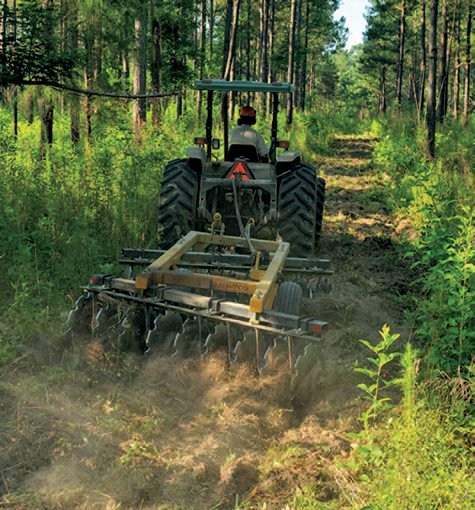
In 2006 we learned about Durana clover at a hunting trade show. Alabama had been experiencing years of drought conditions so we were interested in the plant’s reputed drought tolerance and overall hardiness. That spring a two-acre area of old bahia/bermuda grass pasture in the interior of the property was set aside for a Durana clover planting. Situated adjacent to a young pine plantation, the plot drains well except for two wet areas on the lower side. One end of the plot is shaded more than half the day. Planting preparation began with an application of glyphosate using a boom sprayer and tractor to kill existing grasses. Post kill, the ground was disked to break up the sod.
Severe drought conditions prevailed most of the 2006 summer when we applied lime according to soil test recommendations. In-mid September and prior to a welcome rain, the area was disked and rolled to create a smooth seedbed, then broadcast with 250 pounds/acre of 19-19-19 fertilizer. A mix of 5 lbs./acre of Durana and 50 lbs./acre of wheat was broadcast then covered using an ATV and roller.

Fall and winter rains enabled the clover to establish a uniform stand. The following spring deer, turkeys, and rabbits were visiting the plot. When the wheat matured the plot was bush hogged to expose the clover. The summer of 2007 tested the crop’s hardiness as it was subjected to record drought conditions in July and August. The healthy stand that established in the spring was blooming profusely in early summer but was burned down by late August after weeks of blazing heat and negligible moisture. The mowing and fertilizer application were skipped in the fall of 2008 because we assumed it wouldn’t survive. Winter rainfall was below normal too and reinforced our assumption. Wrong! Though the crop appeared to have failed, the following spring we witnessed first hand Durana’s hardiness as rains returned and new growth appeared from plant survivors and seed.
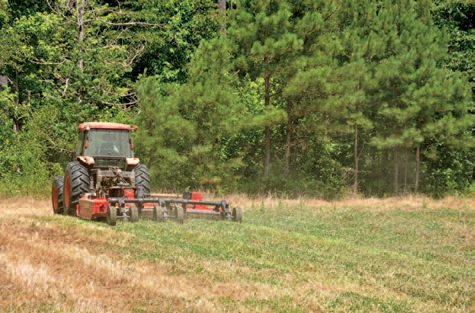
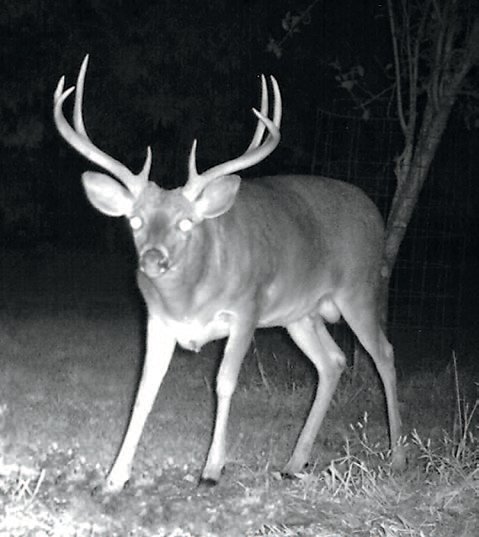
Sufficient rainfall throughout the summer of 2008 allowed the clover to recover despite our mismanagement the previous fall. Bermuda and bahia grass did infiltrate a few areas and required an application of Poast Plus® herbicide. Deer, rabbits, and turkeys kept the clover clipped all summer. By late August the plot was still blooming when it was mowed for the first time. We didn’t skip the September application of 0-20-20! By hunting season in the fall the plot was a lush deer magnet as evidenced by worn trails leading from neighboring property lines. Trail camera photos and personal observations revealed doe, yearling, and fawn groups and a bachelor group of bucks in velvet making regular visits to the field throughout the summer. One buck in particular was a trail camera star from June to December. We nicknamed him Hoss for his hefty size.
Weather conditions during 2009 were generally favorable. During the summer months, exclosure rings and observations showed deer fed more in the shaded areas where clover is protected from sunlight. Grass and weed competition became a maintenance issue requiring herbicide application and mowing. Looking back, we should have been more diligent about spraying when the grass was small and easier to control and procrastinated less with liming when needed. We’re continually impressed with how the clover endures despite management budget limits, sometimes less than perfect management, and factors beyond our control.

The planting survived record cold temperatures last winter and extended wet periods in the low areas this spring. As of early July, summer is shaping up to be a dry one. Only two .10 inch dust-settling rains have been recorded since May 30th. Despite the dry weather, almost every evening we observe a bachelor group of 10 bucks in velvet nipping at the Durana. Our plan is to replant next year and add Durana along an edge in several annual food plots.
We are seeing positive results in deer harvest data from 2006 to the present with a steady increase in body weights and improved antler development. Since then we’ve followed a program to avoid harvesting 2 1/2 year old bucks that was developed by a commercial bow hunting destination, Tara Wildlife in Mississippi. Ron has filmed and hunted there over a ten-year period and witnessed the results.
A buck must meet any three of the five following criteria:
- 16 inch inside spread
- 185 lbs.
- 18 inch main beam length
- 4 inch antler circumference
- 6 inch or better tine length
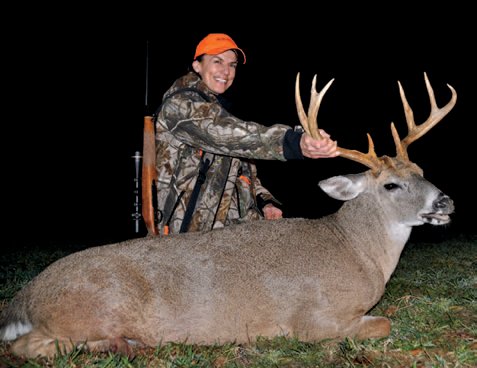
The previously mentioned buck named Hoss was photographed again in 2009 in and around the Durana plot. I tagged the 4 1/2 year old on January 28, 2010. The eight point buck had a 20-inch inside spread and weighed 225lbs. Incredibly, I was blessed to harvest two additional heavy antlered 4 1/2 year old bucks earlier the same season weighing 210 and 225 pounds. Allowing young bucks to reach their potential and improving long-term nutrition are proving key to achieving QDM on the Randle Farm. Durana clover is one of many forage options available in our habitat management program but certainly it’s proven the hardiest and most attractive to wildlife on a nearly year round basis.
History and Description
Durana, (Trifolium repens), earns a five star rating for production, nutrition, and attraction in QDMA’s Quality Food Plots guide. The clover is classified as drought and shade tolerant and will tolerate wet conditions and a wide pH range. Its greatest attributes weren’t developed by accident. Kent Kammermeyer is a wildlife consultant, certified wildlife biologist, and senior technical advisor for QDMA and authored the book’s species profile on Durana. He has over a decade of experience with the product and participated in test plantings previous to its release in 2003.
According to Kammermeyer there had long been a need for a persistent, productive, long-lived clover that could withstand competition in a mixed stand with perennial grasses and other aggressive plants. Kammermeyer reveals how prominent plant breeder, Dr Joe Bouton, while at the University of Georgia, initiated an aggressive white clover program. He visited pasture sites in Georgia to collect stolon-dense white clover varieties growing naturally and competitively that had survived hot, dry summers. His goal was to develop a persistent white clover similar in nutritional and agronomical attributes to ladino clovers but superior in persistence and grazing tolerance. The plant samples were subjected to intense grazing with grass competition. These ecotypes formed the parental foundation for the breeding program. Productive survivors were crossed and eventually a promising entry called GA43 (later named Durana) was selected for further development.
Kammermeyer explains the legume’s characteristics. “Durana, unlike ladino clover, is an intermediate white clover. Its medium size leaf and very thick leaf density from the bottom to top on the plant help prevent weed invasion. Runners, or stolons average 97 per square foot, nearly twice as many as conventional ladino clovers ensuring aggressive spreading and superior grazing tolerance. Prolific blooming occurs for long periods making it a reliable reseeder if the seed bank is ever needed due to plant die off from severe summer drought. Shade tolerance can exceed 70%.”


The following sections on planting, production, and maintenance are guidelines provided in QDMA’s Quality Food Plots guide.
Planting
The legume is adapted from east Texas across the South to the Atlantic coast and north of a line from central Georgia to central Texas. Below this line Durana performs well on sandy loam or heavy soils. It is adapted to the Pacific Northwest, the Upper Midwest, and New England.
Durana is acid tolerant and will grow in low pH down to 5.4. Like other clovers it will thrive in a pH of 6.0 and above. Have a soil test performed to determine fertilizer and liming needs for your soil.
Planting dates:
South: September and October and February to April
North: August and April
Rate: 8 lbs. per acre or 1/4 lb./1000 sq. ft. for a pure stand
5 lbs. per acre mixed with 7 lbs. red clover (Cinnamon Plus, Redland-Graze II, Redland III or Bulldog), and 50 lbs./acre wheat (or oats or rye where appropriate).
Note: For all spring plantings always substitute oats for wheat.
Prepare a smooth seedbed disked 4-6 inches deep. Broadcast the clover seed or mix. Apply the recommended fertilizer or in lieu of a soil test, apply 300 lbs./acre of 19-19-19 or equivalent. Drag or cultipack the area to ensure good soil to seed contact and a firm seedbed. Seed should be planted no more than 1/4 inch deep. Avoid using a disk harrow to cover. When crop failures occur most times it is because the clover seed is planted too deep or the companion grasses are planted too thick.
Durana can be successfully drilled into grasses killed by glyphosate in both spring and fall. Plant 3 lbs./acre and small grains 30 lbs./acre when using a drill.
Frost seeding: There are varying opinions on frost seeding dates in the South. Generally late winter in your area is best when freezing and thawing causes soil expansion and contraction with the temperature changes. Planting during this time will assure adequate soil contact with the seed for germination when soil temperatures rise. Fertilize in the spring.
Production
Durana produces 75-150lbs./acre per year of fixed nitrogen per year depending on soil and growing conditions thereby reducing production costs by lowering or eliminating the amount of nitrogen fertilizer needed. How does clover seemingly sieze nitrogen out of the air? Clover plants have a symbiotic relationship with Rhizobium bacterium that live in nodules, or small, bag-like growths on the plants’ roots. In the relationship, through metabolic processes, bacteria fix nitrogen providing for the plants’ nitrogen needs and in exchange receive carbohydrates and a favorable environment from their host plant. In simple terms, the clover plant provides the energy and the bacteria to provide the tools necessary to convert atmospheric nitrogen to a form available to plants. Durana is sold pre-inoculated with a coating of lime and selected Rhizobia bacteria (strain B) for optimum nitrogen fixation.
Durana’s protein production levels range from 25-30% and digestibility ranks up to 80%. After the first year of growth, depending on soil and growing conditions, forage yield ranges from 2 to 5 tons per acre per year.
Clover benefits companion crop plants as it improves soil structure, increases availability of soil nitrogen, organic matter and other nutrients, and reduces erosion and weed invasion due to its low spreading growth characteristics.
Maintenance
Kammermeyer advises unhooking your plow and hooking up your mower. Mow the clover down to four to five inches 1-3 times beginning in June and ending in August depending on weed and grass competition. Mow once in late August if competition is not a problem. Grassy weed management is key to longevity of Durana stands.
The grass-selective post-emergence herbicide, sethoxydim (Poast, Arrest, or Poast Plus) is recommended to control annual and perennial grasses and works best on actively growing smaller, younger grass of two to four leaves. Avoid applications when grasses are stressed by lack of moisture or mechanical injury (mowing). Refer to Quality Food Plots Chapter 10, Managing Weeds, for detailed information. Remember, it’s the users responsibility to follow the instructions on the label, including the list of crops on which the specific herbicide can be used.
Apply a no Nitrogen fertilizer such as 0-20-30 or 0-20-20 at 300 to 400 pounds/acre once a year in September. Some clover experts recommend an application of 100 pounds/acre Muriate of Potash (0-0-60) as soon as growth resumes in early spring.
“The great majority of Durana stands I have seen on both public and private lands persist for 3 to 7 years or more. Despite competition, drought, overgrazing, and cold I’ve encountered very few that I would consider a failure,” says Kammermeyer.
Clover and Forestry/Wildlife Management
Pine trees and hunting are intertwined throughout the millions of needled acres produced across the South’s timber belt. Bobby Watkins, formerly in research and development of herbicides at BASF is a forestry/wildlife management consultant in Starkville, Mississippi. Watkins is well known for his method of blending forestry and wildlife management techniques to improve timber production while creating wildlife habitat, hunting opportunities, and improving the wildlife carrying capacity within pine plantations. Two approaches utilize the wildlife preferred forage and shade tolerant attributes of Durana clover.
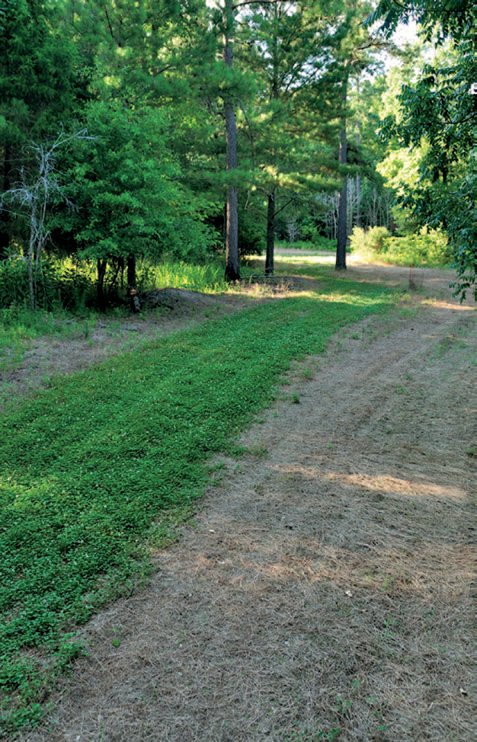
Watkin’s Hub and Spokes® design was developed for pine plantations. Branching from a central clearing, it provides hunting/viewing areas with multiple corridors for food plots and native vegetation management. Watkins uses Durana clover and annual forage crops to provide long term feeding areas in the spoke lanes. Nearby native vegetation and pines benefit from the nitrogen produced by the clover.

Watkins also uses Durana clover in food plots created in timber equipment access lanes after the first thinning of pines. Food plot management is initiated the second year after thinning when woody debris has decomposed.
Employing exclosure rings Watkins has found clover utilization is better in the spoke and access lanes than in traditional open food plots. Durana thrives in the typical shaded conditions with less burn down during hot weather. The lanes and surrounding pines offer excellent hunting areas as deer tend to move through the plantation to visit the more secluded lanes before entering open food plots. The narrow design offers deer security cover that’s a mere leap away.
Watkins coined the term, “rabbitat” to illustrate the habitat created by converting access lanes to long-term food plots within managed pine plantations. “When I see healthy populations of rabbits in access lane plots I know the area provides food, habitat, and security cover for less visible wildlife such as deer, turkeys, and quail,” says Watkins.
Other uses include “evergreen” clover lanes or “green firebreaks” that don’t require bulldozing when performing prescribed burns. Less soil movement means less erosion. The lanes also serve as travel routes for equipment.
Clover lanes provide bugging areas that attract the insects important to wild turkeys and poults. They are a great location for bluebird houses because fledglings have desirable habitat nearby on their first flight. The pollen is a food source for honeybees.
For more information on Durana white clover visit the following websites:
www.penningtonseed.com or 1-800-285-SEED
www.qdma.com
www.deerclovers.com
www.coontailfarm.com
Reference:
Quality Food Plots: Your Guide To Better Deer and Better Deer Hunting
Quality Deer Management Association
Editors: Kent Kammermeyer, Karl V. Miller, and Lindsay Thomas, Jr.