
It seems the vast majority of discussion concerning food plots in the East and Midwest pertains to plantings that focus on white-tailed deer. In deer management and deer hunting, they are used for two plain and simple reasons. First, if certain forage habitats are limited on a particular tract of land, supplemental plantings can be used effectively to provide nutrition during select time periods during the year. Whether high protein blends are employed strategically during the summer months to support antler development and doe fecundity, or hardy cold weather species are used to mitigate the late winter energy crunch, food plots can effectively supplement a deer herd’s nutritional needs in some situations. Secondly, highly palatable and preferred food plots are also obviously very effective at concentrating deer for viewing and harvest. The latter is the main reason the deer plot seed mix trade has boomed into a multi-million dollar industry.
With all the hype about food plots planted specifically with deer in mind, it is somewhat surprising how little excitement there is regarding supplemental plantings for wild turkeys. Granted, there are some seed mix manufacturers out there that provide products that give emphasis to turkeys, and turkeys obviously obtain some mutual benefits from deer plots. But the two fundamental reasons people plant crops for deer can also be impeccably applied to wild turkeys. In certain situations, strategic turkey plots can efficiently supplement a limited resource, like high-yield bugging habitat or late winter forage. Studies across the Southeast have shown in heavily forested landscapes, openings that provide high-quality brooding habitats are commonly the most restricted habitat parameter regarding a wild turkey’s life cycle (Dickson, 1992). And just as in deer hunting, planted openings can also be used to draw toms into close range for harvest. Now for the record, I personally do not hunt turkeys over food plots, as it is considered taboo in my old-school Alabama turkey hunting culture. According to my elders, calling up a gobbler is the only honorable way to kill him. In fact, any type of ambushing is frowned upon, and a believable story would have to be quickly fabricated if that sort of thing ever occurred. But I do think that a food plot’s utility in that regard has value for introducing children and new hunters to the sport. And I am sure if the truth was known, the gobbler-shamans that taught me “the way” have probably whacked their fair share of poor innocent red-headed toms just coming into the patch to eat.
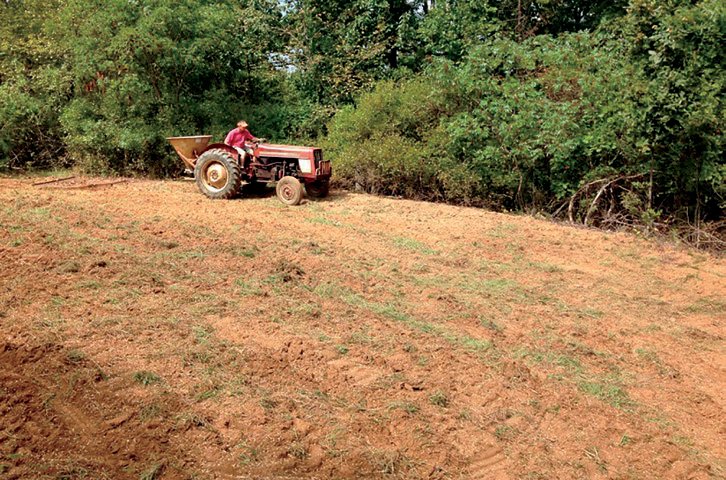
As stated earlier, food plots planted for deer can indeed often have mutually beneficial aspects for turkeys. However, the management, placement, and seasonality of turkey plots often differ from those specifically established for deer nutrition and harvest. This article will discuss some of those differences and provide a template for the establishment and maintenance of food plots with an emphasis on wild turkeys.
Location Sometimes Matters
The location of turkey food plots on a particular tract of land can be very important. And just because a particular spot would be good for deer or another wildlife species, it may not actually be the best choice for wild turkeys. For example, a half-acre green field in the middle of a large, scrubby, seven or eight-year-old cutover would likely be a prime place to coax a buck out for a shot. Deer would likely be using the adjacent thick habitats as bedding and staging cover. However, turkeys may not be so willing to venture through that dangerous rough to access the plot. Granted if turkeys were abundant on the property there would probably be some limited use of the patch from time to time by foraging birds, especially individual hens around nesting season. But it probably wouldn’t get as much consistent use by turkeys. The same food plot on the edge of an open stand of timber, on the other hand, would be expected to readily draw turkeys. The reason for this difference in preference between turkeys and deer can be explained by the dissimilar methods they use to detect and evade predators. While deer rely heavily on their olfactory senses to detect danger, turkeys of course depend mainly on their keen sense of vision to keep them alive. And while deer feel perfectly comfortable in thick brush and cutover habitats, it usually scares turkeys to death. Open habitats like mature hardwoods or grassy pine stands generally make turkeys feel safer from predators like bobcats or coyotes that could otherwise be hiding in the dense brush. There are of course exceptions to this rule, depending on the various regions and ecosystems wild turkeys inhabit. For example, Osceola turkeys in the native scrub habitats of south Florida meander through dog-hair thick palmetto all day without a care. And we have had all had that gobbler circle around us through a tangled jungle instead of down that clean woods road. However, you should try to establish your turkey food plots in a location they will feel comfortable visiting often. And as a general rule that is usually where they will have open, safe access to the patch.
Another important aspect to consider regarding placement of food plots is the interspersion of these openings among other habitats. It is generally a good idea to plot the openings strategically within a property so that all habitat requirements are available to turkeys in a smaller spatial area. A quick assessment of an aerial photo of a property will usually show where open habitats are lacking, as well as revealing some potentially logical areas for plantings. For example, if there are powerline rights of way, gas lines, or similar features on a property, portions of these linear features can often be very easily utilized as food plots. Landowners can usually coordinate with the respective utility company to meet wildlife management objectives as long as they are consistent with the company’s maintenance plan.
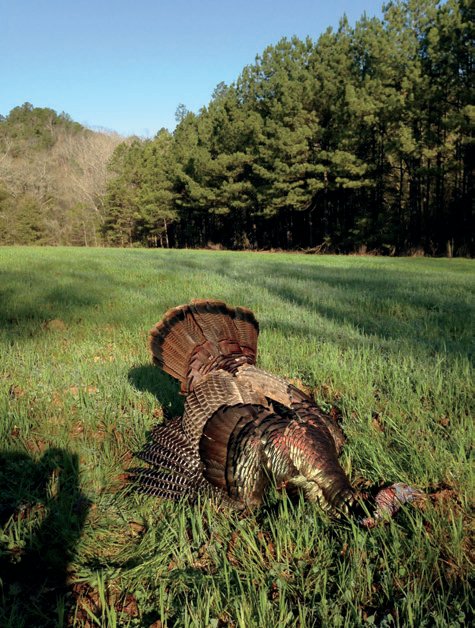
Turkeys forage throughout the daylight hours, but during most times of the year they concentrate their active feeding during the first couple of hours after leaving the roost and the last couple of hours prior to flying up. If you are planning on hunting turkeys over a particular food plot, you may want to consider the proximity of the patch to existing roosting areas. Even your position in relation to the rising eastern sun should be considered. Ideally, a turkey hunting plot would provide quiet access for you while also proving a good setup so that you are not looking into the sun. In addition to being blinded, you don’t want to be spotlighted for all oncoming turkeys to see. Depending on the timber types, topography, and other variables there may be certain areas on a tract of land that are used more frequently and predictably than others for roosting. For example, in regions with few large trees, it is common to see the majority of roosting occurring in the riparian corridors along drains or creeks. A food plot within fly-down distance of a stand of tall riparian trees or on the edge of a hardwood bottom can obviously be a deadly place to set up decoys or call to longbeards coming off the roost. If you know turkeys commonly roost in timber on the side of a mountain or hill, planting a patch on the top of the ridge may turn out to be a good strategy. The point is to use your knowledge of how turkeys behave on your land to choose a spot they will use freely, frequently, and comfortably.
Planting Choices for Wild Turkeys
In the Midwest, open herbaceous habitats can be abundant on the landscape. When it comes to maximizing wild turkey numbers, many forested properties in the South however are lacking in the amount of productive herbaceous openings they have. Strategic food plots can help fill these gaps for your flock. Depending on what species of forage crops are being planted, you will first of course want to consider the condition and type of soils you are dealing with. Some soils on a particular tract may be better suited to perennial plots like clovers while others may serve better planted in annual cool season crops like winter wheat. To successfully establish supplemental turkey plantings, just as with other food plots, it is important to test a sample of the local soils to determine liming and fertilization needs.
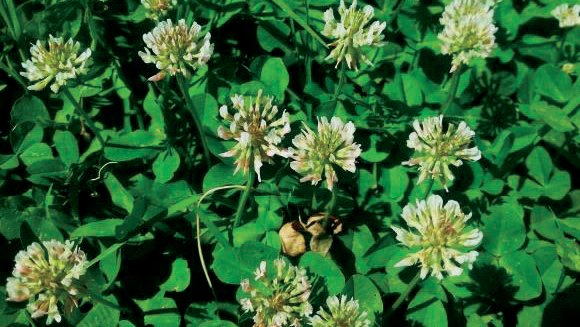
One highly nutritious supplemental planting choice for wild turkeys is ladino clover. Ladino is a large variety of perennial white clover that spreads via underground running rhizomes called stolons. White clover grows relatively low to the ground which makes it very attractive to feeding turkeys. These fields also make prime strutting zones for wary toms following feeding hens in the spring. Fertile, loamy soils with moderate moisture levels typically grow clover better than dry, poorer sites. This is a cool-season species that is most commonly established from seed in the late summer or early fall (September-October). Ladino and other white clovers have very small seeds and therefore should be broadcast (or drilled) into a well-prepared seedbed for successful establishments. This doesn’t mean just chopped up a bit with a harrow or disk. Ladino requires a high level of seed-to-soil contact and it is important to spend enough time working the ground to get a smooth, finely textured seedbed prior to planting. A low-nitrogen fertilizer (5-10-15 for example) is recommended at the time of planting, typically at a rate of 250-300 lbs. per acre. Firming the seedbed before planting with a culti-packer is preferred. Immediately after preparing the seedbed (before any rain) broadcast 5 lbs. of inoculated (with Rhizobium bacteria) ladino seed per acre (or 2 lbs./acre if drilled). Inoculant packets are available at most seed stores and can be mixed with water and applied to the seed before planting. Rhizobium bacteria are symbiotic with some legumes and can significantly increase the efficiency of the clover’s root system. Seed should be covered to no more than a quarter of an inch deep. Most of the time disking over clover seeds will bury them too deeply, whereas one more run of the culti-packer is sufficient to adequately push seeds down into the bed. In many areas, this perennial will last for three years or more but in hot climates it may fizzle out after only one, especially in xeric full-sun locations.
Ladino clover foliage provides wild turkeys with a good source of energy and protein in late winter and spring when acorn crops are often gone. In warmer months a clover patch serves as pretty good habitat for soft-bodied insects, and in turn provides for bugging opportunities during and following the nesting season. White clover is highly nutritious for white-tails too so you can also expect to see a lot of use by deer in a good stand of ladino clover.
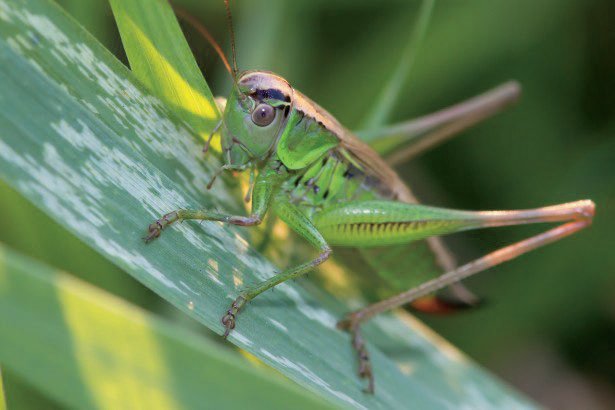
Other cool-season plantings preferred by wild turkeys include the traditional cereal mixes planted for deer, including winter wheat, oats, and annual rye. These cereal grass patches will typically become higher and thicker when springtime arrives and may even become dense enough for hens to nest in if they are large enough in area and left uncut. If the local deer herd doesn’t clip these cereal grasses down enough to affect their seed production, turkeys will often key in on the ripening heads of wheat and oats around the month of May, along with the grasshoppers and American locusts that will usually be hiding amongst the stems. One of the major ways turkeys differ from deer is in their utilization of food plots specifically for the insects and other arthropods produced in the warmer months. In contrast to cool season varieties, warm-season food plots can significantly supplement turkey nutrition through the hotter summer months. Warm-season plantings may include proso millet, browntop millet, sorghum, and buckwheat. In the South, millets should be planted after the last threat of frost (from late March to May) and most varieties will seed out in about 90-110 days. Seeds of the millet varieties are typically available to wild turkeys by late summer, prior to the availability of acorns. Buckwheat is another preferred warm-season crop. Buckwheat foliage can be used to some extent by turkeys but it is prized for its seed, which averages about 18% crude protein. Buckwheat plants mature fairly quickly in as little as 60 days. All of the aforementioned warm-season species can also provide good insect foraging for poults. Bahia pastures, although they are not typically planted specifically for turkeys, are also often frequented by local flocks for insects, as well as for the tiny black seeds later in the season. However, these pastures are virtually devoid of food during winter months. So a cool season food plot adjacent to an improved pasture planted with an exotic sod such as Bahia can add another seasonal element and help hold wild turkeys on a tract of land, especially on a property with limited mast or other winter food sources. Dense, short-rotation loblolly pine plantations are another example of a landscape that can also be fairly devoid of turkey foods.
However, tracts comprised mainly of pine plantations have been demonstrated as capable of supporting fairly dense turkey populations with the inclusion of a relatively small amount of interspersed openings (Sims, 1979).
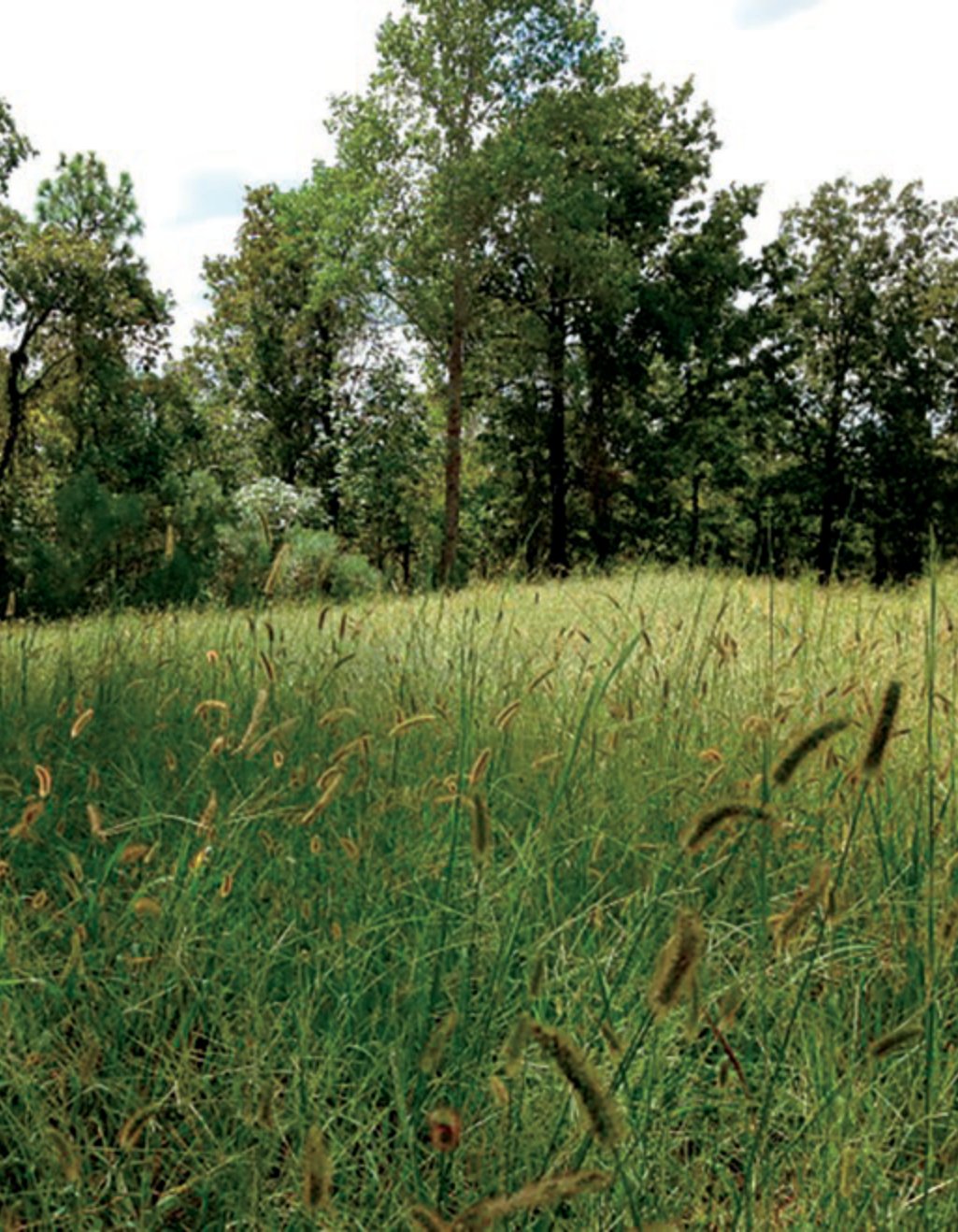
One often overlooked option for increasing turkey populations on a forested property is the planting of native perennials, especially if no open timber stands or old-fields exist on the property. Native vegetation is sometimes expensive to establish but once the investment has been made, it can easily be maintained in perpetuity by a combination of periodic bush-hogging or burning. Diverse stands of bluestem grass (Andropogon/Schyzachirium) mixed with native wildflowers and legumes like beggarweed (Desmodium sp.) make excellent bugging, brood-rearing, and nesting habitats. Some common wildflower species options include coreopsis, native sunflowers, and goldenrods. There are currently several reputable producers of native grass, forb and legume seeds in the East and Midwest, and you can browse the multitude of species and order online. Prior to making an order, it can be helpful to talk to the supplier or a local biologist to help determine which species and varieties may work best for your local soil and geography, based on the origin or ecotype of the seed. These native perennials are often just as good as or better than non-native food plot varieties for wild turkeys, as they can often provide multiple habitat requirements on a single piece of ground. Sometimes disking during various times of the year can release different herbaceous plant communities without the need to plant anything, depending on the local seed bank. Woody encroachment in your native perennial patches, whether they are planted or volunteer, generally must be controlled using fire, mechanical disturbance, or herbicide. If possible, limit summer disturbance until early August or later to minimize direct impacts to nests and poults. Native patches can be burned relatively easy as the flashy fuels are readily ignited and do not stay hot for long after they are consumed. Selective herbicides such as triclopyr or imazapyr can be effective in addressing brush and saplings issues while maintaining abundant herbaceous cover. Keep in mind, while brush and shrub competition is often undesirable, some native shrubs and vines do provide quality soft mast preferred by turkeys. Some of these include dogwoods, blackberries, sumacs, viburnum, wild grapes (fox and muscadine), Chickasaw plum, red mulberry, cat briar, and redbud. Managers sometimes have the ability to select for and retain some of these desirable shrubs in native herbaceous stands. In other cases, these shrub species can be purchased and planted along edges of food plots, pastures, or roadsides if they are lacking.
The Mighty Chufa
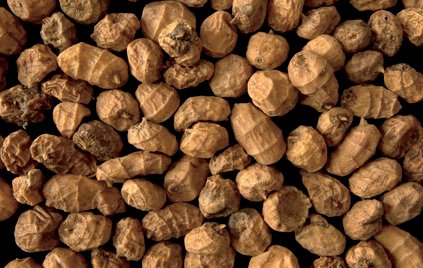
One of the most popular and effective warm-season planting choices for wild turkeys is chufa. Chufa (or Cyperus esculentus var. sativus) is a variety of yellow nutsedge (family Cyperaceae) thought to be native to Africa, India, and the Middle East, although the species itself is known from North and South America and Europe. It is also called zulu nut, tiger nut, or earth almond. Many nutsedges can become weedy in turf and agricultural situations, and in fact, the C. esculentus species is considered to be invasive by some. However the sativus variety doesn’t typically persist in a patch for longer than a few years, and the species is still recommended by conservation-based organizations like the National Wild Turkey Federation (NWTF). Chufa, like many other sedges, is characterized by its grass-like appearance, a triangle-shaped stem, and the production of numerous, small underground tubers. These tubers are high in starchy carbohydrates, glucose, fats, and protein. The species is quite edible by humans and is actually grown as a food crop in some parts of the world. In rural North African towns, for example, chufa tubers contribute a significant percentage of the daily diet. In Spain, a non-alcoholic drink derived from the nuts, called “horchata de chufa”, is highly sought after. To wild turkeys, the nuts must be just as tasty, because once they have been exposed to them, they can’t seem to get enough of them either.
Chufa tubers are not technically seed (or nuts) although they are sometimes referred to as such in reference to planting. The tubers are instead modified plant tissues used in storing energy, similar to a potato. Each healthy tuber has the ability to regenerate into a clone of the parent plant. They typically form from 1 to 3 inches under the ground. Therefore, chufa patches are ideally established in sandy or loamy soils so that they can be readily accessed by scratching turkeys. They will typically grow just fine in clay soils of the piedmont regions. But in those harder, clay soils, it may be necessary to break up portions of the patch when the plants are mature (typically around 100 days) to help expose the chufas. Another indicator of plant maturity is senescing (browning) foliage. Chufa leaves, when green and growing, form thick clumps about 24-30 inches tall, but after the plant matures, the leaves wither and die. When this happens, an abundant crop of small golden tubers should be lying just below the surface.
When planting a chufa patch, a fairly well-prepared (disked) seedbed, free of competitive weeds or pasture grasses, is preferred. The seedbed doesn’t have to be manicured to the extent needed for clovers, however. Following disking, the easiest way to establish chufas is by broadcasting dormant “seed” tubers at about 40-50 lbs per acre. They can also be row-planted like corn but most managers prefer broadcasting. Planting should occur after soil temperatures begin to warm up in the spring (typically after mid-April in the southern states) and before extremely hot weather sets in (before mid-summer). A complete fertilizer (13-13-13) and lime is typically recommended on most soils, however exact rates will depend on your soil test. Drag or lightly disk the planted patch to cover tubers to an average depth of about 1 inch. Even after covering them, keeping the turkeys from prematurely devouring your recently planted chufa patch can be a challenge. Scarecrows or brightly-colored flagging can work temporarily in some cases. Conversely, in other areas where turkeys have not been exposed to this somewhat un-natural food source, they must often be shown the tubers after they are mature. This is easily achieved by running a couple of disk strips through the patch. Some landowners re-disk the patch the following spring and let any un-eaten tubers regenerate for a second year. If there are lots of tubers left this can be successful, but in most cases (especially if the turkeys found them) it is best to replant each year. You should be able to gauge the density of available propagules by inspecting the ground after disking. If they are sparse, replant. Since the demand is usually much lower, chufa “seed” are sometimes more difficult to find than the more common wildlife seed like wheat, oats, and clover. Therefore, it is a good idea to order early if you are planning to plant chufa.
Just as in other warm-season food plots, sometimes weeds and perennial grasses can be a problem in chufa patches. A non-selective herbicide such as glyphosate can be used to eliminate competition prior to planting chufas or other summer food plot species. However if weeds remain a problem after establishment there are selective herbicide options, as nutsedges are resistant to some commercially available chemicals. For grass competition, Sethoxydim can be applied directly over the chufa with no significant impacts (different formulations contain various amounts of active ingredients so see label for specific rates). For broadleaf weeds, 2,4-D is an inexpensive option that can also be applied directly over established chufa patches.

Monitoring
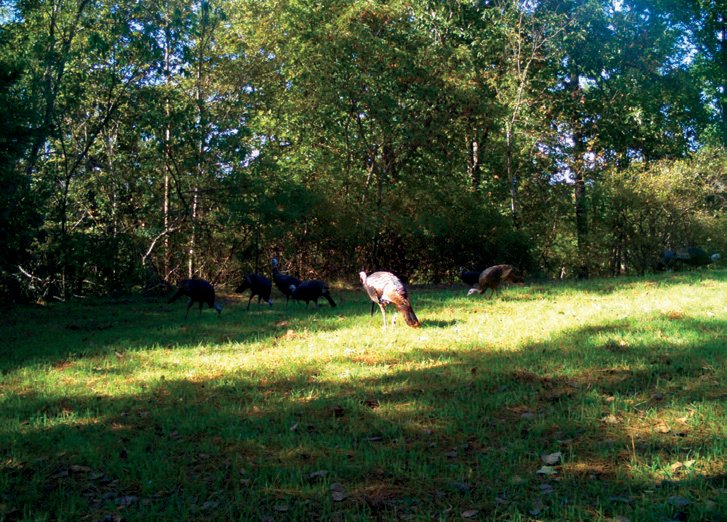
Like other management practices, it is a good idea to monitor the effectiveness and use of supplemental plantings by wild turkeys. Periodic monitoring throughout the year will provide insights about if and when turkeys are using the investments you have made. If a high level of use is observed, it may be worthwhile to increase the size or availability of that particular type of planting to maximize the time turkeys spend on your tract of land. If your tract has mostly closed-canopy hardwood habitats, holding turkeys in the winter can be easy. But keeping them around through the spring hunting season can be difficult without an adequate number of openings. A wild turkey flock’s home range can vary significantly; from a couple hundred acres to tens of thousands of acres on landscapes with sparse resources. But as we established earlier, food plots can be significant in filling some of these habitat gaps. As circadian changes occur throughout the year, movements and feeding patterns can be gauged to some extent by monitoring food plot activity and use. Turkeys, like deer, can also be effectively patterned and censused using remote cameras. Food plots are excellent locations for conducting these camera surveys for wild turkey flocks, and in many cases individual birds, on a property. By tuning in to how turkeys respond to openings on a property you can better understand local habits and habitat use. This understanding can be then used to anticipate needs and provide supplemental nutrition and increased harvest opportunities through a strategic wild turkey food plot management program.
References
Dickson, J. G. 1992. The Wild Turkey: Biology and Management. Stackpole Books. Mechanicsburg, Pennsylvania.
NRCS. 1999. Wild Turkey (Meleagris galapavo); Fish and Wildlife habitat management leaflet. Number 12.
Sims, K. R. 1979. Seasonal habitat preference and food habits of the eastern wild turkey in an area under intensive even-aged timber management in west central Alabama. M.S.Thesis, Auburn Univ., Auburn, Ala. 66pp.