
While most folks are familiar with fall and winter foodplots, planting patches and plots for wildlife during the summer growing season has significant value. Many times, especially in droughty summers, there is a shortage of quality food in even well managed woodlands. In addition, protein, in its many forms, may be the most important nutrient for living things and is needed by all critters during the summer. Of course, other nutrients are important and are necessary for adequate nutrition. For instance, carbohydrates and fats in the diet are important for most wildlife species in winter. Carbohydrates and fats help maintain body condition during cold weather and can usually be found in winter foods like acorns and corn.
Every hunter and wildlife manager is interested in maximizing use and productivity of their plantings in foodplots and fields. Whether the field is planted for wildlife habitat or increasing wildlife observation, specific plantings can be catered to each scenario. One consideration for foodplots is maximizing nutrition for select wildlife species, especially critical time frames of nutritional stress.
Nutrient requirements vary on the wildlife species and time of year, even by sex. Take turkey poults and quail chicks for instance. Newly hatched chicks need 28-30% protein in their diet to build feathers and grow bones and muscle. To meet these requirements, they feed almost exclusively on insects for the first 2 weeks of their life. In this case, protein management for foodplots would take managing fields for maximum insect production instead of worrying about the protein levels in the plants actually growing in the field.
Protein requirements for nesting and laying hens and songbirds are also very high compared to other times of the year. Developing and laying eggs takes a huge toll on female birds and their protein intake needs to be high. Deer have varying requirements for protein in their diet depending on the season and sex as well. Does need high protein levels in summer when developing fetuses and milk production is important as well as in the fall when lactating does are tending fawns. Bucks need high protein when they are developing antlers and building muscle prior to the rut. Fawns and yearlings need high protein diets while growing to fill out muscle and bone structure.
Summer plantings are also necessary to grow the carbohydrates that wildlife relish during the winter in addition to establishing the seed production areas that birds like quail and doves use heavily in fall and winter.
Protein crops
One of the most common problems managers encounter when attempting to plant legume forage for wildlife is that not enough acreage is planted to survive browse pressure. Folks who plant summer beans in winter greenfields (typically less than an acre in size) usually fail to establish a stand. In many cases there are neither enough fields nor are they large enough to establish legumes. Commonly, the plants sprout and are browsed to the ground immediately, essentially providing nothing for the wildlife and a waste of money. In these cases, browse tolerant legumes like clovers can be used but these still do not provide enough forage to make a substantial difference. In most cases, fields planted for summer forage legumes need to be five or more acres and planted acreage should make up 5% or more of a property to contribute substantially to wildlife nutrition.
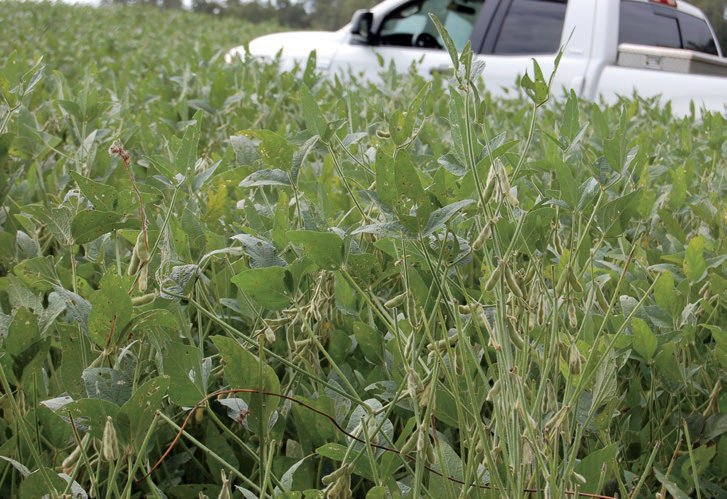

There has been a lot of research and development in summer forage legumes for wildlife. While the agricultural community has developed high seed yield legumes like soybeans for food production, the wildlife community is not as interested in growing beans as they are in high forage production in leafy plants that withstand browse pressure. Plants like soybeans, lab lab, and some peas have been developed that strictly focus on maximum forage production for wildlife. Many of these varieties are “roundup ready” so that roundup can be sprayed directly over the top for weed control, as well as modified for resistance to leaf diseases and nematode problems.
The more common summer leafy legumes planted are soybeans, lab lab, iron clay and cow peas, velvet bean, hairy indigo, joint vetch and alfalfa. All are excellent for forage quantity and quality. Browse and drought resistance are important qualities in the deep Southeast. High deer densities and typical early summer dry spells often are prescriptions for failure. Brands like “Eagle” brand soybeans (http://eagleseed.com/) have been developed specifically for leafy forage production, browse tolerance and the ability to tolerate moderate drought. While initial seed costs may be somewhat higher, the end result is usually better, resulting in cost-savings.
There are a variety of clovers that, typically, are planted with winter grains. Clover patches can be planted and maintained as well with regular mowing and weed control and clovers can often be maintained for years. Common clovers planted in winter forage are crimson, arrowleaf, ladino, durana, red, and subterranean. Alsike clover is typically planted in spring. Most clovers provide fair forage production in summer and also make excellent insect production areas. While most are planted in the fall in greenfields, they typically grow very little in winter and are not utilized much until spring when they start growing.
With all forage legume plantings, the idea is to have an actively growing crop through the full summer. Therefore, agricultural practices are used to maximize the growth of the stand. Pre-planting disking, pre and post planting herbicides, fertilizer and liming of fields are all used and can get expensive, but are well worth the effort and expense.
Carbohydrate and seed production
The other main category of summer plantings is grains for carbohydrates and seed production. Plants such as millet, sorghum, corn, sunflower, etc are all used to produce both quality feed as well as cover for wildlife in summer – winter. Even when landowners we work with do not have an interest in dove hunting, we still often recommend dove field plantings for deer, turkeys and quail. A large (5 – 15 acre) field planted to a mix of corn, grain sorghum, millet, benne, buckwheat and/or sunflower becomes a focal area for the deer, turkey and quail all summer as well as nearly all winter. These plants growing in summer provide good cover and insect production for these critters and, once matured with abundant seed, provide a buffet for these species all through the fall – winter. Most of these plants do best planted in larger acreage fields so that they can stand up to pressure from deer and raccoon damage.
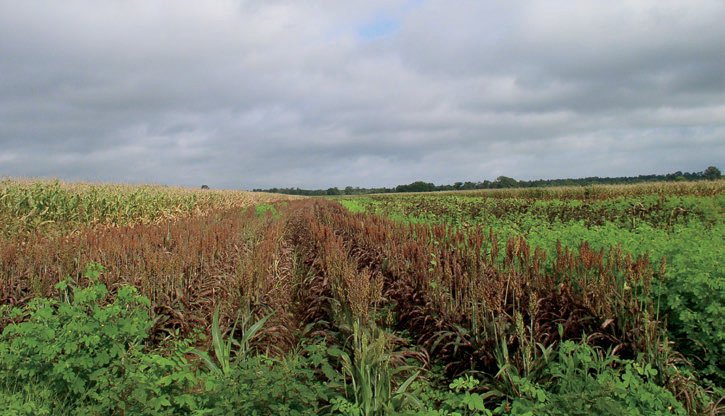
Millet is often planted for quail and doves and typically has the shortest “season” of these plantings. Quick to seed out, with short cover, browntop millet provides an abundant small seed as well as insects for quail and turkeys and is a great seed for dove fields. This millet is also suited to small patch plantings. Other types of millet have been developed and are suitable for other uses. Taller millets, like Pearl, dove proso and foxtail millet, make good cover and feed patches for quail. Millets like Japanese and Chiwapa make excellent waterfowl impoundment plantings growing well on wet soils and producing abundant seed and taller cover for ducks.
Sorghum is a longer season plant and is available in several varieties from 3′ to 8′ tall plants that provide a larger seed, taller cover and a seed that will not decompose nearly as fast as millet. Sorghum is not only readily used by quail, doves and turkeys, but deer will also feed heavily on the seed heads in the fall – winter. Sorghum is a good high fat and carbohydrate food for all wildlife. Sorghum is also an excellent choice for scattered small plots (1/4 – ½ acre) throughout woodlands managed for wildlife. It tends to be fairly drought and deer browse resistant, and does well in small patches.
Corn is a common “standby” plant that many people plant, with good reason. It is an excellent cover plant in summer – fall and an excellent high carb/fat source in winter, if the field has any grain left by then. If not planted in enough acreage, corn can easily be decimated by both deer and raccoons which will eat all the grain and knock down the stalks, leaving nothing for other critters. However, if enough acreage is planted, corn provides a good food source for winter and makes an excellent addition to dove fields.
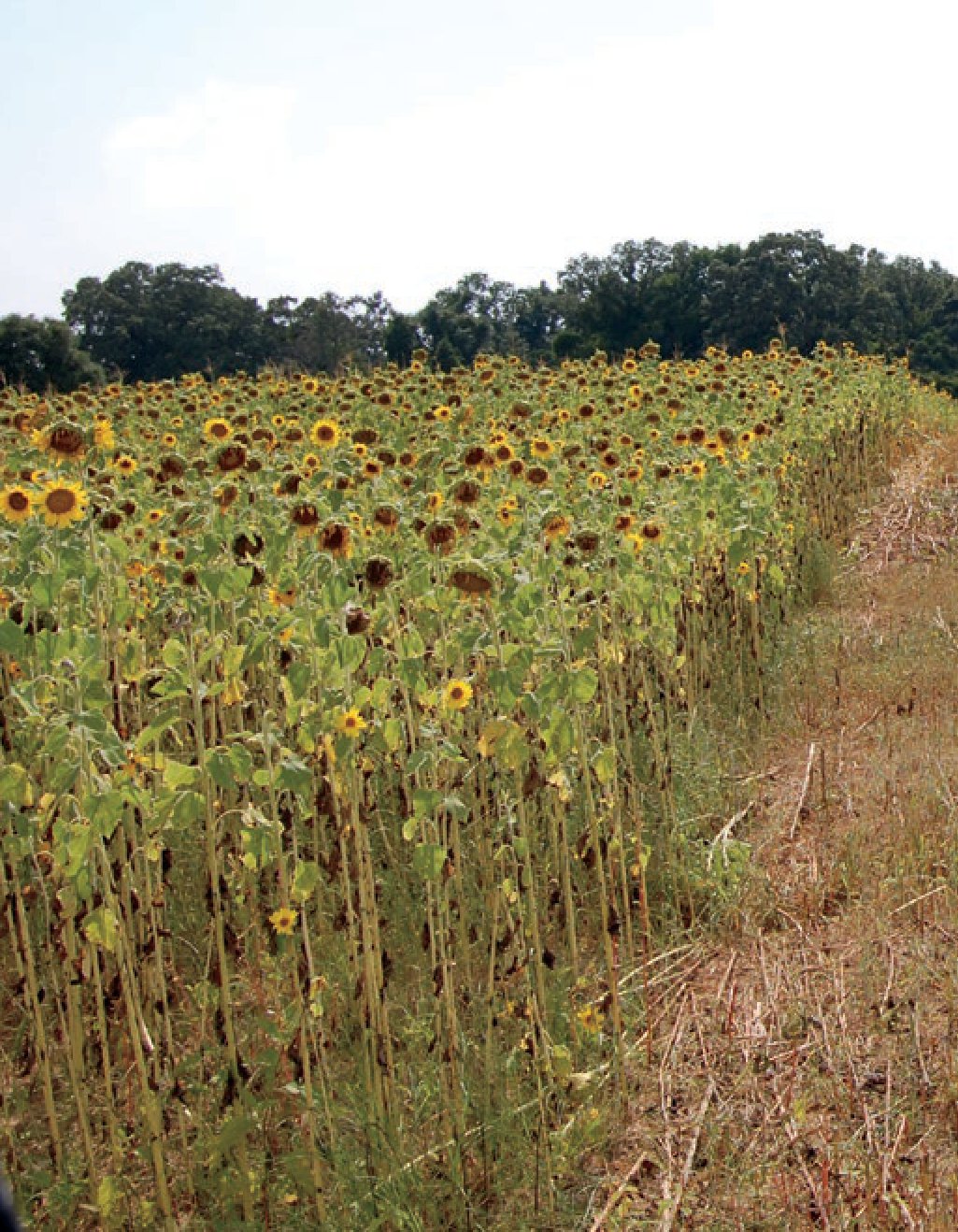
Sunflower is probably the harder of these summer grains to establish since they are susceptible to weed problems and deer will eat off the maturing heads during summer. However, if you can get a field established, there is not much better dove field planting and turkeys and quail also use the cover and seed in sunflower fields readily.
Insect production/native plantings
Finally, plantings for broods simply entails promoting insects in an accessible form. Insects must be abundant and available in fields that chicks can get into and run around to catch the bugs. For this, fields of ragweed, fallow winter greenfields and clover fields as well as burned pineywoods all are excellent insect production areas. To promote ragweed, open fields, 1-3 acres in size are simply disked in the fall about the same time as greenfields are planted. In most cases this is all that is needed to get a field of ragweed since, often, the seeds are in the soil ready to grow. If not, the seed is readily available and can be planted. The beauty is that, with occasional disking, the seeds will continue to resprout every year. Fertilizer and liming helps but is usually not necessary. These “fallow” fields not only create some of the best brood fields available, but ragweed also grows abundant forage in the 20-25% protein level that deer love to browse.
Food plot planting with an eye on meeting the seasonal needs of wildlife is highly important. Providing an abundance of high protein foods available for your wildlife in summer and high carbohydrates in winter, you will not only see both a higher number of critters but also healthier wildlife populations.