
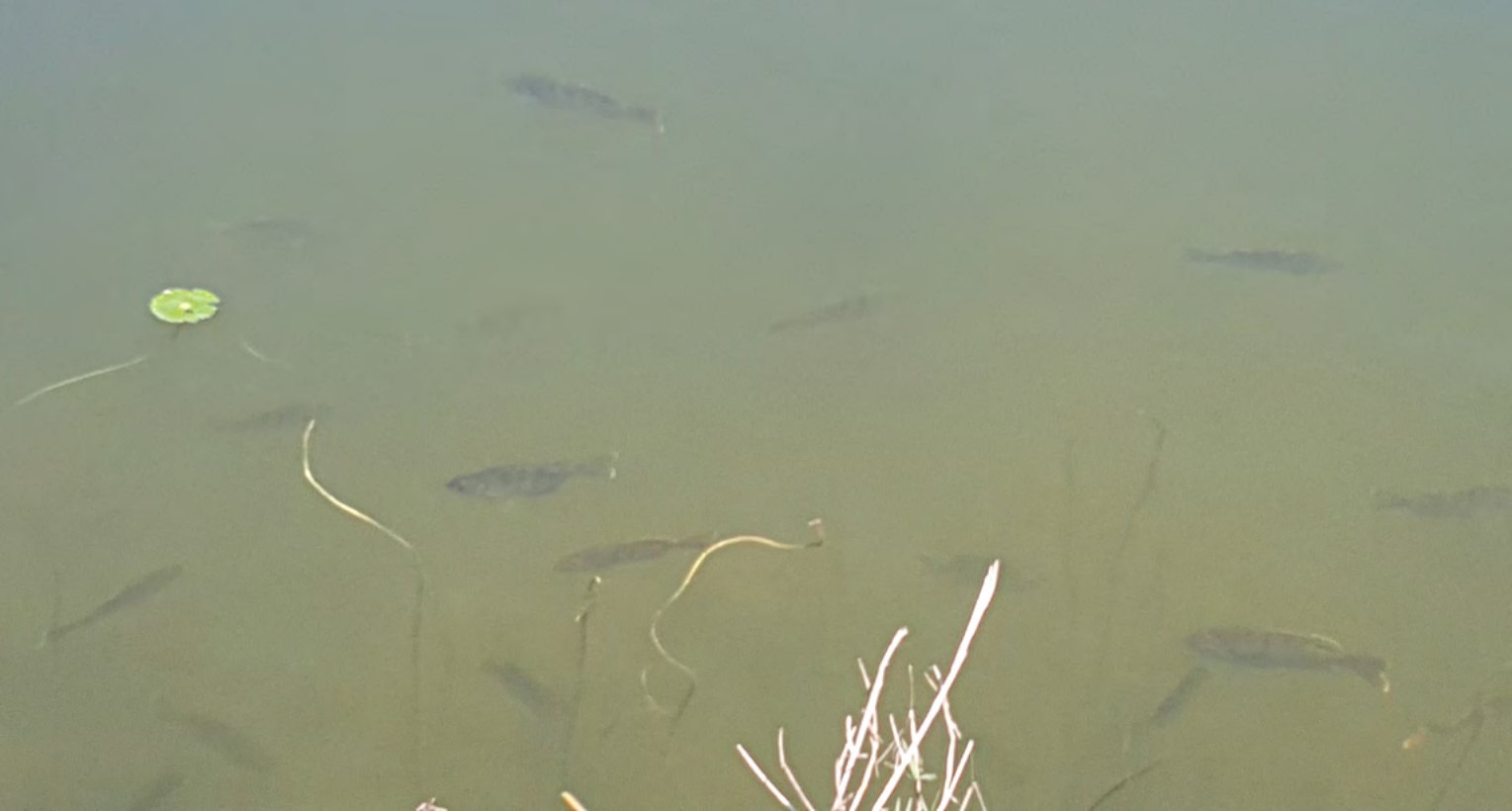
Most have heard a lake manager say or have read that an algae bloom (green water) is good for fish production. This statement is true to a point, but you can have too much of a good thing. A “perfect” algae bloom is a great help in growing quality largemouth bass, black crappie and striped bass hybrids, but some lake owners get too much of an algae bloom and struggle to maintain a healthy fish population.
Planktonic algae (Phytoplankton) are microscopic floating leafless plants that absorb nutrients from the elements in the water. This differs from filamentous algae (long, stringy, “slime” or “pond scum”) on the lake bottom or floating in mats on the surface. Like most plants, algae utilize sunlight to grow, so shaded ponds may not grow as much planktonic algae as waterbodies with more exposure to the sun. There are many kinds of algae – green, red, brown, and blue-green algae. It’s important to be familiar with them because most are harmless, but some blue-green algae can produce potent toxins which can stress or kill fish, and poison other animals drinking it. These toxins are produced inside the cells and stay there as long as the cells are alive. When these cells die and break down, toxins can be released into the water. We have rarely seen a toxic algae bloom in private property lake management, but you do need to be aware of them in case you encounter one. There are more than 17,000 algae species that have been discovered to date and possibly more yet to be discovered.
Most planktonic algae species need to be identified with a microscope, as stated earlier there are thousands of species throughout the world, but in most instances, general identification is acceptable for freshwater lake management. Only on rare occasions does algae need to be identified down to the species level. One of the issues we see with planktonic algae is it becomes too intense and causes water chemistry issues (low dissolved oxygen). All these issues are associated with excess nutrients whether naturally occurring or man-made, and in warmer water. Most freshwater algae blooms grow when water temperatures get above 60° F and thrive as temperatures get warmer. An 87 – 92° F water temperature creates a prime environment for planktonic algae growth. In small freshwater ponds, we rarely see any of the few toxic algae species. These are more common (and still not that common) in larger lakes, reservoirs or in saltwater near the coast. Planktonic algae can occasionally appear on excessive dry or wet years, or be a chronic problem depending on the age of your waterbody and activities currently or historically occurring around and/or upstream of your lake. Remedies range from doing nothing and letting it run its course to continually treating with herbicides and/or biological treatments.
Green water has been proven to support up to 400% more fish than clear water. Green water is not “dirty” water or necessarily bad. This is in the form of planktonic algae which turns the water green or blue-green, brown, red and many other color variations. It can be a slight tint with visibility down several feet to a heavy paint-like color with zero visibility. In some instances, the water may have suspended dirt particles with an algae bloom, giving the water a brown color. To test this theory, take a clear jar of lake water and allow to set in the sun all day undisturbed. If upon return the water is greenish with sediment at the bottom proves it true. If the water is clear and there is sediment in the bottom, the water is just turbid (dirty). If the water is still brown with little or no residue on bottom, you have a brown algae bloom. Many species of algae are involved in algae blooms and these species change over time based on temperature, light, nutrients, and other factors. Most planktonic algae are harmless and in moderation benefit fish populations. Planktonic algae are the foundation of the food chain known as phytoplankton.
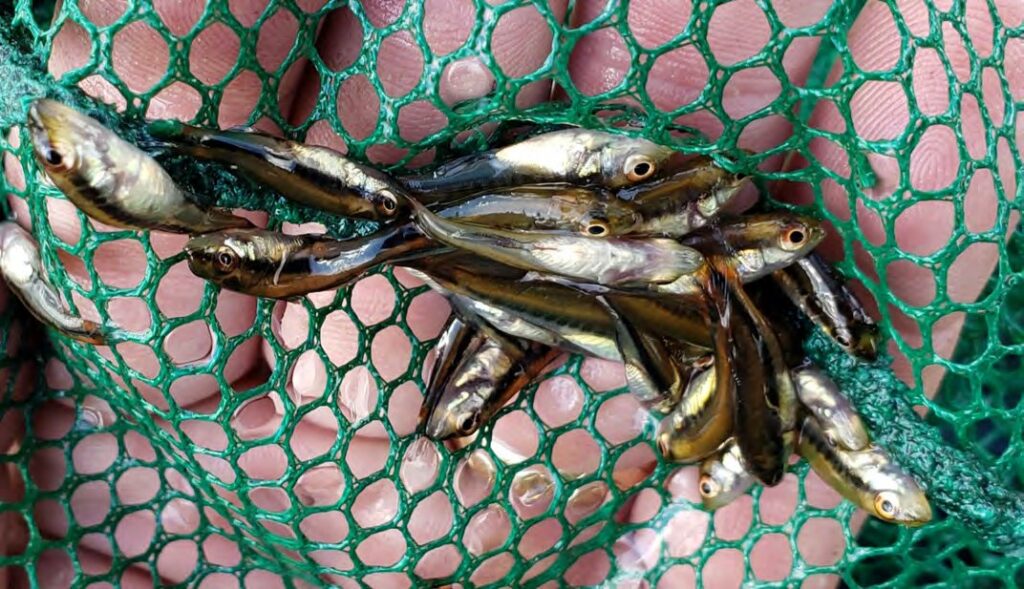
Phytoplankton (microscopic plants) feed zooplankton (microscopic animals) that feed small fish, that feed larger fish and wildlife. Most 24-48-hour old fish hatchlings, regardless of species, feed on phytoplankton and zooplankton. From there, depending on the species, they may continue to feed that way, or they may progress through the food chain changing forage many times if a top-level predator such as the largemouth bass. The more food available for fry and fingerlings, the faster they grow and the higher the survival rate. Species such as the threadfin shad feed on planktonic algae (phytoplankton) their entire life span.
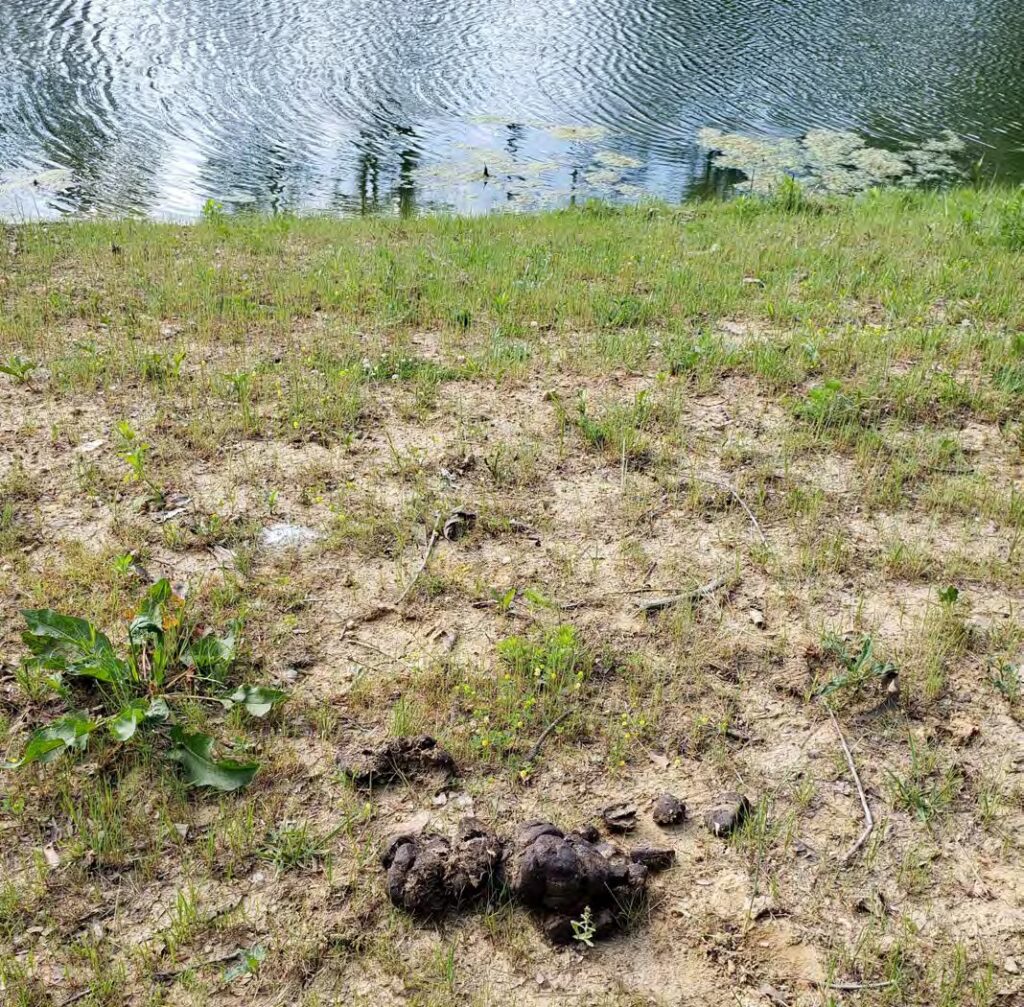
For algae to flourish you need adequate sunlight, adequate water temperature and nutrients which can come from agricultural runoff (animal waste, plant fertilizers), residential fertilizers (homes, golf courses), natural areas (flooded woods, prairies, wetlands, fields, etc.) where large amounts of dead plant material have built up, and from the lake bottom itself, where large amounts of organics have built up over the years from natural lake progression. Besides nutrients, planktonic algae need certain water chemistry parameters to fall within certain ranges, otherwise this type of algae cannot utilize the nutrients to grow and multiply. Water chemistry parameters such as hardness, alkalinity and pH need to be above 20 ppm, 20 ppm and 5.5, respectively, for a good algae bloom to occur. This is why it is always advised to have water chemistry checked prior to initiating a fertilization program, to ensure an algae bloom will occur when desired. We have witnessed liming a lake prior to beginning a fertilization program which allowed an algae bloom to occur naturally with nutrients already present, and no fertilizer was necessary to achieve the desired results.
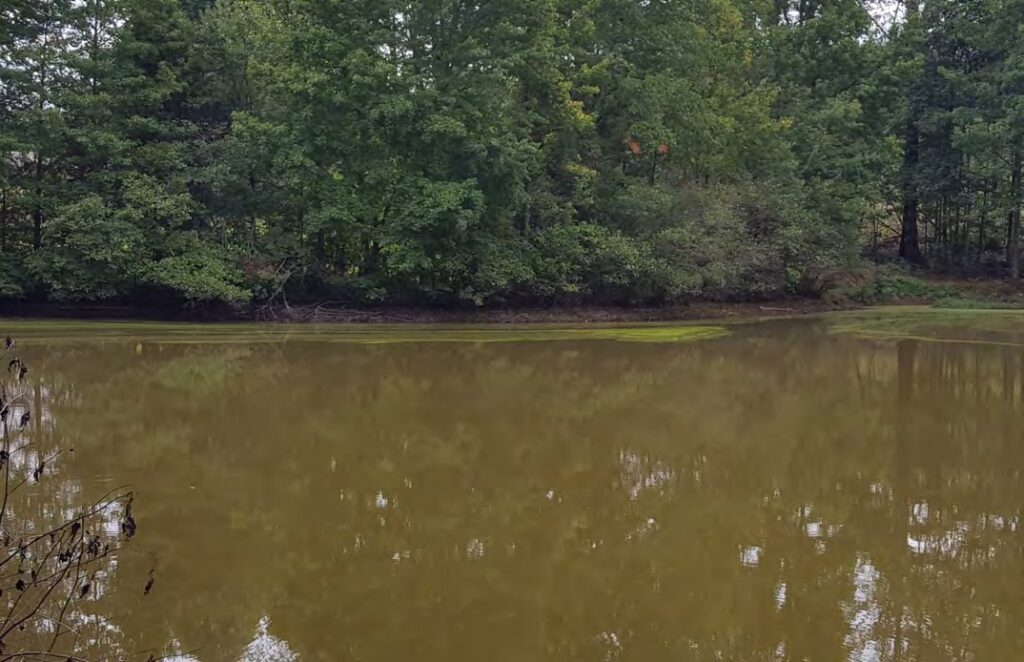
An ideal algae bloom restricts water visibility from 18-36 inches. Anything less and the bloom is too intense, anything more sunlight penetrates farther into the water column and will promote undesirable submerged vegetation growth. Planktonic algae raise dissolved oxygen (DO) levels in the water during daylight hours, but dissolved oxygen levels subside over night as some cells die-off and the remaining do not photosynthesize (put out oxygen). Algae blooms can cause issues after they become established with a sudden die-off. Sudden die-offs occur when a lake dye or herbicide is applied to them, or subsequent days of overcast (no sunlight) weather can trigger a planktonic algae die-off. This die-off creates decomposing plant material and lowers DO levels, sometimes stressing or killing fish. As air temperatures cool and daylight hours shorten, algae blooms subside and may disappear during winter, but if conditions are right will re-appear the following spring with no intervention.
In a lake with an algae bloom, DO levels will fluctuate throughout a 24-hour period. Dissolved oxygen levels will be the lowest at daybreak, steadily increasing as the day goes when the sun is out. After dark, the DO will begin to drop until morning. This swing is natural, fish tolerate this and should have no issues unless the algae bloom is too intense. If the lake experiences several days of cloud-cover, the DO may stay low and on occasions cause stress or kill fish. A green lake typically has a higher DO level during the day and lower at night than a clear lake.
A lake with an algae bloom will have a higher DO level in the top of the water column during the day than clear lakes. But it will also have lower DO levels during the day deeper in the water column than clear lakes, especially in the summer. When waterbodies become layered like this the term is stratified. To make the algae bloom lake water chemistry more stable (de-stratify), the addition of a bottom aeration system will greatly improve the entire water column. A green lake with bottom aeration will have DO rich water throughout the water column all year long, allowing fish to use the entire water column instead of only the top 7-10 feet. This also helps prevent lake turnover from drastic temperature changes where bottom water with little or no dissolved oxygen quickly rises to the surface and causes fish kills.
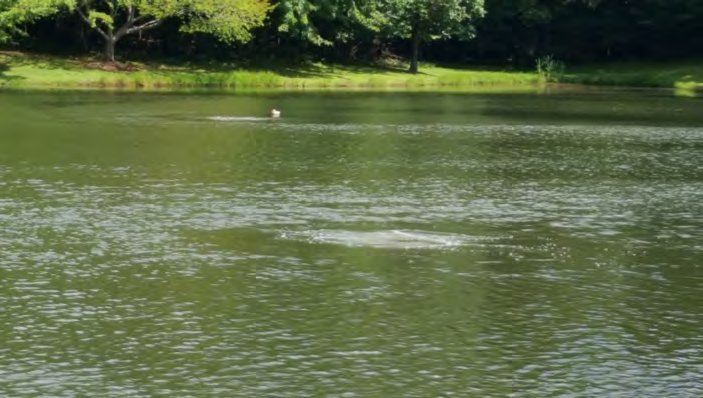
As emergent (plant parts below and above water surface) and submergent (plant parts below water surface) plants increase their presence, so does the water clarity. When these plants become more abundant, they use up more of the nutrients leaving less for the algae bloom, which causes the water to clear. The clearer the water becomes the more other plants can grow due to sunlight reaching farther into the water column. Therefore, when conducting a fertilization program, you must check water visibility frequently to maintain the desired visibility distance to not allow undesirable plants to grow and visibility to increase and grow more emergent and submergent plants that may become a problem in the near future. We have seen a perfect 20-inch visibility with a fertilization program become an aquatic vegetation nightmare in a couple months because the algae bloom went away, water cleared, and other plants exploded in growth with the excess nutrients available.
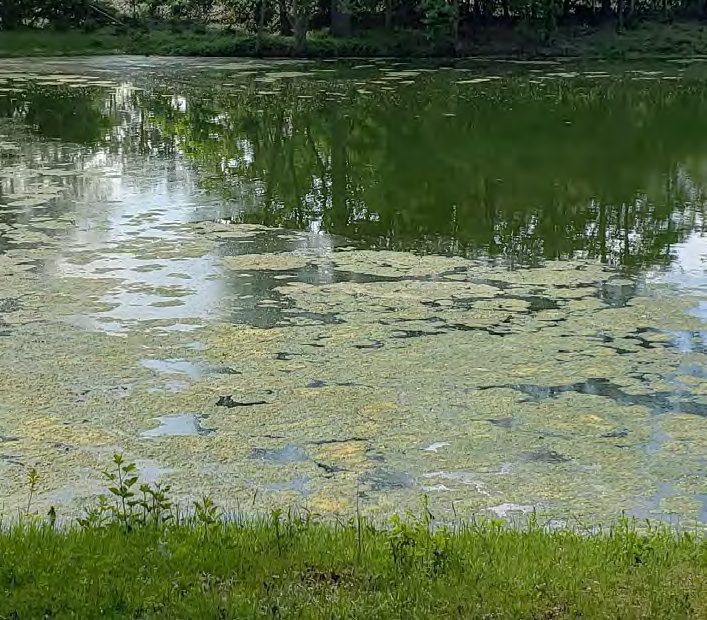
We always stress, if you are going to perform a fertilization program to maintain an algae bloom, you must commit the time and funding to maintain it throughout the entire growing season, otherwise trouble could ensue with excessive vegetation and/or water quality issues.
If an undesirable algae bloom exists and you want to stop or reduce it, the nutrient source must be removed to accomplish this. Depending on where the unwanted nutrients are coming from, or if they are already in the waterbody, this may be a simple fix or require major work. An example of a simple fix is placing barriers (fence) up excluding livestock and the runoff from their living area from entering the lake. A more complex fix may be drawing a lake down, scraping out the organic muck and refilling, which is major work.
Caution must be used to treat algae blooms with herbicides or lake dyes. Once the bloom becomes established, killing the bloom in spring or summer will greatly lower dissolved oxygen levels and will probably kill fish. One instance we experienced was a client in June had enough of his “green” water and was about to treat his prize bluegill pond with a dye to reverse the algae bloom. Due to the time of year, the dye would have killed the algae bloom, however, all the dead phytoplankton and zooplankton particles would have started decomposing, which would have removed all the dissolved oxygen present and caused a catastrophic fish kill. Instead, we had him wait until early winter when the water was mostly clear to add the dye and the following spring, he continued dying the lake without the return of the algae bloom and without killing any fish. We have witnessed professionals who only manage lake weeds and did not understand water chemistry or fish biology and make this grave mistake many times. Use only aquatic labeled herbicides, as some have used homemade concoctions and inadvertently killed fish or desirable plants in the process to stop algae blooms. Karmex has become a popular herbicide ingredient used by landowners in lakes, it is both illegal and harmful to aquatic ecosystems. The active ingredients that have been successful in treating planktonic algae include copper-based compounds, sodium carbonate peroxyhydrate, alkylamine salts of endothall, and flumioxazin. Reading and following the labels is imperative when treating algae, you do not want to induce a fish kill. If a lake dye is desired, apply in mid/late winter when the bloom is less established and maintain the dark color throughout the growing season to avoid any fish stress or die-offs and to control submerged plant growth. Allowing a buffer of plants to grow around and in a lake will also help reduce nutrients entering the system. The more plants using the nutrients, the less available for algae.
Next time someone claims the “green” water is dirty water, explain to them that is not necessarily true and a slightly green lake has more fish and aquatic organisms in it than clear water lakes. I wish all lakes had a slight algae bloom never needing manipulation one way or the other, then growing quality fish would be a much easier job, but then I would be out of a job.