
Many lake owners make the mistake of feeling complacent, feeling they have reached their goals and reduce or stop management practices, or discontinue the assistance of their Lake Manager. This usually comes when fishing has gotten good, due to intense management practices performed, and following their manager’s recommendations. This thinking can lead to timely and potentially costly measures to correct issues that arise from lack of lake management after you have reached your goals. Water chemistry, vegetation and fish all need to be consistently monitored and issues addressed, even after you feel everything with your lake is good. Once goals and objectives are met, there are still things needing to be done to keep the quality of the fishery at the level you have achieved, otherwise it can quickly return to where you started, or become worse.
Water Chemistry
Water chemistry parameters in both new and old lakes change quarterly and over time. Water chemistry is the foundation of the aquatic ecosystem. Once your lake has reached your goals, occasionally monitoring water chemistry is still advised. This is fairly inexpensive to have done, or you can purchase some basic meters and testing kits and monitor yourself, if you know how to interpret the results.

If you have initiated a fertilization program, checking visibility every two-to-three weeks from early spring to late fall is mandatory. When fertilizing, visibility should be between 18 and 36 inches. If a Sechii Disk is not used, the trick of lowering your hand into the water off a dock or from a boat is advised, and if you can see your fingertips when most your arm is under water, add pond fertilizer as directed on label until water temperatures drop below 60° F in late fall or early winter.
Also associated with fertilizing is water pH. If the pH gets low (below 6.0), it will not allow an algae bloom to occur, and lime will need to be added. We recommend adding one-to-two tons of lime per acre (to raise 1.0) in late fall, to get it right so nutrients can produce planktonic algae (green water) the following spring. The reason lime should be added in fall is so it has time to completely dissolve and gradually improve the pH to a desirable level for fertilizing.
Vegetation
If vegetation begins to appear and fertilization has been stopped during the growing season, the decision must be made if there are too many plants present above or below the surface to allow an algae bloom to resume without having the plants take over and the water remain clear. When nutrients (fertilizer) are put into a lake, they will be used by planktonic algae, filamentous algae, submerged or emergent plants. If shoreline, emerged, and/or submerged plants are well established, they will use up all the fertilizer and not allow an algae bloom to occur.
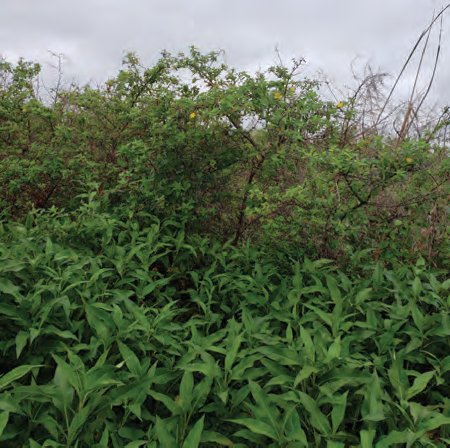
Shoreline and submerged aquatic vegetation including algae (filamentous and planktonic) must constantly be monitored and treated as needed. Letting a plant species go in hopes it will correct itself is never successful and renders a costly mistake and possibly be detrimental and even catastrophic to the fish population you have worked so hard to develop into a quality fishery. Once a potential invasive or problem plant appears, it needs to be identified by species, labeled as beneficial or detrimental, and if needed, treated with herbicide or manually removed immediately. The earlier the herbicide treatment is performed, the better results and less expensive. If a plant gets out of control and covers a large portion of a waterbody in late spring or summer, treating it can put your fish population in jeopardy by stressing or killing them with a sudden drop in Dissolved Oxygen (DO) caused by decomposing plant material. Some plant species have the capability of reproducing and spreading faster than you think. Looks good today, but a few large rains and high nutrient runoff over the next few weeks can leave you scrambling and losing ground on your perfect lake. If a chronic vegetation problem exists, consider stocking grass carp to help maintain may be an option. Be sure the problem plant species is consumed by grass carp prior to stocking. Not all plants are consumed by grass carp, and they consume very little filamentous algae. We normally recommend stocking grass carp 3-7 per acre depending on the plant and objective. Do not stock grass carp with the assumption, “the more, the better”, this is an assumption that sets you up for a disaster.
Filamentous algae is one of the most common nuisance plant species we encounter. Many call it moss or pond scum, and can turn a very nice aesthetically pleasing water body into a mess in a short period of time if unchecked. This is caused by excess nutrients whether already in the lake, washing in from nearby uplands, or being added to produce a planktonic algae bloom. Besides treating the algae with herbicides, (usually copper based products) the cause needs to be identified and reduced or eliminated, if possible. If a fertilization program is in place, this can be a vicious cycle of fertilizing and spraying if not done properly. That is why staying on top of a fertilization program is mandatory. As water gets clearer, other plants besides the planktonic algae are absorbing the fertilizer and growing. The fewer nutrients available for planktonic algae growth, the clearer the water and the better other plants grow above and under the water surface. If pond dye is being used to keep submerged plant and/or filamentous algae growth down, visibility should be checked constantly during the growing season and more applied as needed, per the manufacturer’s recommendations.
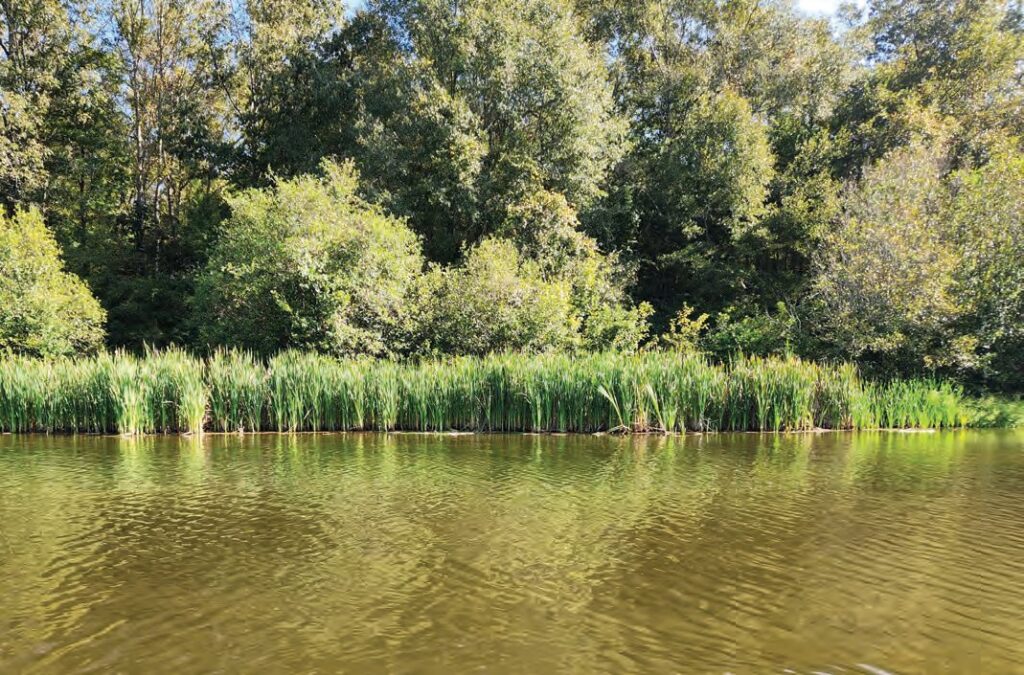
Common invasive plant species always need to be monitored and kept in check. A few other plant species besides algae that grow and spread quickly include bushy pond weed (Naiad), Hydrilla, watermilfoil, Salvinia, water hyacinth, primrose, water lettuce, cattail and duckweed. All these species and some other fast-growing species need to be closely monitored as they can get out of control quickly. A shoreline hardwood species such as willow needs to be addressed on an annual basis, as these can quickly spread, get out of control and become costly to treat and/or mechanically remove. Once a year, unwanted trees need to be cut down and treated with herbicide to prevent re-growth. This is especially important regarding the dam, as no trees should be allowed to grow on the dam for any length of time. To encourage soft tissue plant growth and reduce unwanted hardwood and pine growth, annually mowing the shoreline in late winter is advised. If you are treating any vegetation in or around your waterbody yourself, contact your professional lake manager or herbicide rep to discuss the techniques and herbicide options that will best solve your problems. Too many landowners are provided wrong information or advised to use herbicides illegally from family members or friends who are “lake experts” that cause issues in the future, or do not achieve the desired goal.
Fish Attractors
Refurbishing natural material (oak or evergreen) fish attractors is required about every four to eight years, depending on what material was used. Christmas trees will lose their needles and small branches over the years, all that is left is a trunk and blocks. If evergreen trees are desired, collecting neighbors’ Christmas trees or working with a local tree lot to take their unsold trees can get you a lot for free, and no cutting down required, just collect, and sink in your lake. We prefer to use artificial materials, so this work is eliminated in the future, but natural materials are cheaper.
Aeration and Fountains
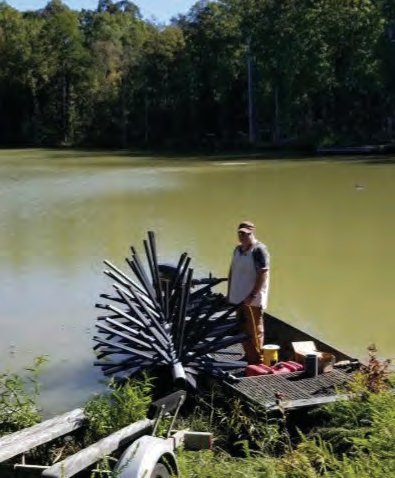
Cleaning and servicing fountains and aeration systems is required every six months to two years, depending on the type of system. Fountain heads can become clogged with algae and/or calcium. If your system has aeration stones, they need to be cleaned every two years with muriatic acid and a wire brush. If your pump is oil or carbon vein, they should be inspected, and parts replaced as manufacturer recommends. Check air filters and replace them every year, and always check to see cooling fans are running properly to ensure the pump does not overheat and cause undue breakdowns or inefficiencies.

Feeding
Supplemental feeding of fish is constant if water temperatures are above 55° F. Allowing feeders to go empty and not feeding for several weeks is unadvised when a lake reaches its carrying capacity, especially if it’s an intensely managed lake. You have artificially created a higher carrying capacity than a natural, un-manipulated waterbody, so the feeding program that’s been in place for some time needs to continue uninterrupted. If feeding is suspended in winter, charge batteries and store them at room temperature. Cold can really shorten battery life. Check timers and feeders in late winter to assure all are in operating order before filling and feeding begins. Make sure all solar panels are clean and clear of limbs shading them out, impeding the daily charging process.
Fish Population
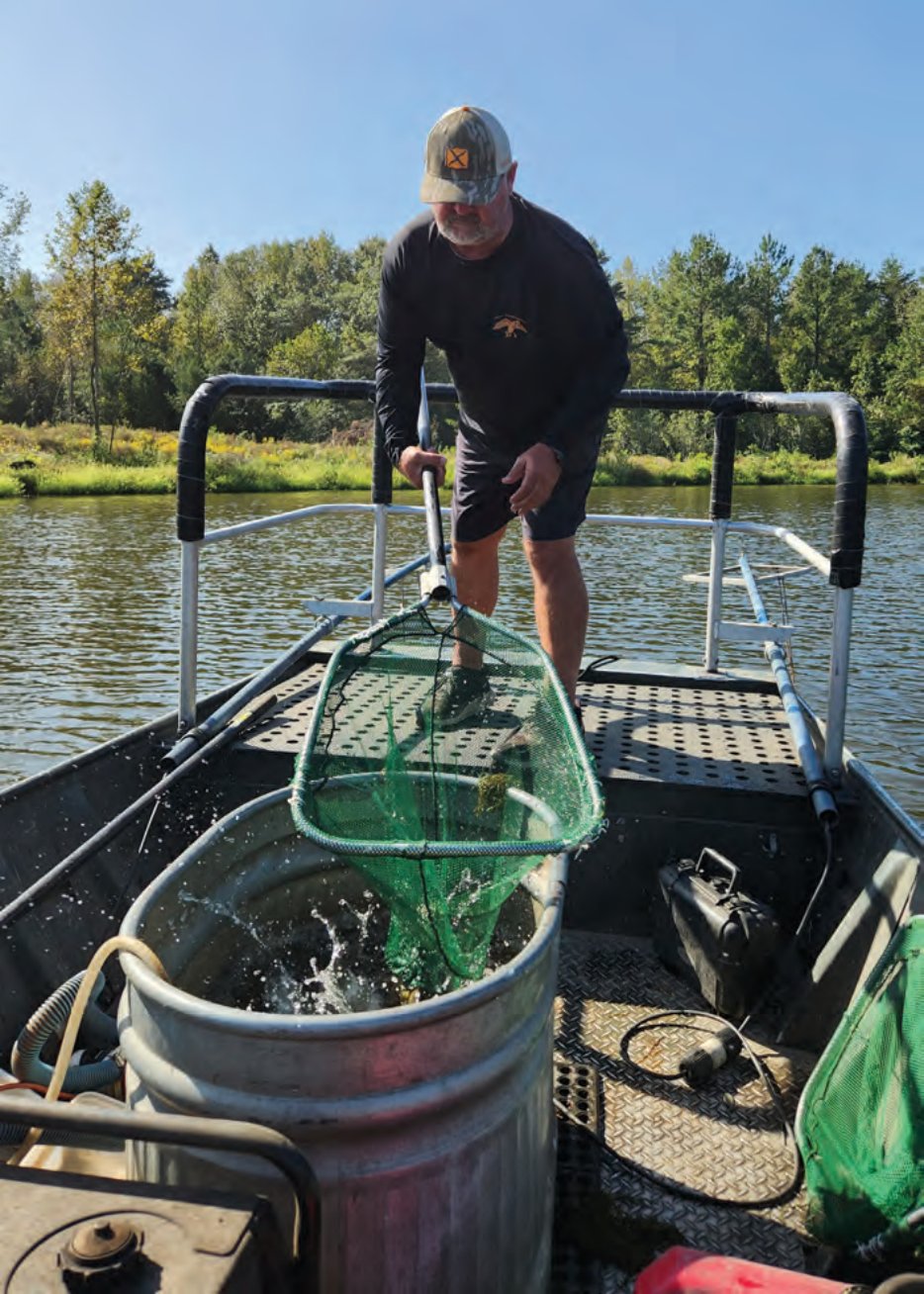
Maintenance of the fish populations may include evaluating, stocking and/or harvesting. We recommend conducting an electrofishing survey every one-to-two years to determine fish species present, abundance and health. Even if your lake is just the way you want it, it will change, and those changes need to be documented, management strategies validated, and current management techniques adjusted to correct any future issues. Electrofishing also can predict gaps in the near future of forage sizes and species make up, which allows stocking plans in the future to assure no size class of largemouth bass are left with too little food and growth rates slow. Electrofishing identifies many problems before the angler will ever notice them, no matter how much you fish and how successful you are.
Stocking forage, either to introduce a new forage species or to replenish depleted forage may be required once a lake reaches quality or trophy status. This refers back to electrofishing results and looking at stomach contents when harvesting smaller bass to see what they are feeding on and how plentiful the forage size for that size bass is available. Also, if a species that does not naturally reproduce such as channel catfish, stripe bass hybrids, or species that were stocked as bass forage knowing they would not survive like threadfin shad, or season specific species like trout that will die in the summer or Tilapia will die in winter, will need to be restocked every year, every other year, or whenever numbers become depleted. Again, if you are working with a professional lake manager, do not stock any fish without consulting them first. A good lake consultant will not mind the questions and should not charge you for a few minutes of time on the phone, or via email addressing your stocking questions. There have been some huge mistakes from landowners not asking their lake manager before stocking something a family member, friend or even hatchery recommended.

Removing bass is a constant task, needing to be done every year. Reducing bass numbers and having abundant forage for remaining bass is necessary in all size groups to keep growth rates high. Once you get a largemouth bass population, even to trophy status, removing some individuals is an ongoing chore. This is the most common mistake amongst lake owners, once they start seeing more forage and abundant bigger bass, they stop harvesting small bass in the designated slot that was prescribed. Or they do not adjust the slot as needed to alleviate the “bottle neck” wherever that may be within the population. If this is not feasible for you to remove fish, get friends and family to help, or talk to your lake manager and if they have an electrofishing rig and your state allows it, the required annual number of bass needing removed can be done by electrofishing. Continually monitoring friends and family so they are not harvesting fish larger than the designated slot is very important. We have seen a lake drastically improve over a three-year span, only to be drug back to its original shape due to friends and family harvesting larger fish, to the point where they were sneaking out four to seven-pound largemouth bass on a regular basis, decimating the quality bass population and turning back time on all the work done to get the population to that point. Electrofishing results documented the drastic decline in quality fish, and investigation and spying by the landowner exposed the harvesting of quality fish, despite the angler’s knowledge of the harvest guidelines set to create a trophy fishery. Fish are no longer required to get a high quality, exact replica mount made. Measure Total Length, Fork Length, and Girth at the fattest point while held horizontally (looks like swimming in water) and some quality photos to document colors and striping, are all that is needed to preserve your trophy. And if you are hungry for fried bass, catch 10-20, or more 12-14 and fry them up. You get a nice meal and help the lake management cause.

Final Thoughts
The final task to do on a regular basis with your waterbody is to enjoy it! Too often we see great lakes developed and the owner never enjoys the fruits of his labor. Spring is the best time to fish ponds. For largemouth bass it’s the pre spawn. I have fished three-acre lakes for only three hours and caught over 25 bass of various sizes ranging from 1 to 8 pounds. When they are biting like that, removing bass becomes easier and reaching your recommended harvest goal doesn’t become a chore, less time consuming and it’s enjoyable. I fish ponds in the middle of the day during deer season, its very effective and fun if you use the correct bait. There is no more thrill than catching largemouth bass at dawn or dusk from a pond with topwater lures in the spring, summer and fall. For bream the best time is late winter to late fall. The hotter it is, the earlier and later in the day you should fish. Black crappie fishing peaks in early spring but is fairly good fall through spring. For catfish, early in the day and late afternoon with worms, chicken livers and hotdog pieces work best. There is not much better than catching your own 14–20-inch catfish and frying them up the same day they are caught.

There is no doubt, once your lake gets to your desired goal, the time and money needed to keep it at that level is reduced, but management does not stop. Some tasks will always need to be performed and the quality of the lake will depend on it. You will get some fluctuations in quality from fish population dynamics (like crappie that are cyclic with peaks and valleys of good and bad year production and growth) and Mother Nature (flooding or drought), but the more you stay on top of the routine tasks the less drops in quality you will observe, and the more your lake will stay where you want it. Your lake manager should provide you with a quarterly calendar for two to four years out when he creates a management strategy, that helps remind you what needs to be done and when, especially if you or your staff are performing most of the work yourself.