
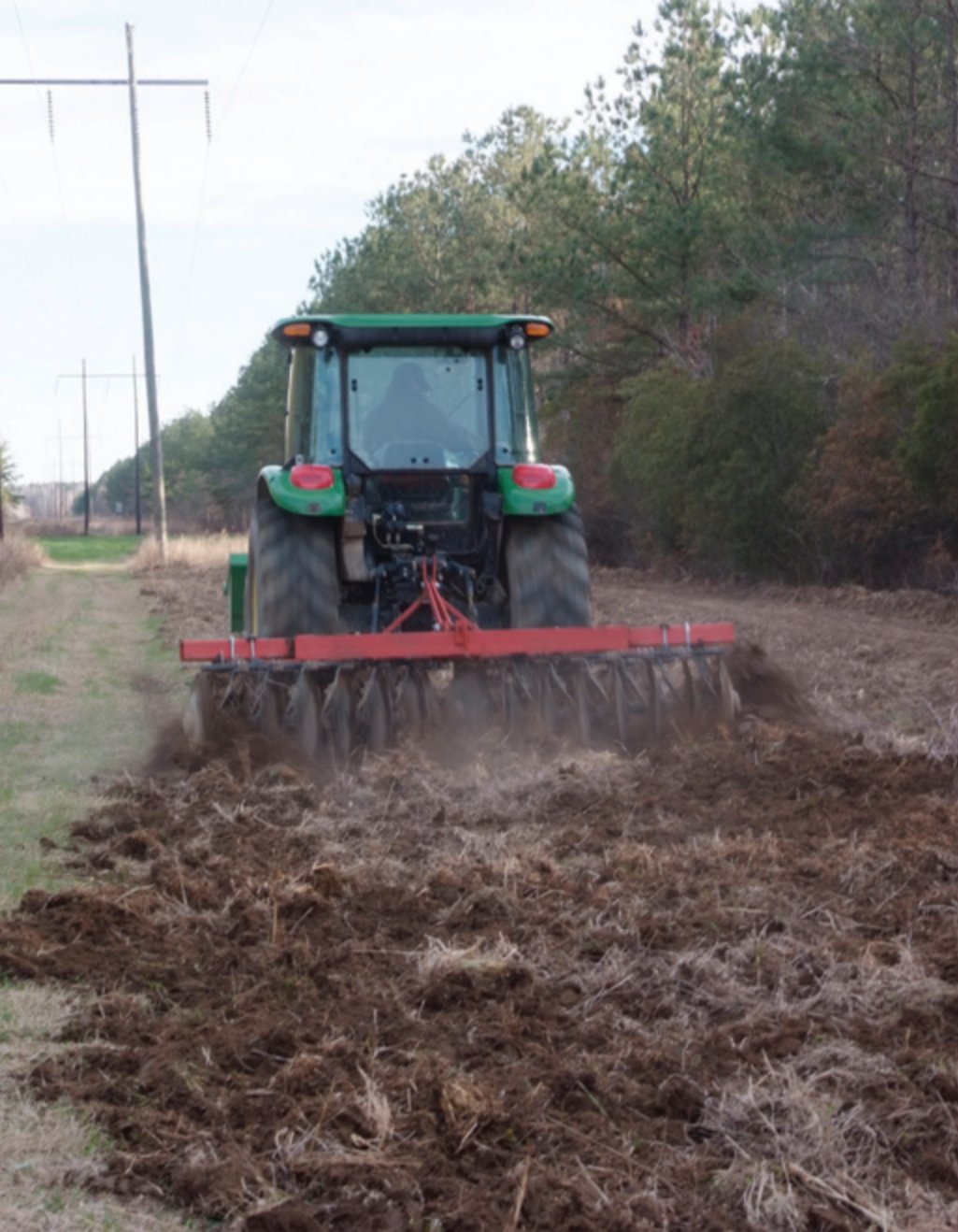
As you will see in this issue’s Management Calendar, many property management activities in spring and early summer revolve around plantings.
Plant summer food plot crops for wildlife
Throughout most of the southeast, April and May are the desired planting dates for many summer crops such as millets, sorghum, peas, corn, soybeans, etc. Because many of the seed producing grass type crops that benefit birds are summer crops, wingshooters devote a lot of energy and effort into planting during this time of year. Deer hunters are well aware of fall food plots because they are so attractive to deer during hunting season, which helps hunters see deer, but often overlook the benefits of summer crops for deer. If you are not fortunate enough to have commercial agriculture on your property or nearby, planting summer crops will benefit your deer herd if adequate acreage is planted. Many biological processes such as fawning, milk production, and antler development are taking place. Most summer plantings for deer are very nutritious and high in much needed protein. Commonly planted summer crops for deer include many varieties of peas, soybeans, corn, lab lab, vetch, and clovers. Regardless of whether you are planting for birds or deer, a successful planting starts with testing the soil and applying required fertilizers and lime to ensure good soil quality. Create a clean, smooth seed bed and plant under favorable conditions. Favorable conditions mean adequate soil moisture and a good chance of rain after planting takes place.
Establish or create field borders where possible.
Field borders are just as the name implies – the areas around the perimeter of fields where they meet woods. This area is biologically referred to as an ecotone (where two habitats meet). These areas can be significantly enhanced by creating a “soft edge” by planting species that will gradually taper the wood line from a mature forest to the field. A field border of planted crops, such as sorghum and millets, and brush/shrub species of 40 to 60 feet wide along field edges can provide food, travel lanes, nesting, brood-rearing, loafing, and escape cover for many wildlife species. Field borders can be managed for native grass/shrub species as well. Simply leave these areas fallow and maintain by periodic mowing, burning, or light disking to prevent trees from encroaching. As you know, most game species thrive and depend on edge habitat. Strategically creating field borders on food plots can enhance bow hunting opportunities as well. For example, creating an hour glass shaped planting area on a rectangular food plot, by allowing the middle edges to grow up naturally, will “funnel” deer through the pinched portion of the planted area offering bow hunters a close shot. I encourage you to check with your local NRCS office to see if you qualify for the “CP33” program. This is a Conservation Reserve type program (CRP) that offers incentives for landowners to install field borders. There is often a cost share initiative that would help pay for this work.

Screen property lines where needed to prevent or reduce poaching.
Most landowners or hunting clubs that are aggressively managing their property for high quality or high-end wildlife have many resources invested into developing, managing, and/or maintaining their property. Regardless of where your property is, efforts should be made to reduce or eliminate poaching. This includes properly posting your property, having secure gates, and fencing if needed. These activities relay the message that you are serious about trespassing. Something that many landowners or hunting clubs often overlook is using crops, shrubs, or other plants to provide natural barriers or screens to keep people from seeing into your property. Obstructing the view of your property from adjacent landowners, hunting clubs, or along highways or roads may not eliminate poaching, but will reduce the temptation. Most properties only have a few key areas along their border that need to be screened. Some of my favorite “natural screens” include evergreen trees such as Leland cypress, cedars, or pines. These species grow well in many soils and climates and because they are evergreen they provide good screen during the winter months. Unless you are planting containerized trees, such as 25 gallon potted trees, most trees should be planted in the winter. An alternative, and something I often do, is to plant spring/summer crops or permanent grass strips that will grow tall enough to do the job. Many of these crops or grasses can be planted in April and May depending on your location. Corn, Egyptian wheat, sorghum Sudan, switchgrass, or some of the taller native warm season grasses not only make good screens, but add wildlife value to your property. This leads me to the second item on our April/May management calendar (see #2 below).
Identify hunting stands or hunter travel areas that need to be screened to reduce hunting pressure next fall.
Hunting pressure plays a significant role in the hunting quality (number and quality of deer seen while hunting) of your property. Hunting pressure does not necessarily mean a lot of shooting that is spooking deer. The most hunting pressure is often applied when hunters do not shoot at all. Examples of this include making full-scale scouting trips through a property during the season, spooking deer while entering or exiting a hunting stand, and hunting stands during unfavorable wind conditions. Most Westervelt hunting clubs and clients collect hunter observation data where they record the number and quality of deer they see while hunting. This helps us assess hunting quality which plays a role in our deer harvest decisions and hunting strategy recommendations. Years of hunter observation data from our clients shows that deer sightings, particularly mature buck sightings, decrease as hunting pressure increases. Therefore, you should make efforts to keep hunting pressure to a minimum. One way to decrease hunting pressure is to screen hunting stands and hunter access areas with evergreen trees or other plantings to allow hunters to enter or exit the stand without impacting deer in the area. While evergreen trees work well for this application, we often plant tall standing crops such as corn or Egyptian wheat where needed to hide hunters. Because these are spring/summer plantings, you need to think ahead. That is, identify hunting stands now that need screening next fall. Strips of corn or Egyptian wheat need to be at least 10 yards wide to be effective since some of the crop plants will fall over after heavy frosts. Obviously wider strips will better conceal hunters. Another trick is to cut/create access trails for hunters to get to the stands quietly and undetected. Although you will need to recheck trails in early fall, cutting/creating them in spring will be easier than waiting until late summer or early fall after vegetation has had a full summer of growth. Lastly, determine the best wind directions for each of your stands. Do NOT hunt the stand unless the wind is right. We keep a stand/wind list at our hunting camp. It is against our rules to hunt a stand under unfavorable winds. You will be quite surprised at how many more deer, particularly bucks, you will see by managing your hunting pressure.
Allow fall annual clovers to seed out.
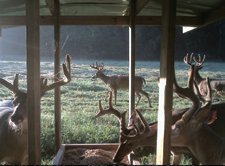
If you included fall annual clovers such as crimson, arrowleaf or other red clovers in your fall food plots, you will notice a strong burst of growth during spring. These clovers will provide excellent wildlife value through early summer. Deer, turkeys, and other wildlife will eat the nutritious foliage of these clovers until the clovers die in early summer. Another benefit of annual clovers is that insects are attracted to the flowers produced as the clover produces seed. Insects are an important source of protein for turkey poults and quail chicks. If properly managed, these clovers will produce seed that will germinate next fall and produce another good stand of clover. To ensure this happens, do NOT mow your food plots before the clover produces seed. We generally leave these fields alone and let them go fallow through late summer. After the clovers die, many weeds will begin to take their place. On many properties, these weeds provide some wildlife value. The next management we apply is early fall when we mow the plots as low as possible, allow the existing weeds a week or so to start growing again, then apply a glyphosate herbicide to prepare the ground for fall. When fall planting time arrives, apply needed fertilizer, lightly disk, then broadcast or drill cereal grains such as winter wheat and/or oats. So, if you want to regenerate annual clovers and take advantage of the free seed produced by the crop you planted last fall, do not mow your food plots before the clover seeds out.
Plant food strips for turkeys and quail.
Food strips are “food plots” for turkey and quail that wind through fields, quail courses, along fire breaks, or wooded habitat. Most supplemental food plantings for quail are established during spring and summer. Food strips are particularly beneficial in years of low native food availability. Plantings of Egyptian wheat, Sorghum-Sudan, grain sorghum, brown-top millet, fox tail millet, and pearl millet are great crops to plant in food strips and will do well in most soil types in the southeast. Food strips should be planted in a rotational fashion. That is, in successive years place new plots adjacent to previous years plot to create a mosaic of current year plot and stubble/annual weed community from the previous years plot. Leaving the food plot stubble (not disking and replanting in the fall) will provide quality cover during fall and winter for game birds.
Keep feeding troughs full for deer.
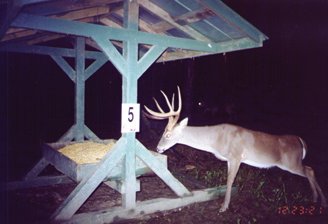
For those of you who implement a supplemental feeding program for deer, you have probably noticed a significant decrease in feed consumption during the spring green-up period. As this new vegetation begins to mature or “harden” up it will be less attractive to deer and feed consumption will increase. Although supplemental feed should be provided throughout the year (or at least when it is legal), May through September is the most critical period to ensure deer have a quality diet. Supplemental feeding is particularly beneficial to a deer herd that is in poor quality habitats such as coastal areas or areas with deep sandy soils. Many biological processes such as antler growth, fawning, and milk production occur in deer during this period. Late summer is also the period in which quality natural food sources are often at their lowest. I recommend providing a quality nutrient rich feed that contains protein, calcium, phosphorus, fiber, etc. Whole corn should be avoided when possible unless you are “training” deer to use new feeding stations or your goal is purely to attract deer. Lastly, remember that supplemental feeding is just what the name implies – a supplement to properly managing the natural food and deer herd. It is the highest hole to “patch” in your management bucket, meaning everything else should be in place before a supplemental feeding program is undertaken or implemented.
Conduct timber harvests.
If any of your timber is scheduled for thinning or harvest this year, early summer is a good time to conduct these activities. Harvesting timber during the winter, if your property is dry enough, or during early summer will give these areas the entire growing season to re-vegetate resulting in better wildlife habitat. Timber harvest areas recover the quickest if activities are completed before spring green up. Woods that are harvested late in the growing season, say July, do not have much growing season left to recover or re-vegetate resulting in poorer quality wildlife habitat until the next growing season when plants begin to reestablish.
Establish photo points.
Early summer is a great time to begin assessing habitat response from management strategies you have employed over the past year. Pictures are a great way to monitor and document the progress of these habitat enhancements. Examples of areas to monitor include areas that you have burned, harvested timber, applied herbicide, strip disked, fruit tree orchards, and food plots. Several photo points should be located throughout your property. Make sure to take notes or mark on a map where each photo point is located so that you can take the same picture over time. Many landowners take a picture from each location every 6 months. Pictures taken over time from these locations will reveal habitat changes and progress made. To ensure you take the same picture each time it is helpful to mark these locations on a map for future reference.