
April/May 2018
Plant summer food plots for wildlife
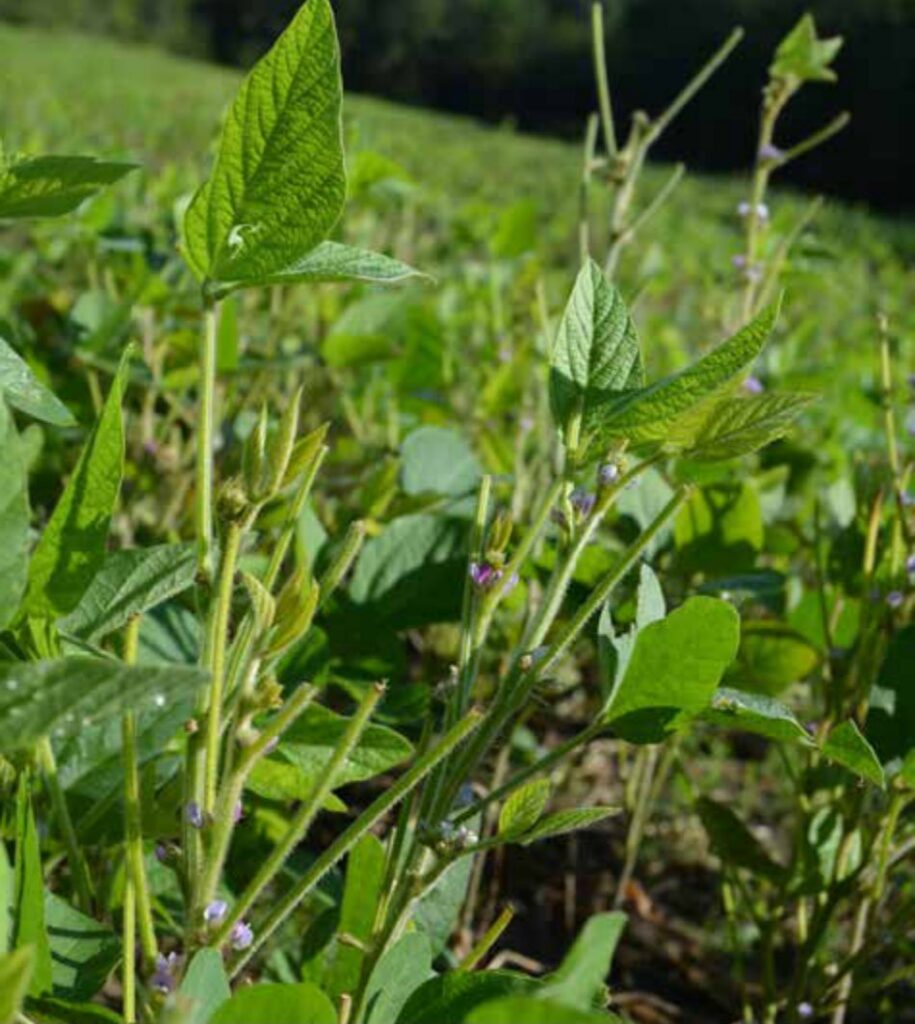
Throughout most of the Southeast, April and May are the desired planting periods for many summer crops such as millets, sorghum, peas, corn, soybeans, etc. Because many of the seed producing grass type crops that benefit birds are summer crops, wingshooters devote a lot of energy and effort into planting during this time of year. Deer hunters are well aware of fall food plots because they are so attractive to deer during hunting season, which helps hunters observe and harvest deer, but often overlook the benefits of summer crops for deer. If you are not fortunate enough to have commercial agriculture on your property or nearby, planting summer crops will benefit your deer herd if adequate acreage is planted. Many nutrient draining biological processes such as fawning, milk production, and antler development are taking place in deer at this time. Most summer plantings for deer are very nutritious and high in much needed protein. Commonly planted summer crops for deer include many varieties of peas, soybeans, corn, lab lab, vetch, and clovers. One of my “go-to” summer blends for deer in the Southeast is a combination of clay-iron peas, lab lab, and peredovic sunflowers. In the past few years I’ve become a big fan of “RoundUp”- Glyphosate ready forage soybeans. One mistake I often see made is trying to plant these crops on small food plots. Because they are so attractive, plots need to be at least an acre, preferably more. Even at low densities, deer can apply too much grazing pressure on small plots and in many cases eat all plants shortly after germination before the crop has a chance to establish. Regardless of whether you are planting for birds or deer, a successful planting starts with testing the soil and applying required fertilizers and lime to ensure good soil quality. Create a clean, smooth seed bed and plant under favorable conditions. Favorable conditions mean adequate soil moisture and a good chance of rain after planting takes place. As you can imagine, weed control poses more problems in summer plantings because of the warmer soils and good growing conditions. Therefore, it is essential to monitor summer food plots for weed encroachment and treat as needed for optimal forage production. I also recommend placing a deer “excluder cage” on each food plot to monitor crop production and deer use. Most of you have used or seen these in the past, but an excluder is simply a piece of 4′ tall close wire fence rolled to make a 3′ diameter tube then staked to the ground. It prevents deer from browsing plants inside the cage.
Create and/or recharge mineral licks for deer
If minerals are lacking in the native habitat (or in the soils), deer will readily use mineral licks throughout the growing season (spring/summer). There are many commercial products available to use in mineral licks that are pre-mixed or you can create your own. A recipe I often use is mixing 50# Dicalcium Phosphate, 50# Calcium Carbonate, and 50# Trace Mineral Salt. These ingredients can be found at most farmers cooperative stores. To mix the minerals simple add each to a wheelbarrow or 3-point spreader and mix well using a shovel. This mix will be enough to create about 3-4 mineral licks. A good rule of thumb is to establish 1 lick per 200 acres. Rather than simply stirring minerals into bare ground, I prefer to create mineral lick sites using a small stack of half rotten logs and pour the minerals over the pile. Using this method the rain will leach the minerals into the logs. It is also a good idea to dig a small trench around the stacked logs to contain the minerals and prevent run-off. The dirt can be added to the mineral mix and added to the pile. Deer will simply eat the rotten wood that is saturated in minerals. As the pile deteriorates due to deer use, simply add a few more logs and minerals to the pile. If deer on your property do not use the licks, don’t worry. This probably means that they are acquiring adequate minerals from native plants and do not need supplemental minerals.
Move, clean & keep supplemental feeders full for deer
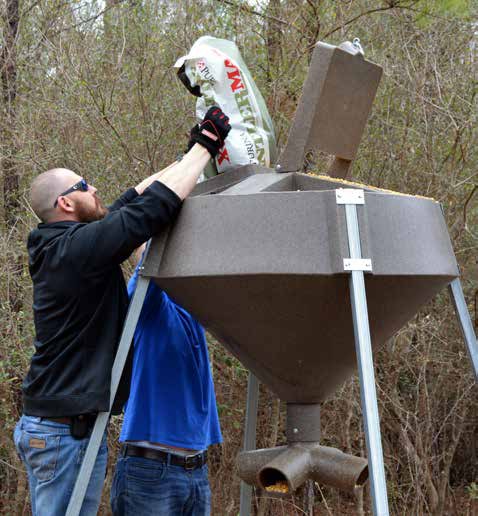
For those that implement a supplemental feeding program for deer, you have probably noticed a significant decrease in feed consumption during the spring green-up period. This is a great time to move (in the same general area) and deep clean all feeders in preparation for the upcoming summer. Deep cleaning for us means hauling a feeder back to the shop to clean all old feed and debris out, then pressure washing using a bleach solution. As new vegetation begins to mature or “harden up” it will be less nutritious and attractive to deer and feed consumption will increase. Although supplemental feed should be provided throughout the year (or at least when it is legal), April through September is the most critical period to ensure deer have a quality diet. Supplemental feeding is particularly beneficial to a deer herds in poor quality habitats such as coastal plain areas or areas with deep sandy soils. There is simply a larger nutritional gap to fill on these less fertile habitats. Many biological processes such as antler growth, fawning, and milk production occur in deer during this period. Later in summer is also the period in which a quality natural food source is often at its lowest. I recommend providing a quality nutrient rich feed that contains a proper level and ratio of protein, calcium, phosphorus, fiber, etc. Whole corn should be avoided when possible unless you are “training” deer to use new feeding stations. As a side note and tip, deer will spend more time at and use/consume more feed (which is the goal) at feeders that are located in remote/isolated areas verses those in the open (e.g. food plots). Another tip is to never hunt over a supplemental feeder. A supplemental feeder should be a safe place for deer where they feel very comfortable and secure. Remember, you want deer to spend as much time at a feeder as possible. This seems obvious, but I commonly see supplemental feeders in sight of deer stands. Take these temptations away from hunters by ensuring feeders are not seen from stands. Lastly, remember that supplemental feeding is just what the name implies – a supplement to properly managing the natural habitat and deer herd. It is the highest hole to “patch” in your management bucket, meaning everything else should be in place before a supplemental feeding program is undertaken or implemented.
Lime and fertilize roadsides
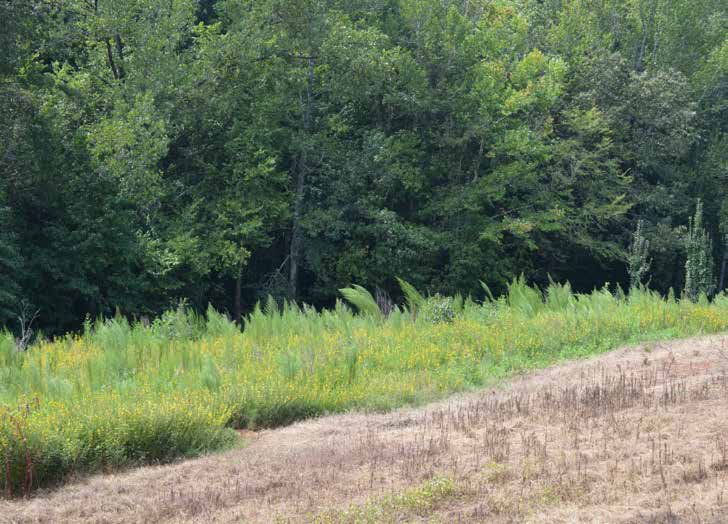
Many landowners concentrate their efforts in the woods or food plots but overlook roadsides when managing the property. Roadsides can account for a great deal of acreage on your property. Liming and fertilizing natural areas along roads during spring/early summer will enhance plant growth, attraction and nutrition of these areas for wildlife. These areas not only provide quality browse for deer, but create ideal nesting and escape cover for turkeys and quail. Liming and fertilizing roadsides not only enhances the wildlife habitat, but because wildlife are attracted to these areas it also increases wildlife viewing opportunities while riding around the property. This strategy is well suited for roadsides that are currently being managed (by mowing, disking, fire, roller chopping, etc.) for early successional habitats. It may be worth noting that this is a “fine-tuning” strategy to enhance wildlife habitat once other “big picture” items such as natural woods, fields, etc. are being actively and properly managed. If you have undesirable vegetation or exotic plants along roadsides such as sweetgum trees, privet, cogon grass, etc., a consulting wildlife biologist or forester may be useful in helping to determine the appropriate mechanical and or chemical strategies to apply to remove these and promote wildlife friendly plants.
Clean and store prescribed burning equipment
Now that the winter burning season is over, take time to clean and properly store equipment used so that it is in good working order the next time you burn. Burn fuel should be properly labeled and stored in a dry/cool place – actually I try to use up all burn fuel during the burning season if possible so that I do not have to worry about storing flammable material. Take firepots apart and clean nipples and replace wicks if needed. Ensure the rubber seal on the lid is in good shape and replace any parts that show excessive wear. Clean and inspect handles, parts, and screws of fire rakes, flappers, etc. Although I use my herbicide tank/sprayer for fire suppression (water), I generally take time in late spring/early summer to clean it up and do general maintenance because I know I will be using it a good bit for herbicide applications throughout the summer. Without proper care and preventative maintenance you are sure to have problems with prescribed fire equipment the next time you need it (I’m speaking from experience).
Establish or create field borders where possible
Field borders are just as the name implies – the areas around the perimeter of fields where they meet woods. This area is biologically referred to as an ecotone (where two different habitats meet). These areas can be significantly enhanced for wildlife by creating a “soft edge”. Soft edges can be created using a variety of strategies. The goal is to gradually taper the abrupt edge of a mature forest along a field which increases “edge habitat” and results in an abundance of food and cover for wildlife. A 40-60 foot field border can be established by planting crops such as sorghum and millets and/or brush/shrub species along field edges. These areas provide food, travel lanes, nesting, brood-rearing, loafing, and escape cover for many wildlife species. Field borders can be managed by native grass/shrub species as well. Simply leave these areas fallow and maintain by periodic mowing, burning, or light disking to prevent trees from encroaching. As you may know, most game species thrive and depend on edge habitat. Strategically creating field borders on food plots can enhance bow hunting opportunities as well. For example, creating an hour glass shaped planting area on a rectangular food plot, and allowing the middle edges to grow up naturally will “funnel” deer through the pinched portion of the planted area, offering bow hunters a close shot. I encourage you to check with your local NRCS office to see if you qualify for the “CP33” program. This is a Conservation Reserve type program (CRP) that offers incentives for landowners to install field borders. There is often a cost share initiative that would help pay for this work.
Control feral hog populations
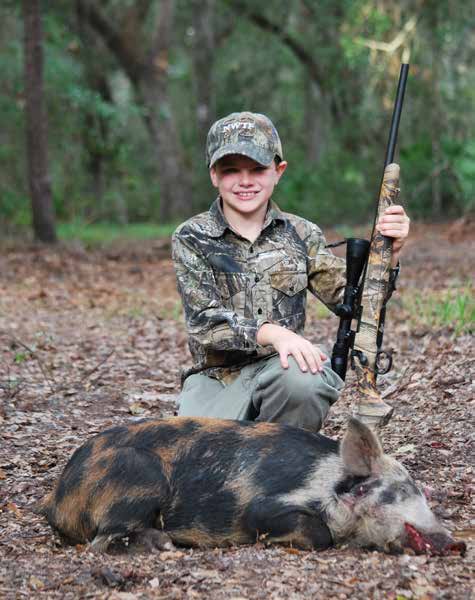
Feral hogs are very destructive and a nuisance on many properties throughout the Southeast. While hogs add additional hunting opportunities for landowners, they are difficult to control. I often hear, “I’d like to have a few hogs on my property to hunt”. I agree and enjoy hunting hogs from time to time. However, if you’ve ever had hogs, you know this is not possible…you cannot have a “few” hogs. A property normally has no hogs or an overabundance of them. The reproductive potential of hogs is extremely high in good habitats. With pregnancies lasting only 115 days, hogs generally produce 2 litters of 1-13 piglets per year, with the potential to have 3 litters! So needless to say, extreme/aggressive control is needed to simply keep up with or stabilize a hog population. There are many ways to remove hogs. Some of the most common methods include trapping, recreational hunting, and professional hunting/trapping or a combination of all. There have been many articles in Wildlife Trends dedicated to successful trapping methods. Hog control should be applied throughout the year or when needed. However, many landowners increase efforts during the summer to reduce disturbance and “hunting pressure” during hunting season. Besides their destructive nature on wildlife habitat, hogs can destroy roads, food plots, pond dams and many other structures on your property. They can do several thousands of dollars’ worth of damage in a short period of time. Controlling hogs will save you time, money, and frustration. A word of caution for those that have hogs but don’t think they are a problem yet – the key word is “yet”. Once they are a problem, it is very difficult to remove enough to control the population.
Create and protect areas for quail habitat
If you actively manage your property for quail hunting, consider establishing protective “thickets” within these areas to provide quail with quality escape and travel habitat. Generally speaking, areas intensively managed as “quail woods” for hunting are maintained through annually burning, disking and mowing or some combination of these. The goal of this management is to set back plant succession to an earlier stage. Plant succession is the natural progression that takes place as plants reoccupy a site over a period of years. Annual plants such as ragweed, broomstraw, croton, partridge pea, wild millets, etc. are considered “early successional species” and are some of the first to occupy a site after a recent disturbance. A mature forest is in a “climax” or late successional condition. Quail are considered a species that prefers early successional habitats. However, while these strategies provide overall great early successional habitat for quail it is also important to “protect” some habitats/areas to provide increased habitat diversity and escape cover within the actively managed areas. Doing so will allow larger plants and shrubs to establish, creating excellent overhead escape, loafing, and roosting cover. Having said this, these areas need to be “disturbed” from time to time to set back succession and prevent trees from encroaching. While every property is different, I commonly design/create these areas to be ¼ to 1 acre and ensure they are distributed roughly 150 yards apart throughout the areas being managed. If fencerows, creeks, and/or ditches are present, leaving a 15-20 yard buffer on each side will create similar habitat and often creates a travel corridor or escape route for quail. To create or “protect” the areas within habitats that receives regular disturbance, just protect the designated area from mowing, disking, etc. For areas that receive fire every 1-2 years, simply install a firebreak around the areas to keep fire out. We often refer to these as “ring-arounds” – areas we have installed a firebreak around to prevent fire from consuming vegetation within the area. To manage the “ring-arounds” and keep them from getting too overgrown we just create new ones somewhere else every 2-3 years and allow fire to set back succession in the original areas protected when we burn.