
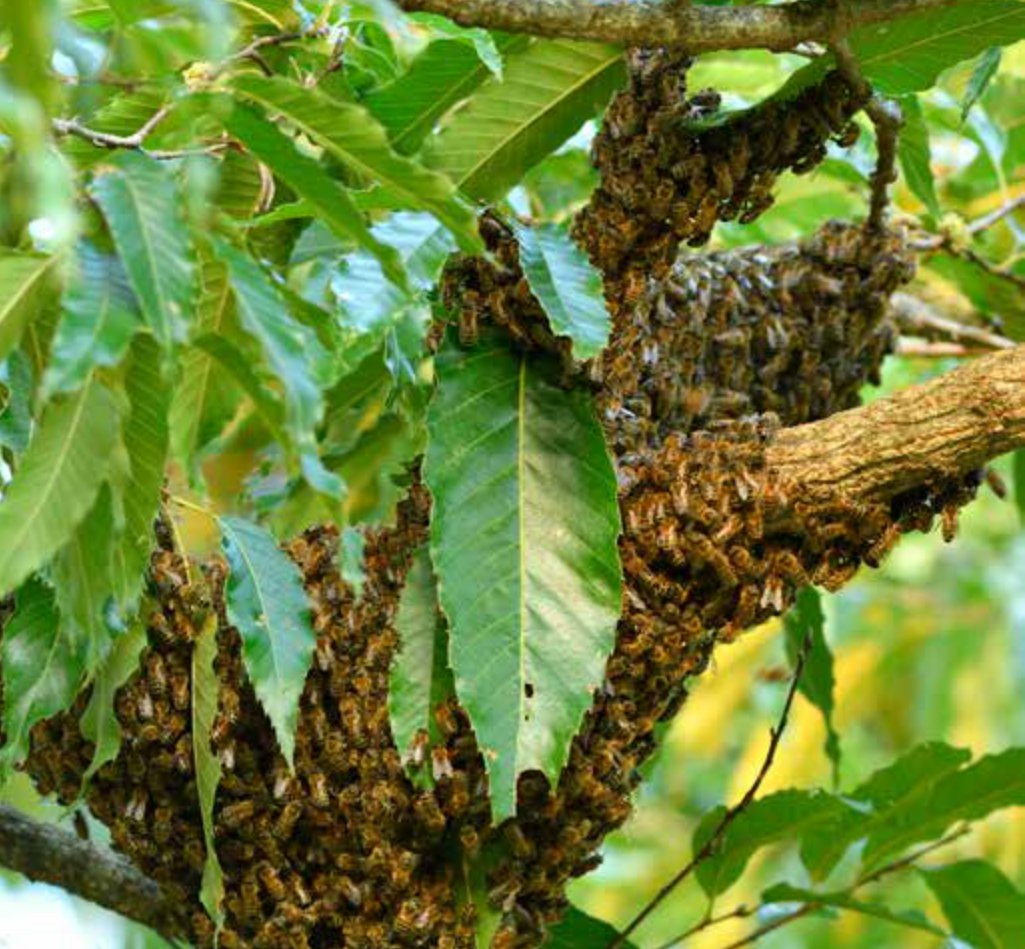
Mention trapping to a hunter, or wildlife habitat manager and it’s likely to start conversations on how to trap fur bearers, predators, pests or the current scourge to wildlife and habitat feral pigs. But how many have ever considered trapping honey bees? The author and her husband certainly had not until a good friend and beekeeper, Kevin Dodd, gifted us with a Mason jar of “homegrown” honey. Kevin’s a “do-it-yourselfer” who enjoys beekeeping and builds much of his beekeeping equipment.
Kevin shares our passion for habitat management and hunting and explained the importance of promoting pollinators for food plot crops, trees and native vegetation. He noted we were already managing pollinators and may not realize it. Bees benefit from our wildlife and timber management procedures such as thinning pines, tree plantings, prescribed fire, food plots and native vegetation enhancement. Bees utilize the wildflowers and grasses that regenerate in burn areas managed for deer, turkeys and quail. Bees visit clover and brassica blooms in food plots during early spring and summer. Adding a new dimension to our existing management efforts was a no brainer.
Perilous Times for Pollinators
Honey bees are fascinating creatures and produce one of Nature’s sweetest rewards (think honey slathered, hot, buttered biscuits). That’s reason enough to promote them! Their impact on the world cannot be overstated. Protecting pollinators such as honey bees is vital to global plant production and directly impacts wildlife and mankind. More than two thirds of the world’s food supply come from plants pollinated by bees and other pollinators such as butterflies, birds, bats, beetles and certain small mammals.
Sadly, in recent years, Colony Collapse Disorder (CCD) has caused an annual reduction of 30-40% of honey bee (Apis mellifera) populations in the United States. CCD is a phenomenon that occurs when the majority of worker bees in a colony disappear and leave behind a queen, plenty of food and few nurse bees to care for the remaining immature bees and the queen. Several possible causes for CCD and the decline in populations have been proposed, including varroa mites, genetic factors, loss of habitat, changes in forest structure, the use of off-label pesticides and changes in beekeeping practices.
National Pollinator Week (June 18-24, 2018) celebrates pollinators and raises public awareness to the importance and plight of this group. The North American Pollinator Protection Campaign promotes awareness through education and partnerships while encouraging restoration, establishment and enhancement of pollinator habitats. To promote and attract pollinators, consider planting a perennial pollinator seed mix (https://www.ernstseed.com). The Wildlife Group (http://www.wildlifegroup.com) offers flowering nut and fruit trees that attract bees.
Find a Mentor
After several conversations and a tour of Kevin’s apiary we were anxious to learn more about beekeeping and add it to our habitat management plan. It was clear there was much to learn before actually acquiring bees to start a hive colony. Kevin stressed mentoring was key to success for novice beekeepers and graciously offered to help get us started with supplies and guidance.
Honey bees are complicated creatures. Even with extensive scientific research studies there are mysteries on their behaviors and biology that remain unsolved. Veteran beekeepers understand the steep learning curve and strongly advise novice beekeepers to join a state beekeeping association or local club where they are likely to find a nearby beekeeper willing to mentor. As a rule, beekeepers are passionate about their craft and most are happy to help “newbees”. (See Side Bar, “Basic Beekeeping Kit & Educational Resources”).
Acquiring Bees
Kevin noted the first step in beginning beekeeping is to decide how to acquire honey bees and listed the following options:
- Purchase a colony and move them to a location. Cost can range from $150-200. These are often heavy and difficult to move.
- Purchase a small NUC (nucleus) colony with three to five frames of established brood and honey stores from a beekeeper and expand into a full-size hive. Cost ranges from $140-$185.
- Purchase mail order packaged bees ($90-$135) which contains about 3 pounds of bees and a queen. It must be introduced into a small hive and grown over time.
- Catch a feral swarm of bees from the wild (mostly free) by locating a swarm or using swarm traps.
The expense and availability of the first three options can be a limiting factor for some which makes swarm trapping appealing for first time beekeepers. Timing on capturing swarms off a tree limb or other structure can be difficult because bees are unpredictable and may move before they can be captured. Swarm traps allow the swarm to settle in permanently. This allows for scheduling the trap relocation at the beekeeper’s convenience.
How to Trap a Wild Honey Bee Swarm
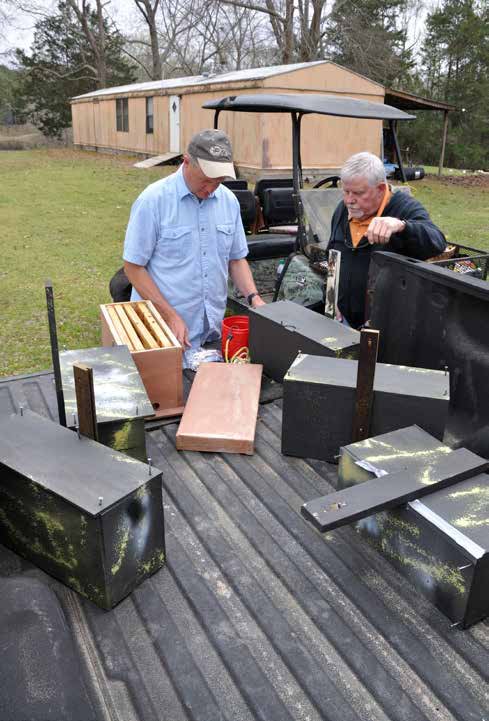
Kevin prefers to construct swarm traps from scrap lumber because it’s an economical and easy way for beginners to get started. There is no magic size in constructing a swarm trap. For the do-it-yourself crowd visit https://www.mclendons.com/tips-projects/diy-how-tos/urban-farming/Building-a-Langstroth-Beehive for detailed instructions on building a Langstroth style ten frame hive. However, unless you can easily drive to the trap location, size can be an important consideration as you will have to carry the hive some distance. The solution is to build a box big enough to accommodate several brood frames (3 to 5) but small enough to be easily portable.
The trap box inside measurement will be half the width (8 1/4 inches) of the 10 frame Langstroth brood chamber’s width (16 1/2 inches). It’s important to remember that honey bees tend to build in every available space. If there are open spaces beside or between the frames they’ll build a freestyle comb that will contain precious eggs or brood larvae which is difficult to transfer to a permanent hive.
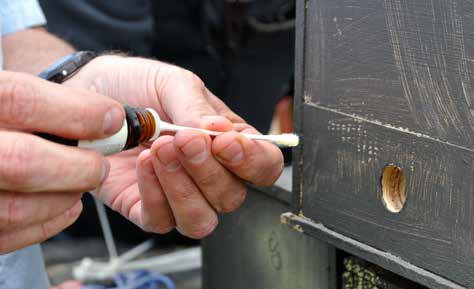
Swarm traps may be built out of scrap wood but avoid thin plywood as it warps easily in wet weather. A waterproof top is important. Traps should be painted with an exterior paint, preferably a light shade. Drill a 1 inch round opening that’s easy to plug (cork or wood) when moving the trap. Any larger will allow nesting birds and flying squirrels to enter. Slotted openings work as well.
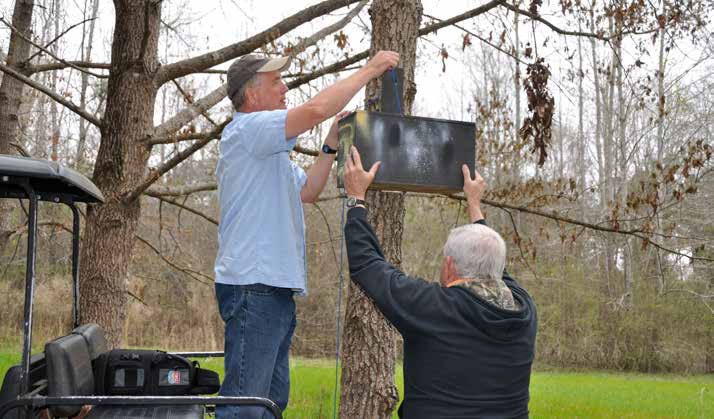
The swarm trap should provide a suitable location for new swarms. There are many varied opinions as to how to make the trap appealing, however several common facts include:
- Placing 3-5 frames with foundation in the trap. At least one must contain drawn comb, preferably dark comb, from a brood chamber. This is obtained from an established beekeeper or an abandoned hive.
- Placing a scent attractant or artificial pheromone inside the trap. This includes oil of lemongrass (sold by Walmart, bath scent stores, Amazon.com) or artificial pheromones available through bee supply outlets.
- Placing the trap a minimum of 6 feet above ground and preferably up to 12 feet. Remember, depending on the trap size, when occupied for a few weeks, it’s possible that the five-pound swarm trap may contain 10 pounds of bees and up to forty pounds of honey and brood. Climbing down a tree or ladder with a heavy box of angry bees is not a safe undertaking. When locating and securing a trap, make sure it will hold extra weight and can be safely retrieved. Established shooting house roofs or ladder stands offer safe platforms for swarm traps. Traps can also be tied or bungee-corded to tree trunks or limbs.
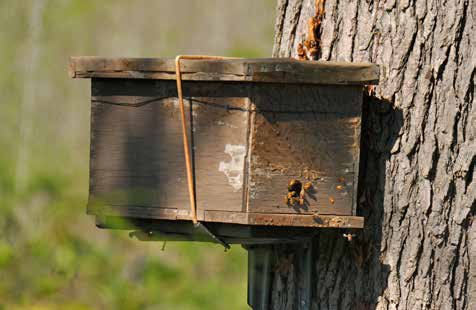
Some believe trap proximity to water or forest openings or shade is important. Consider putting the trap where midday shade will shield it on hot days. Placing traps in close proximity (several hundred yards to a mile) to established bee hives increases swarm captures substantially. Another location option to consider is where swarming honey bees have been observed in the past.
The prime swarming period in much of the Southeast runs March through June, although swarms may occur later. The earlier the bees are trapped the better the chances for colony success. Check traps fairly often (every two–three weeks) as new swarms will outgrow a smaller trap rapidly during prime honey flow periods.
When a swarm settles into a trap, purchase or build the components for an 8 or 10 frame hive body. Choose a location for the permanent hive. Food plots that offer spring and summer forage such as annual and perennial clovers and areas of native forbs and grasses such as old pastures and managed pine plantations near a water source are good locations. Make sure the location is easily accessible. Place the hive on concrete blocks or some type of secure elevated stand.

When a swarm occupies the trap, it is preferable to capture as many bees inside as possible. It’s best done in early morning, after dark or on a cool rainy day. If possible, have your mentor direct and assist you when moving your first swarm. Plug the entrance (round holes are very easy to plug) and then move to the permanent hive location. From there, simply open the box and carefully transfer the frames to a new 8 or 10 frame hive while wearing protective shoes, clothing, gloves and hat with veil. A bee smoker, used as directed, can be used to subdue the bees while working a swarm trap or hive.
Supplies, Tools & Gear

There’s an endless list of accoutrements for beekeeping to dazzle and confuse the beginner. Like hunting or fishing gear, most of it is unnecessary. The basics will get the job done. Kevin suggests a hive tool for pulling or prying frames loose (sold as paint scrapers at Lowes and Home Depot) and a bee smoker. A quality head covering with veil is a must have. Don’t scrimp on this gear. Being stung around the face is the quickest route to losing interest in beekeeping! A bee jacket with a built-in head veil is better. Various styles are offered. Prices range from $25 and up. You can substitute a thick fabric light-colored long sleeve shirt for a bee jacket as long as there are no openings for bees to enter. Long-cuffed beekeeping gloves are recommended. Regular denim blue jeans are normally sufficient to protect your legs. Make sure there are no openings around the ankles. Use tape or elastic bands if needed. Light colored clothing should be the rule as bees tend to focus their aggression on dark colored items. There are numerous bee supply stores online most of which will offer a “beginner” package that includes the above and more. Local Farm Supply and feed stores carry supplies as well. For full protection, the pros use a bee suit and gloves.
Why Trap Wild Honey Bees?

The dramatic decline in honey bee populations from Colony Collapse Disorder has researchers testing and looking for ways to increase populations through improved genetics. Strong genes are important to the health and sustainability of honey bees. Besides the economic advantage, collecting wild honeybees through trapping is another way to help fortify the genetic pool. A colony that’s trapped in an area where there aren’t many managed bee farms nearby are likely from a colony that is essentially wild. A colony that survives long enough to produce a swarm must be hardy. They’ve been tested by pests, disease, withstood harsh weather and survived on their own. Time will tell how hardy the author’s first colony trapped from the wild and featured in this article will be as it grows through its first season. Stay tuned for updates.
Basic Beekeeping Kit & Educational Resources
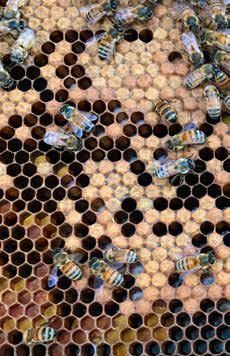
Beekeeping supply companies and some farm stores offer beginner kits. The list below provides everything needed to start and work your first hive, except the bees and feed. For do-it-yourselfers use tutorials and build some supplies yourself or save time and purchase fully assembled supplies. Either way, links below will help get you started.
Basic Beginner’s Beekeeping Kit
- Telescoping Top
- 1 Hive Body
- Inner Cover
- 1 Bottom Board
- 10 Assembled Deep Frames with Foundation
- Entrance Reducer
- Entrance Feeder with Quart Plastic Jar
- Smoker with Fuel
- Bee Brush
- Standard 10″ Hive Tool
- Beginner’s DVD and Book
- Plastic or Leather Beekeeper Gloves
- Head Veil or Bee Jacket with Built in Veil
Hive Components
Telescoping Top – Seals the top of the hive, providing protection from wind and rain.
Inner Cover – Creates dead air space for insulation against heat and cold and makes removing the top easier.
Super – Comes in two sizes, Shallow and Medium used for honey storage.
Queen Excluder – prevents the Queen from laying eggs in the honey supers above the hive body.
Hive Body – Used as the brood chamber for the queen to lay eggs and rearing of new bees. Any size super can also be used as a brood chamber.
Bottom Board – Screened bottom board provides ventilation and aids in mite fall.
Entrance Reducer – Reduces entrance opening. Used when feeding and over-wintering.
Hive Stand – Provides a landing board for bees and raises the bottom board off the ground minimizing moisture.
Frame – Wood or plastic frames inserted into the hive body and supers designed to hold the comb where brood, pollen and honey are stored.
Educational Resources
There’s much to learn about beekeeping: hive biology, apiary (bee yard) supplies, tools & gear, hive management through the seasons, honey collection and DIY honey extraction methods. It’s a great activity in which to involve the entire family. Join a local beekeeping club or association for guidance to find a mentor and attend field days. Search online and book stores for books and videos. Go online for associations, clubs, newsletters, workshops and mobile apps for tracking hives. Facebook is loaded with chat pages to help the beginner. Below are a few recommendations to get you started.
Associations
Alabama Beekeepers Association (Search your state associations online)
www.pollinator.org
Books
“First Lessons in Beekeeping”, Dr. Keith Delaplane
“The New Starting Right with Bees”, Kim Flottum & Kathy Summers
“Plants Honey Bees Use in the Ohio and Tennessee Valleys”, Shannon Trimboli
“Beekeeping for Dummies”, Howland Blackiston
Websites
www.brushymountainbeefarm.com
www.GrassyRoadsFarm.com
www.carolinahoneybees.com
www.Amazon.com
For DIY’ers visit https://www.mclendons.com/tips-projects/diy-how-tos/urban-farming/Building-a-Langstroth-Beehive
Facebook pages
Sweetgum Ridge Honeybee Chat
Grassy Roads Farm
Carolina Honeybees & Beekeeping
Beekeeper Charlotte
LEARNING “BEEK” SPEAK
by Tes Randle Jolly
Beekeeping requires an understanding of basic honeybee biology and the hive. A Google search will reveal numerous beekeeping glossaries. Below are some basic terms “beeks” (beekeepers) commonly use. Pay close attention to your mentor and you’ll learn the lingo even quicker.
BEE TERMS
Colony
The entire bee population of a hive or other dwelling that includes worker bees, drones, queen and developing brood.
Queen
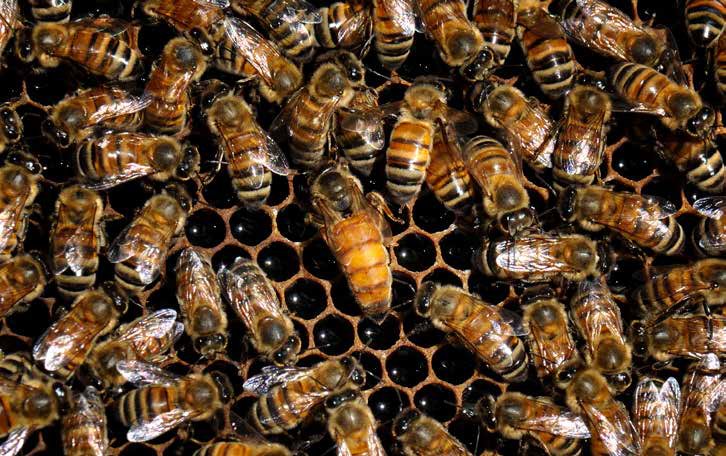
There’s just one queen per colony and she lays all the eggs. The queen leaves the colony once to mate with drones. Her body is longer and larger than the workers and drones.
Worker
These are female bees who care for the queen, nurse the new brood, forage for nectar, pollen and water. They do most of the work.
Drone
Male bees are recognizable by their rounded bottoms. They are fewer in number than female worker bees.

Brood
Bees before they hatch from the cells as they go through the stages of egg, larvae and pupae. They are kept in the center of the colony.
Swarming
The process of a colony expanding or reproducing. The old queen exits the hive escorted typically by over half of the colony. The remaining bees are left with all the brood and food stores. A new queen is hatched and will leave the hive to mate with drones from other colonies, then returns to lay eggs.
BEE PRODUCTS
Honey
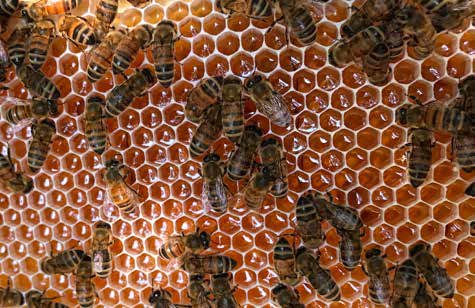
What we drizzle on biscuits a sweet thick treat produced by honeybees from the nectar of flowers, composed mainly of sugars dissolved in about 17 percent water. Honey contains small amounts of vitamins, proteins, mineral matter and enzymes.
Bee bread
A mixture of honey and fermented pollen fed to the brood.
Royal jelly
A milky secretion made up of water, proteins and sugars produced by worker honeybees. It’s fed to all the larvae and the adult queen. It’s the same “milk” that feeds the workers but with a greater proportion of sugar.
Beeswax
Used for building comb. A complex mixture of organic compounds secreted from special glands on the worker bee’s abdomen. Beeswax has a melting point ranging from about 143 to 147 degrees F.
Comb
A structure of six-sided cells made of wax produced from wax glands on a honeybee’s abdomen. A comb is comprised of two layers connected at their bases where brood is reared and honey and pollen are stored.
Propolis
Also called bee glue. A sticky waterproofing substance used to strengthen the comb and seal the hive. Made from resinous materials or sap collected from plants and trees.