
Most exotic (non-native) fish species are in the South. Most exotic plants and animals are in the southern states due to most exotic species being warmer climate species. But not all exotic species are in the South, and not all invasive species are non-native/exotic. Some native species are invasive in small lake situations and deemed undesirable species for you to reach your management objectives. A few exotics are intentionally stocked, like the tilapia in the North, into private waters to enhance the largemouth bass population where climate will control their numbers. Yes, it is all very confusing for the lake manager trying to do the right thing and get the highest productivity from their waterbody. Invasives are even more confusing. A lot of exotic species are invasive, but what is deemed a highly desirable native species in the reservoir next door to your pond, such as the crappie, are regarded as invasive in your three-acre pond. They multiply too fast, numbers cannot be controlled, and will not grow to desirable sizes, while suppressing more desirable species growth in your aquatic ecosystem such as the largemouth bass. Recently we started working on a pond in central Georgia that has flathead catfish in it. These have a ravenous appetite and can decimate fish populations, even in the wild and more so in a small, closed ecosystem. It is unclear to the new landowner if they were stocked by a hatchery, moved there from another waterbody by hook and line, or the recent hurricane and flood transplanted them there from the nearby river. No matter how they got there, they now have to be delt with.
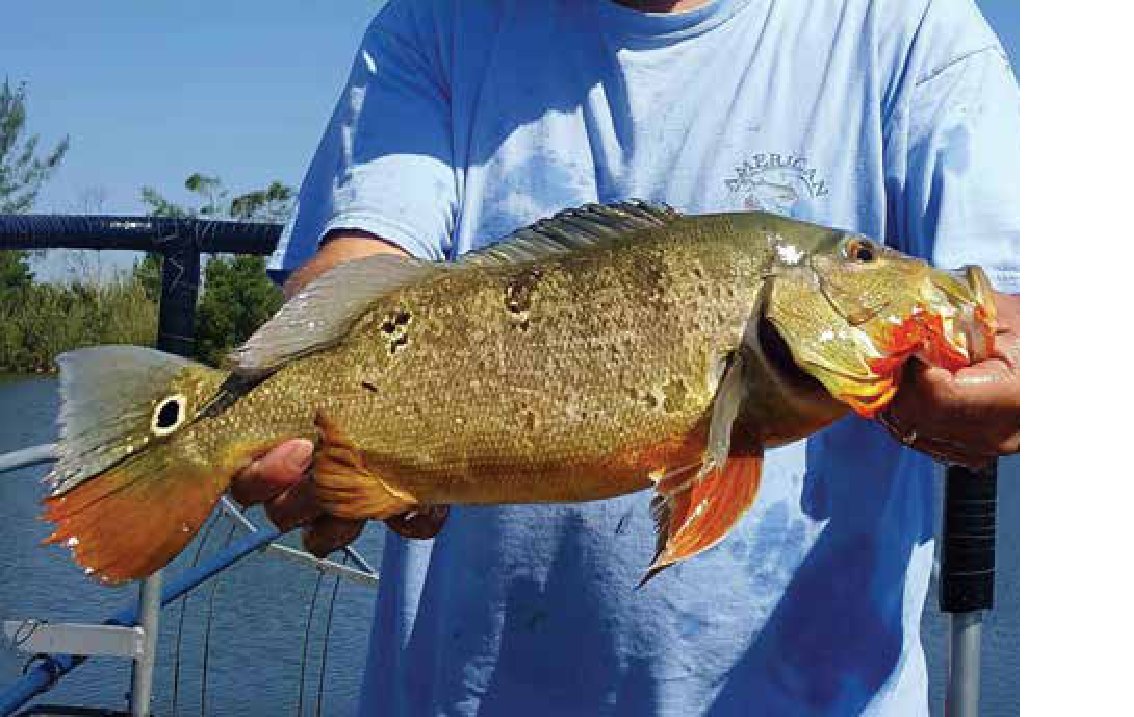
In the Deep South, almost anything can show up in waterbodies including big snakes, lizards, etc. But we are only talking about fish. I have seen a lot of exotic fish species now established in the wild in Florida, including tilapia, walking catfish, goldfish, koi, snakehead, African Jewel fish, brown hoplo, sailfin catfish (Plecostomus), Oscar, peacock bass, European eel, Paku, which looks very similar to a piranha, Mayan cichlid, clown knifefish and several others. As you look at the list you notice a few very popular species especially the peacock bass and Myan cichlid that are targeted by anglers. Not all are in private waters, but many of those species have been documented in private lakes and ponds. There are exotic fish species that are being documented migrating north into areas that were once thought they could never survive and establish populations, as they adapt, and annual average winter temperatures rise. When we work in Florida, we need to carry an updated exotic fish identification handbook or an app on our phone to help identify fish we never see anywhere else in the country. More recently in northern states, species such as bighead carp, northern snakehead, tilapia, and even Paku have been documented in numbers too great to be an anomaly release of someone’s pet fish. Which is how many wild exotic fish populations were started. Some are adapting and tolerating the cold, while some seek refuge in natural thermal areas or manmade, like near power plant discharges where they can survive winter then head back out into the ecosystem during spring summer and fall. Exotics do not have to be non-US fish. Species can be moved from area to area they are not native, and they are deemed exotic or non-native to that new area. In the 80’s, state fish and wildlife agencies transplanted the flathead catfish from mid-western states to rivers and lakes in the East. That was a huge mistake, as the flathead in some new areas decimated the original populations of local fish, and caused real problems. The most popular, most desired freshwater fish in the US is the black bass, and the Florida largemouth bass is non-native in many parts of the country and the world, as it has been moved, stocked and established more than any other freshwater fish. Recently it was discovered that the Florida largemouth bass is displacing and reducing numbers of other black bass native to the areas they were stocked/introduced.

We have clients in Florida where we annually remove exotics and invasives to help the largemouth bass, bream and forage fish prosper. In small ponds this works, in larger ones it does not, because not enough can be removed. One pond just under an acre can yield 350-400 tilapia weighing 250 lbs. the first visit, but diminishes drastically if successive years are done, and bass and bream numbers have a very positive response to the removal. In some situations, a total eradication needs to be conducted by killing the entire fish population and starting over. In rare situations the only way to resolve the problem is to use rotenone (fish poison) or by draining completely dry. Electrofishing removal reduces numbers, but is not an eradication method like the other two. This is common, but you need to know several factors you are dealing with to be successful. First, can fish enter your waterbody from a nearby waterbody? Killing all the fish in your waterbody only to have it repopulate with undesirables from a nearby creek, river, lake, marsh or canal makes your work useless. Big floods and/or hurricanes are common reasons private lakes receive fish that were never stocked in the first place. Even shallow sheet flow across pastures can move fish from one of the above to your waterbody. And when it comes to the walking catfish, you do not even need high water in south Florida.

Another common cause is moving fish from nearby waterbodies to your lake, sometimes unknowingly and sometimes purposely moving them. Sometimes lake owners get bad advice from a neighbor, relative or the internet that a certain fish species in a nearby waterbody or their buddy’s lake should be caught and moved in. Collecting bream or shiners from a nearby waterbody with seine, traps or cast net to stock your waterbody can unintentionally stock an undesirable invasive or exotic species. Even hatcheries have been known to stock invasive fish, without the landowner’s knowledge by accidentally including an undesirable/invasive when stocking desirables. I am unaware of any hatcheries that will guarantee there are none present, but if you bring it up that you are aware it can happen, they should be more vigilant. Also, inspecting the fish in the tank before stocking with a few large scoops, to see if there are any undesirables can be done. The more reputable the hatchery the better they do. Even good hatcheries have slipups with green sunfish. Probably the most common fish in this scenario is the green sunfish. It is invasive in small ponds, undesirable and can prevent you from reaching your largemouth bass or quality bluegill population and growth goals. We have seen a shipment of bluegill, redear or shiners arrive with a few green sunfish in the tank. It only takes one male and one female to create a disaster in your waterbody. Green sunfish are native in many parts of the country, but not a problem in open public waters, but do become a problem in small closed aquatic ecosystem.

There are a lot of what I call “designer” fish out there for stocking. They are crosses thought to enhance your lake. Some of them are very good, some are great short term but leave a mess down the road. Please do your homework and familiarize yourself with the species before stocking or moving to prevent future headaches. An example was a fish that is crossed between the green sunfish and the bluegill. It has the green sunfish mouth and appetite, but grows fast like the bluegill. The first few years your pond is full of giant bream. However, as the years pass, and generations are produced, the fish revert back to the green sunfish, not the bluegill. The bream population gets smaller over the years, leaving you with a pond full of small, invasive green sunfish, not suitable for sport, and too small to eat.
The tilapia is viewed exotic and invasive in Florida. It is illegal to move, or stock tilapia in Florida. You can cast net as many as you want, throw on ice and take home for consumption, but it is illegal to throw them in a water tank and move from one waterbody to yours. It is also an exotic in northern states, but not deemed invasive, and legal to stock as largemouth bass forage by lake and pond managers. In Florida, the tilapia grows at excessive speed and reaches a large size (too large for even trophy bass to eat). In a highly productive lake before age one, they can be too big to benefit bass as forage and become detrimental to your ecosystem, and they will live to be four-to-five years old hitting weights well over five pounds and some near 10 lbs. When stocked in northern ponds, they go in in March and die before November. Most of their time in the pond or lake, they are small enough for largemouth bass to consume. They do have to be restocked every year.
I must comment that the peacock bass was intentionally introduced in south Florida by the state game and fish agency. Its range has remained there since its introduction in the 1980’s and is one of the few exotic introduction success stories in our country. We have never encountered a peacock in a small private pond. You would be surprised how many exotic plants and animals were introduced by State and Federal agencies over the decades. A few were great success stories, but most ended in disaster. The list is too long to cover here.
Another popular exotic with anglers is the Mayan cichlid. It is not as invasive as the tilapia, in the South, but it has reduced or eliminated bluegill populations in a few areas. Mayans are fairly common in small private waterbodies south of Orlando. But many anglers swear it is the best tasting freshwater fish of them all, and in the spring flock to south Florida to catch hundreds of pounds to fill their freezers.
As stated earlier, many exotics are invasive, however, there are several native fish species that are or become invasive in certain situations. We deter our clients from stocking black crappie in small (under 10 acres) waterbodies, because their numbers are too hard to control and hinder the success of other species more desirable in our goals which in this situation, they become invasive and undesirable. Even in ponds less than one acre we advise not to stock largemouth bass, because their numbers exceed a quality bass carrying capacity and they become invasive to the other species that can thrive without them present. In small waterbodies under one acre, they multiply so fast and consume all the forage, affecting the entire population dynamics. Which is why most professionals use one acre as the threshold for stocking LMB. Most people want them, but they out multiply the food/forage and become invasive in rare situations.


One common invasive fish that seems to make its way into many ponds is the bullhead. Yellow, brown and black bullheads are common throughout the Southeast. Flooding is one way they get into your waterbody, but also, they can come in the hatchery truck with channel catfish. It is not uncommon for landowners to purposely introduce them, because they enjoy eating them, but they can become an issue and eventually may need to be killed out due to no other species can compete with them. Unlike channel catfish, they reproduce well in small ponds and numbers can become high with slow growth and even physically damage the dam due to spawning activity. It is rare, but documented, that channel catfish overtake a waterbody. They generally do not reproduce well in a pond with a healthy largemouth bass population, nor is the underwater habitat conducive for them to spawn.

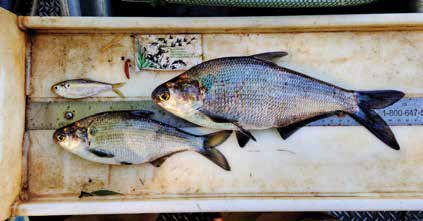
Some invasive species are only invasive if they are allowed to be. For example, golden shiners are a great bass forage and help bass to achieve their full potential. However, if the bass population is not managed properly and becomes stunted with no big bass present, golden shiner populations will inundate your waterbody with big individuals and no small ones. This influx of big shiners with no predators to keep their numbers down interfere with bream growth and production.

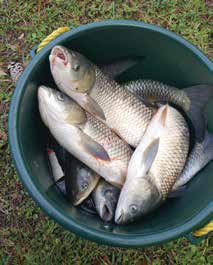
The triploid grass carp is the biggest double-edged sword in a fish manager’s tool box. Too often these useful management tools are incorrectly stocked at way above the correct stocking rate, making them invasive and needing to be removed. Even though they do not reproduce, they are still invasive and detrimental to your aquatic ecosystem because they are not easy to remove after stocking. We have several clients that overstocked them, under advisement of a weed management person and not a fish biologist. They can affect plant species, the amount of vegetation present (obviously), water clarity (muddy water), increase or intensify algae blooms, degrade overall water chemistry and all these affect desirable fish reproduction, numbers and growth. More is not better with grass carp. Gradually build up to a number that manages your vegetation, do not stock all at once, or stock too many to cause you more harm than good. We always recommend to treat plants first with herbicide, then stock triploid grass carp to maintain the plant and keep it at a low density.
As you can see, managing exotic and invasive fish species is not easy. A species deemed good in one waterbody may be invasive and a liability in another. Most exotic fish species are bad, but in a few instances exotic fish are a benefit to your waterbody. The bottom line, like dealing with exotic and invasive plants, properly identify the species you are dealing with, learn its biology and best management practices. Please seek advice from an experienced professional before other unexperienced friends or relatives.