
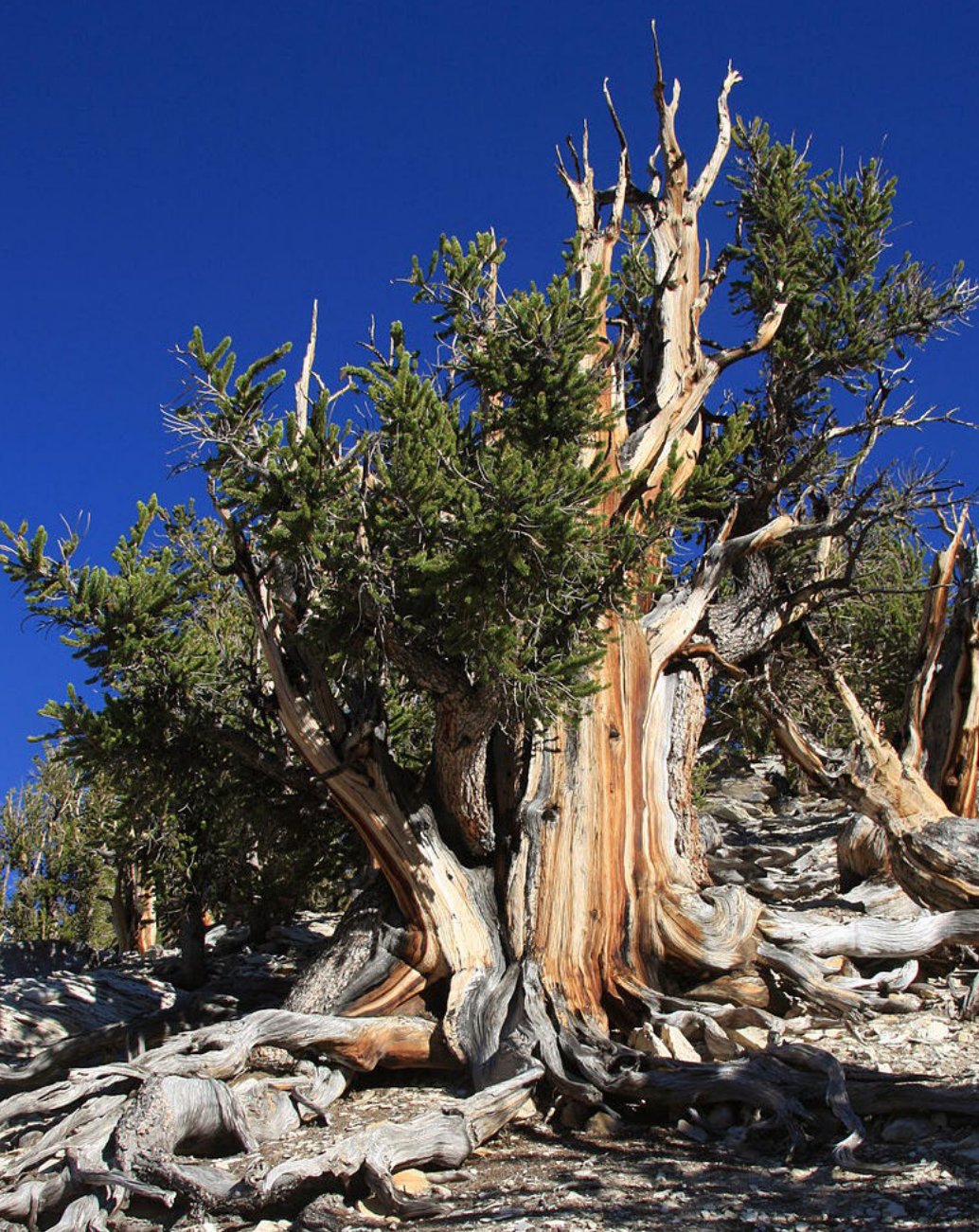
The year was 2833 BC. As the rising sun lit up the pale rocky hillsides of the White Mountains, on a piece of ground that would one day become the Inyo National Forest in eastern California, a Green-tailed towhee (cousin to the Eastern towhee) began his morning ritual. Since it was early spring this towhee was intent on singing from the highest perch he could find, a sentry position from which he could attract a female and warn other male Green-tailed towhees to stay out of his territory. His plot was situated in a sparsely scattered grove of gnarled Great Basin bristlecone pines (Pinus longaeva), and these are not tall trees. The meager understory consisted only of clumps of dwarf paintbrush, wax current, and western yarrow sprinkled here and there among the mostly barren rocky slopes. This place is a harsh environment with poor dry soil and cold winters. But to the towhee it was home. During his morning chorus, however, there were no signs of other towhees; no rival males and no lonesome females. So from the tallest bristlecone on his turf (only about 25 feet high) he jadedly fluttered to the ground to scratch out a breakfast from whatever seeds or occasional insect he could find. A plump bristlecone pine seed, dropped from the parent tree above a few months earlier, lay helplessly on the dolomite rocks in front of the hungry towhee. He quickly spotted it and grabbed it up to swallow. Just as he plucked it from the rocks however he heard the soft call of a female a little ways down the slope, and in a nervous panic he took to the air, flying with high anxiety in her direction. In his frantic exodus he produced his best melodious song, and this allowed the lucky bristlecone seed to fall back to the ground and onto an open spot of loosely packed soil and slag fragments. The towhee pair went on to raise a family on that hillside, and in the meantime the pine seed germinated there in the poor desolate soil, with the assistance of a couple unseasonable rain showers. It grew at a respectable rate for the first few years and then slowed its development to a languishing crawl as it matured. Some 4848 years later, in the spring of 2015 I visited this grove of ancient trees with my family. I watched as Green-tailed towhees sang from the tip-tops of the old twisted bonsai-like relicts. There were young bristlecone seedlings and many juvenile (100-200 year old) “saplings” scattered around, as well as thousands of the old super-mature trees that have stood the test of time. The seedling from 2833 BC is still there somewhere too, and it is still alive! The exact location of the tree (named Methuselah) is kept secret since it once held the biologically significant title of the oldest non-clonal organism known to man. The new champion (5065 years old) was discovered somewhere in the same mountain system and it also remains anonymous for its protection.
Bristlecone pines certainly don’t get in any hurry and the same can be said of many of our other North American pine species, including the ponderosa (~700 years), white (~500 years), longleaf (~400 years), lodgepole (~400 years), and shortleaf (~250 years) pines. Each species has its own unique characteristics, physiology, and niche in the regions it occupies. In this article we will examine some of the most common pine species and discuss their ecology and management with regards to native plant and wildlife communities.
First things first. A “pine” is technically a coniferous tree in the genus Pinus, within the family Pinaceae. The family contains about 250 species worldwide, including cedars, spruces, and firs. Many in this group date back to the pre-Mesozoic Era, although a great deal of speciation has occurred since then. Within the genus Pinus itself, there are approximately 120 species (including trees and shrubs). Pines are found almost entirely in the Northern Hemisphere, especially in seasonally cool and cold climates. Pines are evergreen and resinous, and they are among the most commercially significant tree species in North America, as they are prized for their timber and wood pulp value. In warmer regions like the Southeast, pines are typically fast-growing softwoods (at least for the first few decades of their lives) in nutrient rich soils. However they can be very slow growing on poorer sites. Many pines are often managed in short rotation artificially stocked plantations, primarily for pulp production and the paper making industry.
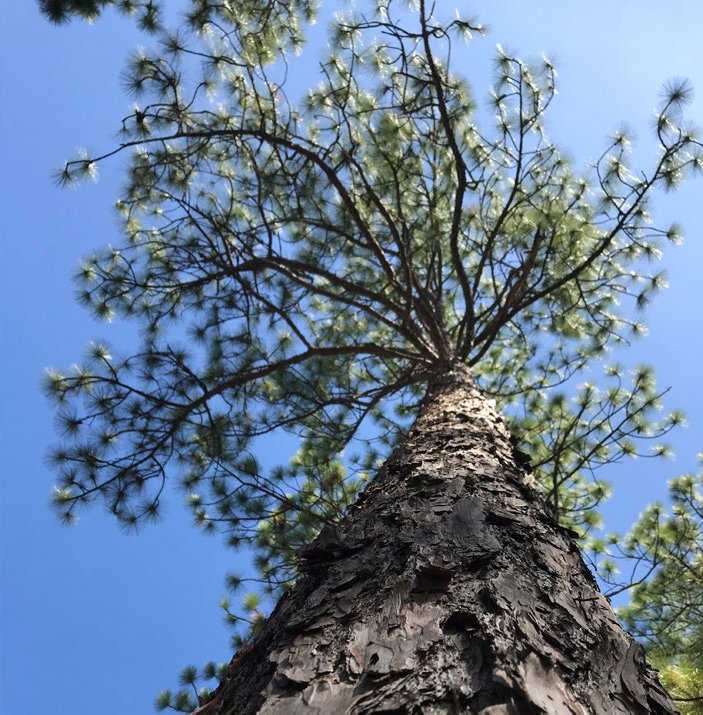
Thirty six species of native pines occur in North America. They are the most abundant conifer in the United States, and in many regions, they are the most abundant tree type. Pines are gymnosperms, as opposed to flowering plants (angiosperms), and therefore they typically do not rely on bees and other traditional pollinators for their survival. Instead, they are mainly wind pollinated. The Greek word “gymnosperm” means “naked seed”. Pines, like all gymnosperms, have two types of cones. Smaller male cones are generally produced on new growth shoots and they are partly responsible for the copious clouds of yellow pollen each spring. The larger female cones are usually attached directly to heavier limbs and produce the winged seeds (originating between each scale) that spiral to the ground when the time is right for their dispersal. In some species, seeds are held until after a fire event. The fragrant resinous leaves, or needles, persist for two years and new needles are produced each year, allowing pines to remain evergreen. Pines typically have thick protective bark that offers protection from fire and other elements, but this varies also depending on species.
As we established earlier, the species of pines one may expect to find in a particular region will vary depending on soil type and climate. And so will the plant and wildlife species associated with the certain kinds of pine forests. One of the best known ecosystems in the southeastern US is the Longleaf pine (Pinus palustris) forest system, which historically extended from Virginia to Texas. As a species, the longleaf pine has three needles per fascicle that average 10-16 inches long. Female cones are large, ranging from 6-10 inches long. Due to the drastic reduction in its native extent, many now-rare species are tied to this tree species and its ecology. Lots of articles and research papers have been written about the importance of longleaf pine ecosystems, especially those forests found in the coastal plain regions. This species is indeed most common in low elevation, sandy soils. In fact the species epithet (palustris) actually means “swampy”. This name is a little misleading however since longleaf actually thrives in dry and well-drained soil types, even sometimes growing in seemingly solid rock. There are actually significant forests of longleaf pine in the mountains of the Ridge and Valley ecoregion and throughout the hills of the Piedmont. These longleaf systems are sometimes referred to as “montane longeaf pine” forests. Montane longleaf pine is typically very slow growing due to poor site indices and harsh conditions. Studies have shown that montane longleaf also produces more abundant and frequent cone crops than the flatwoods longleaf pines.
The Red-cockaded woodpecker, Northern bobwhite, Eastern fox squirrel, Brown headed nuthatch, Eastern cottontail, Bachman’s sparrow, Henslow’s sparrow, Eastern diamondback rattlesnake, Gopher indigo snake, and Gopher tortoise, are all associates of healthy longleaf pine forest systems, with the latter three species restricted to the coastal plain regions. Healthy longleaf systems are generally those that are regularly exposed to, or maintained with, consistent fire. Longleaf pines are obviously very tolerant of fire. They have insulating bark and long insulating needles that protect meristem shoots from mortality during a burn event. In fact, many other pine species are also dependent on periodic fires for their long-term survival and reproduction, whether by promoting successful germination of seed, controlling competing vegetation, or both. As a seedling, the longleaf pine patiently sits in a low stature grass stage, typically for two to five years, building the carbohydrate energy reserves in its main tap root. Then when fire or some other disturbance comes along it bolts upward to take advantage of the available sunlight. Longleaf needles are resinous and very flammable and therefore can increase the likelihood that a lightning strike will ignite the stand. Any pine forest system (not just longleaf) that is fire adapted typically has abundant fine fuel understories. A grassy understory is made possible by the fire’s control and/or elimination of the woody midstory (saplings and mid-canopy sized trees), thus allowing ample sunlight to reach the ground.
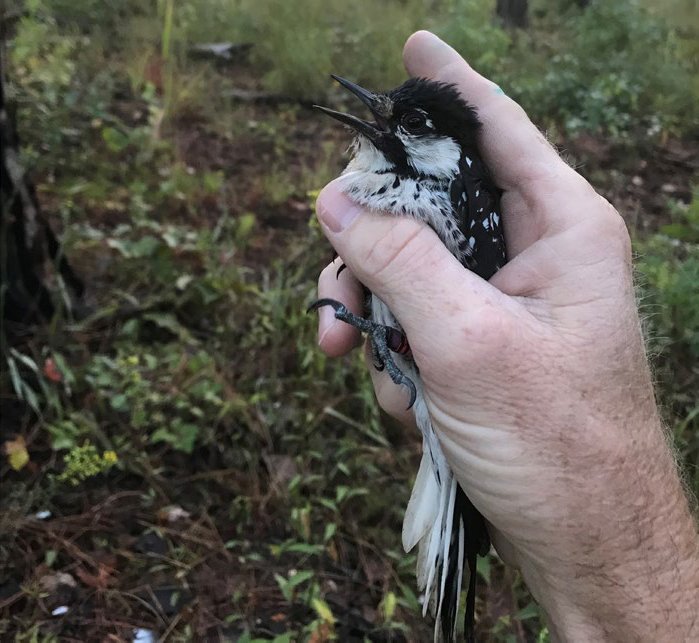
Longleaf pine systems are known for their extremely high grass, forb, and legume diversity, and some rare plant species (such as several pitcher plant species, Venus’ flytrap, Panhandle lily, American chaffseed, Hairy wild indigo, and Barbara’s buttons) also rely on these habitats. Therefore, one of the most effective and cost-efficient treatments in longleaf pine forests is prescribed fire. Once heavily utilized in the naval stores industry, longleaf pine is also highly prized for its timber value. Although it can be relatively slow starting on some sites, it is a prime timber species, and is important in the pole market in some regions. It has excellent structural timber quality and is moderately to very rot resistant at maturity when there is significant heartwood in the lumber. Although there were challenges in restocking longleaf up until a couple of decades ago, the high survival realized through containerized seedlings, as well as a better understanding of site preparation techniques, has made longleaf a much safer investment for managers. Due to its longevity most longleaf stands are managed at relatively long rotations (for financial and wildlife reasons) as compared to species like loblolly pine.
Shortleaf pine (P. echinata) is somewhat similar in its biology to longleaf pine. Shortleaf, however, is easily distinguished by its short (3-4 inch) needles in bundles of 2 or 3 per fascicle. They typically have numerous small (around 2 inches long) cones. With a historic range of 22 states, its habitat is similar to the longleaf. Shortleaf occurs on several acidic soil types including well drained sandy loams to rocky sites, and also sometimes on clay soil types. Like the longleaf ecosystem, shortleaf systems were also shaped largely by periodic fire on the landscape. It is believed that Shortleaf pine systems evolved with a fire return interval of 2-18 years (Pickens, 2019). As a larger sapling and a mature tree it can tolerate fire fairly well. However, small seedlings and saplings are not as fire-proof as longleaf and typically do get top-killed during a burn. However, shortleaf is a re-sprouting species. Therefore, when regenerating shortleaf, fire is often excluded for a few years so that the seedlings can establish a significant root system from which to re-sprout, or until they can withstand the thermal stresses of the fire. From a timber management perspective, shortleaf is very similar in its quality and form to longleaf when mature (in the sawtimber market). Planting shortleaf is not nearly as popular as planting longleaf or loblolly, however. This trend is partly due to forest health concerns, particularly concerns from “littleleaf disease”. Littleleaf disease is prevalent on the erodible clay soils of the Piedmont ecoregion and is often cause by stresses due to these soils and their nutrient deficiency, poor drainage, and variable moisture content (Campbell and Copeland, 1954). These stresses often lead to fungal (primarily Phytophthora cinnamomi) as well as nematode infections and ultimately cause death in the tree after a few years in most cases. While other pines in the Southeast are also susceptible to littleleaf disease, shortleaf pine is the most commonly affected species. Open fire-maintained shortleaf pine stands can provide the same high quality wildlife habitat as longleaf stands. Again, this has to do with the herbaceous understory associated with these systems. Bobwhite quail as well as many of the longleaf pine associates are often just as content in these systems as in longleaf.
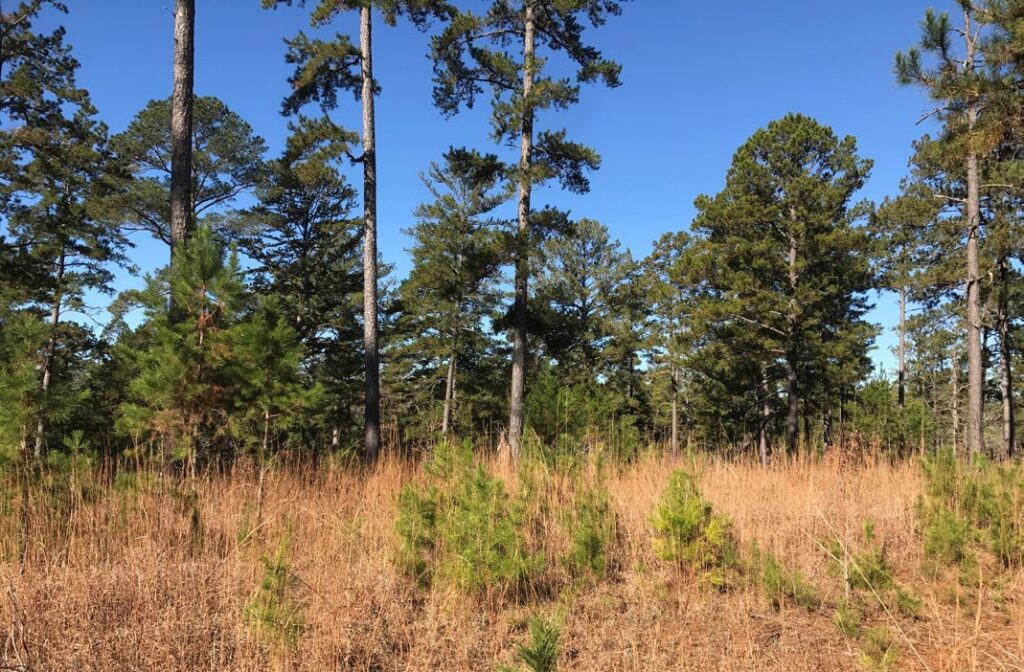
The most common tree in many parts of the Southeast today is the Loblolly pine (P. taeda). The native range of loblolly pine extends through the eastern United States from southern New Jersey south to central Florida and west to eastern Texas. This range includes the Gulf and Atlantic Coastal Plains, the Piedmont, the Cumberland Plateau, and the Ridge and Valley ecoregions. Loblolly has bundles of 3 needles (5-8 inches long) per fascicle and female cones of about 4 inches long. It commonly reaches heights of 80 feet. This pine can be very fast growing on high quality sites and typically prefers more mesic sites than the former two species of Southeastern pines. However, it can grow on a variety of acidic soil types. Loblolly has been used extensively throughout its native range for paper pulp production and currently exists in densely stocked plantations on millions of acres. Typically these plantations have lesser relative value when it comes to wildlife (both game and non-game species) habitat quality. This is due to the tight, closed canopy conditions and little to no herbaceous understory on the forest floor. While dense plantations do offer good cover for deer and some other species, a common management prescription is to thin these plantations if wildlife is a priority. Loblolly is not as fire tolerant at an early age as longleaf or shortleaf but in areas that are not burned on a short rotation it is an excellent pioneer tree species. Loblolly is generally a more efficient seeder than longleaf as evidenced by the rapid colonization seen in old fields, when mature seed source loblolly trees are present. After it persists to a few years old however, a loblolly pine can tolerate periodic fire and it can be managed with most of the same understory benefits of shortleaf and longleaf systems. In these cases, loblolly is sometimes referred to as a surrogate pine, taking the place of historically occurring pine forests (longleaf and shortleaf) that have been lost due to fire suppression and other land use changes. Loblolly has similar wood quality traits as longleaf and shortleaf and is still the most commonly planted pine in the southeastern region. One forest health concern that managers sometimes face with loblolly is that it reaches its peak rather quickly (when compared to longleaf and shortleaf) on some dry nutrient-poor upland sites, sometimes as early as 30-40 years old. Loblolly decline can occur when it occurs on these soils for which it is not well-suited, and as a result the stands become stressed. In a weakened state they are attacked by bark beetles and root weevils, and are commonly infected in the process by one or more species of fungus (most commonly Leptographium sp.). On richer, more mesic sites this disease is not too much of a concern and the tree can live to be well over 130 years. Poor soils and overstocking (and other stressors such as injury) can also lead to infestation by Southern pine beetles, especially in Loblolly pine. These tiny beetles can wipe out thousands of acres of pine forests in a single season. Thinning in overstocked loblolly stands is often prescribed as a preventative treatment to defend against Southern pine beetle epidemics. Thinning improves the vigor of the remaining individual trees and helps to break the reproduction cycle of the beetle by exceeding their flight distance from tree to tree. Fusiform rust (caused by the fungus Cronartium quercuum) is another very important disease in Loblolly pine and it is recommended that mangers use “improved”, rust-resistant, seedlings when purchasing from nurseries for replanting stands.
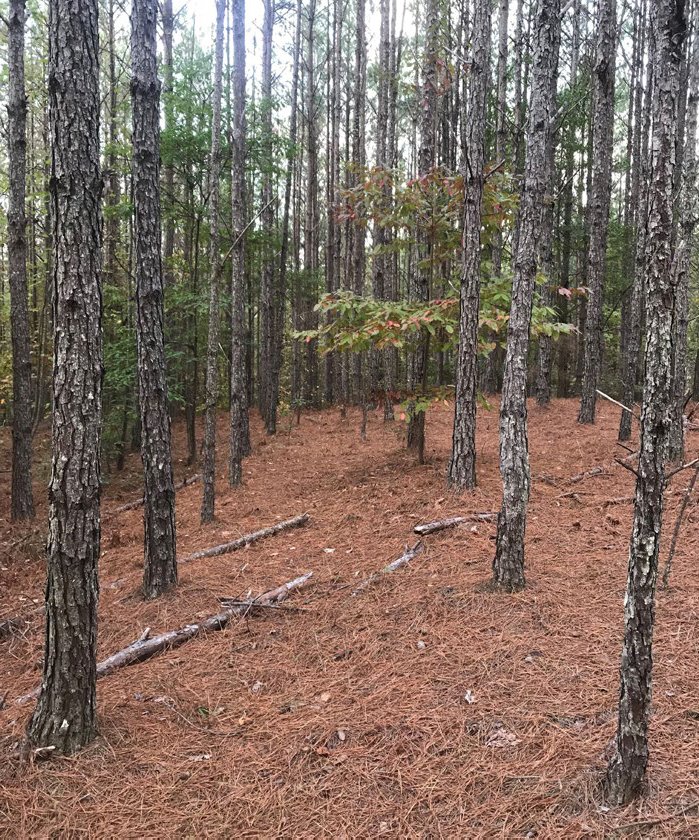
With a range that extends from southern South Carolina to eastern Texas and south throughout Florida, in many wetter areas of the coastal plain, Slash pine (P. elliottii) becomes the dominant native forest type. Slash is similar to longleaf but it is more suited to semi-saturated and deeper sandy soils and often occupies wetter sites. It is still fairly tolerant of fire and has basically the same high quality wood and timber characteristic as the other southern yellow pines. Due to its high resin content it is often used for railroad ties, pilings, and poles (Lohrey and Kossuth, 1990). It was (and to a lesser extent) is still used as a resin source for the turpentine industry. Slash pines are sometimes difficult to discern from longleaf pines. They have fairly long needles (8-9 inches) and medium sized cones (3-6 inches in length) and express a similar growth habit and look as longleaf. They are also known to hybridize with both Longleaf and loblolly pines as well as Sand pine (P. clausa), which also occupies similar habits in the southern coastal plain. There are two varieties of slash pine, the typical elliottii variety and the Florida variety, with the latter occurring throughout the entirety of Florida, and even into the Florida Keys. Slash is fast growing and is often planted for soil stabilization as well as for wood products in the Southeast. Slash is most commonly regenerated using even-aged silvicultural methods. These consist of either artificial regeneration (clear-cut and replant with seedlings), or through natural regeneration using on-site parent trees (using a seed-tree or shelterwood method). The two most common diseases of Slash pine are Annosus root rot (caused by the fungus Heterobasidion annosum) and fusiform rust. Slash, like loblolly is often planted off-site on soils that it is not well suited for. This can sometimes cause problems with stand longevity. Regarding wildlife, slash pine seeds are consumed by many birds and small mammals and thick stands offer good cover for deer and other species. Red-cockaded woodpeckers will sometimes use this species, as well as bald eagles, for nesting (like the aforementioned southern yellow pines). This pine is often one of the most common overstory species in the wet flatwood ecosystem. This ecosystem is maintained by fire, but at probably a slightly less frequent rate (perhaps 5-7 years) as compared to upland longleaf ecosystems (Landers, 1991). Wet flatwoods can be very diverse in their herbaceous/shrub understories. They typically contain wiregrass (Aristida), blue maidencane, toothache grass, Carolina redroot, beaksedges, and various species of pitcherplants.
Changing the scenery completely, as we move up into the north half of Alabama and Georgia, through Tennessee, Kentucky and into Pennsylvania, New York, and Virginia we run into another common pine species, Virginia pine (P. virginiana). Virgina pine has short (1/2 to 3 inches long) twisted needles, with 2 per fascicle, and small cones of about the same length. Virginia pine prefers well-drained loam or clay in hilly terrain, but it also persists on very poor, sandy soil, or even rocky bluffs. Here in these harsh environments it often appears stunted and twisted. Virginia pine is short lived for a pine, usually only persisting 90 years or less. Unlike the other pines we’ve discussed, this species is poorly adapted to fire and is often found mixed in stands with hardwood species. It was historically used to produce mine timbers, railroad ties, and tar. Today it is used extensively for reclamation and rehabilitation purposes associated with coal mining operations, as it is fast growing. Virginia pine can sometimes produce good lumber but it is typically less desirable than the southern yellow pines. This species is also currently grown on tree farms for Christmas trees. Outside of this industry, Virginia pine is not commonly planted for timber production, although it has gained some popularity in recent years in the pulp industry. The Cherokee Indians used this species historically as a medicine for colds, fevers, and stomach ailments, as well as for a soap (from the needles). Other than providing thermal and tough cover, it has limited wildlife benefits.
Moving even farther north into Nova Scotia and across the Northwest Territories of Canada down into the Great lakes area, the Jack pine (P. banksiana) is somewhat similar in its appearance to Virginia pine. It can form dense scrubby stands on poor sites and is ecologically important because it is the key habitat feature for breeding Kirtland’s warblers, one of the rarest birds in the United States. This bird breeds only in large (100+ acres) stands of young jack pine in a very small area of Michigan. These young stands are often a result of periodic fire that causes mature jack pines to completely release their seeds. Kirkland’s warblers winter in the Bahamas but depend on these specific young Jack pine habitats to breed. As they mature Jack pine stands generally become more open and host understory shrubs like blueberry.

The Eastern white pine (P. strobus) is a large, long-lived species found on well drained and rocky soils of the Appalachian Mountains and north into Maine, Canada, and the Great Lakes states. It is easily recognized by its bluish-green needles (2-5 inches) arranged in bundles of 5 per fascicle. It has loose slender cones and its branches are arranged in whorls on the trunk. Eastern white pine forests historically covered much of northeastern North America although only about one percent remains. The tallest eastern white pines are 180 feet. It has moderate to high wildlife value and its seeds are important for a variety of animals including red squirrels, crossbills, pine siskins, and others. White-tailed deer, rabbits, and other mammals browse it for forage, especially in winter. White pine produces high quality lumber and this species played a key role in the expansion of settlers and industry into the West. Historical reports from around the Chicago area in the 19th century tell of hundreds of thousands of big white pines per year being sent to the lumber yards. Prior to that time this species was also interestingly used regularly for building large square rigged sailing ship masts. Large white pines in the original Thirteen Colonies area were even known as “mast pines” and were marked with symbols of the crown, reserving their use by the British Royal navy. Today it is commonly grown in plantations for lumber, furniture-making, and sheared Christmas trees. White pine blister rust is an important disease for the species, caused by a non-native invasive fungus from Europe. Since its arrival about a hundred years ago, this fungus has taken a significant toll on many large populations of Eastern white pines, and as it continues to spread it now threatens all nine species of native white pines in the US, including the Western white pine (P. monticola), and even the ancient bristlecone pine groves of the Southwest.

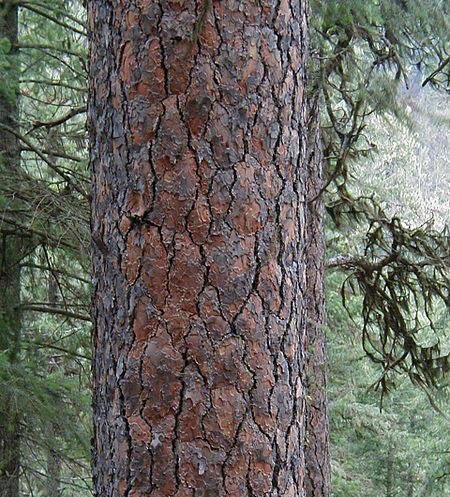
One of the most common and charismatic pines found in the mountains of the Southwest and north through the foothills of the Rockies, is the Ponderosa pine (P. ponderosa). Mature ponderosas are large trees and have yellowish-red bark with large bark plates divided by contrasting black furrows. The tallest was recorded in the Rogue River–Siskiyou National Forest in Oregon and measured 268 feet. Several subspecies and varieties exist but on average this species has needles in bundles of 2-3 and ranging from 4-8 inches long. They have long large taproots that help them withstand drought conditions for extended periods. Much like longleaf, this species is fire adapted and mature individuals are able to withstand periodic fire events due to their thick protective bark. They often grow in open savannahs or in scattered open woodlands with grass understories. At higher elevations ponderosa pine is commonly found in dense forest stands mixed with Douglas fir. Here it provides habitat for the endangered spotted owl. In the higher elevations the natural fire return interval is longer than on the drier ponderosa savannahs. Over time with fire suppression and land use changes these open systems, just like longleaf ecosystems, have declined sharply on the western landscape.
Farther to the north and northwest, the Lodgepole pine (P. contorta), or twisted pine, is another common pine of the West. It grows as far north as the Yukon in Canada and south through the Rockies, down the Cascades all the way into California. Its needles are short (1-2 inches) and occur in pairs. The species can occur as a shrub or a tree that reaches 150 feet tall, depending on site and subspecies. Lodgepole pines are common in Yosemite, Yellowstone, and several other western National Parks. In 1988 when the large Yellowstone wildfires burned, thousands of acres of these trees were killed, but now some 31 years later, dense stands of young lodgepole pine trees have established themselves from seeds of the former generation. This species is an effective recolonizer following fires or drought. It has excellent wood properties for lumber, plywood, and paneling, and is also used for furniture, windows, and fence posts. Lodgepole is used in modern horticulture industry as an ornamental tree and for large containerized bonsai specimens. The lodgepole pine gets its name from its historic (and modern day) use in structural poles for Native American teepees. Ecologically speaking, lodgepole forests are typically low in structural and species diversity and provide habitat for relatively few wildlife species. The Northern goshawk is one exception and can often be found nesting in western lodgepole pine forests. Interestingly, lodgepole pine is a serious invasive species in New Zealand.
In summary, pines are a fascinating part of the cultural and natural history of the country. While there are certainly several more species of pines that occur across the United States, these are some of the most common. Many are important from an ecological and wildlife habitat perspective, as well as commercially. Soils, topography, climate, and periodic disturbances such as fire, can dictate where and to what extent pines occur on the landscape. Some systems host extremely rare plant and animal communities and some species live to become giants. Others, like the ancient bristlecones, seem to have the ability to make time stand still. Hopefully now as you travel across the country you will see the various species of pines along the way in a slightly different light.
References
Campbell, W.A., and Copeland, O.L. 1954. Littleleaf disease of shortleaf and loblolly pine. Circ. 940. USDA. 41 p.
Cronon, William (1991). Nature’s Metropolis: Chicago and the Great West. New York, NY: W. W. Norton and Company. p. 183.
Eckhardt L.G., Weber A.M., Menard R.D., Jones J.P., Hess N.J. (2007). Insect-fungal complex associated with loblolly pine decline in central Alabama. For. Sci. 53: 84-92.
Landers, J.L. 1991. Disturbance influences on plant traits in the southeastern United States. Pages 39-60 in High intensity fire in wildlands: management challenges and opportunities. Proceedings of the Tall Timbers Fire Ecology Conference, No. 17. Tall Timbers Research Station, Tallahassee, Florida.
Lawson, E. R. 1990. Pinus echinata Mill. Shortleaf pine. Pages 316-326 in R. M. Burns and B. H. Honkala, technical coordinators. Silvics of North America. Volume 1. Conifers. U.S. Department of Agriculture, Forest Service. Agriculture Handbook No. 654. Washington, DC.
Lohrey, R.E.; Kossuth, S.V. 1990. Pinus elliottii Engelm. Slash pine. In: Burns, Russell M.; Honkala, Barbara H., technical coordinators. Silvics of North America. Volume 1. Conifers. Agric. Handb. 654. Washington, DC: U.S. Department of Agriculture, Forest Service: 338-347.
Pickens, B. 2019. Fire Ecology of Shortleaf Forests. Shortleaf Pine Initiative Website (http://www.shortleafpine.net). Accessed 10/20/2019.