

One of the most common types of aquatic plants in private lakes, and the smallest, is algae, which also can be the biggest benefit, downfall, and most frustrating to manage. Algae can occur in both fresh and saltwater. Algae comes in three forms planktonic (phytoplankton – microscopic plants), filamentous (single-cells forming chains or strands), and rooted plants known as Chara (musk grass) and Nitella (stonewort). Most phytoplankton and filamentous algae species need to be identified with a microscope as there are thousands of species throughout the world, but in most instances, general identification is acceptable for freshwater lake management. Only on rare occasions does algae need to be identified down to the species level. The most common issues we see are phytoplankton (green water), filamentous (sometimes referred to as pond slime or scum) and Chara. All are associated with excess nutrients whether naturally occurring or man-made, and warmer water. Most freshwater algae grow when water temperatures get above 60o F and thrive as temperatures get warmer. An 87 – 92o F water temperature creates a prime environment for both phytoplankton and filamentous algae growth. In small freshwater ponds, we rarely see any of the toxic algae species, most commonly blue-green algae. Blue-green algae is more common in larger lakes, reservoirs or in saltwater near the coast. Algae can occasionally appear or be a chronic problem depending on the age of your waterbody and activities currently or historically occurring around and/or upstream of your lake. Remedies range from doing nothing and letting it run its course to continually treating with herbicides and/or biological treatments.
Phytoplankton
Most have heard a lake manager say an algae bloom is good for fish production. Green water has been proven to support up to 400% more fish than clear water. This is in the form of planktonic algae which turns the water green (also blue-green, brown, red and many other color variations), can be a slight tint with visibility down several feet to a heavy paint-like color with almost zero visibility. Many species of algae are involved in algae blooms and these species change over time based on temperature, light, nutrients, and other factors. Most phytoplankton are harmless and in moderation benefit fish populations. Phytoplankton are the foundation of the food chain. Phytoplankton (microscopic plants), feeds zooplankton (microscopic animals), that feed small fish, that feed larger fish and wildlife. Most 24-48-hour old fish hatchlings, regardless of species, they feed on phytoplankton and zooplankton. From there, depending on the species, may continue to feed on those, or they may progress up through the food chain changing forage many times like a top-level predator such as the largemouth bass. The more food available for fry and fingerlings, the faster they grow and higher their survival rate.
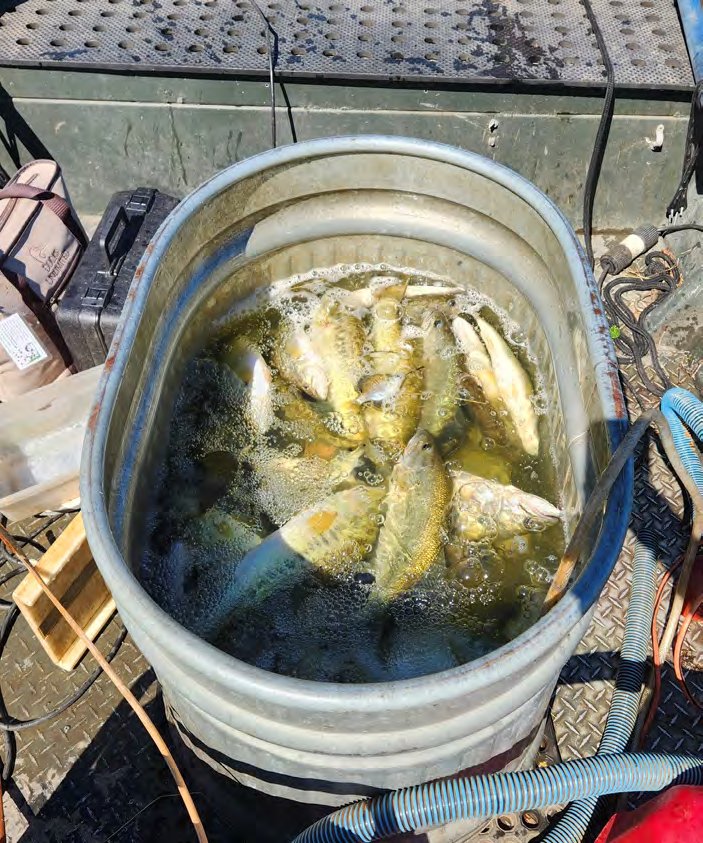
For algae to flourish you need sunlight, adequate water temperature and nutrients which can come from agricultural runoff (animal waste, plant fertilizers), residential fertilizers (homes, golf courses), natural areas (flooded woods, prairies, wetlands, fields, etc.), where large amounts of dead plant material have built up, and the lake bottom itself, where large amounts of organics have built up over the years/decades from natural lake progression. Besides nutrients, planktonic algae need certain water chemistry parameters to fall within certain ranges, otherwise this type of algae cannot utilize the nutrients to grow and multiply. Water chemistry parameters such as hardness, alkalinity and pH need to be above 20 ppm, 20 ppm and 5.5, respectively, for an algae bloom to occur. This is why it is always advised to have water chemistry checked prior to initiating a fertilization program to ensure an algae bloom will occur. We have witnessed liming a lake to raise the pH prior to beginning a fertilization program triggering a natural algae bloom with nutrients already present in the ecosystem, and no fertilizer was necessary to achieve the desired results.

An ideal algae bloom restricts water visibility from 18-36 inches. Any visibility less, and the bloom is too intense. Any greater visibility, and sunlight penetrates farther into the water column and can promote undesirable submerged vegetation growth. Planktonic algae raise the amount of dissolved oxygen in the water during daylight hours, but dissolved oxygen levels subside over night as some cells die off and the remaining do not photosynthesize. Algae blooms can cause issues after they become established with a sudden die-off. Sudden die-offs occur when a lake dye or herbicide is applied to them, or subsequent days of overcast (no sunlight) weather can trigger a phytoplankton die off. This die-off creates decomposing plant material and lowers dissolved oxygen levels, sometimes stressing or killing fish. As air temperatures cool and daylight hours shorten, algae blooms subside and may disappear during winter, but if natural conditions are right, will occur again the following spring.

If an undesirable algae bloom exists and you want to stop or reduce it, the nutrient source must be identified and removed to be successful. Depending on where the unwanted nutrients are coming from, or if they are already in the waterbody, this may be a simple fix or require major work. An example of a simple fix is placing barriers (fence) up excluding livestock, to drawing a lake down, scraping out the organic muck and refilling is major work. Caution must be used to treat algae blooms with herbicides or lake dye. Once the bloom becomes established, killing the bloom will greatly lower dissolved oxygen levels and will probably kill fish. Use only aquatic labeled herbicides, as some have used homemade concoctions and inadvertently killed fish and desirable plants in the process to stop algae blooms. The active ingredients that have been successful in treating planktonic algae include copper-based compounds, sodium carbonate peroxyhydrate, alkylamine salts of endothall, and flumioxazin. If a lake dye is desired, apply it in late winter when the bloom is less established or nonexistent and maintain the dark color throughout the growing season to avoid any fish stress or die-offs.
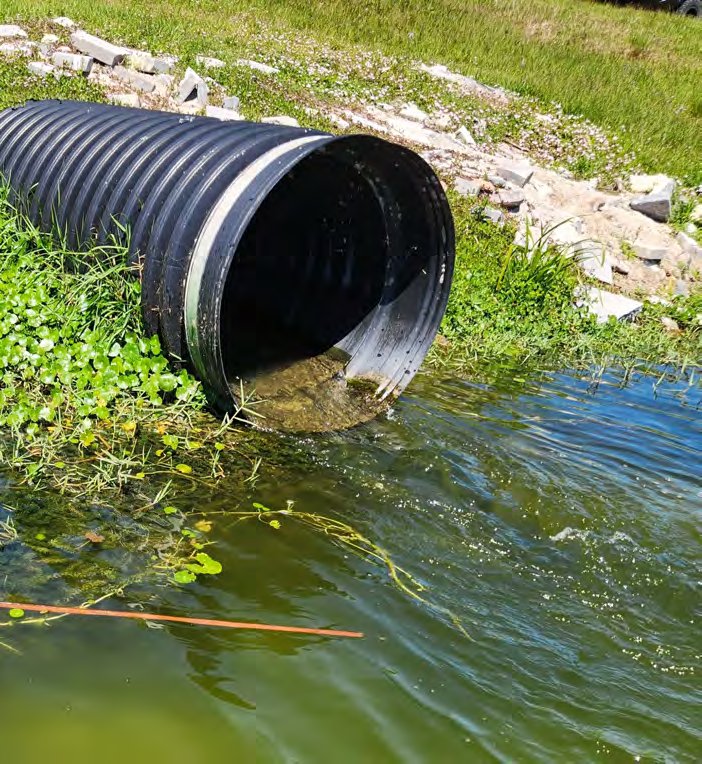
Allowing a buffer of plants to grow around and in a lake will also help reduce nutrients entering the system. The more plants utilizing nutrients, the less available for phytoplankton. We have seen many times in fertilization programs, the landowner/manager get behind on adding fertilizer which allows submerged plants to flourish. The more submerged plants present, the clearer the water, due to submerged plants using the nutrients, and phytoplankton having none to grow.
Filamentous Algae
Filamentous algae are single-cell plants that connect to other cells that are usually identified by being “stringy” or “hair-like” (referred to by some as pond slime or scum), in appearance located on the lake bottom, attached to other emergent or submerged plants or floating in mats on the surface. Filamentous algae start growing from sunlight reaching the lake bottom feeding off nutrients in water or organic materials on bottom. These organic materials can be in the form of decomposing plant or detritus (bottom muck) material. Filamentous algae create habitat for many micro and macro invertebrates (bugs, worms, snails, etc.). These invertebrates are used as food by fish and other wildlife species (e.g. amphibians, reptiles, ducks, etc.)
Filamentous algae begins its life cycle underwater attached to the bottom or structure (plants, logs/brush, rock, etc.). After a period below the surface, it eventually breaks free and floats to the surface. This is when it becomes visible, aesthetically undesirable and an issue for lake managers. This also becomes the time it is harder to treat and control. If you are conducting a fertilization program, you will experience a small amount of filamentous algae around the edges. This is normal, but should it become a larger problem, it will have to be addressed. Once filamentous algae comes to the surface it can float around and is usually wind driven.
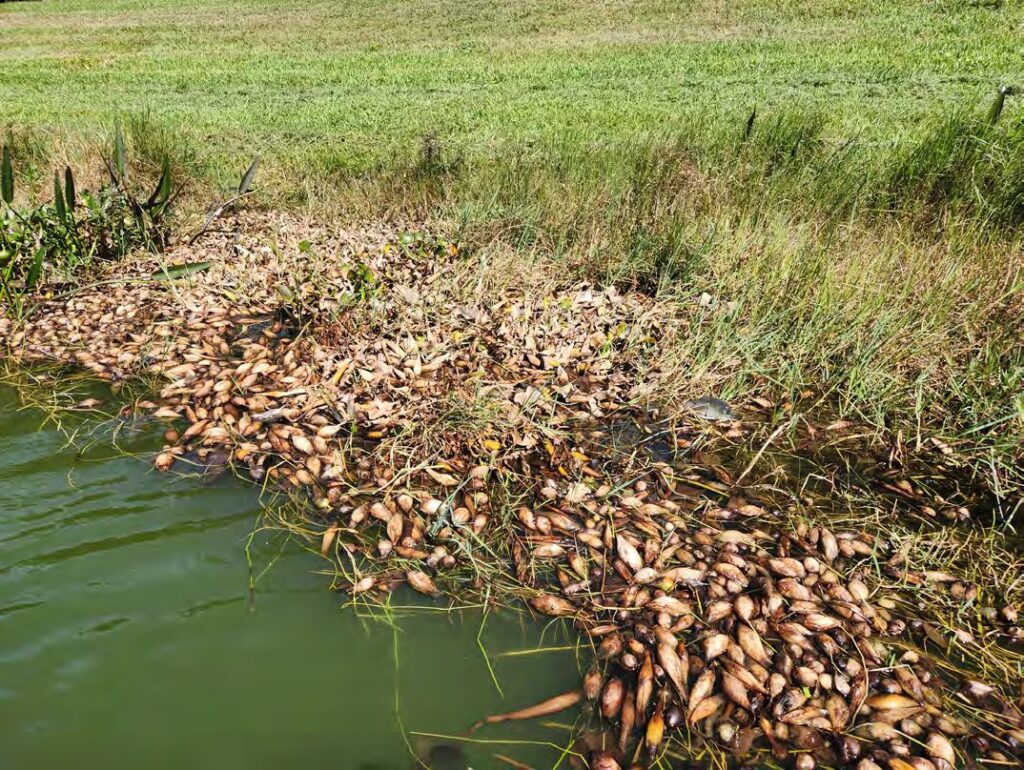
A common and one of the worst filamentous algae is Lyngbya. A blue-green algae that lives on the lake bottom, but eventually breaks free and floats in thick mats on the surface. It may get a crust on it with a dark green or even black coloring. Lyngbya initially forms as a dense, carpet-like layer on the bottom of the pond and this is the best time to start addressing the issue with herbicides. The cyanobacteria produce gases which then cause pieces of the mat to break loose and float to the surface. It is slimy to the touch due to a gelatinous coating that it produces. The gelatinous coating makes the Lyngbya resistant to algaecide applications. There are currently no products that have been proven to be 100% effective in penetrating this coating. Even when the coating is penetrated and the algaecide kills the internal cells, the mucus-like layer prevents the Lyngbya from decomposing and sinking to the bottom. In this case, you end up with dead, white or gray colored remnants that continue to float on the pond surface for weeks after treatment.

Lyngbya thrives in shallow, clear water that has high amounts of nutrients (phosphorus and nitrogen), and little or no water movement. A lake dye (if desired), can be the first step in controling Lyngbya to prevent the initial growth and is the best way to control the spread. The dye will limit the amount of sunlight that reaches the pond bottom; thereby making it difficult for the Lyngbya to become established. Lake dyes are available in a few different colors (Black, Blue-Green, Blue). In ponds with low water movement, a surface fountain or aerator can be very beneficial. Reducing available nutrients in the pond with commercial binding agents like Phoslock is another option. And finally, routine algaecide applications help keep the growth in check. But in the end, there is no simple solution for permanent removal and grass carp are not an effective tool for control.
When treating an algae bloom, always be aware of the potential for fish kills from dissolved oxygen depletion. Treating smaller portions of the lake during cooler temperatures is recommended for filamentous algae. Herbicide control should begin with an application of copper crystals or granular endothol early in the growing season while the Lyngbya is still on the bottom and at the first sign of the plant, following labeled rates. Once Lyngbya reaches the surface either dead or alive it can be beneficial to break up mats with the boat motor prop, to help speed up the decay process or facilitate an effective follow-up liquid herbicide application. A liquid herbicide application should be completed with a good surfactant/penetrant to help overcome the outer layer of the plant. The following is a list of recommended tools/herbicides (always follow labeled rates):
- Lake Dyes – Once a dye program is begun it is important to constantly monitor and re-apply as necessary to prevent submerged vegetation growth.
- Granular Copper – Cutrine (use medium size crystals as it is easier to apply)
- Granular Endothol – Hydrothol (can kill fish, do not exceed labeled rates)
- Liquid Copper – We recommend Captain XTR and EarthTec (will act as surfactant) tank mix
- Surfactant/Penetrant – We recommend LI700 if using Captain XTR only.
Once filamentous algae reach the surface, mechanical removal is best. This removes the plant material and the nutrients from dying plants that would be created from chemical treatment. Once it gets to the surface it’s hard to kill with either liquid or granular because if you don’t kill it all in a short period of time, it grows off its dead self and becomes a vicious cycle of treating/growing/treating/growing. Treating floating mats on top and from underneath (sticking nozzle under mat and spraying under side), and churning spray into the mats with the motor prop may be necessary to get herbicide in contact with living plants. Dead filamentous algae feed and protects living algae from coming in contact with herbicide. This is why it is very important to treat early and address nutrient sources. Despite common belief, grass carp do not consume filamentous algae at a rate to make them a successful control method. Tilapia have been documented consuming filamentous algae; however, they do perish in winter in most areas and need restocking annually. Installing a bottom aeration system will also help reduce filamentous algae growth by keeping nutrient molecules in motion, not allowing plants to utilize it. Adding blocks of bacteria and enzymes have also proven to help control algae growth in certain situations. Adding Alum post treatment binds with phosphorus molecules preventing it to be utilized by algae, hindering its growth.
Aeration can deter filamentous algae from growing. Water movement keeps molecules moving so algae cannot use nutrients as easily. You can still have a phytoplankton (green water) bloom with an aeration system installed, but it does help combat filamentous algae growth.
Rooted Type Algae
Chara (musk grass or skunk weed) and Nitella (stonewort) are multi cell algae commonly misidentified as other plant species. Chara has no flower, will not extend above the water surface, and often has a “grainy” or “crunchy” texture. Chara has cylindrical, whorled branches with 6 to 16 branchlets around each node. The name Musk Grass is derived from its foul, musty almost garlic-like odor. This plant is often confused with coontail and both need to be properly identified for chemical treatment as what treats one, does not affect the other. Stonewort has no odor and is soft to the touch. It is light to dark green in color with forked, bushy branches 1/16 to 1/8 inches in diameter. This species is the least common of the two.
Mechanical raking is fairly easy to remove both species. If herbicides are desired, the active ingredients that have been successful in treating Chara and Nitella include copper-based compounds and alkylamine salts of endothall. As always, follow label instructions, as salt of endothall at higher than label recommendations are toxic to fish. Again, grass carp do not prefer these plants, but tilapia have been documented to consume them.
Although some lakes have chronic algae problems, having some algae present is not a bad thing for the fishery. Managing it in some aquatic ecosystems is harder than others. Those with a naturally occurring algae bloom where visibility always falls in the desirable range, consider yourself lucky, use it to your advantage and manage to its full potential.