

People don’t think there’s much to do in winter as a pond manager, but there is actually quite a bit that can be done. Most pond owner’s minds are on hunting, holidays, watching football and indoor activities during the winter. There are actually many things you can be doing as a pond manager during the winter, and getting wet is not one of them.
Mowing or using a weed eater along the pond shoreline during late winter just prior to green-up is advised to expose plants to sunlight and promote growth. Do not perform this until just before the growing season to help prevent erosion. If done in fall or early winter, the soil is exposed for a long period of time and unnecessary washing of bank sediment could occur. You can also mark areas where you want vegetation to remain short for bank anglers to have access. Throughout the year, come back and periodically mow to keep open. Mowing cattails in winter, then treating with herbicides in early spring as shoots begin to appear is a good technique for reducing or eventually eliminating cattail growth. Be careful not to mow any desirable or recently planted trees.
Mechanically removing (with machinery or by hand) dead aquatic vegetation that has either become dormant or was left from a fall herbicide treatment reduces its presence in the spring and reduces the amount of nutrients released into the water and organic material building up on the bottom. Organic build up can contribute to excessive planktonic algae bloom or filamentous algae growth (green slime on bottom or floating).
Planting trees should always be done just prior to the growing season. In and around the lake consider hibiscus, red maple, and cypress. These can provide habitat for fish and wildlife, shade for anglers and aesthetics to the lake. When planting cypress in water, make sure all the branches are above the waterline when it greens up. Also, stake all trees planted in the water because their first year the trunks are very flexible due to the water intake. After two growing seasons the stakes can be removed. Plant accordingly to the tree’s needs and tolerances to the current and predicted water levels. Predator guards are a must. Protecting the young trees from something that is not there is better than not protecting them from the beaver that are there. Beaver will destroy trees both along the shore and in 2-4 feet of water. Consider planting soft and hard mast trees around your water body. This provides additional food for wildlife including deer and turkey, while adding to the pond aesthetics.
Trim any trees both around the pond and on the property that either needs it for shaping/control or to promote fruit or nut growth during the upcoming growing season. All trees can benefit from various kinds of pruning. Check the literature for the types of trees you have for trimming and trimming techniques to achieve the greatest benefit. Willows and wax myrtles can become invasive, but if you want to keep them around your pond, they need to be constantly trimmed and surrounding upcoming shoots cut to the ground or below. Also, thinning trees around and in the pond can be done. Where you have multiple individuals or a desirable mix with undesirables, they can be thinned to improve growth of remaining trees.
Having a commercial company build a dock is best done in winter especially if the company is jetting in poles and doesn’t need to enter the water. Your activity around your pond is probably reduced and the dock will be complete before spring when you start using your pond more frequently. A feeder can also be added and turned on in the spring when feeding activity increases and water temperatures get to above 55º F.
Fountains and Aeration Systems
can be installed or routine maintenance performed without having a great effect on the water quality. Fountains can develop calcium build up on the heads creating an undesirable pattern or creating unnecessary pressure on the pump. Aeration stones can also become clogged with muck and calcium build up reducing air flow and putting added pressure on the pump. These types of cleaning projects can be done with Muriatic Acid on site or taking them to the barn or garage and replacing when finished. Some aeration systems have air filters and/or carbon veins that occasionally need replacing. When turning on a fountain or aeration system that has been off for a week or more, or turning on a new one for the first time, follow the manufacturer’s start-up procedure to eliminate water quality issues or causing a fish kill.

Winter is the best time to conduct a draw down. Draw downs can be used to improve bottom sediment, kill vegetation, reduce surface acreage for a large scale herbicide treatment in spring, or to conduct repairs to dams or outflow structures. A lake with high organic buildup (muck) on the bottom can greatly benefit from either exposing the bottom to dry up organics or drawing down and scraping and removing organics completely while increasing lake depth. Draining a pond down to expose submerged vegetation to cold temperatures to kill it and slow its growth and reduce coverage in the spring when the water comes up reduces herbicide costs for habitual plants being treated constantly. If a large treatment with an expensive herbicide is planned, drawing a pond down to reduce the acreage and amount of herbicide required saves money and improves the treatment by keeping a higher concentration of herbicide on the plant for a longer period of time. This technique is frequently used with a Fluridone (Sonar) treatment. Should repairs be needed to a leaking dam or repair/replace an outflow structure, completing during winter so restocking (if needed) can commence in the spring as it fills up helps expedite the process.

Reduce or stop supplemental feeding, and repair or clean fish feeders during winter months. If water temperatures get below 55º F in your area, feeding can stop. If continued feeding is desired, switch to a sinking feed, fed once per day during the warmest time, in about 6-10 feet of water. Do not dispense feed any deeper, as the dissolved oxygen may be zero at greater depths and fish may not consume. Feed has a lot of dust and cleaning feeders with a hose or blower can remove the dust and enhance operation. Once dry, oil any moving parts that can be oiled.
Batteries should be slow charged when pulled and stored at room temperature. Batteries can also be disconnected from the timer and motor and left in feeders when connected to a trickle charge panel if temperatures are mild. For areas with colder winters, pulling the batteries is advised.
Stop fertilizing or dying lakes when water temperatures get below 65-70º F. Once water temperatures drop below 60º F planktonic algae growth stops along with most vegetation. In areas with mild winters, this needs to be monitored closely as to not have an explosion of undesirable submerged vegetation growth in late fall or early spring resulting in excessive submerged vegetation.
During winter, meet with your pond manager to strategize about what has been working, what has not, and budget for the upcoming year. Has the management plan and implemented techniques improved the fishery? And is it to your expectations, and/or achieving your goals and objectives? Have things prescribed that have not been performed or performed incorrectly that were not beneficial or detrimental to success? If your pond manager is responsible for everything, then success and failure lies on him. If you or your staff are supposed to execute the strategy, work closely with the Pond Manager to assure you implement techniques properly and in a timely manner. During these meetings, both the Pond Manager and Landowner/Land Manager need to be open to criticism and prepared to change things to reach the set goals.
Liming needs to be done in the fall or early winter to allow the water chemistry to stabilize before spring and the fertilizing season begins. Liming is generally done to ponds that are under a fertilization program or where Alkalinity and hardness are below 20 ppm (parts per million), pH (acidity) below 6 and conductivity below 50 uS/cm (micro Siemens per centimeter). Liming is also performed in water bodies where big swings in pH readings occur daily, which can cause stress to fish of many species. Most areas require 1-2 tons of agricultural limestone per acre, but you should have both the water and surrounding soil sampled and tested for pH before determining the proper amount of lime to apply. Your Pond Manager or County Extension Agent can help you determine how much lime, if any, is needed.
Cleaning out or installing new wood duck nesting boxes should be done in early winter. That reduces any chance of wasps or snakes occupying the boxes, and will have them up and ready when wood ducks start searching for adequate nesting cavities in mid to late winter. Annually remove old nesting material and replace with fresh cedar shavings or sawdust. Use a predator guard on nesting boxes lower than 10 feet off the ground where feasible. Make sure the inside wall has adequate roughness for ducklings to climb out when leaving the nest. Also, assure when placing new boxes there will be adequate cover from the nest to the water for ducklings. If no activity has occurred in boxes for 3-4 years, moving them to a new location may be necessary.

Fish attractors from artificial materials can be built in the warmth of a garage or barn. Christmas trees can be collected from friends, neighbors or tree lots that didn’t sell them all (you may get them for free the day after) and put out when air temperatures are more pleasant. Be sure to place in 6-10 feet of water to assure the dissolved oxygen is acceptable all year round and do not place in the 20-30 foot deep holes where lack of DO may prevent fish from using them certain times of the year.
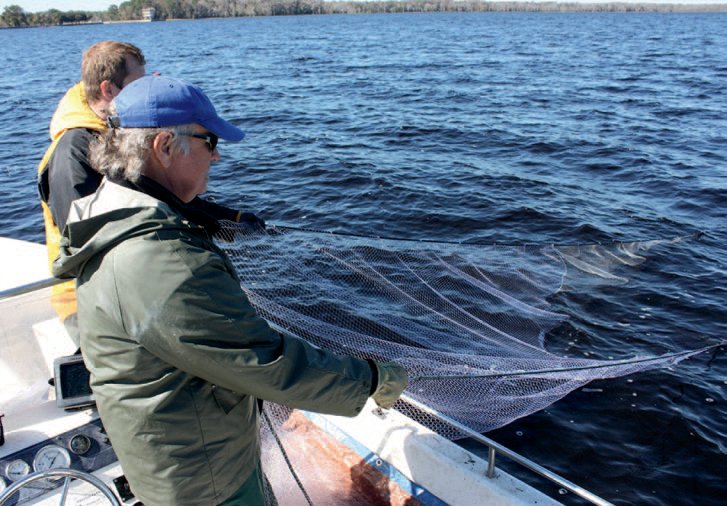
Electrofishing to evaluate a waterbody is not done during winter, but additional sampling for species not typically collected during electrofishing such as catfish or crappie can be done using other techniques. Hoop nets and gill nets during winter months typically collect these species that are not observed in great numbers during spring or fall electrofishing. As with all fish sampling, check your individual state’s regulations prior to starting.
Enjoy the resource! Try some winter fishing, duck hunting or place a deer stand near the pond. Fishing in the winter can be phenomenal for crappie (if you have them) or largemouth bass, especially after a long cold stretch followed by a couple of Indian Summer days in a row which triggers fish to feed since they have been eating very little during cold weather with a slower metabolism.
