

Reproductive habitat, what is it, why do we need it, how do we create it, and how do we maintain it? Reproductive habitat is usually not managed for but is an important component in all wildlife management. All wildlife species have some special needs for either nesting or food/cover for their young. Each species needs places to place their young or eggs (nests, dens, etc) and these offspring have special dietary needs and, therefore, the habitat required to support this diet. For instance, brood habitat for birds is one of the least managed for and least understood habitat types. Game birds from quail and turkeys to songbirds like shrikes and indigo buntings all need good brood habitat. Without it we either have poor or no populations of these species. We can have all the nesting habitat in the world for these birds and hatch many successful nests, but if we do not raise successful broods of chicks to adulthood, we will not have good populations of quail, turkeys or insect-eating songbirds.
To better understand brood feeding and requirements, we need to cover a little basic biology. Some birds, like quail and turkeys, have precocial chicks meaning that they hatch from the egg with open eyes, are fully feathered with down, and follow their parent(s) away from the nest immediately after hatching. They have the ability to either find food on their own or they are shown food by the parent, but are not fed. Many songbirds, however, have altricial young which are born nearly naked, eyes closed, stay in the nest after hatching and are fed by the parent(s). Depending on the type of nests these birds use, various habitats are needed. Quail, turkeys, sparrows, among others are classified as “ground-nesting” birds. They heavily utilize broomstraw-based habitat types to build and conceal their nests and many have precocial young. Other birds build nests in shrub or tree branches or utilize hollows in trees for nesting. Most of these “above-ground” nest builders have altricial young that must stay in the nest until they can fly. Doves are a good example of these and the availability of good nest sites can limit their reproduction, although they will nest on the ground. Den and hollow nesters have examples of both with birds like owls raising the young in the den until they can fly and species like wood ducks having chicks that leave the nest immediately to follow the parent to find food.
Most birds need a high protein diet for the first 2-4 weeks after hatching and insects are commonly the high protein of choice. Quail and turkeys need to be led immediately after hatch to habitats that are rich with small insects within a few inches of the ground. Adult birds such as flycatchers, indigo buntings, loggerhead shrikes, grassland sparrows, kestrels, blue birds, various warblers, yellow-breasted chats, as well as a variety of others, all need to have close access to insect rich environments to feed their young while in the nest and their young need these habitats once they fledge (leave the nest and begin to fly) and start to forage on their own. Insects are also an important part of adult turkey and quail diets in the spring and summer.
In mammals, some similarities exist. Deer, for instance, need good places to hide their fawns where predators cannot find them for the first couple weeks until the fawns begin following the dam. In these first weeks, the fawn is dependent on milk from the doe and, typically, does not move unless she is there. Grassy cover is an excellent place to hide fawns where their spotted patterns mimic sun-dappled environments and their lack of scent keeps them from being detected unless they are seen. Once they begin to follow the doe, they begin to feed on browse and mast in addition to milk. Other mammals, not usually managed for (raccoons, squirrels, coyotes, etc.), also need places to have their young like ground dens, tree dens, etc. and, in some cases, lack of dens can be limiting to their ability to reproduce. Mammals all leave their young in the “nest” in the first weeks and most are born blind and helpless, tended by the mother until they become more self-sufficient.
NESTING COVER
Creating nesting cover for cavity-nesters from raccoons and squirrels to blue birds, kingbirds, owls and wood ducks is easily understood. They need dead trees as well as older, live hardwoods that develop hollows in places where branches have broken off. In lieu of these, boxes can be installed in good places for these critters to nest. Wood duck, blue bird, screech owl, and squirrel boxes are all available (both commercially made and plans) and should be considered where natural hollows are limited.
For those species that need shrub and tree branches to nest, managing for a wide diversity of ground vegetation, shrub and mid-story sapling layer in addition to taller trees is simple and recommended. This habitat type is rarely limiting on most properties in the southeast.
Nesting cover for “ground-nesting” birds and mammals like white-tailed deer that heavily utilize grassy cover to hide their young, however, is often limiting in many properties. While deer and turkeys can reproduce without much of this habitat, their reproductive output can be enhanced by developing high quantities and quality of broomstraw habitat. Quail and other birds like Bachman’s sparrows, meadowlark, etc., on the other hand, are highly dependent on this habitat and become virtually non-existent without it. This habitat type is sunlight dependant and does not grow well in shady environments. Heavy thinnings in pine woodlands, combined with regular burning is the most common prescription for creating this environment.
Patch size of this habitat type is also highly important. Small and/or narrow patches of broomstraw habitat might be good nesting or fawning cover but may encourage a high proportion of the nest or fawns to be hidden in areas that are easily searched by predators. If these habitat patches are long and narrow (less than 50 yds wide), raccoons searching for bird nests or coyotes or bobcats searching for fawns become very successful at finding their prey. Managing these patches of cover in larger blocks is encouraged and making sure that there is ample nesting cover left after spring burning occurs is important.
BROOD HABITAT
While most mammals do not require different cover and habitat for their young, birds typically do. Once young mammals begin following their mothers on foraging forays, they typically begin to feed on the same foods the mothers do. Many young birds that left the nest immediately after hatch are often those that need a specialized “brood” habitat. As noted, quail and turkey chicks feed almost exclusively on insects for the first 2-3 weeks until they begin to fly efficiently. Their highest mortality time frame is also in theses first “flightless” weeks. Anywhere between 50-75% of the chicks hatched may be lost before they can fly even in the best managed habitat, so both quality and quantity is important.
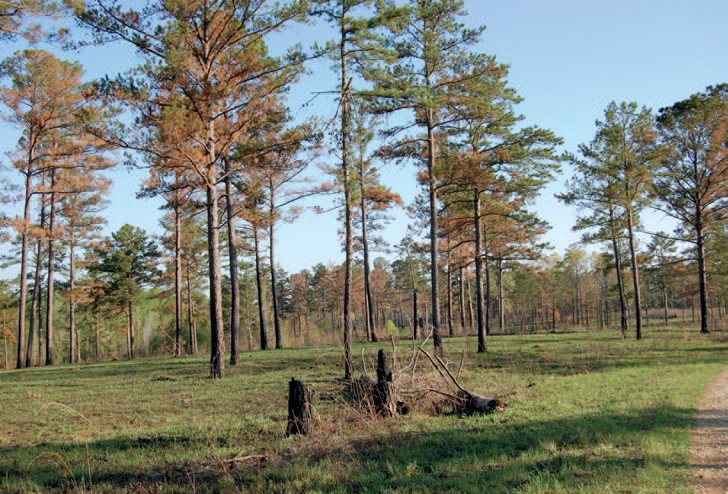
The most highly selected insects are the grasshoppers and crickets, spiders, flies, and beetles. So where do we find these “bugging areas”? Typically the best bugging grounds are areas where new growth of weeds is occurring. The two best habitat types for critters that forage on the ground are burned, open woodlands and weedy fields. Grassy areas can provide some bugging habitat, but the best insect production seems to be where “weeds” like forbs and legumes are abundant. This is where insects lay and hatch eggs and where their young are grown. Small insects can be eaten by a wide variety of birds and the short growth of new weed fields and burned woods keep the insects available to ground foraging chicks like quail and turkeys.
The growth structure of these weedy areas is also important. Thick mats of grass inhibit movement of ground traveling birds and do not provide much bare ground to move and find food. Stems of plants like ragweed, partridge pea, climbing and woody legumes, horseweed, dogfennel, goldenrod, blackberries, milkweed and many others, all provide stems with bare dirt in between for ease of movement and foraging ability as well as a canopy cover of leaves to shelter chicks and keep them from being seen by predators while they are feeding.
The areas that quail and turkey hens select to take their broods to vary by the quantity of each habitat type that is available to them, soil types and how it appears. For instance, in the some clay regions of Florida and Georgia, quail broods are most often raised in recently burned, open pine woodlands, often near field edges. In some sandy lands in central Georgia, however, broods are more often found in fall disked ragweed fields with burned woodlands selected second. It, undoubtedly, has a lot to do with the species, structure and density of the vegetation growing on the site, fertility and moisture of the soils, as well as the density and type of insects produced on these habitat types that makes hens select one type over another.
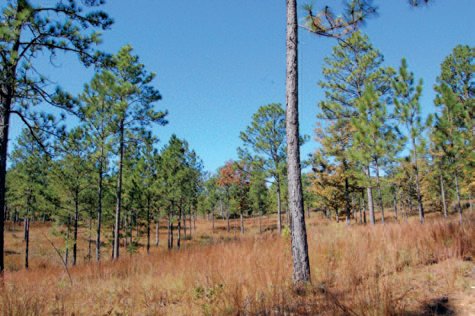
Regardless, it is generally a good idea to establish a well-distributed series of bugging areas of a variety of types across a property to provide a good selection of choices for your hens to raise their chicks. In pineywoods habitats that are well-managed and already providing the broomstraw habitat for nesting, it means having 50 – 70% of your woods burned each year in the winter or spring. Burning reduces the leaf litter on the ground, creates more bare dirt and stimulates quality plants to resprout in your woods creating excellent bugging areas.
Annual burning is necessary for maintaining bugging grounds. If fire is excluded from any area for too long these unburned areas will become too thick for movement and nesting. Rotating the burn areas annually is always a good idea so that there is good nesting habitat next to good brood rearing areas and chicks do not have to travel far to reach feeding grounds after hatching. Burn areas in the 25 – 150 acre range are probably ideal. Blocks less than this are not used effectively and could have higher predation rates on chicks. Blocks more than this isolate birds like quail within the burn block where they are more susceptible to predation and do not have good nesting and cover within their home range.
Managing brood habitat in field systems requires making sure that the majority of your brood fields are disked in the fall of each year. Fall disking has been used on quail lands for decades to promote a variety of seed producing plants and reduce fall cover prior to hunting season. It just so happens that this technique promotes one of the best insect production areas and brood habitats for insect eating birds. One of the most common plants promoted by fall disking is common ragweed. This plant is a host for a variety of insects and usually small grasshoppers are extremely abundant in the spring and summer in ragweed fields. Other plants that occur with ragweed in these fields are partridge pea, beggarweed, blackberry, Doveweed and milkweed, among others. These plants are all good insect producers in addition to supplying seeds for various birds throughout the summer and fall. Ragweed is also one of the most highly selected seeds by quail in the early fall.
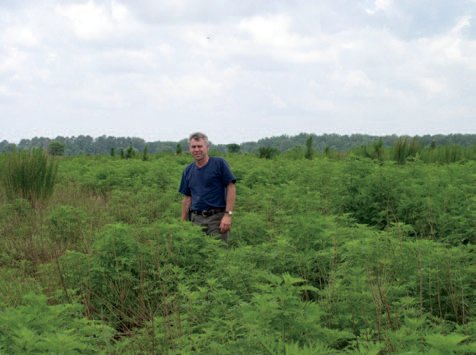
Field size is also important in these systems. Fall disked fields less than 1 acre can often be too small to effectively raise broods because predators can hunt this size field well and possibly increase brood mortality. Fields more than 5 acres or so are not used effectively by quail and turkey broods because so much of the field is located away from the edge where these birds typically position themselves. Fields in the 1-5 acre range are probably ideal for brood habitat, especially for quail and turkey broods that spend their early life totally on the ground walking from place to place.
In very poor fertility and droughty soils, fertilizing these fields may have some advantages. Early in the spring when these fields are beginning to grow, fertilized fields begin growth earlier and develop the canopy that protects young chicks faster. This allows the earliest broods to begin utilizing these fields sooner. The drawback on fertile soils is that the growth later in the year can become rank and thick. Disking these fields can be completed anytime from October to March, but fall is the best time for a variety of reasons. Disking in October and November allows managers of quail properties to reduce cover in these fields, thereby concentrating birds in field edges and woodlands. This increases the chance that the birds can be found later in the hunting season. These disked fields are also used heavily by turkeys throughout the winter because they can find seeds, roots and tubers exposed by disking.
Winter greenfields planted for deer are also an acceptable brood habitat type. If a field is disked in the fall and planted to a light mix of winter grains (wheat, oats or rye) and clover, it can become a nice spring/summer insect producer for broods. If ryegrass is planted in the field, it grows too thick for quail or turkey chicks to negotiate through, chokes out the clovers, and is virtually useless for brood habitat. In a good mix, the winter grains begin to seed in mid-spring, providing seeds for the adult birds, the clovers provide greens for the adults and chicks and the mix produces a considerable amount of insects through the summer. If the planting rates are relatively low (50 – 70 lbs/acre) and the field is well fertilized, native weeds begin to grow through during the summer and provide multiple benefits.
There are various required habitats for wildlife species. Quality cover is necessary to allow adults to survive the winter and enter the breeding season, nesting habitat is imperative to successfully hatch chicks, and quality brood rearing habitat is required to successfully raise broods to adulthood. If one of these is missing, your population of the selected species will not reach its potential. Brood habitat provides multiple benefits for both birds due to insect and seed production as well as deer for weedy forage production. It is easy to create and maintain and is a required addition to any property that attempts to manage game or non-game wildlife.
Reproductive cover is often not considered but is certainly one of the most important habitat types for any wildlife species. To successfully maintain or increase populations, young must be produced and survive to adulthood at the same or greater rate than adults are lost in the population. In a species like quail, for instance, roughly 80% of the fall population is made up of young of the year, regardless of hunting pressure. It is obvious in this scenario that reproduction each and every year is imperative to maintain huntable populations. In a longer lived, lower annual morality species like white-tailed deer, for instance, they can replace themselves if they successfully produce a fawn every other year or so but a lot depends on hunting pressure and mortality. In all species, the higher the reproductive output, the more individuals are available for hunter harvest.