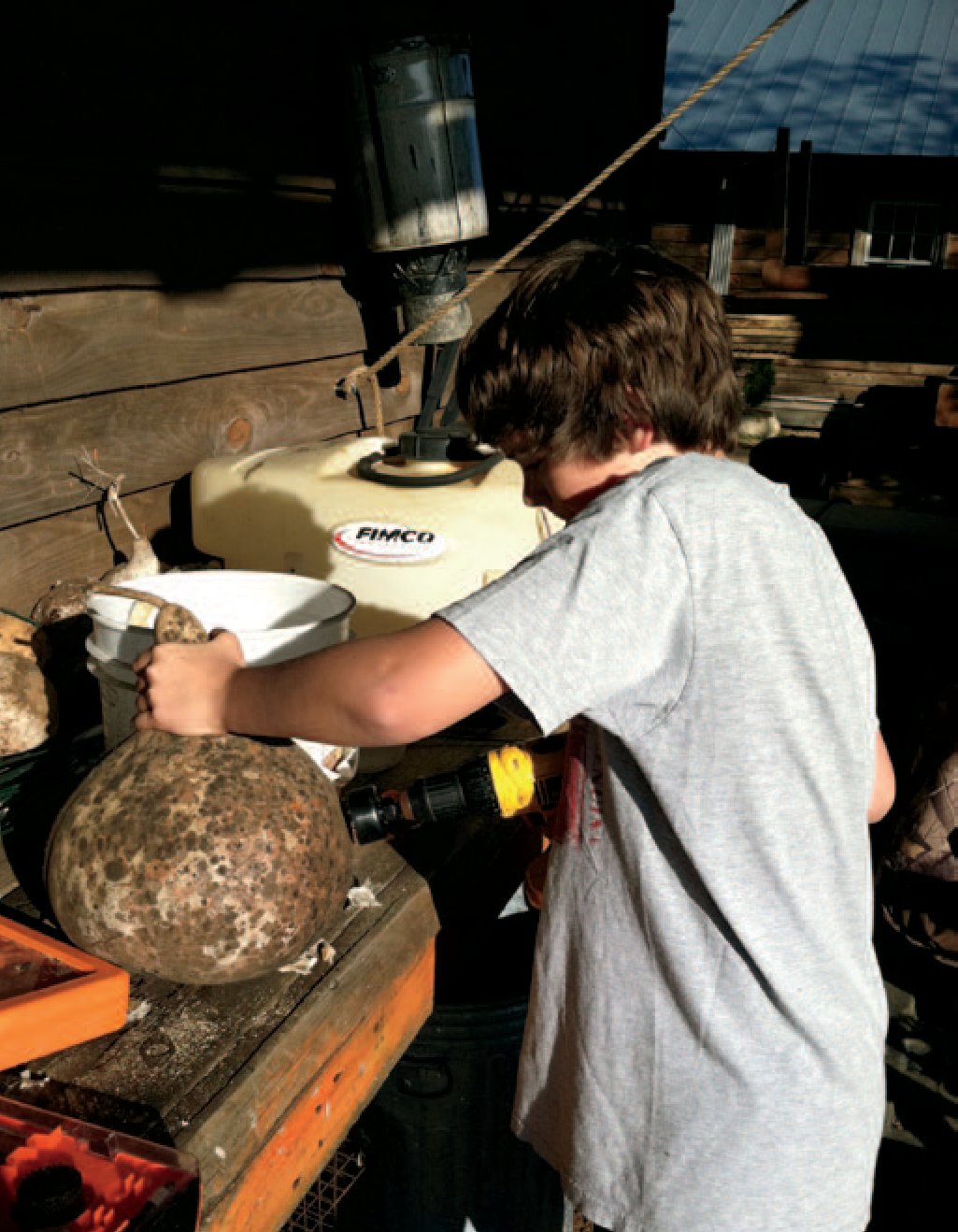
The Calabash “bottle” Gourd was first domesticated around 10,000 years ago in Asia and about 4,000 years ago in Africa. It is thought that the gourd arrived in the Americas via Paleo Indians at the end of the last ice age. The gourd’s primary use was for the transport of water and food as the rind of the gourd is very tough and has been known to be weatherproof for up to seven months. Dippers and cooking utensils can also be created by removing the seeds and cutting the hard rind for specific purposes.
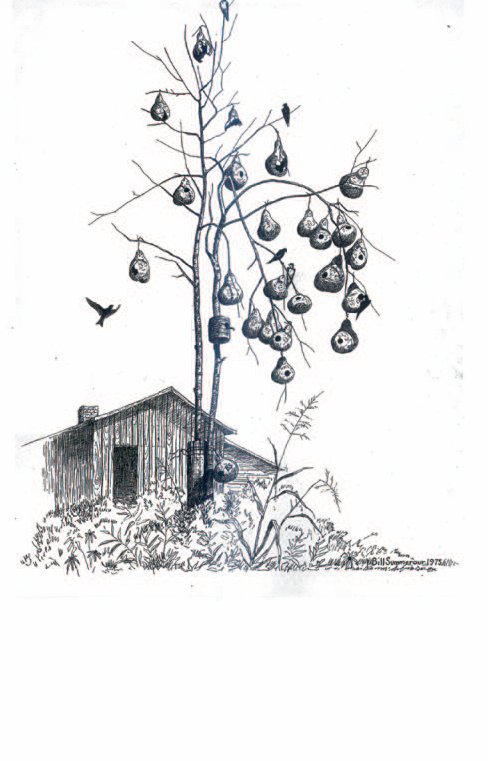
The most recognizable use of the gourd in the rural landscape is for constructing Purple Martin housing. This tradition was started by native Indian tribes who hung the hollow gourds on exposed tree limbs within close proximity of their village. This was done in an effort to reduce pesky insects and provide early warning against predators such as snakes and raccoons. The Martins will harass unwanted interlopers as they protect their colony.
The Martins eventually found it safer to nest around humans and shifted their natural nest selection instinct behavior to nest only within close proximity of man-made structures. The aesthetic of a Martin Colony also adds to the overall farmstead, breathing life and interest into the architecture of the farm.
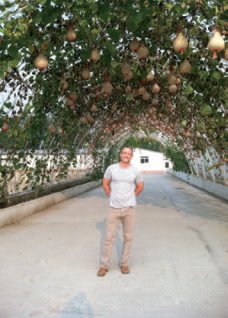
I discovered another interesting addition to the farm on a recent visit to Beijing, China. A gourd arch was constructed using bent rebar and old hoop house skeleton structures. The arch adds a wonderful contrast to what are usually rectilinear buildings and creates shade in summer for barnyard animals. Another benefit is that you can view the hanging fruit rather than them hiding beneath the large gourd leaves.
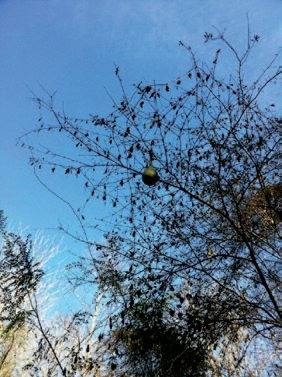
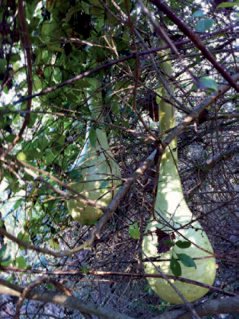
Last spring, I experimented with planting gourd seeds on the edges of food plots and checked on the progress of the plants periodically over the season. Deer seem to avoid the leaves, and to my joy, I discovered this fall a cache of gourds hanging from a nearby tree. The gourd vine had climbed like Kudzu from the food plot and into the surrounding trees and produced, (with assistance from gravity), very long handled gourds. The green gourds I collected are now drying for the use of a new Martin Colony this spring.
The gourd, when planted properly, can be an exciting new addition to our planting scheme this year. A fruit which takes a long time to develop will delight when hiding under those giant leafy vines come September.