

I have two farms that I manage that are within a quarter mile of each other in my area of Central NC and Southern VA. Both farms have more in common than they differ in terms of soil quality, topography, neighbors, etc. Both farms share a similar soil type of red clay with a dash of loam in the upland areas that make up the majority of both farms. They also both have areas of super rich bottomland soil that borders a major river that they both have running through the property. Both farms have timber management taking place and both are actively planting food plots in spring and summer. They also share similar goals such as producing trophy bucks 4.5-years-old plus and prioritize a healthy turkey population as well. Also, both are similar in size with both farms being around 400 acres. They have plenty in common here so what’s the story you may ask.
The first farm, which we’ll call Farm A for the purpose of this article, is a perennial producer of high scoring mature bucks, and lots of them, as well as being able to boast having a healthy turkey population that uses the farm year-round. What do I mean when I say high scoring bucks and plenty of them? Think Kansas or Illinois quality – 6-10 bucks over the age of 4.5 ranging 140″-175″ on any given year. Farm B right down the road is a different story when it comes to deer. Although it does support a decent turkey population, the quality of bucks that live here are average to poor for the area. To my knowledge, the largest buck that’s been harvested there was barely 130″ and mature bucks aren’t commonplace. In this short article I’ll do my best to point out the differences in each farm in an effort not to demean either landowner but to make a few observations that, in my opinion, set them apart when it comes to producing quality bucks in the same area and better and more wildlife overall.
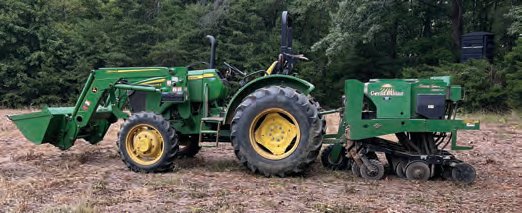
One thing I mentioned is that both farms were planting food plots in both spring and fall. That’s great and something I encourage all my landowners to do, but the difference is what, how, and when we were planting. Farm A was originally made up of old hay fields that had been poorly managed for many years. The first step to making these fields into food plots was to do soil tests. We did so and applied the appropriate lime ASAP and fertilizer at planting. The next step was to ID what was growing there now – a monoculture of tall fescue with some broomsedge, dog fennel, sweetgums, and persimmons. As soon as conditions allowed, we treated the fescue and other vegetation with glyphosate and, in order to not lose any organic matter that had accumulated from the years of hay management, planted with a no-till drill. The first spring planting was a planting of milo with a pre-emergent to prevent grass followed by a fall burndown with glyphosate to kill any regenerating fescue and another no-till planting of fall blends to continue to build up the soil, smother weeds, and feed wildlife. This continued on Farm A until the pH was balanced, unwanted weeds and grasses were under control, with an emphasis on soil health, preserving organic matter, limiting erosion, and matching appropriate plantings to sites that would allow them to thrive and produce accordingly, providing wildlife with quality food year-round.
When I was brought on to work Farm B it had been planted in various food plot crops for many years. It had been soil tested repeatedly and been limed and fertilized appropriately always but had seen many years of repeated heavy tillage with very little to no weed control. This heavy tillage led to perpetual erosion, extreme compaction in the red clay sites, and a healthy seed bank of various agricultural weeds such as pigweed, marestail, cocklebur, carpetweed, and others. As you can imagine this often led to poor plots due to low water infiltration on the compacted soils and choked-out plots due to extreme weed pressure. Also, Farm B is one of the worst cases of not matching specific crop species to the correct site I’ve ever seen. For example, it was common for the landowner to plant perennial clover on upland sites that were full sun and sloped – both of which lead to low moisture retention due to rains tending to run off a sloped field and also to quickly dry on a site that receives full sun all day. Perennial clover prefers a moist site that holds its moisture well and allows it to persist for many years. On wet years, the perennial clover would do well on those upland sites but as soon as a drought hit the dry, compacted, and sloped upland sites would turn hard as concrete and the clover would go dormant quickly and, more often than not, die. On the bottomland sites with heavy moist soil, the landowner would often plant his annuals. On wet years these annuals could drown in those moist sites and be stunted by excess water or even choked out by moisture loving weeds/grasses due to lack of an herbicide program and luck of pre-planning and matching the planting to be able to control the weed pressure present on the site. A simple plan of matching plantings to the proper site and matching the weed species to the planting would have prevented these common plot failures.
Another huge difference between these farms was Farm A always did its best to plant according to conditions versus a set date, meaning Farm A planted ahead of impending rain or into good soil moisture after a good rain – obviously during the proper planting window but always in the best conditions possible. This ensures you get good initial germination and your plantings off to a good start. As long as I have helped with Farm B it’s always planted based on dates. The landowner is very busy and would schedule the planting date three months ahead of time! If that date got rained out it was common that it may be a month before the next planting date. Too wet, too dry, no rain in sight, it doesn’t matter – we have two days to plant and we are planting. Obviously, this roll of the dice can get you into trouble and lead to poor germination and bad food plots.
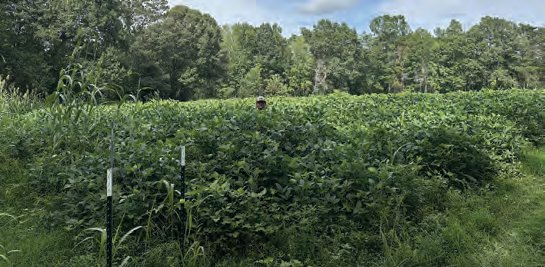
The third large difference between Farms A & B was the mindset and goals of each food plot program. Farm A prioritizes feeding deer and wildlife year-round above all else and plants species that are always overlapping in maturity and providing quality food even in the off season. Farm B’s main goal is to attract deer and turkey during hunting seasons. Every planting is viewed through the lens of what they will be eating and attracted to when we can hunt them. Farm B’s food plot program often leaves major gaps of quality forage and the quality of bucks in the way of antler size and body weight is proof of it.
A fourth big difference between the two farms is how they interact with the neighbors on bordering properties. Farm A has worked for years to contact and build relationships with all the hunters and landowners that have tracts that border or are in close proximity to his place. He shares his trail camera pictures with those folks and gives his thoughts on ages of specific deer, doe numbers, predator populations, and when he harvests deer or sightings while hunting. Although landowner A isn’t close with all his neighbors, he does have the ability to contact them and a decent working relationship that has been built over time. This has led to increased communication with neighbors, which has helped to raise the age structure of the deer herd significantly. Turns out that when those neighbors realized that the 2- or 3-year-old bucks they were seeing on trail cam weren’t going to be harvested by a hunter on Farm A or other neighbors they were much more willing to pass on the deer, allowing it to reach upper age classes and ultimately increased antler growth. It also helped with deer retrieval if a wounded deer crosses property lines and helped to know if a buck was alive somewhere if not seen by cameras on Farm A.
Farm A has had similar results sharing information on turkeys. By letting the neighbors know that Jakes are off limits on the farm they feel comfortable passing them on their properties as well. The neighbors also know that Farm A sets a limit of two long-beard Toms being harvested off the farm in a season. This helps build the mindset of leaving game to hunt the following season and a respect for the resource. It appears to have caught on because all game populations are flourishing in the “neighborhood” of Farm A. Also, Farm A introduced a good trapper that works his farms to the neighbors. This allows the trapper’s work to take place across multiple farms in the area, allowing predator populations to be managed across a much larger footprint than just the 400ish acres of Farm A. Farm B takes a bit more of an isolationist approach. In my opinion, the landowner looks at his place more like an island. He seems to know little about his neighbors and shows no interest in getting to know them or their hunting habits and management practices. He’s made the comment before that the deer and turkeys that live on his place have very little reason to leave and they don’t step off his 400ish acres. Fact is that’s highly unlikely. I’ve hunted, ran many trail cameras, and managed many properties in similar areas and terrain as his. Even on much larger and better managed properties that have an abundance of food and cover and are lightly hunted, deer and turkeys frequently use other properties to varying degrees. One of my good friends killed a large and very unique buck in early November of this year. He and few other friends had the buck on cameras spread out on various farms that spanned over 6.5 miles from one another. This deer had access to well managed property with food plots and was lightly hunted and yet he still roamed widely. Treating your farm as a piece of a greater puzzle, regardless of size, is always a good idea. Looking to build relationships with neighbors in an effort to elevate age structure of a deer herd and prevalence of all game can work and Farm A’s quality and quantity of game is proof of that.
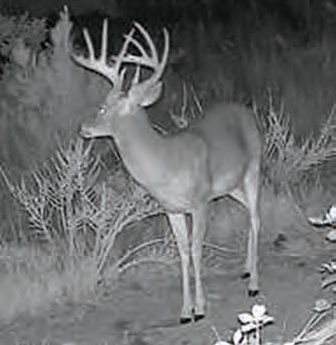
Another separating factor between the farms is willingness to track specific bucks from year to year and managing doe numbers. Both farms utilize trail cameras heavily and have their farms well saturated with them. What I’ve noticed between them though is Farm A saves his pictures from year to year, allowing him to better age bucks at present. This allows Farm A to confidently be able to discern if they are looking at a great 3.5-year-old buck that could really be a giant the following year if passed this fall or a mediocre 5-year-old that needs to be harvested. This allows bucks with the best genetic potential for antler growth to reach older age classes and continue to spread their genetic material, and at the same time, removing lower quality antlered bucks, stopping the spread of their genes, allowing the space and resources they consume being left to better deer. The years of past picture data let us know how old these deer are so we aren’t guessing. Farm B rarely saves pictures from year to year and if questioned on how old they thought a deer was, comes back with a wide range of answers that are often based on antler size. This typically leads to “high grading” where the best genetic bucks for antler growth are killed at a young age, removing their ability to grow a larger set of antlers the next year and spread their genetic material. Even worse, they often leave the smaller antlered bucks of the same age to live to see the next season, further spreading their genetic material and consuming resources. Yet another reason you can have a wall full of 100-130″ deer from over the years and just down the road they are hunting and harvesting 150″ plus bucks regularly.
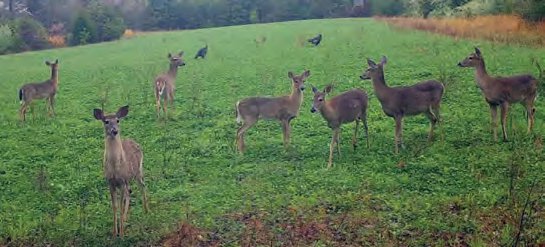
Also Farm A keeps close tabs on the doe population from year to year and works hard to keep the population balanced and below the farm’s carrying capacity. Shooting does can be fun but it’s work and can be time consuming. It’s vital though to ensure deer populations stay low so that there is an abundance of quality food for the remaining deer. Farm B doesn’t prioritize killing does and couldn’t give you an educated guess on how many are on the farm. This has led to an extremely high population of deer that are in constant competition for resources. They eat food plots to the ground and, in dry years, can completely wipe out highly preferred native browse. Not to mention that they make the farm hard to hunt due to deer bedding everywhere and lots of old smart does living there.
Although both farms actively manage timber, Farm A separates itself here as well. Farm A prioritizes sunlight reaching the forest floor and the creation of quality browse and cover through the management of early successional habitat. Farm A has forgone future timber income by not planting back areas of clear cut and allowing constant early successional regeneration with the use of prescribed fire. Farm B has had timber harvests in the past but is looking to maximize timber returns versus creating quality wildlife habitats. That’s fine but you’ll certainly see a difference in habitat quality and that will corelate directly with the abundance and health of the wildlife each farm is producing.
Also, Farm A is flat out hunted better, as well as being laid out properly for hunting. Factors like wind and thermals, where the deer will bed and feed during parts of the hunting season, are all taken into consideration on Farm A. This directly leads to deer, and even turkeys, spending significantly more time on the farm and being harvested there or allowed to reach another year of growth safe from the neighbors. It’s also hunted lightly and under the appropriate conditions. Farm B is hunted hard and based on the calendar, not on the conditions. ATV’s are used to move across the property, alerting deer and sending them to the neighbors’ farms. Wind directions and thermals don’t get considered much and stands are located based on the view versus access and undetectability. This leads to poor hunts, spooked deer, and increased time that deer spend in safer areas on neighboring tracts.
Farm A has also shown a great willingness to take advice and learn. This allows Farm A to be responsive and make changes for the betterment of the farm and the animals that live there. Farm B is more stuck in its ways and continues to do things for no other reason than that’s how they’ve always been done. This mentality can leave a property stuck in a rut and never realize its true potential.
The last difference is very apparent between the two landowners is their use of state, federal, and local programs and funding. Landowner A studies all available programs that provide cost-share money or direct payment for habitat or conservation practices. This has led to monies being issued that can be used to plant food plots, build roads, conduct prescribed fire, etc. Some of these programs include the planting and management of pollinator habitats, planting of certain trees, reforestation of fields, etc. and all have fit nicely into the farm’s existing habitat plan and management program. Landowner B isn’t interested in these programs and is admittedly too busy to learn. Staying on top of these programs has allowed Landowner A to receive funding to increase the habitat on the farm that he otherwise would not have been able to afford.
I hope this article has left you with a better understanding of how utilizing the proper strategies, being thoughtful, having a plan, working with neighbors, and being willing to learn and take advice can affect your farm and its abilities to reach its full potential and ultimately your goals. Also, I want to make note that I’m not bashing Landowner B or his farm. I’m simply pointing out the differences in each landowner to illustrate some of the reasons one farm can perform so much better than a similar farm in close proximity. Take the time this year, as deer season winds down, to access your plans and management practices and see if you have fallen into any of these pitfalls. If so, work this next year to correct these issues and your farm will be on the right track to meet its full potential.