
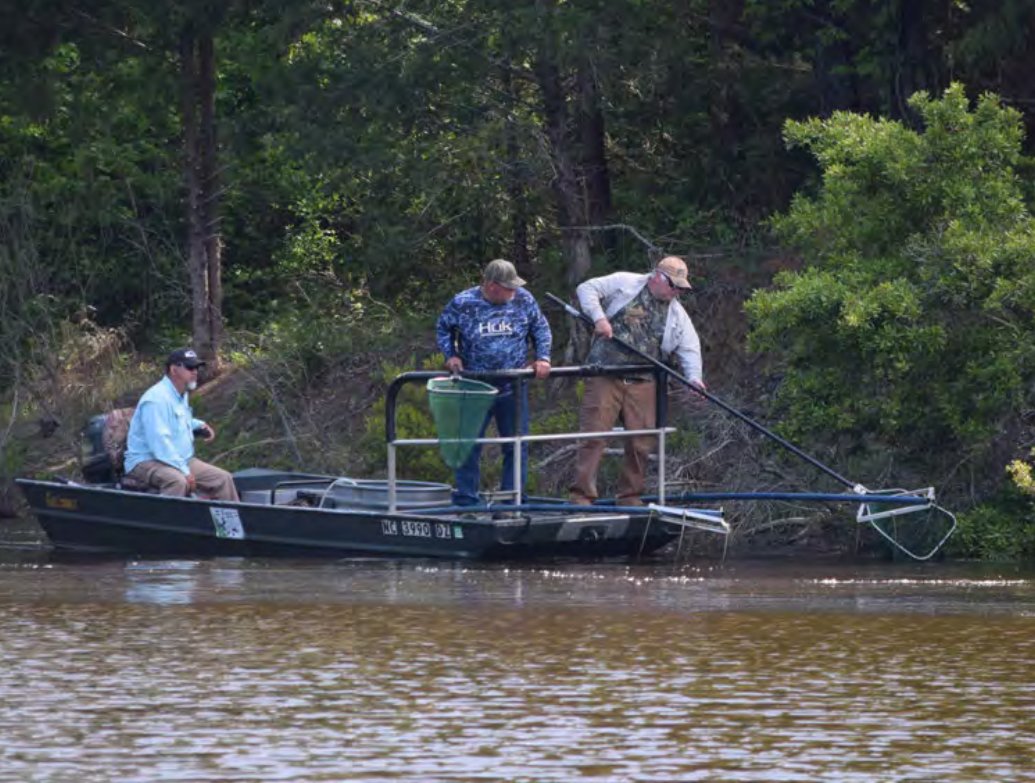
Spring is the busiest time of the year for lake managers. Lake owners in the South have the luxury of working on and enjoying their lakes in winter while Northerners have cold weather and even freezes that deter winter lake work and/or recreation. My schedule is by far the busiest from late February through June. We start electrofishing in Central to South Florida in late February to early March, and finish spring lake evaluations in the Carolinas in Late May/early June. Thank goodness not all areas start spring the same time, or else someone like myself who works large geographical areas would make it hard to service all our clients as well as we do.
Once water temperatures get above 50º F, things start becoming active and alive. Monitoring the severity of your past winters helps you determine what may need addressing in late winter/early spring this year. Did you have excessively warm or cold temperatures or lack of or excessive rainfall this past winter? Colder than normal temperatures may have caused a fish kill you are unaware of in forage species such as threadfin shad and/or golden shiners? Threadfin shad have a cold-water threshold of about 45º F and golden shiners about 35º F. Species such as largemouth bass, bluegill and redear sunfish can handle ice covering the surface, but may have been affected by lower-than-normal Dissolved Oxygen (DO) levels. However, Copper-nose bluegill and pure Florida bass may perish in cold water temperatures when stocked farther north than they can handle. On the opposite side of the spectrum, if it was warmer than usual, certain species of vegetation may not have died back and possibly grew during winter and is already becoming a problem before spring is here. Besides seasonal weather patterns of hot or cold, flooding and drought affects your waterbody. Weather may also affect hatcheries making it harder or impossible for a while to acquire certain fish species for spring stocking such as threadfin shad, mosquitofish, tilapia, and golden shiners, as we will probably experience in spring 2021 from the extreme cold that went across the country.
Water Chemistry
During the spring, your water chemistry should be good from top-to-bottom particularly DO, unless you have major issues. Sampling water chemistry every quarter can help you understand what kind of swings your waterbody has throughout the year and determine if any water quality issues are negatively affecting your fish population. Spring water quality issues can affect fish growth, health, reproduction, egg hatching success and fry survival.
We recommend testing in the morning for water temperature, DO, pH, and conductivity one foot below the surface and one foot off the bottom in the deepest spot. At various locations (depending on waterbody size and number of inflows) test for ammonia, alkalinity, carbon monoxide, chlorides, hardness and salinity (if close to the coast). With the DO meter, determining if there is a line and at what depth separates good DO levels and poor, or if it is constantly good or bad from top to bottom is important. This will change with the seasons. In a lake with good water chemistry and no aeration system DO should be good top-to-bottom in spring and fall, with it stratified (layered like a cake) in the winter and summer. The depth of this separation line will vary depending on algae blooms, water clarity and substrate makeup. The farther down this line is the better, as there are more surface acres for fish to reside during these times. Checking this in spring only is a mistake as it may look good, but during other seasons, the poor water quality section may be large and hindering the success of your fish population. If you have a suitably fitted bottom aeration system, the DO will be constant throughout the water column throughout the year.
If you conduct an annual fertilizing program, or starting one is desired, begin fertilizing once water temperatures reach 55-60º F and continue throughout the growing season. Monitor the visibility every-other-week and add fertilizer as directed on the product label. Desirable visibility with a fertilization program is 18-36 inches. Any more and you can have submerged vegetation issues, any less can cause a catastrophic fish kill should the planktonic algae die off all at once. Do not over fertilize and do not stop the program mid growing season once it is started. If the pH is not adequate (above 6.5 minimum), we recommend liming in the fall, allowing water chemistry to adjust over winter so you can start fertilizing in the spring.
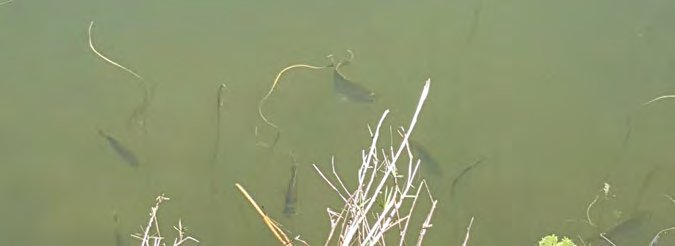
Adding an aeration system in the spring makes the startup easier than if done in summer or winter. The air temperature is not as hot while installing the equipment, and the water column DO and temperature should be fairly steady throughout making it less likely to cause a fish kill during the startup process. Spring is a good time to service pumps and clean bubbler stones every year.
Habitat and Vegetation
Once shoreline and submerged vegetation begin to grow, immediately begin treating foreseen nuisance aquatic vegetation with herbicides to prevent excessive growth in summer and large amounts of herbicides being required later in the year. This may be determined by historical growth, the species of plant and the past winter temperatures whether plants were killed, growth was slowed or continued at a normal rate. The sooner in spring problem vegetation is treated, the more successful the treatment. Know your plant species biology, herbicide, application rates and the effects from water temperature.
Some filamentous algae species will begin to grow underwater on the bottom before other terrestrial plants begin to grow. If treating filamentous algae is required, treat as soon as you see it appear. Like all other nuisance plant species, treating sooner rather than later is better overall for the lake and your budget. Other early growing species around the shoreline or in the water that has been a problem in the past should be treated as soon as the plants appear to be growing. A growing plant receiving foliage herbicide treatments responds much better than a dormant plant.
Spring is the best time to transplant soft tissue aquatic vegetation in or around your lake. This allows it a full growing season before winter to root and become established. Make sure plant species chosen and locations around the lake are best for your area, easy to care for, allow bank access and are aesthetically pleasing. Plant species purchased from a nursery specializing in native aquatic plants or a nearby donor site can be sources for your native species. When using a nearby donor site, be sure you properly identify the plant to prevent moving a nuisance or non-native species creating a problem for you in the future.
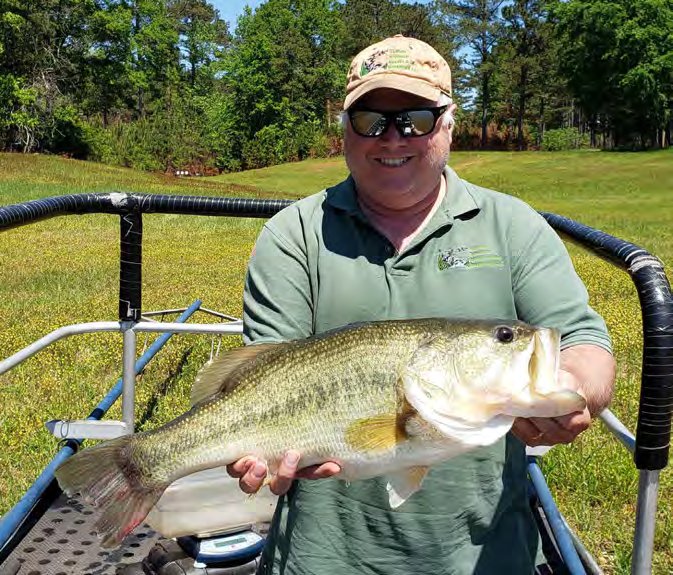
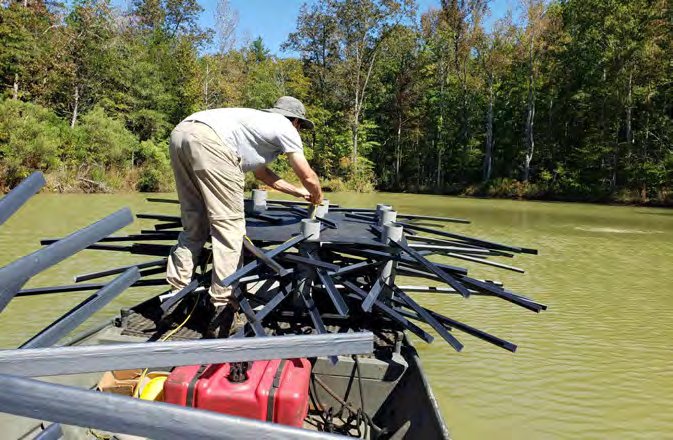
Early spring is also a good time to add offshore fish attractors and gravel spawning beds to help by increasing bream and bass spawning areas and providing hiding habitat for newly hatched fish and increasing survival rates, especially in waterbodies lacking good natural habitat. We have observed gravel spawning beds being used in less than five days after installation.
If you stopped supplemental feeding for winter, begin feeding once per day when water temperatures get above 55º F. Feed during the warmest part of day in 4-6 feet deep water. Begin feeding twice per day when water temperatures are between 60 and 70º F. Increase to feeding four times per day when water temperatures reach above 70º F. In some areas these water temperatures may be reached in March and others not until June. Hopefully over winter you cleaned feeders, checked timers and recharged batteries prior to restarting the feeders. If all feed dispensed is not consumed within 15-20 minutes, reduce times dispensed to reduce waste. Most feeding attracts fish, so feeding times throughout the day need to remain the same for long periods of time so the fish will be nearby when the feed is dispensed to ensure most is consumed and waste is reduced. Feeder locations can be points to sight evaluate catfish, bream and shiner populations while fish are at the surface consuming floating feed. We recommend feed with various sized pellets and floating and sinking mixed in one bag. There are various brands of feed on the market, whichever you choose, make sure it has a minimum of 30% protein. Both Purina and Sportsmen’s Choice offer a mixed size and floating with sinking feed in the same bag. Be sure the feed is fresh and not moldy, certain feed molds can be toxic to fish. Depending how your batteries are stored over winter (inside, fully charged when stored and fully charged again before putting out) replacing old ones in the spring is a good idea to not be down during the critical spring feeding time.
Fish
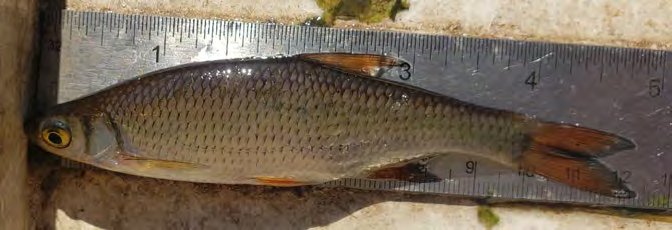
The hatcheries and weather will dictate when they can bring your ordered fish. Some fish are not available all year long, and many not until late spring or early summer, while some may not be available even when promised and once they are, it is too hot to haul them. In some instances, getting to the lake to stock can become an issue due to heavy spring rains. The best made plans can become very fluid when it comes to stocking, so be understanding and flexible. But, getting your order in as soon as possible helps to get your fish. The later you get entered on a stocking list, the more people in front of you and the fewer fish for customers closer to the bottom than the top of that list, no matter the species. As stated earlier, some years there are no fish in certain species available due to winter die offs at the supplying hatchery or natural waterbodies where the species are collected. If it does not look like your desired species will be available one year, consider selecting another available species as a substitute. There are usually alternatives, but the cost may be more or less depending on the alternate choices.
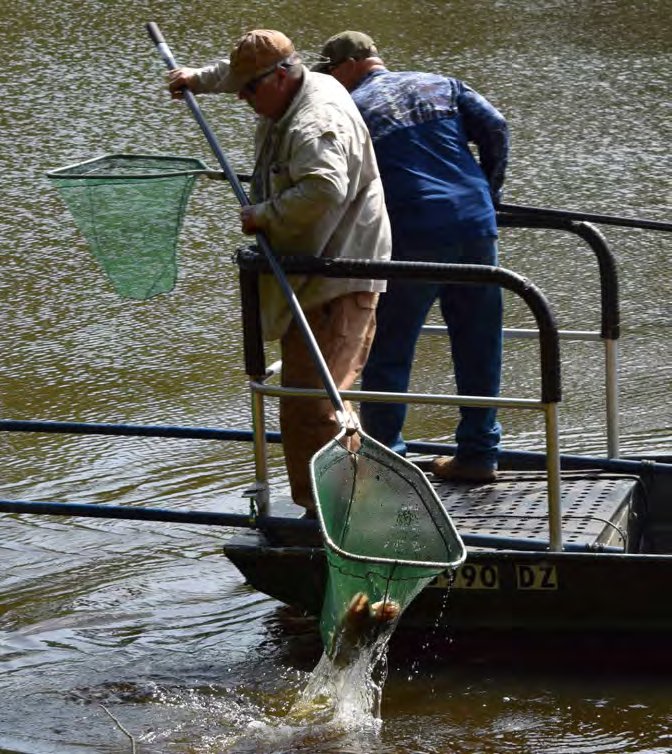
The spring is the best time to conduct an electrofishing survey, followed by fall. Spring, just before or post largemouth bass spawn assures most bass will be in the shallower water and more likely to be included in the sample, which indicates how weak or strong the population is. Sampling at this time allows for your lake manager to compile the data, create a management strategy and get started on implementing the recommendations that includes stocking before the summer heat arrives.
The spring is a good time to remove largemouth bass with rod-and-reel from the designated slot and numbers recommended for the year. This also alleviates predator numbers for post spawn survival of forage also hatching during the spring. Most bass management strategies for largemouth bass have a bass removal component in it, and the bass are easier to catch in spring after a winter of eating very little and coming off the spawn. Many clients do not use this opportunity and then find summertime fishing harder to catch the numbers that were prescribed. Again, for this task, spring is the best time, followed by fall then summer and winter, when it becomes harder to catch bass.
I once had a college professor tell the students that if you liked hunting more, become a fish biologist and if you like fishing more become a wildlife biologist, because fish biologists work more in the spring and wildlife biologists work more in the fall. That was definitely some great, accurate advice. I am really busy in the spring as many landowners with fish and lake work, however, he did show us fish biologists how to schedule work around spring turkey hunting, because everyone deserves to do a little bit of that too.