
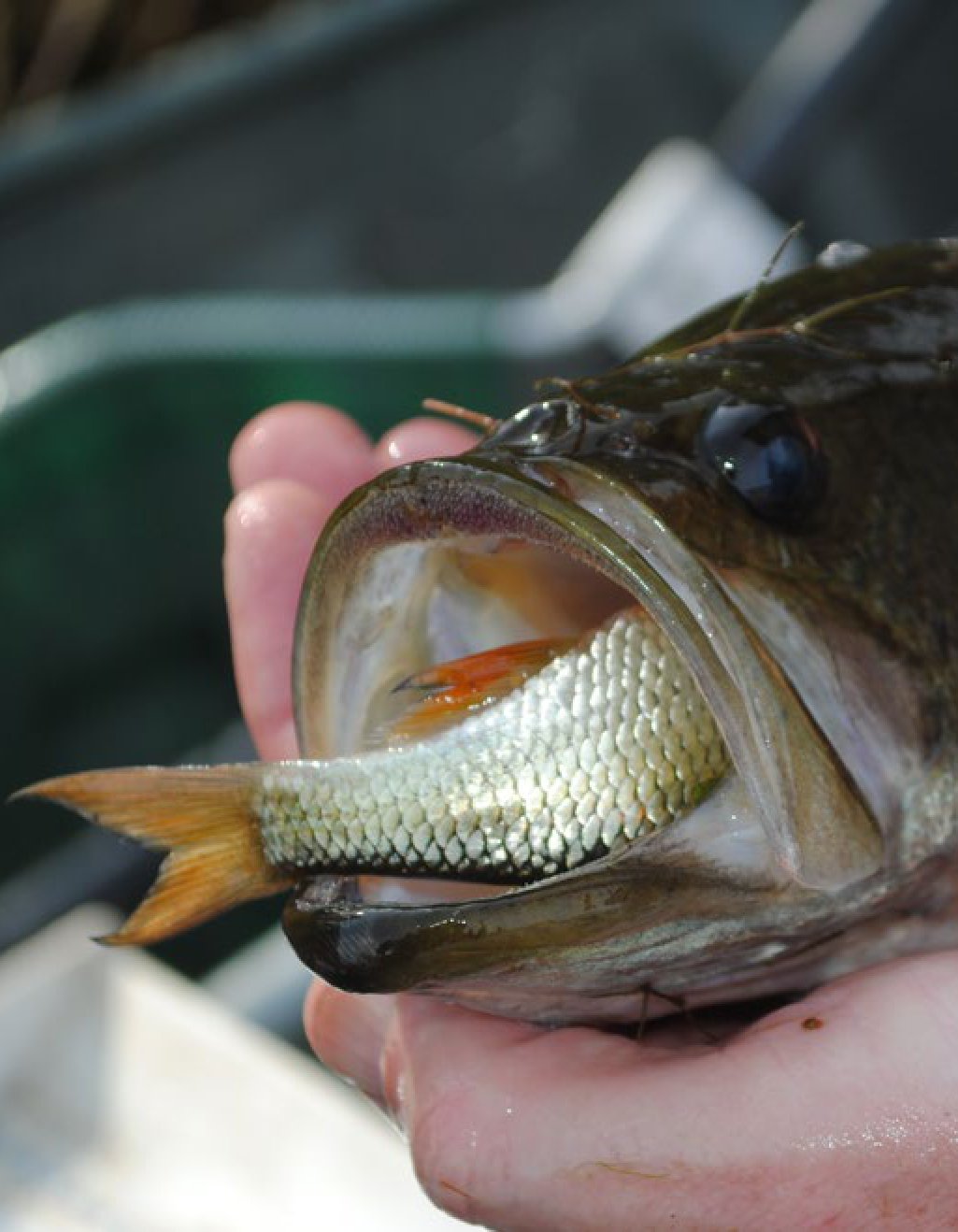
The most common live bait used for trophy largemouth bass throughout the country is the golden shiner (Notemigonus crysoleucas). Over the years in private lake management, everyone has heard the pros and cons from hatchery owners, private lake managers and the weekend pond manager regarding the golden shiner as a largemouth bass, crappie and/or striped bass hybrid forage fish in small ponds and lakes. Fish hatchery personnel have argued with me and our clients when calling around for a golden shiner supplier. Every waterbody is unique with water chemistry, habitat and fish species assemblage. Being a professional research fisheries biologist for over 31 years, I have never observed a negative impact where golden shiners were present, whether naturally occurring or through introduction. That does not mean it hasn’t occurred, but we have not yet observed it. We have seen situations where there were too many large golden shiners in a waterbody, but this was due to largemouth bass mismanagement, not the shiners taking over. The two most common reasons given by private lake owners who do not want them present are that they can take over a small waterbody or that bass, crappie and striped bass hybrids will not bite artificial lures once they are exposed to shiners as forage.
Life History
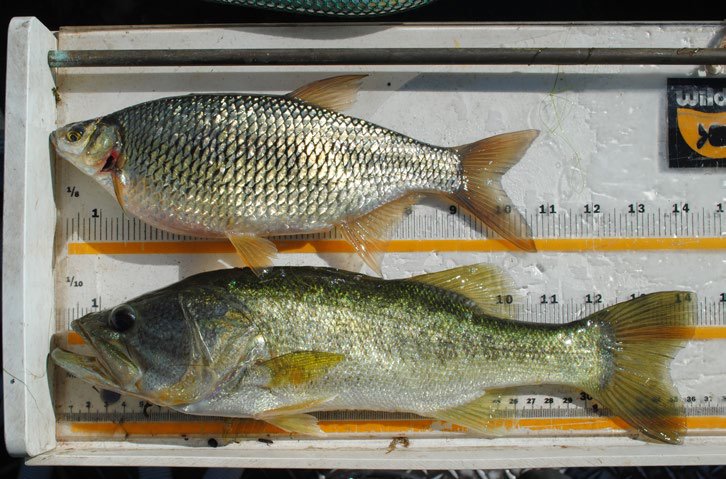
Golden shiners are native to the eastern half of the U.S., but have been widely distributed throughout much of the rest of the country stocked as a forage or released after fishing used as a bait fish. The golden shiner is identified by its deep body, triangular head, deep forked tail and usually golden color. The gold color is darker, depending on the water color they live in and more prominent during the spawning season. The maximum size is around 12 inches, but most golden shiners are less than 6 inches long. These native fish do have a cold-water threshold of approximately 35º F. Once water temperatures reach this level, they become stressed and can die if it remains this low for a few days. Many times they can be found in areas farther north than expected to survive, but they have access to warm water refuges during winter which helps with their survival. The farther south the water body, the faster they grow and the larger they get, due to longer growing seasons.

Golden shiners scatter adhesive eggs on submerged vegetation. No care is given to the young. Spawning starts in the South about mid-March at 68 ºF and fish spawn periodically until water temperatures exceed 81 ºF, typically around June. It has been documented that they have spawned in the fall as temperatures fall into the desirable range.
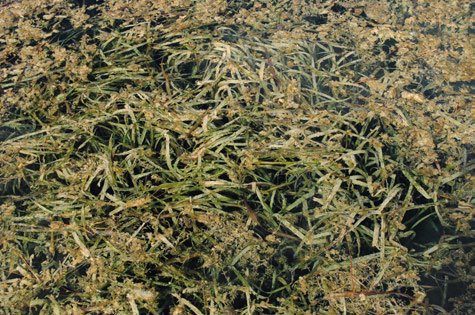
The main food source for golden shiners is zooplankton (microscopic animal) and phytoplankton (microscopic plant), but also feed on many other food items such as insects, algae, snails and tiny fish. Golden shiners will consume commercial fish feeds. Although they feed primarily by sight, golden shiners tolerate plankton-rich (green water) ponds and are found in a wide variety of water clarity types. Given their small size as adults, their high fecundity, and their omnivorous food habits, golden shiners are considered an excellent forage species. They have been documented to occasionally eat fish eggs, which is why we recommend not stocking until other species have established. In waterbodies with balanced largemouth bass populations, a golden shiner population may not be sustainable and may require to be periodically restocked.
Some ponds have never been stocked with the golden shiner, yet have them present. These came from a nearby waterbody upstream or through flooding of a nearby lake, creek or river. If you have them without stocking, I would consider yourself lucky. They are a great source of protein for desirable predator fish such as largemouth bass, black crappie and others.
Management
When managing trophy largemouth bass, abundant forage is necessary to keep growth rates high and carry bass from hatchling to 8 – 15 years-of-age, and depending on how far north your waterbody is’ 6 – 15 lbs. A 10 lb. largemouth bass can consume an eight-inch golden shiner, but a 14-inch largemouth bass will need 2-3-inch-long shiners to help it with growth. Relying on only one forage species places a lot of pressure on that population. Fostering multiple species of forage, such as bluegill, threadfin shad and golden shiner, offers a better chance of creating a naturally, self-sustaining forage base. This approach always offers forage at various sizes, locations in the lake, and during the largemouth bass’s entire life cycle. With these three forage species, forage is available off-shore in open water, and near shore around structure and vegetation. As the golden shiner population numbers dwindle, bass will refocus on bream and/or threadfin shad. This moving from forage species to forage species gives the depleted species a chance to repopulate naturally without restocking.

We have rarely observed good populations of black crappie and striped bass hybrids without a mix of small forage species. Again, that mix is usually bluegill, threadfin shad and golden shiners. Although these two predator species are traditionally open water feeders, they will move around a pond or small lake and feed where the forage is available. Large black crappie love one-to-three-inch golden shiners as food. Striped bass hybrids up to four pounds love three-inch golden shiners.
There are as many different recommendations on when to stock and the stocking rate as there are people who do and do not want them in their waterbody. If it is a new pond, and you want harvestable bream as part of the population, we recommend stocking golden shiners three-to-five years after the initial stocking of other species. Allowing the bream population to become established before stocking golden shiners seems to work best for both species. If you only desire trophy largemouth bass, stock bream, threadfin shad and golden shiners 6 – 12 months before the largemouth bass get stocked. Golden shiner stocking rates range from 100 to 1,000 fish/acre. Generally, stocking size is approximately two inches, but some suppliers offer them up to six inches. You should stock sizes and numbers according to the predator species and numbers present. If not a new lake and largemouth bass are already present up to 16 inches, stock various sizes of golden shiners to help with some surviving and spawning without being consumed. If you are trying to jump start a stunted largemouth bass population, stock higher numbers of smaller individuals that can be consumed shortly after stocking, but also include stocking individuals too large for consumption which creates a breeding stock. As stated earlier, these fish do have a cold-water threshold of about 35º F and should a die-off occur, or predators consume the majority of them, restocking golden shiners may be necessary.
Golden shiners will consume commercial fish feed. Offering small pellet or mixed-size pellet feed allows more individuals to benefit from a supplemental feeding program. Feeding will increase growth rates and numbers in the waterbody. Feeding will also concentrate forage where some predators will follow-up and prey on the easy meals.
Where we have seen golden shiners “take over” a pond is generally in the Deep South. With long growing seasons, they spawn in spring and fall, and harvesting largemouth bass was not being conducted. When we conducted electrofishing surveys, we discovered a large number of big shiners, with no big largemouth bass in the fish population to consume them. In my opinion, the golden shiner didn’t take over, the largemouth bass were mismanaged. If this happens, removing several largemouth bass from the bottleneck-size-group and stocking small shiners or another small forage species to get them through their current size and into larger sizes to consume the larger shiners will be necessary. Electrofishing results can help determine more advanced management decisions and help you achieve your goals in a shorter period of time by knowing exactly what state the entire fish population is in, and not just one species.
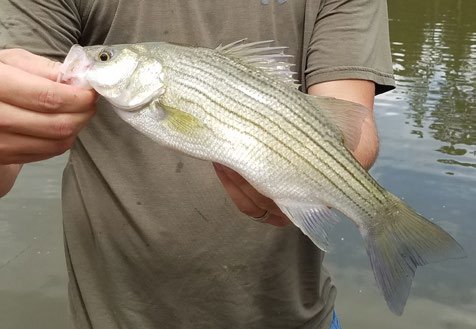
Another concern mentioned was that largemouth bass, black crappie and striped bass hybrids cannot be caught on artificial lures once golden shiners are introduced. We have several clients around the country with balanced fish populations, golden shiners present, quality-size predator species, and can still catch sportfish on artificial lures. The best bait for crappie is the minnow from your local bait shop. It is best to use artificial lures when angling for quality largemouth bass and striped bass hybrids in small ponds and lakes to reduce hooking mortality from shiner fishing. I have never seen a waterbody where the fish did not bite because there was too much forage whether bluegill, threadfin shad, golden shiners or another minnow or forage species. That doesn’t mean it has not happened, but that would be an anomaly and I am not concerned about it. I have caught lots of very fat, healthy fish that would still bite when their natural food was unlimited.
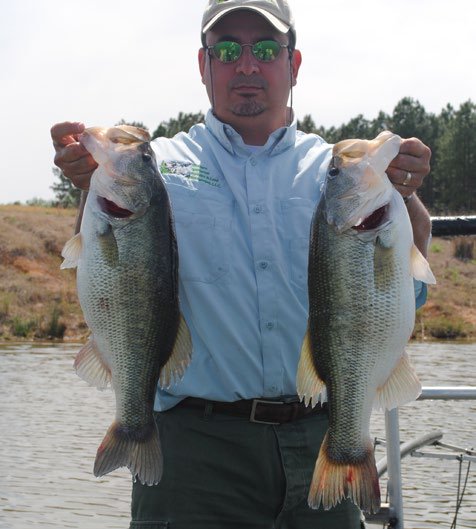
The golden shiner is not the cure all for growing quality sport fish in smaller waterbodies, but it is another option lake managers have to increase the forage base, which will expedite predator growth rates and increase numbers of various, desirable predator species. We always preach forage diversity for many reasons, but mostly because it is successful. You or your lake manager just need to figure out what forage species will work best in your waterbody.