For decades lake owners and managers have been trying to improve their private fisheries, and genetics at some point, is discussed. It is always stressed to have a high-quality fishery, you need good water chemistry, good habitat, a strong forage base, along with good harvest practices to maximize the growth of your fish species, particularly with largemouth bass. One thing that also contributes to success of a quality or trophy fishery is fish genetics. Most lake owners/managers do not alter or change the genetic make-up of their fishery and just manage what they have, while a few strive to improve what they already have and turn it into something exceptional. Some of the genetics work overtime and have been very beneficial to lake managers and some have been deemed more harmful than good.
Common genetically altered freshwater fish include the largemouth bass, bluegill, black crappie, striped bass, triploid grass carp and a few others. The Largemouth bass being the most studied and desired. For decades people have been trying to generate a superior genetic largemouth bass, and some with the desire to grow a new world record.
The Holy Grail now is to raise a new largemouth bass World Record. To raise an exceptional largemouth bass takes all the above mentioned, and (no one likes to hear it), but it also takes luck. For a fish that starts out not much larger than a seed on your morning bagel, has to grow and survive well over a decade and almost grow double of what the average largemouth bass growth rate documented. It requires perfect environmental conditions, no disease, never any water chemistry issues, unlimited forage its entire life. It has been attempted many times, to grow a new world record even in captivity where all the factors are controlled with zero chance of predation at a younger age, and they still have failed. Luck is something that happens and cannot be duplicated. With all that luck, includes a genetic freak that outgrows anything like its species has seen. I do believe some day the current World Record will be broken. The bass could be from a five-acre private farm pond, a ten-acre golf course or neighborhood pond, or from a large public lake or reservoir in the southeastern part of the US, Texas or California.
The most desirable pure strain genetic largemouth bass is the Florida (Lepomis, salmoides floridanus). This was the genetic make-up of the bass in Japan. It is unknown if the one in Georgia was a pure Florida that had been stocked, a Florida/Northern cross or a straight Northern (which is the least likely scenario). The Florida Largemouth bass has been stocked all over the country by both State agencies and private lake managers during the past several decades. The Florida largemouth bass has been the foundation for various crosses trying to obtain a faster growing fish that achieves even greater top weights. The true
Largemouth Bass
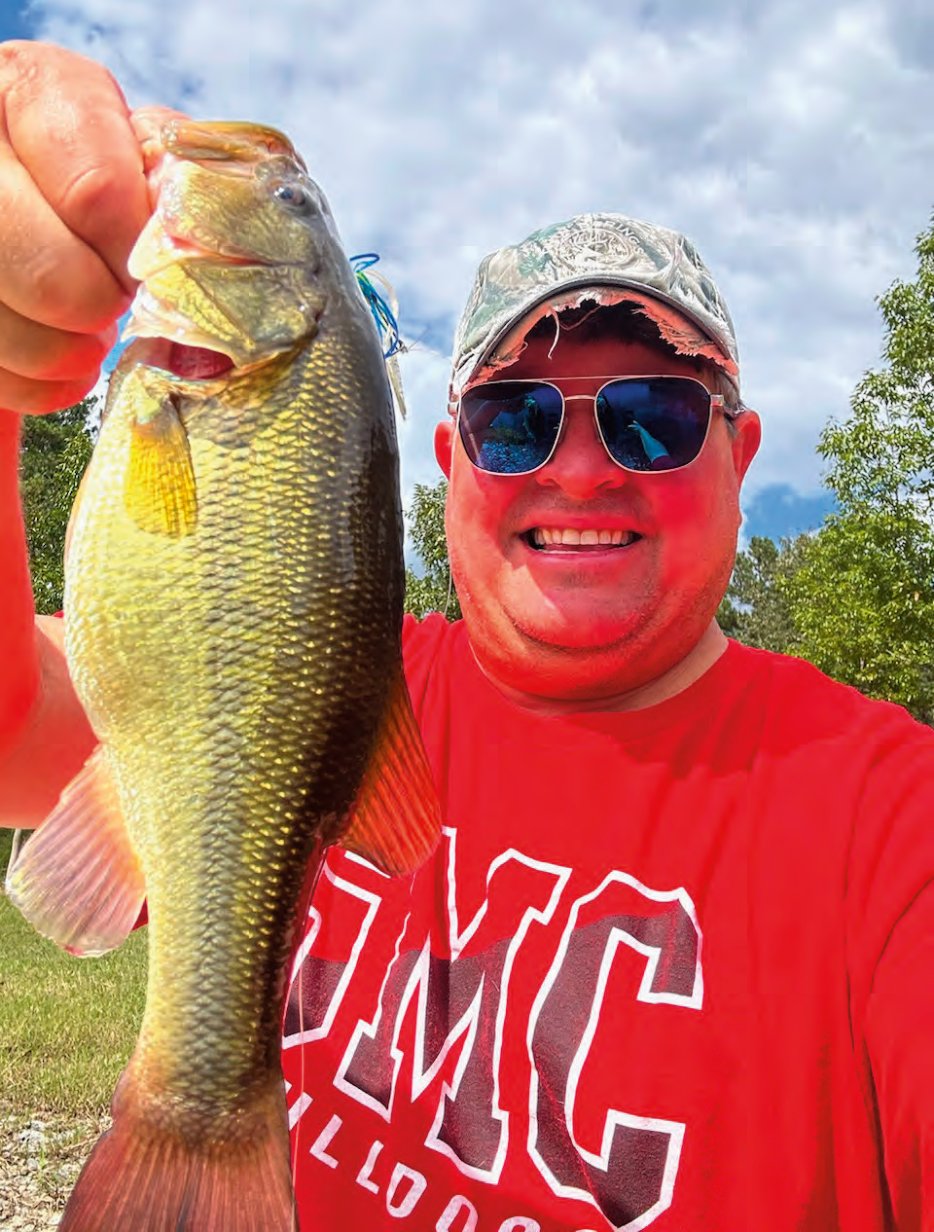
The largemouth bass (Micropterus salmoides) is the most sought after and most intensely managed freshwater private and public water fish species in the country. The desire to consistently grow and catch big bass has always been most lake owners’ objective. This desire has spread all over the world as seen by recent big bass catches in Japan and other countries. The current International Game Fish Association (IGFA) World Record, All Tackle, largemouth bass were caught in Jacksonville, Georgia in 1932 and Shiga, Japan 2009 that both weighed 22 lbs. 4 oz. There have been a few others thought to have been larger, but for some reason or another, they were not acknowledged by IGFA. Anything that will give managers and anglers the opportunity to grow bass quicker and catch more, larger individuals is intriguing and has been implemented by several.
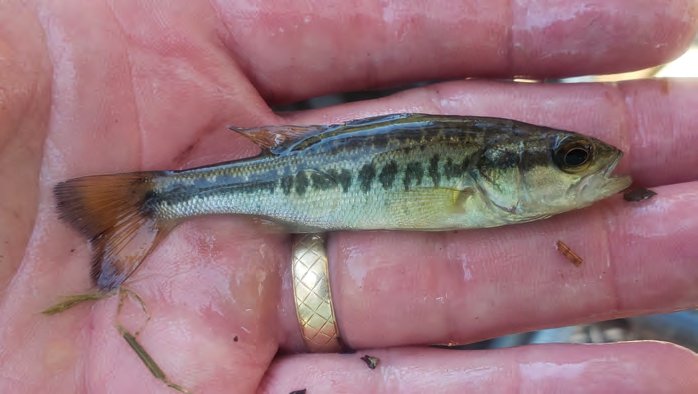
Florida strain bass occurs throughout Florida, but is more common from north Florida east and south of the Suwannee River. There are recent signs of the pure Florida strain in northeast Florida and south Georgia, but it is unclear if those are naturally occurring or have been introduced. There are indications the Northern strain is in central and south Florida, and that is probably due from the introduction of the Northern strain or Tiger/Gorilla/F-1 Cross bass. The Florida strain’s desirable traits are that it can tolerate warmer temperatures and can reach weights well into the double digits and the teens, while its undesirable traits are slowing down feeding in peak summer heat and grows slow, requiring more years to reach quality/trophy size than a cross like the Tiger/Gorilla bass/F-1.
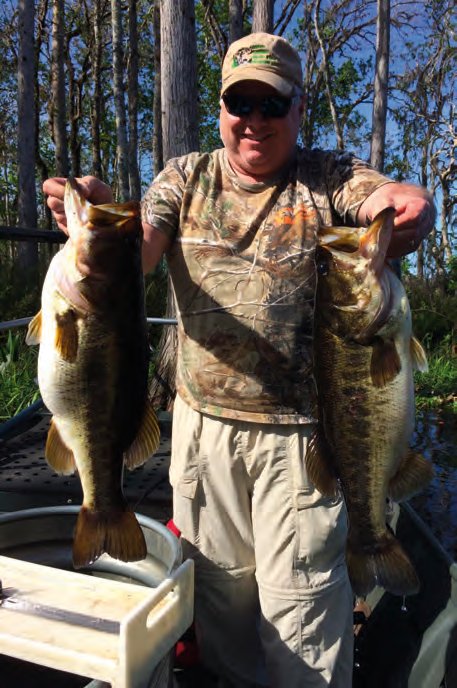
The Northern strain of largemouth bass naturally occurs in many parts of the country where it is native or has been introduced. The Northern largemouth bass is similar to the Florida strain, but many feel it feeds more often (even when full), even during the hotter months and tolerates cold weather better, but its negative is that it rarely reaches weights in the double digits.
Crossing the northern strain with the Florida strain has been performed since the 1960’s. This crossing occurs naturally where the two subspecies over-lap in the South. These intentional crossings may be referred to as the Tiger Bass, Gorilla Bass or F1 Cross. The Tiger Bass is a cross with a Florida female and a northern male. This genetic makeup produces a bass that has the potential to grow bigger than a Northern strain bass, but has the constant appetite of the Northern which allows it to grow faster than a pure Florida. The only negative that has come from this is that very few of these fast growers will reach double digits, but they reach 7-9 pounds in half the time it takes a pure Florida strain bass to grow to these weights, when forage is unlimited throughout its entire life.
Up until recently this Florida/Northern cross was very well received, and these fish were stocked by many private landowners and some state agencies around the country. But through research conducted by various states, universities and private hatcheries another trait has been isolated to help improve these “super” bass. Now using males from known females over 10 lbs. and crossing with females weighing over 10 lbs. (both Florida or the Florida/Northern cross have been used), will improve the genetics of the prodigy and increase the numbers of quality fish in the population. Texas started this concept in the mid 80’s with their Share Lunker Program, where they will come get your 13+ lbs. female largemouth bass and spawn her with known males from large females, and stock the fingerlings back into public waterbodies. Recently, other states have adopted this practice of collecting high quality genetic females, spawning them out, then restocking the fry or fingerlings back into open water public lakes and rivers.
All this sounds terrific for the private lake owner, however recently some states and universities are questioning the unnatural introduction of various pure and cross versions of the largemouth bass across the country. It is displacing or eliminating other lesser known less genetically superior natural black bass populations such as the shoal bass (Micropterus cataractae), Suwannee bass (Micropterus notius), redeye bass (Micropterus coosae), spotted bass (Micropterus punctlatus), smallmouth bass (Micropterus Dolomieu) and Guadalupe bass (Micropterus treculii).
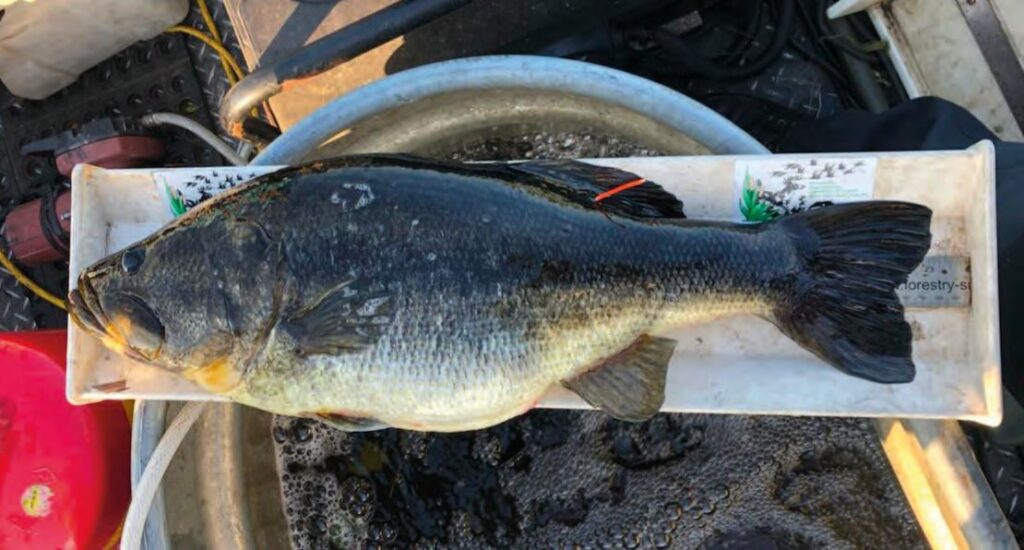
If you are considering stocking a genetic cross/enhanced version or pure Florida strain largemouth bass, or any species of fish, know its life history and what can be expected in the future. For example, if you start a new lake and stock pure Florida strain not in their natural region, they will remain pure Florida until a northern individual gets inside your waterbody through anglers moving fish or a flood event and begins breeding. Then your Florida bass will slowly shift to the Tiger/Gorilla/F1 Cross, but eventually shift more to bass having more Northern than Florida traits. If you have a lake with Northern bass already present, adding pure Floridas will naturally create the cross, but it will slowly revert back to Northern traits. One technique is to add pure Florida females, tagged and fin clipped to a pure Northern gene pool. The tag and fin clip are to identify the fish later as a pure Floridian when caught, and not to remove it as part of your annual small bass removal program. The key to keeping whatever you choose as your genetic makeup, is to not allow other sub species to enter your waterbody otherwise the gene pool of desirable traits becomes diluted. Florida, (other states are working on such regulations now for introduction of non-native sub species), has created laws preventing the stocking of any bass except the pure Florida largemouth bass in certain areas where it is known that most bass carry the pure Florida gene.
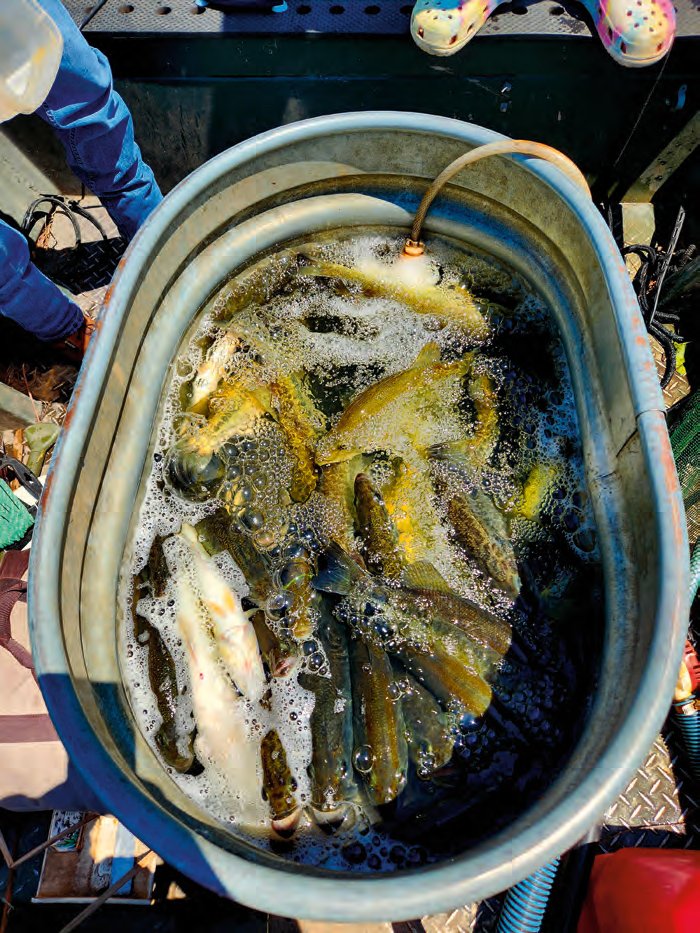
Another management tool when trying to create a super bass is to not harvest all the fast growers, but target slower growers for harvest. Now you are into the micromanagement of genetics. The ones you want to remain, and breed are the faster growing females and ones that will live longest with potential to be the biggest. This can be monitored through tagging and watching growth rates of females (females are the bigger bass that turn into quality or trophy individuals). A step even further is to stock only female genetically superior individuals. This eliminates any chance of overpopulation and the increase of natural forage availability. Monitoring all known aged females allows you to remove slow growers and keep fast growers. It is thought that with any harvest guidelines the faster growers are being plucked from the population because they reach the harvest pool quicker. Leaving these fast growers is hard to do, but can be done with intense monitoring.
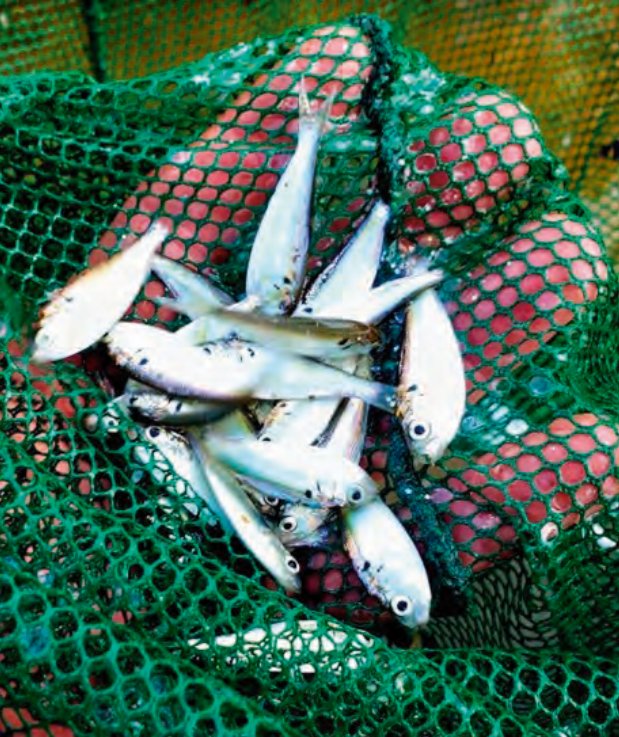
Bluegill
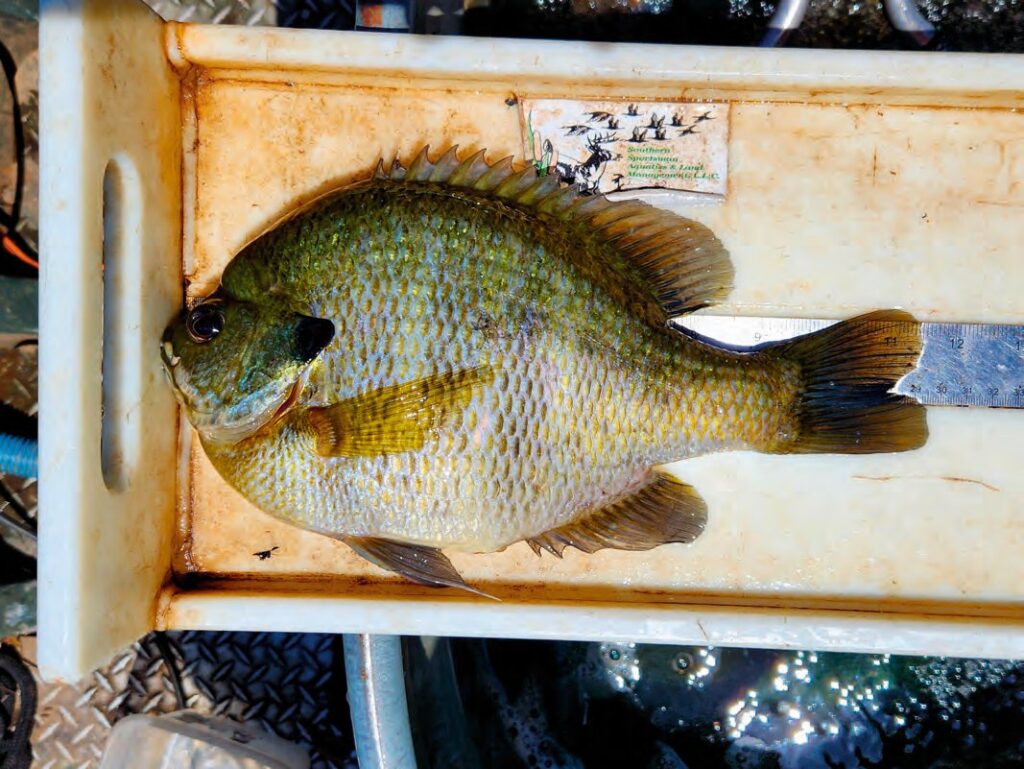
The bluegill (Lepomis macrochirus) is a close second to the largemouth bass when it comes to desirable genetics considered by lake managers who desire faster growing and obtain bigger individuals, quicker than the standard native bluegill in their area. There have been a few crosses that became popular for a few decades, but have seemed to have subsided once the long term affects of these fish were discovered. A popular bluegill cross is the bluegill (or redear sunfish [Lepomis microlophus]) with the green sunfish. This creates a fast-growing species with a large mouth and ravenous appetite. However, over the years as this cross reproduces from generation to generation, it reverts back to the less desirable green sunfish. Whenever two fish species or subspecies are crossed, they always revert back to one of their original species or subspecies and seems more times than not always back to the undesirable version. If it goes back to the less desirable individuals the reward verses risk verses amount of money/work needs to be assessed. I have seen a few pond owners start completely over with a rotenone kill and/or draining to remove the undesirable species they were left with and start over after various genetic trials.
The copper nose bluegill is another naturally occurring species in Florida that is being reproduced and stocked around the country. It has a better appetite and grows faster and larger than its northern counterparts. As stated earlier, unless you can keep these fish isolated from local bluegill stocks, they will become diluted and eventually take on the traits of the bluegill in your area. A quality supplemental feeding program with most bluegill populations can greatly increase growth rates and numbers, regardless of subspecies or genetic makeup. Smaller pellet, higher protein feed greatly accelerates bream and other forage species populations.
Hybrid Striped Bass
The hybrid striped bass (Morone saxatilis X Morone chrysops) has been used frequently in private lakes and ponds as an additional or the sole sportfish for decades. It is commonly stocked into small waterbodies that may not be able to support a natural producing largemouth bass population. Since it does not reproduce, its numbers can be controlled through stocking and harvest. We like to stock them in lower numbers, but every other or third year to offer anglers various sizes and ensure once the oldest/largest individuals are removed from the population through harvest or natural death, there are others present to fill the void. This way as you transition through year class to year class there are always quality fish to catch as opposed to waiting for a restocking to grow into the quality/harvestable size range.
Black Crappie
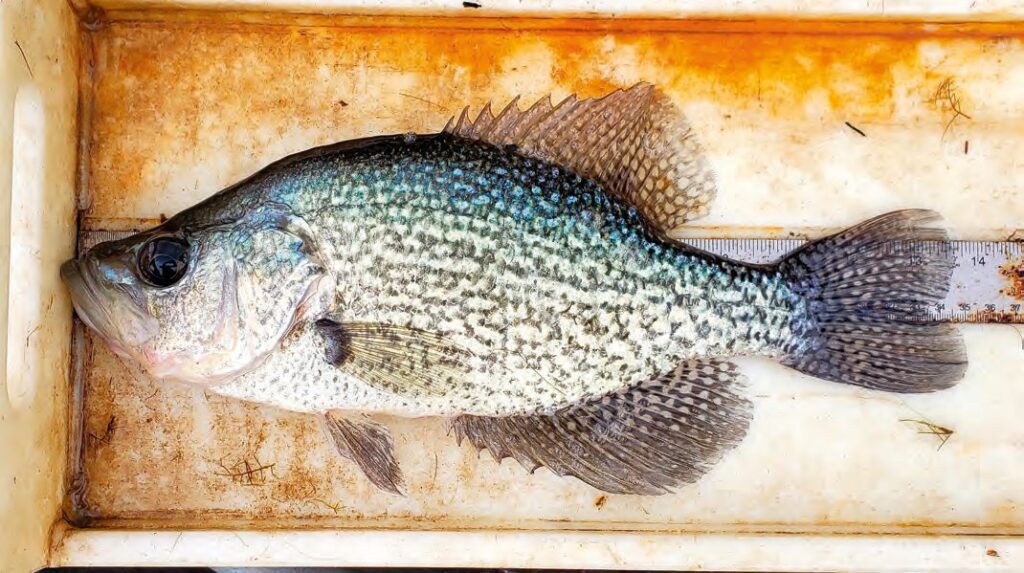
Many pond owners want black crappie, but they are prolific spawners, over populate small waterbodies, and become stunted. There are two cross options, one is a cross with black and white crappie, where the offspring still reproduce, but at a much lower rate than pure strain black or white crappie. The second option is a triploid (will not reproduce) male black striped crappie cross with female white crappie that can work well for some lake owners wanting crappie and do not want the natural reproduction. Fish hatcheries in Mississippi call it the Magnolia Crappie. Like the channel catfish and stripe bass hybrid, harvest numbers need to be tracked and upon depletion restocked occasionally if stocking the sterile individuals. Even though these do not reproduce, desirable and usable size forage is required. We also recommend stocking every other year to generate multiple years classes so there is no down time between quality fish present. This can come in the form of silversides (glass minnows), threadfin shad, small shiners or even better, a combination of all three with some small bream to grow the crappie quickly and large.
Grass Carp
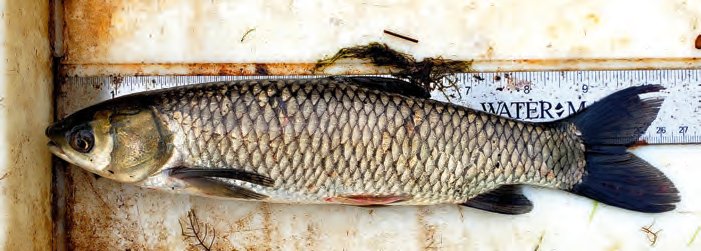
One of the most common genetically altered fish used by lake managers is the triploid grass carp, used for aquatic vegetation control. This fish does not reproduce and can be stocked in numbers to maintain, reduce or eliminate certain vegetation. Over the years I have seen triploid grass carp used to perfection to control unwanted aquatic plant species and I have also observed them grossly misused to where it did nothing to reduce the target aquatic plant species, eliminated all desirable plants from the waterbody causing erosion or altered the water chemistry to an undesirable state with suspended dirt particles increasing turbidity and lowering dissolved oxygen levels. Some states prior to the sterile triploid grass carp stocked diploid grass carp into public waters and are still dealing with the disaster decades after their introduction. There is a lot of misguided information about grass carp use, so research your specific problem plant and the fish prior to stocking. We have recently begun getting several requests to remove grass carp (which is not easy and usually takes them 10-15 years to die off), in overstocked and mismanaged waterbodies where they are doing more harm than good.
Whatever your target species is, your fish management goal is to maximize its growth potential and numbers. Besides good fish genetics, good year-around water chemistry, good habitat, good forage base whether natural or supplemental, good harvest practices, and also a little luck to grow a monster. Even with all the genetic alterations that can be made to largemouth bass, you still need all the previously mentioned to align and one freak genetic individual to live 12-17 years to possibly reach the upper teens or world record weight. I have worked throughout the southeastern United States almost 40 years as a fish research biologist and lake manager on some of the most productive waterbodies in the country, but have only seen one largemouth bass over 15 lbs. and maybe a dozen-or-so at 12-13 lbs. I have seen many more bass between 9 and 11 lbs. than most. You can only manage around Mother Nature so much, and once you have maxed her out, a little help from Lady Luck is what’s needed to grow that Super Fish.