Ensure doe harvest goals are met
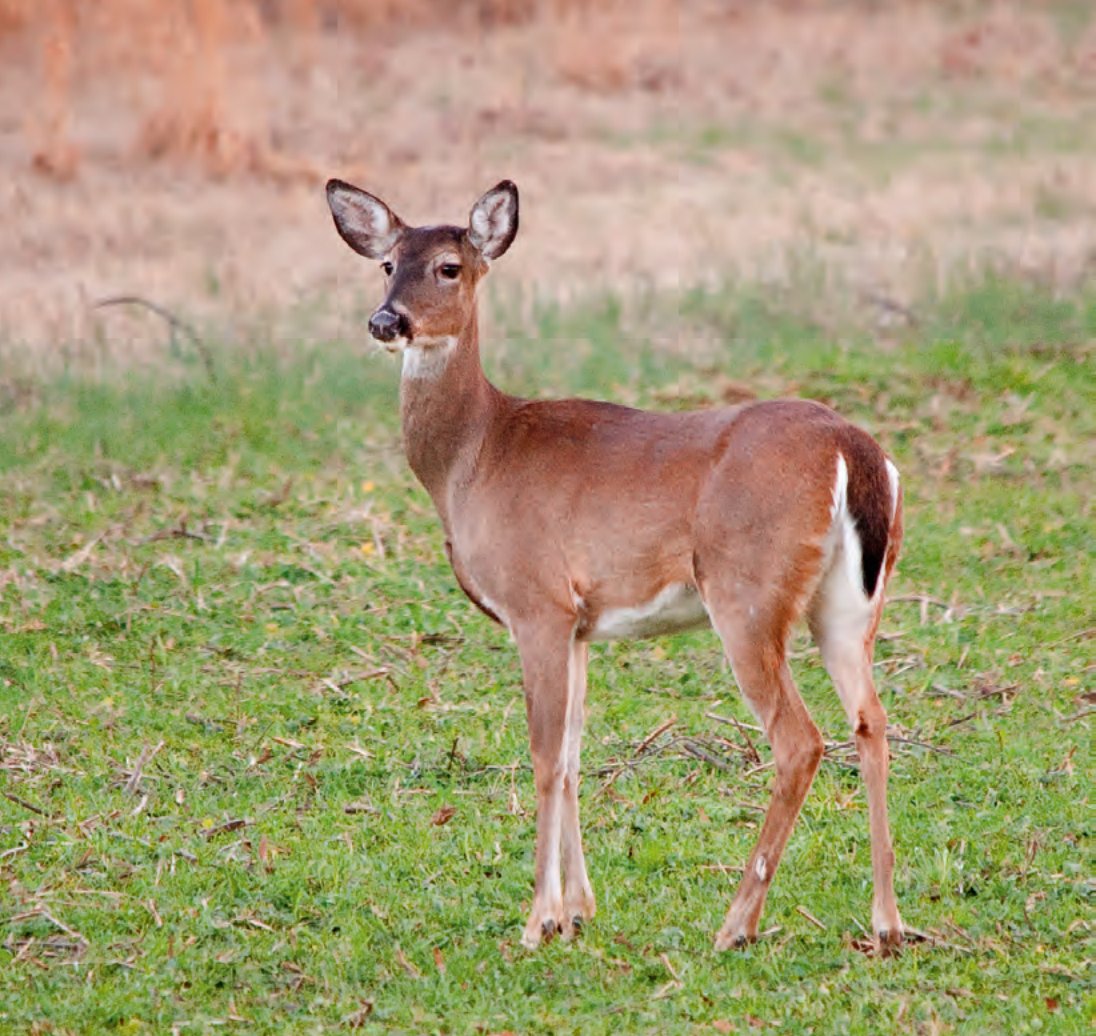
Doe harvest goals are contingent upon population management needs of a deer herd. If the overall deer density is within the desired range, where the goal is to maintain the current population size, deer harvest is still needed to remove the number of deer that recruited into the population that year (i.e., fawns that survived and entered the adult population). If the goal is to reduce the overall deer density, deer harvest must exceed the number of deer that recruited into the population. A simple law of nature taught in college Wildlife Population Dynamics courses is that Population Growth = Births minus Deaths.
Ideally, it is best to harvest does early in the season and/or before the rut. Doing so will save food resources for remaining deer and immediately improve the sex ratio for the upcoming breeding season which will conserve energy for your deer herd. An unbalanced sex ratio will result in an extended breeding season where bucks can lose up to 30% of their body weight from excessive breeding activities. Consequently, under these conditions, bucks enter spring needing to recover. The highly nutritious spring food then goes towards body maintenance rather than body/antler growth for the following year. The extended breeding season associated with an unbalanced sex ratio also results in poor hunting due to the lack of breeding competition. That is, there are so many does that bucks do not need to compete. In this case, hunters generally do not see much breeding activity such as chasing, rubs or scrapes. We often refer to this as a diluted rut.
By the time you get this issue of Wildlife Trends it will be late in the hunting season in most states. If you have not met your doe harvest goals, get to work. If needed, recruit the help of friends. Holding a “doe harvest weekend” is a great way to get participation from club members or friends. Make a big deal out of it by having a cookout at the camp with “awards” for those that harvest the largest doe, oldest doe, or most aggregate weight.
Collect fetal data from harvested whitetail does
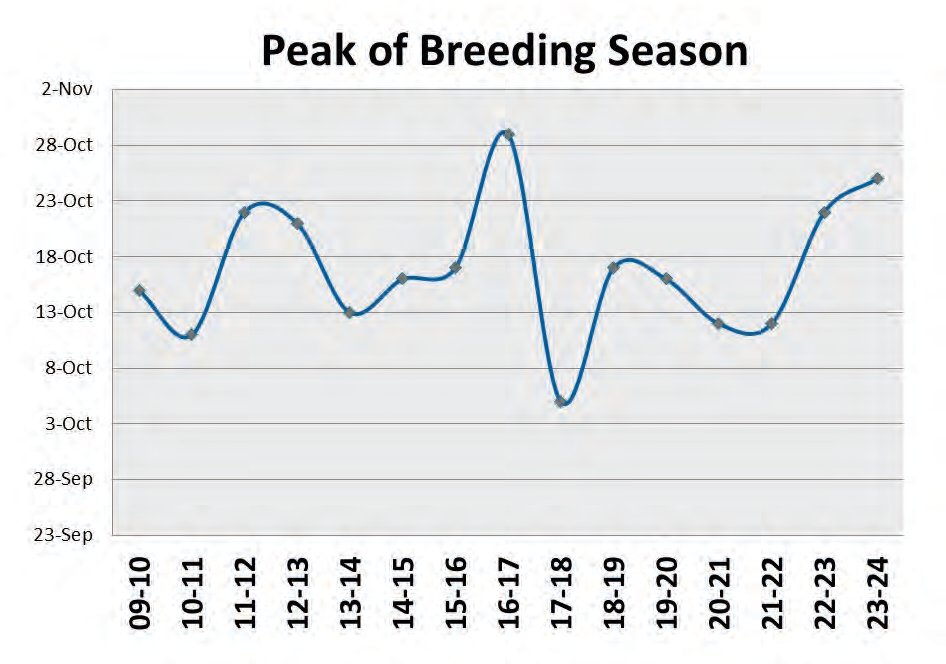
If the breeding season or rut occurs in your area before or around Thanksgiving, and your hunting season extends into late December of January, you should be able to collect and measure fetuses from does harvested later in the season. Similar to human fetuses, the age of deer fetuses is determined by their length. Commercially produced fetus scales are essentially rulers that can be used to measure and ultimately determine the age of the fetuses. White-tailed deer fetal scales can be obtained from the National Deer Management Association. Knowing the date of harvest along with the age of the fetus allows you to determine the day of conception. With an adequate sample size of fetal data, this information can provide much insight into your deer herd’s reproductive performance as well as the length and peak of the rut in your deer herd. This not only helps you determine when to put in for vacation next year (during the rut), but the length of the breeding season will shed light on the adult sex ratio of the herd. A tighter sex ratio will result in a shorter more intense rut due to increased competition for mates, while an unbalanced sex ratio will likely be represented by a long, weak rut due to less competition and length of time it takes bucks to breed the abundant doe population. This information, along with hunter observation data, is a great and free way to help assess the status and success of your deer management program.
Perform preventative maintenance and calibrate sprayers in preparation for burning and early summer uses
Although you probably won’t use them for a couple months, late winter is a good time to overhaul sprayers. By overhaul I mean check all hoses, tubes, connections, filters, nozzles, etc. This is also a good time to calibrate sprayers so that everything is ready when early summer weeds become a problem in food plots. We commonly use the pistol nozzle of our sprayers to assist in prescribed burns. Be sure to check all parts and test the pistol nozzle, hoses, etc. if you plan to use it this winter during burning activities. Working on sprayers is a great mid-day activity while hanging out at the camp during a weekend of hunting.
Prepare for last phase of duck season
If you have multiple duck ponds and hunt waterfowl throughout the season, strategic/staggered flooding schedules help maximize hunting opportunities by extending the food supply in ponds. That is, by not flooding some ponds or areas early in the season you essentially “save” these ponds and their associated food for later in the season. Thus, if you have “saved” ponds on your property for the late phase of duck season, mid-late December is the time to initiate flooding of these areas. Maintaining water depths of 12″-18″ is ideal for puddle ducks such as wood ducks, mallards, gadwall, teal, etc.
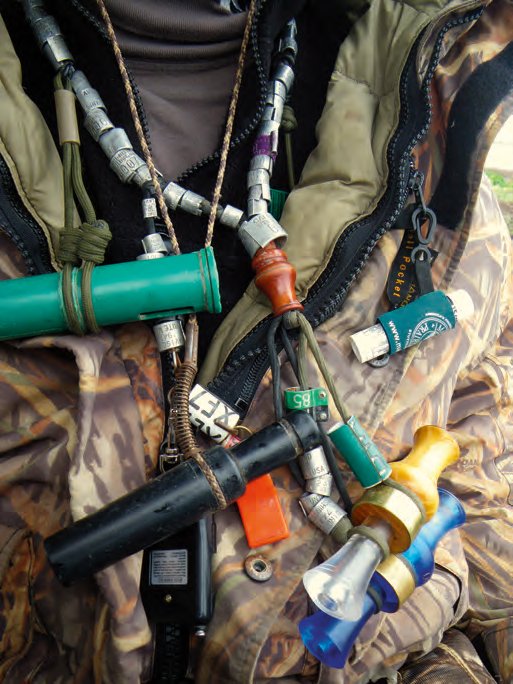
If you enjoy duck hunting but only have one or two small “duck holes” on your property, enhancing these areas (e.g., water management, plantings, etc.), and managing the hunting pressure will ensure you have exciting hunts each time you go. Like most wildlife, ducks react to hunting pressure. As hunting pressure increases, the number of ducks using the area decreases. Managing the pressure simply means that you do not hunt the pond too often and allow the area time to rest between hunts. A good rule of thumb is to not hunt a small pond (or any small area where ducks use), more than once per week. Of course, longer rest periods result in better hunting. It is also a good idea to not hunt the area in the morning and afternoon of the same day. If food sources remain and you allow the pond to rest longer than a week, you will be pleasantly surprised at the number of ducks that will be using the pond, especially if there is hunting pressure on surrounding areas.
Scout now for next duck season
Doing a little homework this season, even if it means missing a hunt or two, will help you have better duck hunts next year. By this I mean take time to watch and glass wetlands, moist soil impoundments, beaver ponds, lakes, and flooded fields to find new areas to hunt. While food sources and water can change from year to year, in most cases ducks will be attracted to the same areas each year. Simply stage yourself somewhere that you can see the area you are scouting without spooking ducks. In most cases, a high vantage point that offers a landscape view is best as it often allows you to see where ducks are coming from as they approach and which direction they go when they leave. Good vantage points are often hills, highways, bridges, barns, and sometimes deer stands. The point is to get as high as you can so that you can see the sky where ducks are flying. I can’t tell you how many times I have set up and scouted like this and found an even better spot by being able to see flocks from a landscape level verses getting into the actual area (tight) where I thought ducks would be. In some cases, you may not see ducks go down but notice that lots of flocks headed in a certain direction. Relocating closer to the area you saw ducks headed on the next scouting mission will often reveal a new honey hole. As you begin to pinpoint areas ducks are using, close in tighter and start learning exactly where ducks want to be and how they approach when coming in. If it is still duck season, this is when I like to hunt the spot a couple times. Doing so will help you identify exactly where to build a blind this summer. So, by next season, you will be sipping coffee after putting out your spread of decoys while waiting on daylight and ducks to start flying.
Assess and flag or mark wildlife improvement projects such as new food plots, plot expansions, wildlife clearcuts, new roads, and roadsides that will be widened
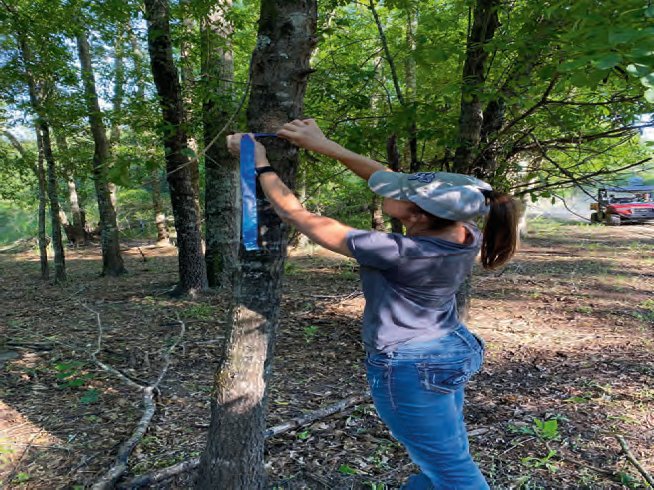
Because temperatures are cool (or cold) and the leaves are off trees where you can generally see better in the woods, winter is a great time to assess and mark areas for upcoming timber harvest, new food plots, or other improvements. Having the leaves off is certainly a big help because you can see what you are doing and visualize areas that you are flagging. Projects that may need to be marked or flagged include small bedding areas that will be created with chainsaws (chainsaw work is more pleasant during the winter too while it is cooler), new food plot areas or expansions on existing plots, areas along roadsides that need attention next spring, etc. Besides flagging areas that will require heavy equipment and drier conditions, winter is also a good time to mark areas that will be planted in wildlife friendly orchards, supplemental hardwoods, areas to plant hedgerows for quail through fields, etc. Marking these areas in winter will not only be more pleasant for you and allow you to see what you are doing, but will ensure you are ready to tackle these projects when conditions are right. Also, flagging in winter gives you time to think more about the areas you have flagged out before the project is implemented. The last thing you want is to be flagging just ahead of a logging crew and having to make hasty decisions on where you want a new food plot to be created.
Create a wind map of your property to help you have more successful deer hunts
A deer’s nose is its best defense. Through my career as a wildlife biologist, I have been fortunate to have worked and hunted with many “lucky” hunters – those that seem to cross paths with the biggest bucks on the property year in and year out. These are the guys you see in magazines standing under a barn wall full of mounted bucks. Generally speaking, I am not one that believes in “luck”. To me, luck is where preparation and opportunity meet. All of these hunters did their homework to understand how and why deer (particularly the mature bucks they were hunting), used the property and set up stands accordingly. They all seem to have different thoughts on where and when to hunt the stands. However, the single common strategy used among ALL of these hunters was they closely monitored wind and only hunted stands under favorable winds. That is, they only hunt areas when the wind is right – carrying their scent away from where they expected deer to come from. Although I routinely wear ScentLok and spray myself with odor neutralizers before heading to a stand, I am a firm believer that if a deer gets downwind, it is over (at lease in most cases). On properties that have hills or draws, wind will behave differently across the property. As wind hits ridges or tree lines it is diverted and results in the wind changing directions at given points on the property. You may be surprised that a true north wind can generate a south wind in some locations on a property. Something else that will cause “odd” winds is large bodies of water such as a lake or river. In the morning, cool air in the woods is often drawn out to the warmer water area creating different wind currents than the true wind reported. The opposite can occur in the evening. These situations often occur under light wind conditions. To create a wind map, simply record the true wind (wind direction without interference – wind the weatherman reports), then visit various spots on the property where deer stands are located and record the actual wind at these spots. Many hunters collect and record wind information over time, often while they are hunting, then compile what they have collected to create a wind map. Once generated, a wind map is a valuable tool that will help you select which stand to sit resulting in more successful hunts. Of course, you still need to be in the right place at the right time. But these “lucky” moments happen more often when you have prepared and selected a stand where your scent is not a factor.
Prepare deer stands for the off-season
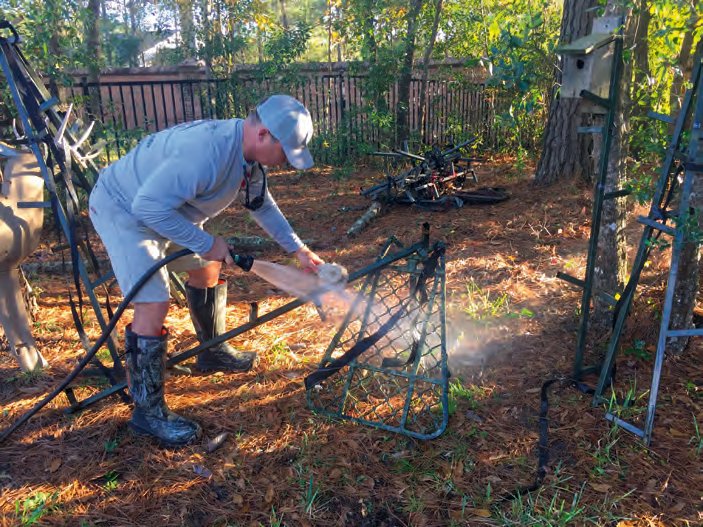
Once deer season ends, it is a good idea to “summer-ize” your hunting stands. That is, to ensure they are in good working order next season there are a few things to do. Ladder and lock on stands should be loosened or removed from the tree to allow the tree to grow during summer and prevent it from absorbing the attached chain or strap of the stand. This not only protects the stand from potential damage but is good for the tree. If the stand is not going to be removed from the woods, remove any cushions or seat straps and burlap/camo covers that may be on a stand. This will prolong their life and prevent the weather or critters from ruining them before the next season. Cushions and covers should be removed from tripods or other stands as well. Although they should already be secured, double check the tie downs and anchors of tripod stands. There are two kinds of tripods – those that have blown over and those that will. Making sure they are securely anchored will reduce the chances of a tripod getting blown over. Shooting houses should be cleaned out and sealed up as much as possible. Sealing them (meaning closing the door and windows), will reduce damage by squirrels, owls, etc. It will also reduce wasps as well (notice I said reduce). Cleaning shooting houses out in late winter is much nicer than trying to do it in August! Of course, all climbing tree stands and pop-up blinds should be removed from the woods and stored over the summer. When “summarizing” ladders and lock on stands, it is VERY important to revisit these stands just before hunting season starts again the next year to reattach the chains/straps and tighten everything up. One trick we use to identify stands that are “safe and ready to hunt” is to tie a piece of flagging onto the stand once it has been tightened and checked. Use the same color flagging for each season. For example, this year we are using blue flagging. Next year we will use a different color, say yellow flagging. So, if a hunter gets to a stand this season and does not see the blue flagging, they will know that the stand may have been overlooked and/or has not been checked and secured.