
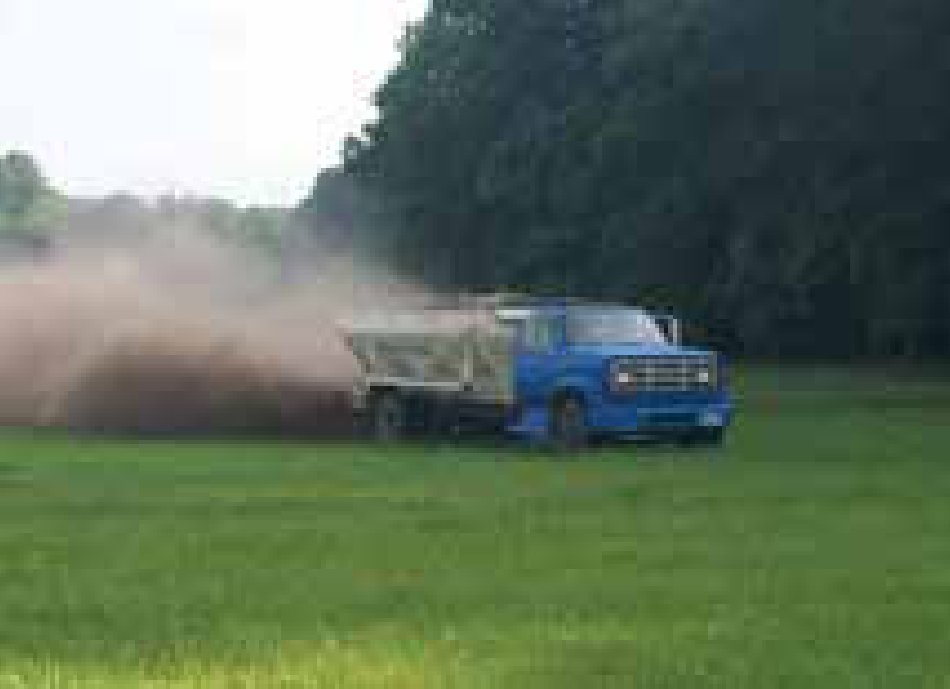
What does chicken poop and wild turkeys have in common? And why should you care? If you are a land manager concerned about his food plots, a landowner concerned about economic returns from your timber, agriculture or hunting lease interests, a chicken producer concerned about his livelihood, or a hunter concerned about maintaining healthy, huntable wild turkey populations, there are a few things you do need to know about chicken poop and wild turkeys.
Long story-short, previous studies have shown that litter from domestic layer/breeder poultry operations can cause disease infection in wild turkeys, namely Histomoniasis, also known as Blackhead Disease. With recent wild turkey reproduction and subsequent harvest declines in several Southeastern states, many point to chicken poop as the suspect. But is this just perception or correlation or is there something to it?
Chicken Poop and Wild Turkeys: Setting the Stage
If you’re like many land managers and landowners, you’re looking for ways to boost the productivity of your soil. Whether to improve production of row crops, pastures, planted pines or food plots. Most of us don’t have the luxury of rich, bottomland soil with a perfect pH to work with, so we have to amend and adjust. This allows us to get the most out of the soil and in-turn increase yields. The most common way to do this is by applying lime and fertilizer. If you can get the pH right, then the nutrients you add can be accessed by the plants. Plants with plenty of nutrients grow quickly. In the case of food plots, they produce lots of vertical cover, seeds/mast, and highly nutritious, easily digestible forage for all kinds of wildlife. Agricultural crops/pastures, timber and straw production increase in volume (bushels/ac, bales/ac, tons/ac) and as a direct result yield better economic returns. Depending on where you are, one of the easiest and cheapest ways of applying the fertilizer portion of the equation is using chicken litter. Many land managers and landowners also gain income through hunting leases and making sure there are sustainable, huntable turkey numbers is important too.
Most chicken producers are looking for economical ways to offload a bunch of chicken poop or “litter” which is a mixture of manure, feathers and bedding. Chicken production, particularly for fryers and broilers, is a pretty quick turn-around. A batch of bitties is grown and slaughtered usually at 5-6 weeks and then a new batch is brought in. Sometimes the chicken houses are cleaned with every new batch of chickens, other times it might be six months, but either way that’s a lot of poop that needs to go somewhere. Returning it to the soil as fertilizer rich in nitrogen, in particular, makes sense while hopefully making a little money. It’s usually early spring when driving through the countryside you get a whiff of a very unpleasant smell that seems to encase you from every direction. That my friend is the pungent smell of chicken poop getting spread on agricultural fields, which is a much more common occurrence than ever.
The comeback of the wild turkey is a conservation success story. Their populations are thought to have dropped as low as 30,000 in North America and now are upwards of 7 million, thanks to the efforts of state and federal wildlife agencies across the U.S. and passionate volunteers and staff associated with The National Wild Turkey Federation. Wild turkey populations in the Southeast have seen explosive growth, especially through the 1990’s. Turkeys trapped and transferred to new areas quickly expanded to fill unused habitat. Wild turkey hunters used to be few and far between as well just because it was so darn hard to hunt birds when there weren’t very many. Today many hunters are used to hearing 10 or more birds gobbling their heads off on any given spring day and when those interactions start to drop off, it’s very noticeable. Turkey hunters are a passionate lot and the recent reproduction declines and subsequent decline in harvest numbers are concerning to them. They aren’t alone. Wild turkey biologists are also concerned.
The Protozoa, The Worm and The Chicken: A Complicated Story of Poop
If you’re not into the complicated world of diseases with medical terms, scientific names and what not, then now’s the time to skip down to the next section, but if you’re like me and totally geeked out about it, party on, Wayne! For the skippers, do, however, at least read the last two paragraphs so you don’t miss the important part.
Mother Nature can be incredibly simple and equally complex. Relatively speaking, the pathology of Blackhead Disease (Histomoniasis) is a little complicated and definitely doesn’t fall into the simple category. The disease itself actually requires several hosts and time, so there are multiple steps involved before there are any symptoms let alone a dead bird. For those interested in trivia, one unique fact about the protozoa Histomonas is that it is one of only a few parasites that utilizes another internal parasite in its life cycle.
The term “Blackhead” doesn’t have anything to do with the coloration of an infected birds’ head, (that’s actually avian pox in many cases), but refers to the lesions that sometimes appear on the liver of a diseased bird.
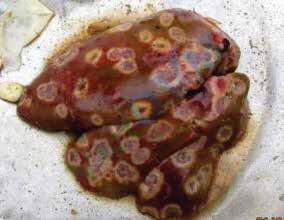
Blackhead Disease is pretty common in poultry and other gallinaceous birds (chickens, turkeys, chukkers, quail, pheasants, etc.), but affects each differently. Chickens and pheasants are the natural hosts of the protozoa that causes the disease and rarely get sick. But even that has changed recently and now Blackhead Disease is a growing concern for chicken producers as well. Bobwhite quail, Hungarian partridges and guinea fowl are kind of in the middle and sometimes get sick with moderate mortality rates. Turkeys and ruffed grouse are especially susceptible and will usually get sick and die in pretty short-order and with high mortality rates (>75%). That’s one reason Blackhead is considered one of the most important turkey diseases. The domesticated turkey industry can be especially impacted by it as it can decimate a whole flock.
A wild turkey infected with Blackhead Disease will appear listless, with drooping wings, and/or ruffled feathers. They will be very tame or confused and won’t roost in trees. Infected birds will also have sulphur-yellow colored feces.
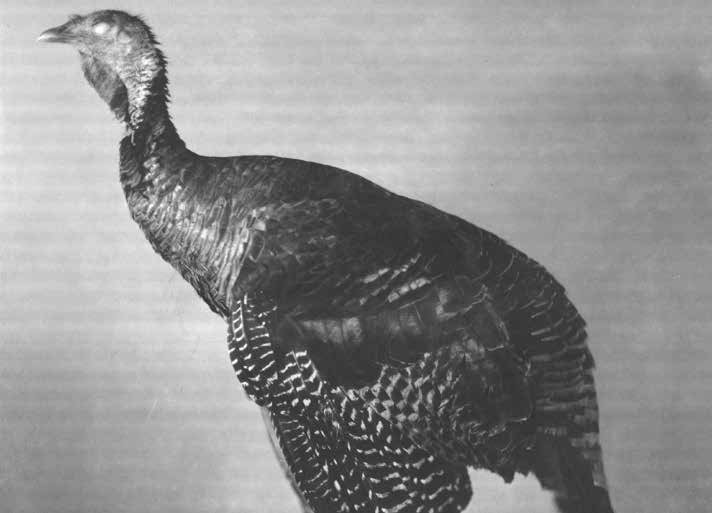
The protozoa that actually causes the disease, Histomonas meleagridis, hence the disease name Histomoniasis, requires several stages before causing problems for turkeys. So what in the heck is a protozoa? It’s a microscopic parasite.
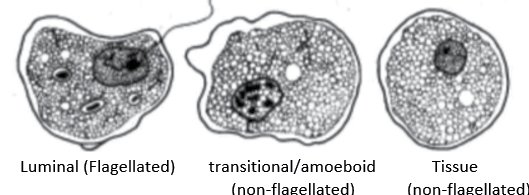
Kinda cute with their little flagella (tail), but protozoans are a group that can cause some issues for many. There’s a reason people shouldn’t drink water straight out of the stream. Ever heard of Giardia or beaver fever? Yep, that nasty bout of diarrhea was caused by a protozoa. But for Blackhead Disease the protozoa has a bit of a trip before it can make a bird sick.
One way Blackhead Disease is spread is through the fecal-oral route. Yes, poop to mouth. Yuck! Many diseases are spread this way and that’s why you should listen to your mother and wash your hands. Just saying. But lucky for us people don’t get Blackhead Disease. Unfortunately for wild turkeys, hand-washing isn’t an option. However, this route is not considered a major pathway to infection. The most common way the disease is transmitted is through another organism. Enter two worms and a beetle.
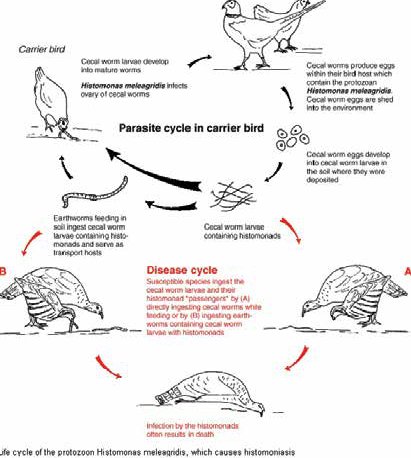
The Histomonas protozoa is actually found inside a cecal worm (Heterakis gallinarum) that is a relatively common parasite and happily resides in a chicken’s gut. A trophy cecal worm is still less than a millimeter in size. The infected cecal worm is passed through the feces of the chicken. If the litter is spread in fields, so is the protozoa infected cecal worm. Which is now available to our friend the earthworm who inadvertently eats the much smaller cecal worm containing Histomonas. Grayling beetles that are commonly found in poultry litter will also pick up the protozoa and when eaten can pass the disease on. Of course, what turkey doesn’t love a beetle or a worm, right?
Here’s the real important part and why it’s key to discern between types of chicken litter you use. It takes more than 6 weeks for a cecal worm to mature in the gut of a chicken. As I mentioned before, broiler/fryer chickens are slaughtered at 5-6 weeks, not giving the cecal worm enough time to mature and provide living quarters for the protozoa. However, breeder/layer operations where the birds live much longer have high rates of infection and this is the litter that poses the most concern.
To sum it up, Wild turkeys either eat contaminated soil, infected earthworms or darkling beetles. They may or may not get sick and die.
“Eat More Chicken” – Not Just A Slogan Chanted by Cows
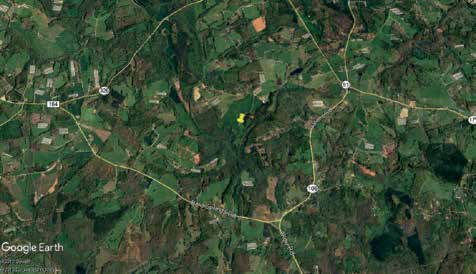
The poultry industry has grown significantly over just the past 20 years or so with chicken houses so numerous in some areas you can throw a rock from one to another. According to a 2011 Pew Report (Big Chicken: Pollution and Industrial Poultry Production in America), chicken, once a distant third to beef and pork, is now the most popular meat in the United States. The average American eats more than twice the amount eaten in 1970. The American poultry industry has matched this change in appetite with an exponential increase in production. For example, in 2007, 8.9 billion chickens were raised and sold as food in the United States, a jump of more than 1,400 percent since 1950. At the same time, chicken farms have grown in size. By 2006, a typical operation produced an average of 605,000 birds in vast buildings of 20,000 square feet or more. The area of greatest chicken production, known as the Broiler Belt, runs from East Texas through the heart of the Southeast into Maryland and Delaware. And in some states, chickens outnumber people 400:1.
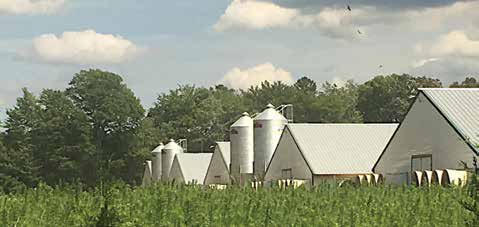
Looking at those numbers with litter in mind, according to a University of Georgia Extension bulletin, based on average nutrients, a ton of poultry litter has an estimated value of $41. A 20,000-bird broiler house will produce approximately 150 tons of litter per year with a potential gross value of $6,150. A flock of 14,000 breeder hens will produce approximate¬ly 150 tons per year with a potential gross value of $4,300. The cost of transporting poultry litter varies. Litter removed from a broiler house is usually very bulky, increasing its transportation cost per pound of nutrient. The average delivered cost for commercial operators is $20 per ton of broiler litter; thus, litter can provide an economic benefit for many growers, if it is effectively marketed.
Pretty much all of the chicken houses are located in rural areas and their litter is spread in agricultural fields and forests where wild turkeys roam. With this growth in the poultry industry and the recent declines in wild turkey productivity, many are concerned that it’s a disease issue, specifically Blackhead Disease. Local turkey hunters in these high density poultry production areas frequently lament the lack of turkeys compared to the past and always point to the increase in chicken houses. I’m not being critical of the poultry industry in anyway here. They and the agricultural industry in general bear a great responsibility in keeping us all fed while having to deal with greater regulations, limited land to operate in and a seemingly ever growing demand. I’m certainly a part of that equation as there’s nothing better than some buffalo wings on the barbie and I make a lot of trips to Chick-fil-A.
More Chickens But Less Wild Turkeys – Are they related?
With the uptick in poultry production there has also been a down turn in wild turkey numbers in some areas of our southern states. In turkey biologist circles it has been dubbed the Southeast Wild Turkey Reproduction Decline and was first addressed in 2011. A study was initiated as a response to persistent declines in annual reproductive indices of wild turkeys based on surveys conducted by member states of the Southeast Wild Turkey Working Group (SEWTWG). The SEWTWG is a collective group of state wildlife agency turkey biologists/coordinators that meets annually. In other words, many of these state turkey biologists were seeing hens with no poults or very few poults compared to the past. There were and still are concerns that this reduction in productivity is an indicator of current or future declines in turkey populations. This may be coming to bear as these states usually see a decrease in hunter harvested birds after several or many years of poor reproduction.
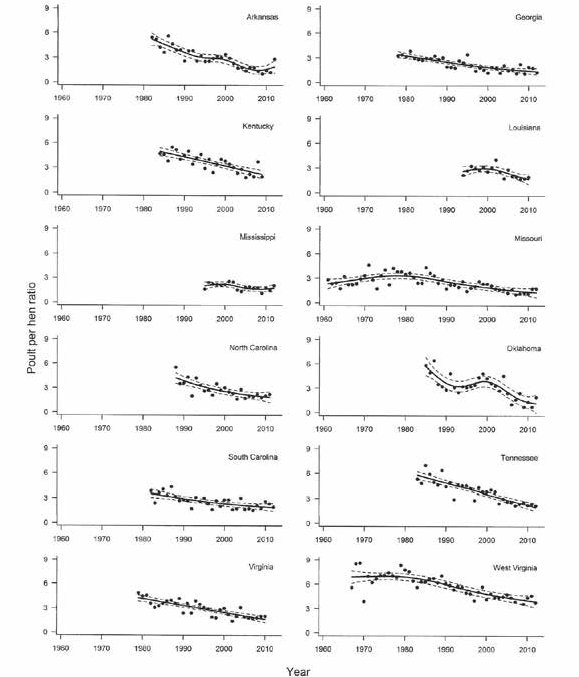
When considering causes of any wildlife declines, diseases are always a consideration. Research out of the University of Georgia in 2008 tested hunter-harvested wild turkeys in southwest Georgia and north Florida for various diseases in an area of high poultry production and found very little that would cause major impacts at the population level. As far as Blackhead Disease is concerned, previous research from the 1990’s indicated that as long as broiler/fryer litter was used and NOT layer/brooder litter then all was right with the world because there was just not enough time for the protozoa’s life cycle to complete itself. To our current knowledge this still holds true, but based on findings from recent research at the University of Tennessee we may need to look at this issue more closely. The investigation found several hunter-harvested wild turkeys with active infections of Blackhead Disease. It was a low number of the tested birds, but pretty significant to catch the disease in action since it does generally cause mortality quickly and at a high-rate. Taking a closer look at this connection is not just because it may be impacting wild turkeys, but also because Blackhead Disease is becoming more of an issue for the poultry industry as well.
What You Can Do
- If you use chicken litter for fertilizer, make sure it’s from fryer/broiler operations and NOT from layer/breeding operations. If you’re not sure and can’t confirm, consider using alternative sources.
- If you’re in an area with lots of poultry production, be on the lookout for odd acting wild turkeys. If you see one, keep an eye on it and contact your state wildlife agency. They can guide you on what to do next. If it’s legal in your area and you don’t mind giving up a tag, go ahead and dispatch the bird.
- If you find a freshly dead wild turkey (or harvest a sick one), use gloves (or plastic bags as gloves), place in a plastic bag and put in a cooler with ice packs (not wet ice). Keep cool until you can contact your state wildlife agency for further directions.
- Never eat a sick-acting wild turkey and always wash your hands after handling any animal.
- Participate in any research or monitoring program that will help build our knowledge base, whether it’s an online survey or submission of samples from a harvested bird.
Additional Resources
Drobney, R. D., Schultz, J. H., Byrne, M. E., M. J. Chamberlain, and B. A. Collier. 2011. Potential density dependence in wild turkey productivity in the southeastern U.S. Proceedings of the National Wild Turkey Symposium 11:329-351.
Byrne, M. E., M. J. Chamberlain, and B. A. Collier. 2014. Southeast regional wild turkey reproductive decline study: retrospective regional analysis of wild turkey productivity in the Southeast. Final report for the Southeastern Wild Turkey Working Group.
Davidson, W. R., et al. 2006. Field manual of wildlife disease in the Southeastern United States. Third Edition. Southeastern Cooperative Wildlife Disease Study.
Gerhold, R., M. Nobrega, and R. Applegate. 2016. Investigation of hunter harvested carcasses and laboratory trial to understand the potential transmission of pathogens from poultry litter to wild turkeys (Meleagris gallopavo). TWRA Wildlife Technical Report 16-3
Ingram, D. R., D. L. Miller, C. A. Baldwin, J. Turco, and J. M. Lockhart. 2015. Serology survey of wild turkeys (Meleagris gallopavo) and evidence of exposure to avian encephalomyelitis virus in Georgia and Florida, USA. Journal of Wildlife Diseases 51(2).
Nickens, T. E. 2013. Wild Turkey on The Rocks? Audubon. http://www.audubon.org/magazine/wild-turkey-rocks
University of Georgia Extension Bulletin #1330. 2013. Poultry litter applications on pastures and hayfields.
University of Georgia Extension Bulletin #1245. 2013. Maximizing poultry manure use through nutrient management planning.
Waters III, C. V., et al. 1994. Status of commercial and noncommercial chickens as potential sources of histomoniasis among wild turkeys. Wildlife Society Bulletin 22:43-49.