
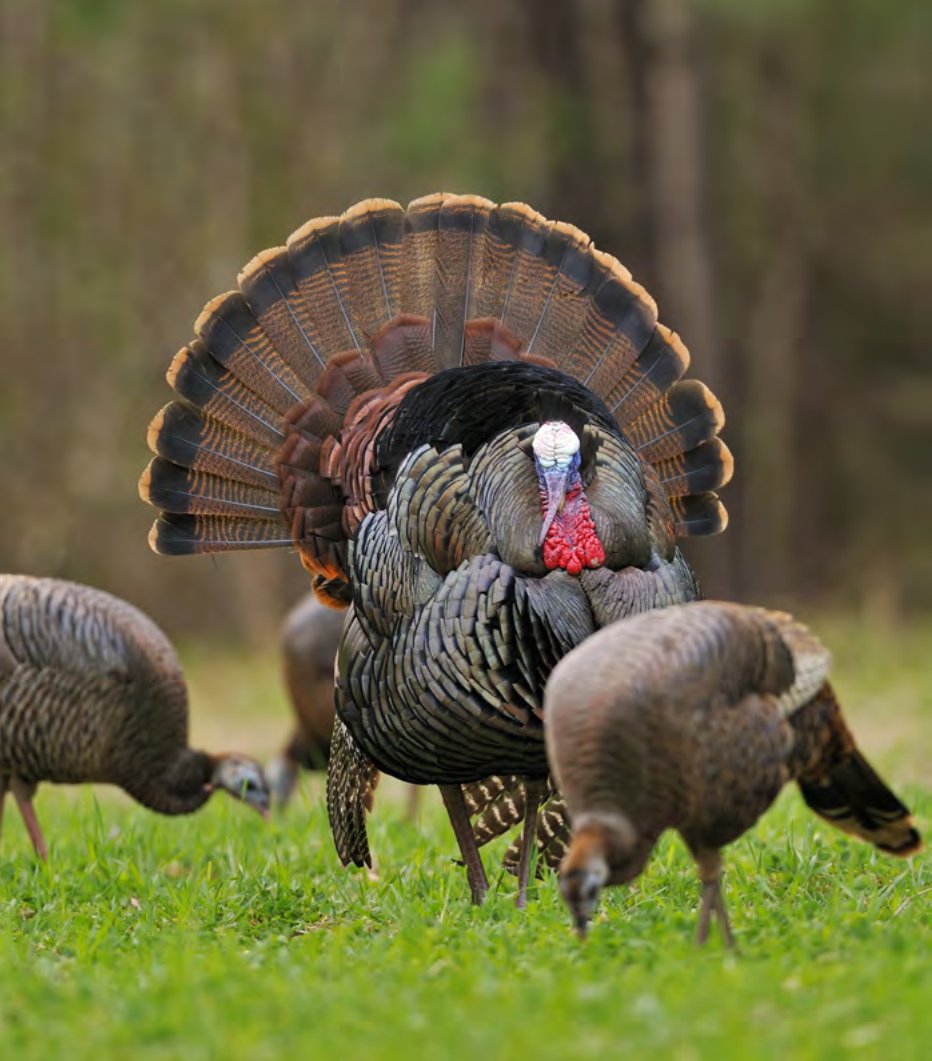
The wild turkey (Meleagris gallopavo) evolved more than 11 million years ago. Wild turkeys were revered by ancient civilizations for their spiritual connection but were also recognized as an important food source. With European expansion in the 17th century came unregulated hunting and habitat destruction which gradually decimated or wiped out populations in many areas.
The come-back of the wild turkey is truly one of America’s great conservation success stories. In the early 1900’s wild turkey populations were estimated as low as 30,000 birds. The work of the National Wild Turkey Federation, state and local agencies and private landowners have paid tremendous dividends. Today the estimate is over seven million wild turkeys nationwide. Five distinct subspecies inhabit North America—the Eastern, Osceola, Rio Grande, Merriam’s and Gould’s wild turkeys. In turkey hunting circles tagging all five is referred to as the Super Slam of turkey hunting.
There’s never a dull moment in the spring woods as turkeys feed, court, mate, battle, nest and brood. The time of dogwoods in bloom and gobbling at dawn is a much-anticipated time of year. It’s the season when a hunter’s calling skills, stealthiness, woodsmanship, patience and endurance are tested against the king of spring.
The following photo essay features insight into the springtime world of the wild turkey, its behaviors, habits and interactions plus a few insights that may help hunters plan a successful hunting strategy.
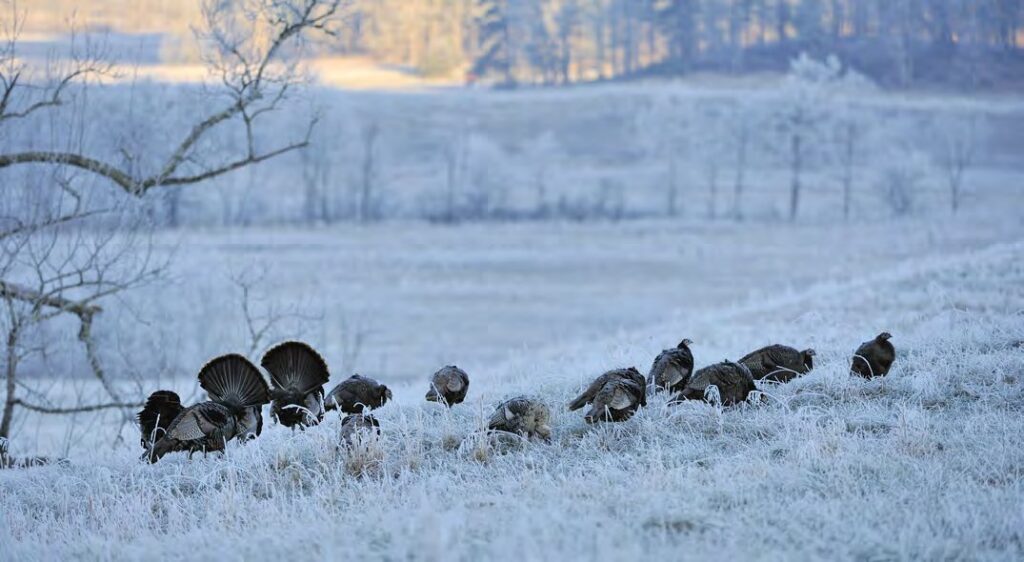
As fall winds down and winter approaches, wild turkeys generally separate into winter flocks of gobblers and hens. Mixing of flocks can occur throughout the season especially in cold regions where food sources are limited or concentrated in certain areas. Gobblers may strut anytime though it occurs predominantly during spring mating season.
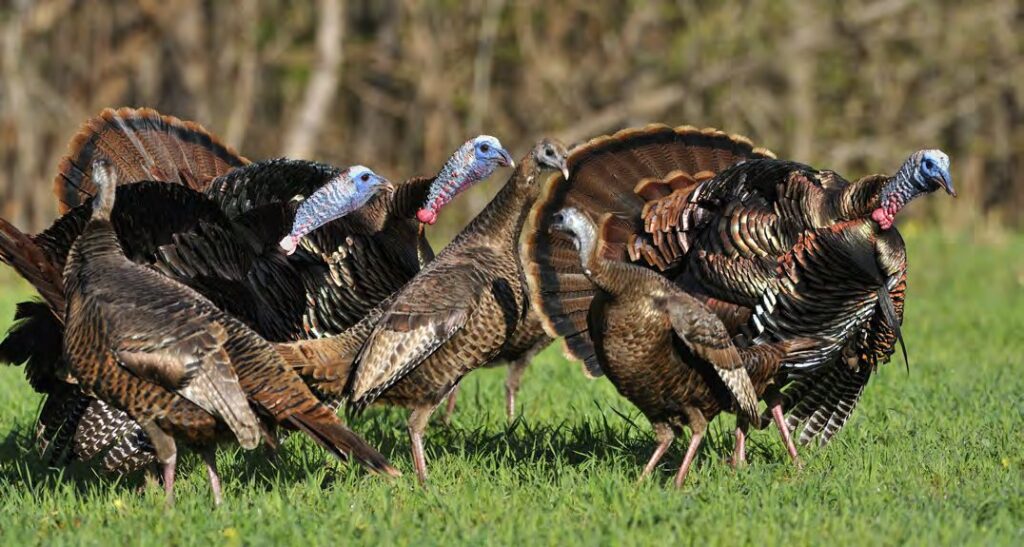
By late winter and as daylight and temperatures increase, so does the action in the turkey woods. Hen and gobbler flocks reunite and the hierarchy in each is settled. Gobblers and hens are vocal and interacting throughout the day. Noisy, feather flying, pecking and chasing spectacles occur as each turkey defines its place in the pecking order. Large flocks generally split into smaller ones and disperse. This typically occurs prior to or near the opening of hunting season.
When scouting or hunting, listen for sounds of a “barnyard bird battle”—aggressive purring, wing flapping, loud clucking, cutting and excited gobbles. Turkeys will often rush to a fight. When other hunt strategies fail, try imitating the sounds of a turkey fight. Turn up the volume and aggressiveness on your calls. Slap your leg against your cap to mimic wing flaps.
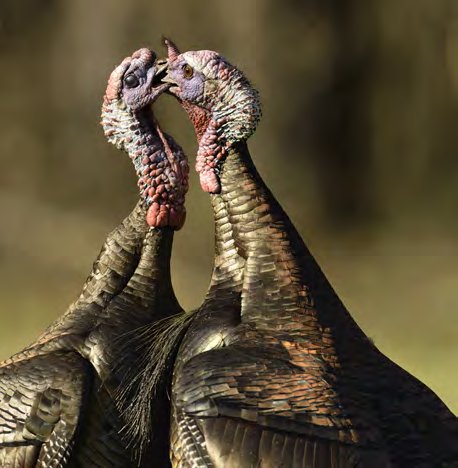
A dominant gobbler must defend its breeding range. Gobblers that have a non-breeding subordinate tom(s) as an ally is in a better position to ward off interlopers. Two battle tested gobblers squaring off, sizing up the opponent like prize fighters in the ring is a sight to behold. They address each other with heads held high, red caruncles swollen with engorged blood, tail fan flared and wings dropped to appear more threatening. The fight intensity and duration varies. A threatening display, wing slap and spur jab may be all that’s needed to send the opposer running. Two seasoned toms may battle for long periods much like whitetail bucks with an intent to seriously injure the other. The two toms in the photo locked beaks for nearly 15 minutes in a shoving and neck twisting match that eventually ended when one tom was able to throw the other off balance and to the ground much like a cowboy bulldogging a steer.
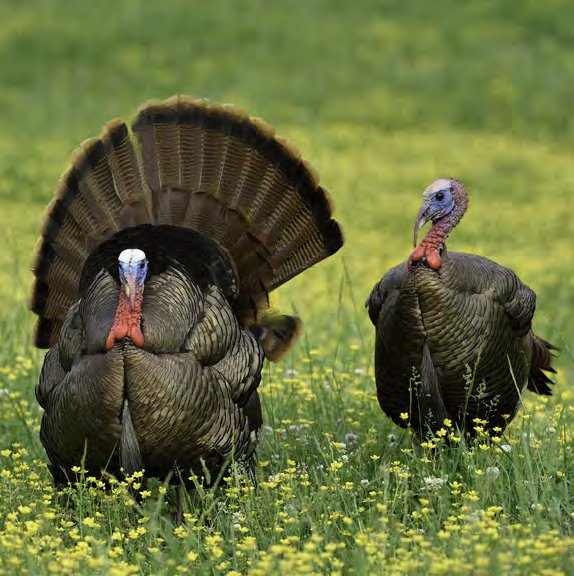
Spring turkey gobblers put on one of nature’s most beautiful courtship displays. Strutting is generally associated with breeding season as gobblers display their colors and plumage to attract hens. Strutting also occurs when gobblers defend their rank as winter flocks reunite in spring, or to show dominance anytime of the year.
Strut zones are locations where turkeys meet and gobblers strut. They consistently show evidence of wing dragging marks, tracks and scratching. Though turkeys will strut anywhere, there are features typical to many strut zones—favorable typography so gobbles can be heard from a long distance, adequate sunlight in enough open area for gobblers to be seen and to observe approaching hens and to detect danger.
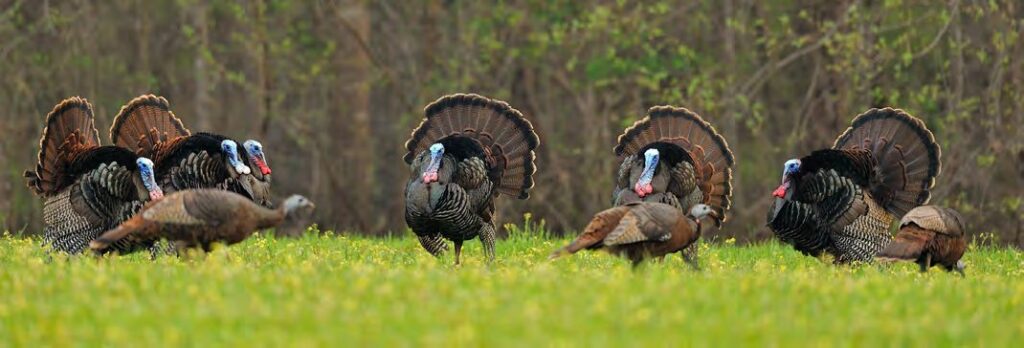
Jakes are awkward and entertaining to watch but like teenage boys, can be the source of expletive laced frustration for hunters. Rising hormone levels and low status in the breeding order plus idle time leaves them primed to disrupt, intrude and bully. Particularly aggressive jake gangs are often older ones from early hatches the previous spring. “Bull jake” gangs will take over a hen flock from a gobbler(s) that are unable to defend against the mob. This photographer has observed many occasions where a jake gang will literally run to a gobbling tom and attack. The search and destroy behavior may influence certain mature gobblers in such areas to clam up during the peak breeding period. Savvy hunters practice patience and give setups more time. They listen for more subtle clues to a gobbler’s presence in an area like spitting and drumming. Hens and jakes nearby may give a gobbler’s presence away. They often react to a spit and drum with a short 3-5 note yelp.
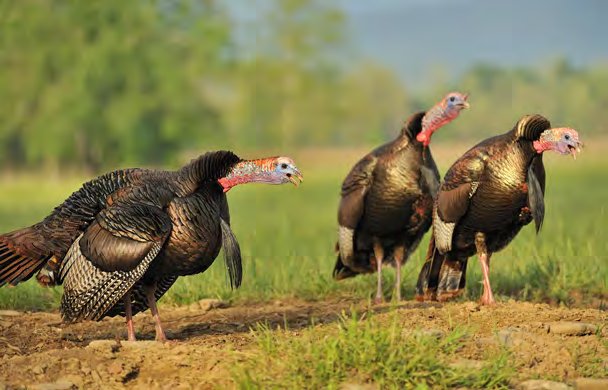
Increasing daylight hours as winter transitions to spring triggers hormonal changes in wild turkeys. The beginning of gobbling in late winter and early spring signals the approach of the mating period. Gobbling is the sound turkey hunters find all but impossible to resist. “Talking turkey” with gobbling toms can cause a fevered affliction that is only remedied with frequent trips to the woods. It can all but destroy common sense in the best of folks. Like a siren’s song, the thunderous gobble rattling the spring woods lures bleary-eyed hunters from warm beds at wee hours to forsake jobs, family time and household duties. Thankfully, it’s a seasonal ailment.
Gobbling peaks during this time. Toms, anxious to mate, are eager to announce their presence and locate and attract hens. Their loud and proud attitude makes them susceptible to a hunter’s calling and ability to pinpoint their position.
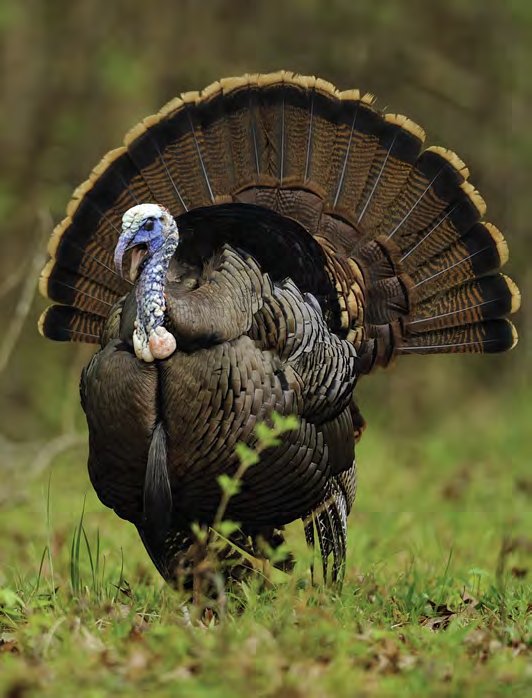
Start to finish, a gobble happens quickly, typically under a couple of seconds. It’s described as a loud, rolling, throaty garble of sound. It’s impossible to see all that happens, in real time, during the call. Thanks to high speed digital image frame rates available in professional cameras, an interesting split-second pose is possible to capture in a sequence. It demonstrates how just before a gobble begins a tom’s head tilts, the beak opens wide, presumably to gulp air, before the gobble is cast. (Note the open beak in photo) What appears to be the fueling charge for the gobble occurs in the blink of an eye.
The inner, or second, eyelid regularly closes briefly during a gobble. (Note the closed inner lid in photo.) Often the lid will close just as the gobble starts and may do so again during the sound’s release. When hunting, a quick adjustment or slight movement is needed, try making it during a gobble.
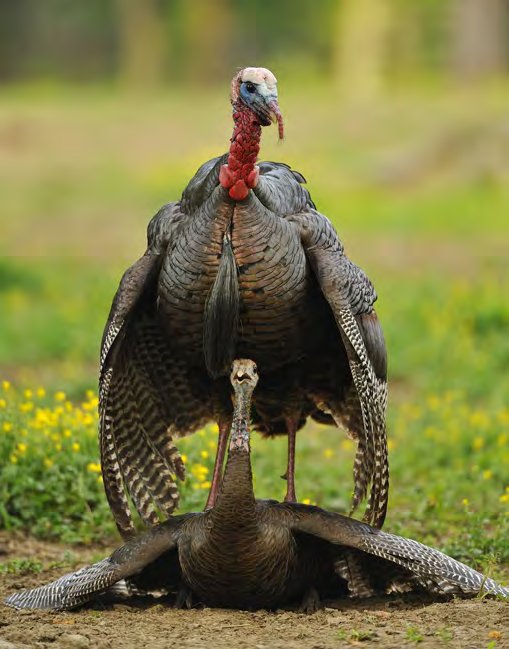
Nature’s colorful spring renewal is the perfect backdrop for gobblers to engage in courtship displays. Gobblers are polygamous and will mate with multiple hens. Breeding begins in late winter and early spring (February to May) depending on the region. Most breeding is done by dominant gobblers; however, subordinate toms and jakes can be sneaky and will take advantage of an opportunity if presented.
The gobbler pictured here pressed his case as a desirable mate to a hen that seemed barely aware of his presence. Ignoring his dashing strut, the hen fed, preened and dusted most of the morning. Finally, the hen stood motionless with head bowed for a few moments. The gobbler took notice and strutted to her side. The hen squatted, assuming the breeding position. The gobbler stepped up and treaded her back for several minutes before mating. The hen twice emitted a soft squeal that made during mating. One breeding is sufficient to fertilize all of the hen’s eggs though hens will typically mate several times throughout the season.
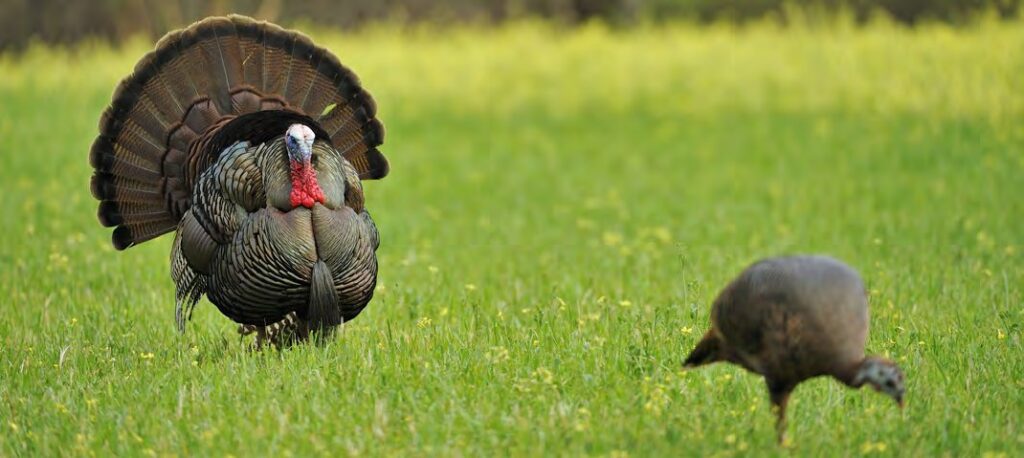
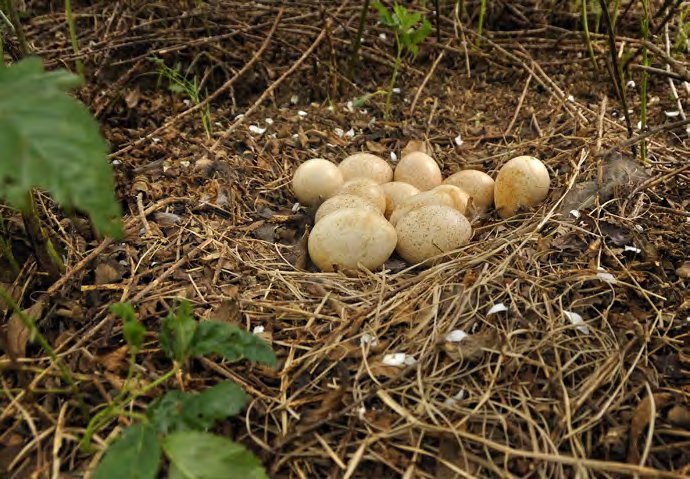
Once the mating period is underway, hens scout for suitable nesting sites. Optimum nesting habitat features a well-developed understory that includes low bushy/vine type cover in pine forests, cutovers, old fields and along stream edges. Hens leave the flock temporarily each day to lay an egg. The average clutch has 8-10 eggs.
The odds are against a hen successfully hatching a clutch of eggs. Primarily, predators, weather and turkey habitat management practices will define success. Less than half of all nesting attempts are successful. As ground nesters a hen and her nest must remain hidden from a host of predators for up to 6 weeks during the laying and incubation period. Common predators of turkey eggs include raccoons, opossums, skunks, snakes and crows. Necropsy studies prove feral hogs will eat turkey eggs. Harsh weather conditions and human disturbance (mowing, disking and burning) also claim nests each spring. Hens likewise are vulnerable to coyotes, bobcats and feral cats and dogs.
Savvy hunters know mid to late morning hunting can be productive during the egg laying period. Gobblers who are alone for several hours while hens are away may become more vocal and vulnerable to hen calling.
From a hunting perspective, the nesting period can be very productive for hunters who are aware when most hens in their area are committed full time to incubating eggs. Gobblers that were previously “henned up” are now alone but still have the urge to mate. Some gobblers will join with others as the breeding season winds down. Others will resume frequent gobbling to attract hens and cover ground each day searching.
An effective hunting tactic during the incubation period is to note where nesting hens frequent a feeding area, food plot or dusting area during their short breaks from nesting duties. Gobblers will sometimes hang out nearby or cruise near areas to find hens, especially late in the day. It’s a good location to set up, be patient and call softly, sparingly and use non-vocal calling like leaf scratching. Take care not to spook or disturb nesting hens.
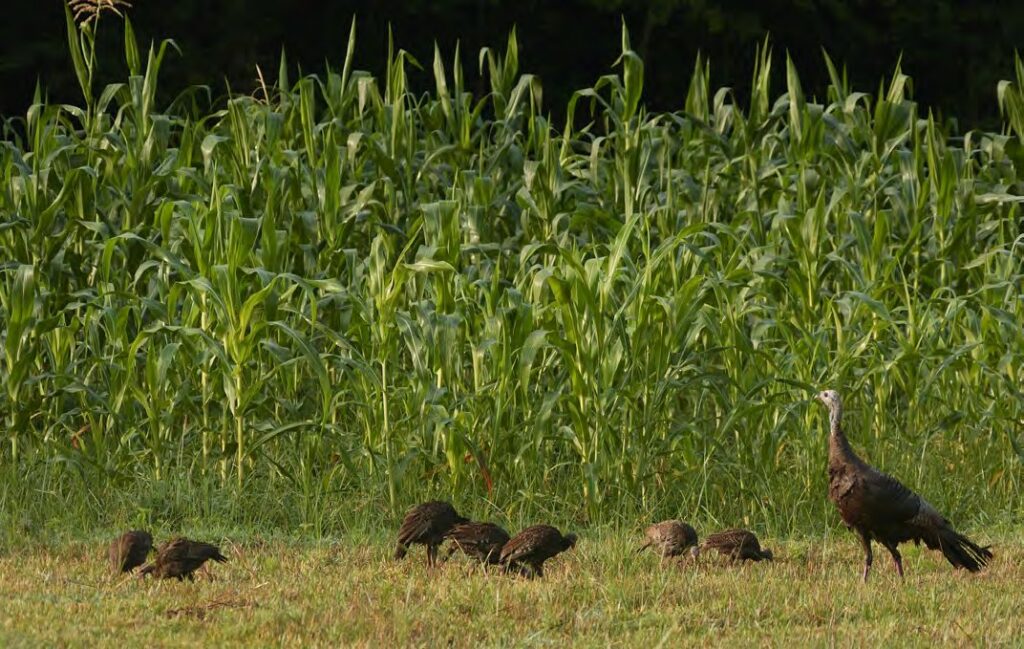
Incubation lasts about 28 days. All eggs in a clutch hatch within a 24 hour period. Unless weather conditions are poor, the hen leads the poults away from the nest 24 hours after hatching is complete. Mortality rates of poults range from 70-80%. Most hen and poult deaths occur during the first 2-3 weeks after hatching when poults are unable to fly and must roost under the hen on the ground. Poult predators include raccoon, bobcats, foxes, coyotes, owls and hawks. By three weeks of age, poults can fly up into low shrub trees or bushes increasing their chances of survival.
Nesting habitat is ideally situated near brooding habitat. Poults require protein rich insects early in life to grow quickly.
Poult rearing success is a good measure of an effective year-round wild turkey management program. Clover fields attract and hold hordes of insects. Mowed strips help young poults with access. Winter food plots of cereal grains and pasture grasses that are allowed to mature offer summer forage for growing turkeys. Disked lanes around field edges provide dusting areas. When you realize just how difficult it is for hen wild turkeys to brood and raise poults the wild turkey restoration and management story becomes even more remarkable.