
October/November 2014
Mow lanes through CRP areas, grassy powerlines, or standing corn fields to provide additional hunting opportunities
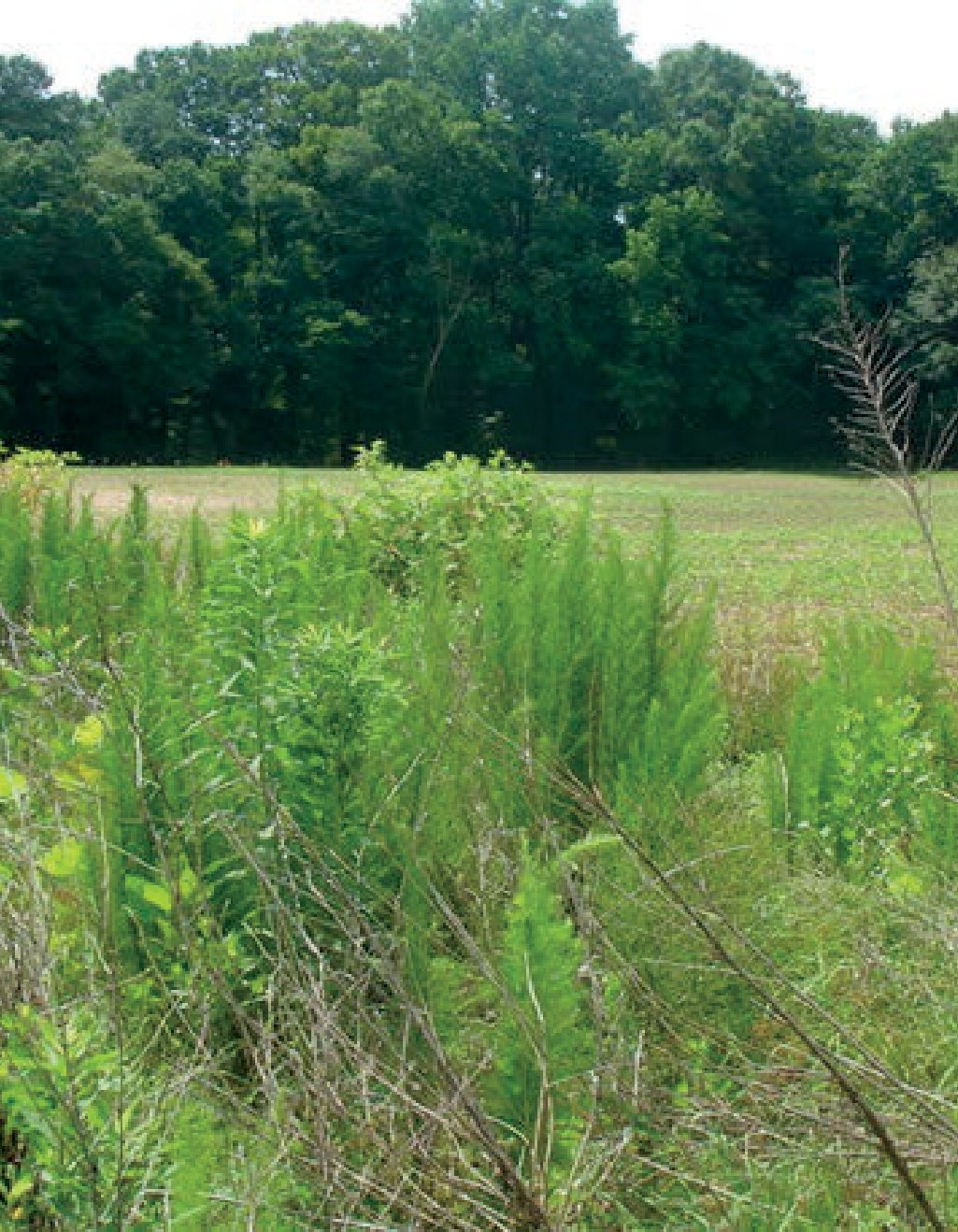
Growing mature bucks is relatively easy to do if you stick with a sound deer management program geared towards quality deer management. However, harvesting mature bucks is another story. Through my experience, there is no better place to observe and/or harvest mature bucks than in a long mowed lane that runs through thick cover (e.g., clearcuts, young pine stands, chest high grassy areas, corn fields, etc.). This thick cover is where the mature bucks live. These lanes offer bucks a sense of security which makes them more apt to use these areas during daylight. They know that with a quick bounce, they are in heavy cover and safe. Mowed or disked lanes through thick cover also provide great travel corridors to connect woodlots or mature timber. Deer will often take the path of least resistance and will use these lanes to travel which can make for some exceptional bow hunting opportunities. Mowing a wagon wheel pattern or hub & spoke design works well for gun hunting if the situation allows for it. If designing the set up for bow hunting, make sure the lane runs close enough to the stand site for a close shot. These areas make for some exceptional hunting, particularly during the rut.
Scout from the skinning shed
How many times have you found a great place on your property to hunt that had everything – great food sources, cover, maybe a few deer trails and rubs… set up a stand, sit there all day with anticipation and never see a deer? Or worse yet, have you ever convinced yourself that “this is the place, it’s just a matter of time” and spend a weekend committed to a single stand and not see much of anything? I have, and it isn’t much fun! Don’t get me wrong, I don’t have to kill a deer every time I go to the woods, but I at least want to see some action. It was very likely that the area I was hunting was indeed a “good area” and had all the ingredients of a prime spot, but the deer simply weren’t using it at the time. It is also very likely that there were either abundant food sources or more preferred food sources available somewhere else on the property. Like me, deer are slaves to their stomachs (or rumens). They feed many times each day. Thus, food is what drives most deer movement. Deer movement results in successful hunts. The key is to know where deer are bedding or loafing, which food source they are using, and position yourself in a strategic location near the food source, bedding area, or between the two and you’re in business.
Effectively scouting by traditional techniques is certainly necessary to consistently have successful hunts. However, traditional methods require a good bit of time and energy on your part, which for most of us is limited. Besides the time required, traditional scouting techniques require the hunter to “ramble around” the woods disturbing deer and leaving a lot of scent behind. This is where scouting from the skinning shed comes in handy, will minimize “scouting pressure”, and can save precious time that can be spent on stand.
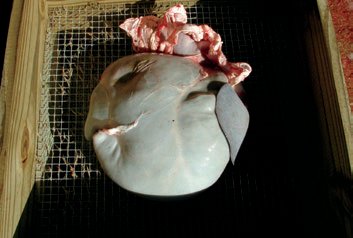
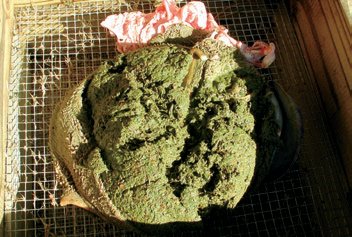
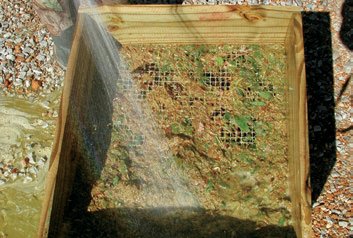
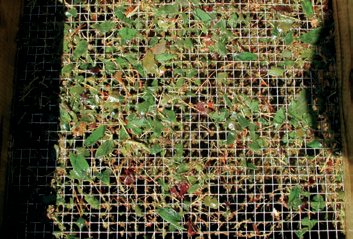
Scouting from the skinning shed simply refers to inspecting the rumen contents of harvested deer to determine available and preferred food sources that deer are using at that particular time of the season. “At that particular time” is important because food sources change from week to week. To do this, simply cut the rumen (stomach) open and look to see what’s inside. A word of caution: if the rumen is bloated or tight, release pressure slowly with the point of your knife before slicing….and turn your head or you may be inspecting your own stomach contents! Although the contents often look like a green gooey mess, with some inspection the primary food sources the deer has been eating should be obvious. It helps to dump the contents on the ground or concrete pad and run some water over it. I keep a “scouting box” at the skinning shed that makes the job easier. The scouting box is nothing more than a wooden box with a hardware cloth bottom. This allows you to dump the stomach contents onto the screen and wash away the more digested/fine particles leaving only the larger pieces behind. Stomach contents often include various leaves and acorns. Simply identifying what deer are eating will help you focus on specific areas of your property, leading to more productive hunts.
Ensure proper pH to save money when planting food plots
If you haven’t been to the feed store in a while, hold onto your hat – or maybe your wallet. Due to the increasingly high cost of oil and the search for alternate bio-fuel sources, the cost of fertilizer, corn, and many other seeds have more than doubled over the past few years. Because soil pH plays a significant role in the ability of plants to uptake nutrients (fertilizer), you can save money by adequately liming to ensure proper pH levels are maintained in your food plots. With a balanced pH, plants will be able to use nutrients already in the soil along with the most expensive ingredient of food plot planting – the fertilizer. The accompanying photo shows the difference in plant growth of Egyptian wheat with proper soil pH vs low soil pH. Both areas received the same fertilizer and rate. However, the area on the left was limed to adjust soil pH above 6.5 while the area on the right was not limed and had a soil pH of 5.2. The difference is quite obvious. Liming can be done anytime during the year. However, because it can take 3 to 6 months to effectively change soil pH, applications of lime are often done in spring or summer.
Save leftover seed from fall food plots
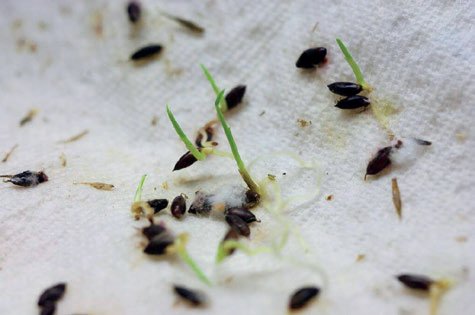
If you have food plot seed leftover after planting this fall, save it! Some seed can remain viable for a long time and can be used next year; particularly if it is stored in a dry/cool place (I often use a walk in cooler to prevent problems with rats and bugs). When planting time comes around next year simply conduct an easy germination test to determine if the seed is still good. Take 10 seeds and place them in a moist paper towel in a window sill. Monitor and keep the towel wet/damp over the next week to 10 days. If 6 of the 10 seeds germinate then your germination rate is roughly 60%. Adjust planting rates accordingly to ensure adequate coverage is obtained. Don’t toss that old seed out – planting old seed can save you money.
Where possible, leave field borders and/or summer crops standing for additional winter cover
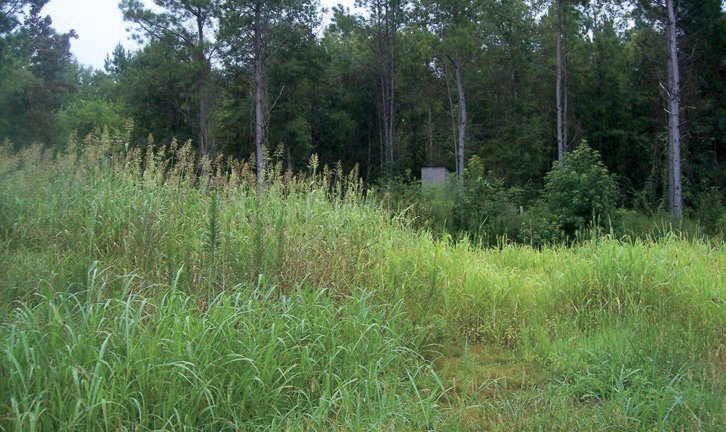
Deer, turkeys, and quail use thick habitats along field edges for loafing, escape, bedding, and nesting cover. There are a few options I often use to create field borders – simply leaving a border of natural vegetation around the perimeter of a food plot or plant summer crops along the edges and leave them through winter. To manage a natural field border, mow the borders in late winter every few years or as needed to maintain vegetation and saplings at a manageable height. When leaving a summer crop, there may also be some seeds left from the crop that will provide additional food sources during the winter for turkeys and quail. Standing dead summer crops such as grain sorghum, corn and millets provide additional edge habitat and can be used to create “soft edges” along areas where food plots or fields abruptly meet mature forests. Soft edges can provide areas where deer feel safe and comfortable as they enter a food plot. Deer will often emerge from the woods and stand in the soft edge habitat as they check the field for danger. This provides hunters an opportunity to observe and judge deer before they enter the field.
Consider split applications of nitrogen on food plots (not on perennial legume/clover plots)
Applying a split application of nitrogen means that you apply half of the recommended rate of nitrogen at or slightly before planting time, then apply the remaining half a month after crops have germinated and are growing. Split application reduces the exposure of nitrogen in the soil to elements that can create losses such as leaching and denitrification. The second application of nitrogen provides a boost to the growing crop when it can utilize the added fertilizer resulting in better forage production. Before deciding to apply this technique, consider normal rainfall and soils of your property. If you are in an area that receives a good bit of rainfall during early winter and your soils get muddy easily, preventing you from driving on food plots with equipment needed to spread the second application of fertilizer, split applications may not be an option. Not only will applying a boost of nitrogen increase forage production, but deer and turkeys are attracted to plants that are nutritious and actively growing which will result in better hunts on your property.
Record and utilize deer hunting observations
Quality deer management involves more than producing quality bucks. It should create quality hunting experiences as well. Collecting hunter observation data (where hunters record the number of deer and quality of deer they see while hunting) allows you to monitor the hunting quality of the property. Adjustments in management strategies can be implemented accordingly to promote quality hunting. Additionally, hunter observation data is a great (and cheap) method to help assess some parameters of the deer herd. Although a camera census is, by far, the most accurate way to collect information regarding the deer herd, trends in population parameters such as the adult sex ratio, buck quality, and fawn recruitment can be monitored with hunter observation data. However, for this data to be meaningful, it must be collected accurately each year to track trends in the data. Hunter observation data is also a good way to assess hunting strategy success. When recording this information hunters generally record when and where they were hunting (e.g., PM-food plot, AM-clear cut, etc.) and what they saw. When the data is analyzed, it provides insight as to which hunting methods and which areas are most productive. For example, through hunter observation data collected throughout the season, you may find that hunters saw more mature bucks per hunt in thinned pine stands in the morning verses the afternoon. Thus, you can adjust your hunting strategies to enhance the productivity of your hunting time. Like most data, as you begin to collect enough over time, trends in the data will begin to paint a picture. Remember to record observations from every hunt even if you do not see any deer.
Conduct a camera survey to assess the status of your deer herd
If you are a long term subscriber to Wildlife Trends, you have seen this calendar task in many fall issues. The reason is simple. Conducting a camera survey is one of the most powerful and useful tools available to assess a deer herd. Monitoring the status of your deer herd is the backbone to the success of your program. Collecting and recording harvest data (weights, measurements, ages, etc.), hunter observation data (number, sex, and quality of deer you see while hunting), as well as population surveys provide information about the deer herd that will allow you to make sound deer management decisions and adjustments in strategies where needed to accomplish your goals. Without this information you are simply guessing. If you are like me, you spend way too much time, money, and energy managing your property to just guess on how many and which deer to harvest this season. I want to know. Conducting a camera survey is the best way to get an accurate assessment of the status of a deer herd (number of deer, buck quality, fawn recruitment, etc.) and make buck harvest decisions before you head to the woods. The best times of the year to conduct a deer survey is when natural food availability is at its lowest which is generally late summer/early fall and late winter before spring green up. Most managers conduct fall surveys (September through early November) because they also use the photographs to make buck harvest decisions before hunting season. We generally try to conduct our surveys soon after bucks shed velvet but before the majority of acorns start to drop.
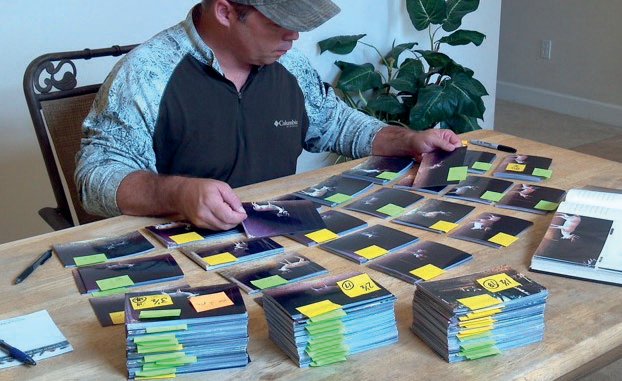
Regardless of whether you conduct a full scale survey or simply use cameras to scout, photographs from trail cameras are a great tool to assess buck quality and make buck harvest decisions before the moment of truth in a deer stand. I have seen many young bucks with great potential make it another year because they were placed on a “do not shoot” list. If you are using the trail camera photographs to make buck harvest decisions, late summer or early fall is when you need to deploy them.