
A hunter slips through the brush, taking note of the light breeze, and formulating a plan to silently approach a stand of white oaks that are halfway up the slope of a small hill. The wind is in his face, ensuring that his scent won’t reach his quarry before he is in place for the shot. The month is October, and this year acorns are plentiful on south facing slopes. The late freeze the previous spring significantly reduced acorn production, and it seems that only white oaks on south facing slopes were able to produce. The hunter’s years of experience tell him that areas where acorns are available are prime locations to harvest a deer. The hunt should be an easy one…in theory. Assuming the deer are where he thinks they’ll be, the only obstacle standing between him and venison for his family is a silent stalk down the slope, through the tangled brush lining the small drain at the bottom of the hill, and up through the relatively open red oak stand that lies between the drain and the white oaks.
As he silently slips from tree to tree, his eyes and ears are constantly searching for the tell-tale signs of a feeding deer: the white flicker of an ear or tail, the distinctive crunch of a deer chewing on an acorn, or the subtle rustle of dry leaves under a hoof. He is careful that his motions are near silent. His footsteps barely disturb the leaves, and he skillfully avoids stepping on any twigs whose distinctive “crack” would signal his approach. There…just ahead are two does and a fawn. His skills have served him well. Their heads are down, and as expected they are methodically searching for acorns in the white oaks. He slowly slips to a kneeling position next to a small tree, and uses the lower branch of a neighboring dogwood as a rest. He takes aim, ensuring the sights mounted to the barrel of the gun align with the front shoulder of the deer, and slowly squeezes the trigger. The shot of the gun shatters the near silence of the forest, and the hunter peers through the smoke that envelopes him following the shot. The state is Virginia, and the year is 1838.
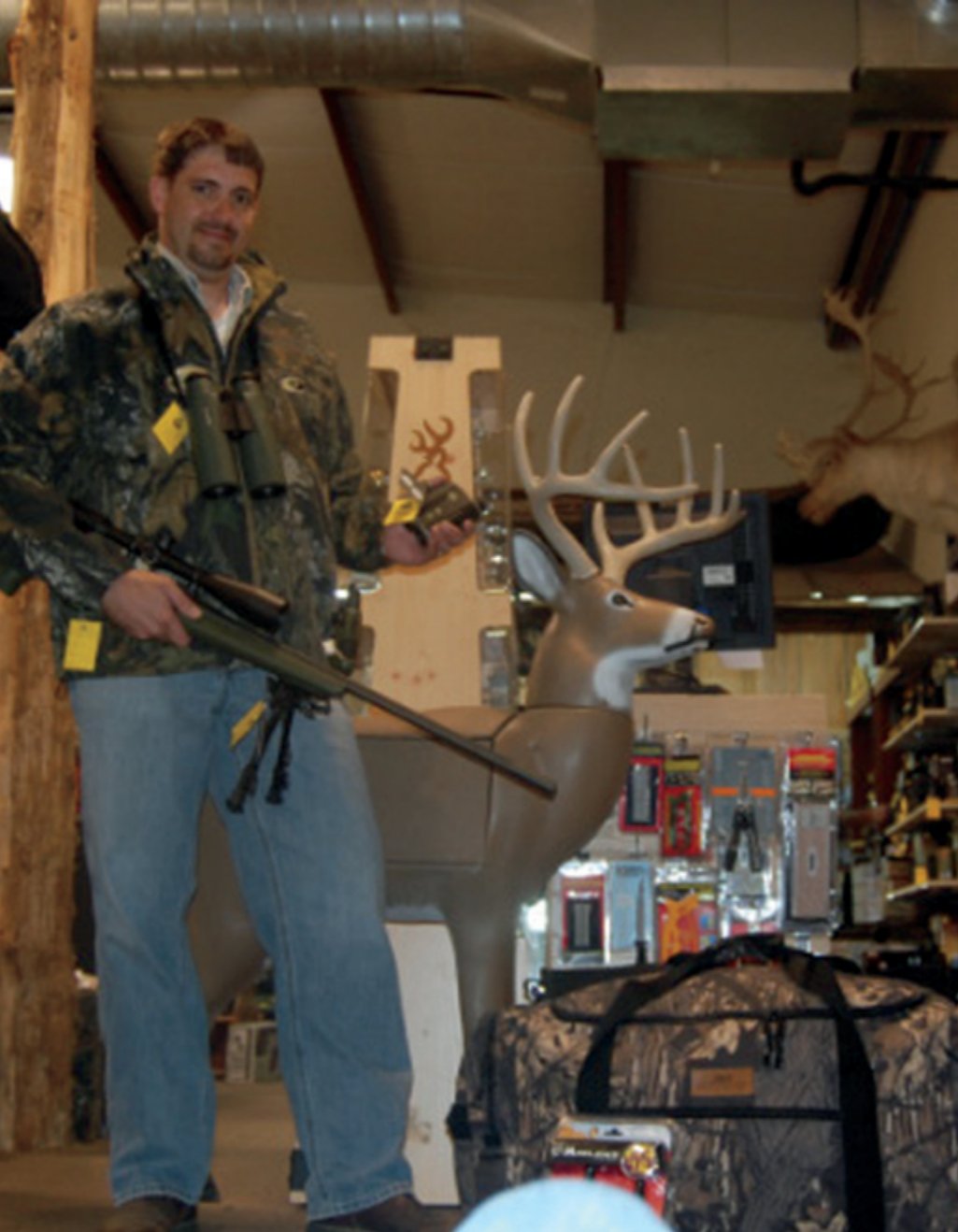
I would hazard a guess that this is not the type of hunt with which most of us are familiar. The majority of hunters today, if envisioning a deer hunt, would picture a tree stand, rifle, and high powered scope: the tools of the modern deer hunter. Today’s deer hunt is obviously far different than that which occurred 170 years ago. Hunting has become a recreation, rather than a form of subsistence. Today’s deer hunt is immersed in technology, and enveloped in comfort. Hunters are armed with a cadre of products designed to improve their hunting proficiency and to make their hunt more relaxing and enjoyable. Sadly though, the evolution of recreational hunting has resulted in a steady decline in hunters skills. There is no question that today’s hunters can’t be asked to pit themselves against outdoorsmen of earlier centuries: men who spent their entire lives in the woods and whose lives depended on their hunting skills. But, surely we could expect the average hunter in 2008 to compare favorably with hunters from 30 or 40 years ago. Sadly, we can’t.
This article discusses the evolution of deer hunting, and how it has served to dull our skills as hunters. I’ll list what I consider to be the things that have contributed most to our decline in skills, and discuss a few things that hunters can do to keep their edge. It should be noted that I do not consider myself a great woodsman, and I lump myself into the group of hunters whose skills have declined. But, I am striving to work against the tide of popularity, and I believe that my hunting success in recent years indicates that my skills as a hunter are on the rise. By listing the following causes for decline in hunters’ skills, I am not trying to point a finger at anyone or anything, but rather at highlight how hunters have allowed themselves to be led.
The Popular Media
It wasn’t too long ago that the only outdoor magazines were Field and Stream and Outdoor Life: the only hunting show was The American Sportsman. I still laugh at Patrick McManus, and I will forever get goosebumps when I hear the voice of the late Curt Gowdy. Many of you likely feel the same, and it is this passion and love for the outdoors that has fueled the explosive increase in magazines and television shows dedicated to hunting during the past 15 years. While the number of hunters is declining each year in the United States, the passion of hunters is ever on the rise. We crave the experience and the excitement, to the point that when we can’t actually be in the woods we want to read about it and watch it on television.
But what has been the result of this explosion of hunting and outdoor activities among the outdoor media? I believe that first and foremost, it has changed our perception of reality and success. For many of us, the antler pornography that has become the focus of the majority of these outlets has perceptibly changed our ideals. Twenty-five years ago, the majority of deer hunters went to the woods with the primary goal of harvesting a deer and enjoying the experience. Today, a steadily growing number of hunters go to the woods with the primary goal of harvesting the big one. We, as a hunting fraternity, have become so obsessed with antler size that we are beginning to lose sight of the simple pleasure of the hunt. In other words, the end product (the kill) has become more important than the process (the hunt), and it is causing a decline in our skills.
Throughout history, hunters have always been obsessed with large antlers. Antler/trophy displays have been around for centuries, so we are no different than our forefathers in this regard. But today, we have expectations of instant success, and are willing to do whatever we think it will take to increase chances of that success. We read about the big one being harvested, and we see the big one being harvested on television. The perception is on the rise that harvesting these trophies is the norm, and we expect it to be true for us as well. As a result, we employ all of the techniques and gadgets discussed in magazines and on television, and we expect them to work for us. In short, we are relying on the expertise of others to fuel our success, rather than increasing our chances for success by building our own foundation of experience.
If a television personality says do A, B, and C, we find ourselves doing these things without question. I would contend that we are coming to expect A, B, and C to work, and we are losing our understanding of why these things work. In essence, deer hunting is taking on a cook book type process, where if we follow the recipe described by others, we will be successful in our endeavor. But, the reality is that A, B, and C are based on deer biology, and without an understanding of deer biology (which is not gained overnight), we will in the end be rather unsuccessful as hunters.
My advice is this…learn what you can about deer hunting from whatever sources are available. But realize that it is more important to know WHY, than it is to know HOW and WHAT. Take the time to understand why something works, why deer do what they do, etc., and you will rapidly increase your own knowledge base. In the end, your track record as a hunter will shine much more brightly.
Food Plots
Food plots might just possibly be the Achilles heal of hunters. But first, let me make a few statements for the record. I am not opposed to planting food plots, nor hunting over food plots. I believe that food plots can be used to improve hunting success, and I believe that food plots are beneficial to deer management programs. I sometimes hunt on food plots, and I will continue to do so in the future. But, I believe that food plots have contributed more to a decline in skills of deer hunters than any single thing.
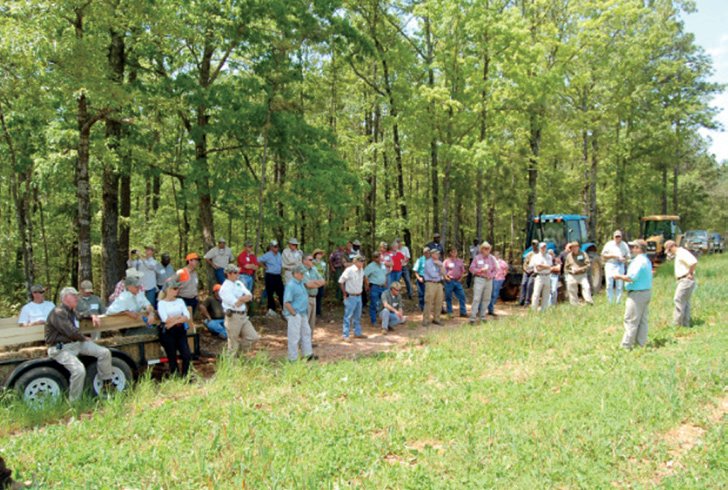
Food plots are perceived to be locations of high deer activity. The reason for this perception is multi-faceted. First, the simple fact is that we tend to see deer on most hunting expeditions when we are sitting on a food plot: this may not always be true when hunting in the woods. But, what we don’t realize is that the deer we see on food plots tend to be young and inexperienced: not the deer we normally are interested in harvesting. Second, since we tend not to shoot at these young and inexperienced deer, they will return to the same food plot day after day, thereby increasing the number of deer that we think we are seeing. So we return to the food plot again. And these same deer come out again, further fueling the perception of the food plot as being an oasis of deer activity. Third, as we become accustomed to hunting food plots and spend less time familiarizing ourselves with deer movement patterns away from these plots, our hunting success declines on those occasions when we do actually hunt in the woods. As a result, our perception of deer activity on food plots is bolstered even more.
Now let’s consider comfort. There is no question that on a cold, windy, or wet day, comfort can be a rare commodity in the woods. But, in a permanent shooting house overlooking a food plot, comfort is plentiful. The walls of the house block the wind, the roof keeps out the rain, and small portable heaters are easily employed in these structures. Also, consider the types of benches and chairs that can be used in shooting houses: maximum comfort is close at hand! There is no denying that these comforts are attractive, and that they tend to draw us to shooting houses. The result is that we further increase our use of food plots, thereby reducing the time spent in the woods and further diminishing our skills as a hunter. Additionally, we unfortunately create more human disturbance around food plots, thereby further decreasing the chances that mature deer will utilize these areas during daylight hours.
The result is that we come to rely on our skill as a farmer to ensure that we are successful as a hunter. Because we spend less and less time in the woods, our hunting skills slowly decline and we become even more reliant on food plots to ensure that we can see deer while hunting. This situation becomes painfully obvious during years when deer use of food plots is low: such as during years of high mast production or warm, wet winters when there is considerable natural vegetation available in the woods and the deer are not strained from an energetic perspective because of the warm temperatures. During these years, deer sighting on food plots are low, and harvest numbers decline.
The solution? Understand the shortcomings of food plots. View them as a hunting tool, rather than a hunting necessity. Hunt trails leading to food plots. Position yourself along travel corridors between food plots where mature bucks will roam in search of potential mates. You may see less deer, but the quality of deer that you see will probably increase. If you limit your hunting of food plots to infrequent times, you will reduce the human disturbance at those sites and increase your chances of seeing quality deer when hunting those areas. Finally, we tend to focus our hunting efforts on food plots when introducing children and novice hunters to the sport. The reasons are obvious: they see more deer, and the types of stands on food plots (buddy stands and shooting houses) lend themselves well to two hunters sitting side-by-side. But, don’t be afraid to take these new hunters to the woods. Their hunting skills will progress at a faster rate, and they won’t come to learn that the only place to successfully harvest a deer is a food plot.
Final Thoughts
This past year was very successful for me as a hunter…and guide. During a year that most in Alabama considered a tough year hunting, I was able to harvest my share of deer, witness my son shooting his first deer, and guide/witness my girlfriend to the successful harvest of five deer (one of which was a 5.5 year old buck) during her first year hunting. While many hunters in Alabama complained that “we had overharvested the deer” and “we needed to reduce doe harvest,” my party and I had ample opportunities to harvest deer. Between you and I… if we could shoot straight (myself included… remember, I never claimed to be a great hunter), we would have harvested close to 50% more deer this past year. The key to our success was getting away from the places that we normally hunted. We used our knowledge of deer movements in the area and sought out likely spots where we felt that deer might be moving from bedding to feeding areas.
There were quite a few days that we didn’t see deer, and we didn’t see large numbers. But, compared to most hunters we spoke with, we were very successful.
Don’t be afraid to change things up. Try something new. Go to an area that is a biologically-sound hunting area, rather than one that the media says will work. Remember, you’re the expert on your property. If you don’t think you are, then get out there and make yourself the expert. I’ll be honest, most of the deer that I killed were during exploratory hunts: those times when I went into a new thicket, hunted a new trail, or went into a new section of woods. I was trying to learn what the deer were doing so that I could better place my fellow hunters during upcoming hunts, and unbeknownst to me, I was setting myself and my hunting partners up for success. I’ll be sure and discuss the data that serves as the basis for this hunting strategy in an upcoming article in Wildlife Trends.