
For several years, Allen Deese with The Wildlife Group and I have enjoyed working the information booth at the National Wild Turkey Federation convention in Nashville. If you’ve never been to this gathering you owe it to yourself to attend. We’re there to answer questions about a range of wildlife management subjects such as tree planting and care, food plot strategies, predator control and more. But the number one subject these turkey fanatics want to know about more than anything else is…CHUFA!
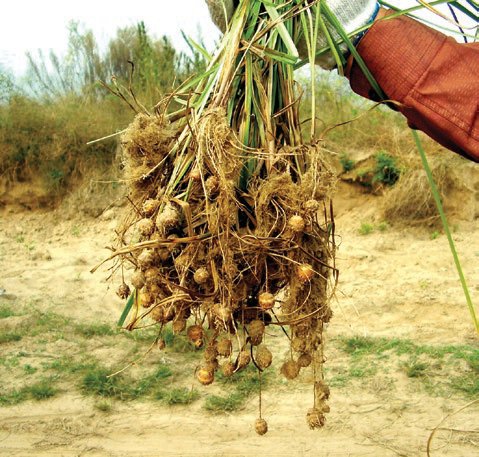
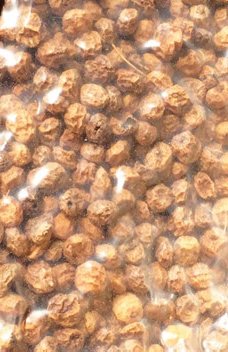
There really is no better crop you can plant to attract and hold turkeys on your property than chufa. Sometimes called ice cream for turkeys, ground almonds, and hog peanuts, the chufa is a perennial in the family of the nut sedge grasses. The ¼ to ½ inch long underground nutlets or tubers of the chufa plant are highly sought by many species of wildlife other than turkey. Racoons, deer, and wild hogs will scratch up the plants to get to the tubers. In fact, chufas were first planted in the southeast US as feed for hogs allowed to free-range in winter and spring. The taste of the tubers is very similar to coconut, they are sweet and high in fat (21%). Chufas are thought to have been first cultivated in Africa and southern Europe, but are they are very widely adapted and can be grown in almost all regions of the Southeast.
Turkeys begin scratching out the tubers in the fall, after the tops have turned brown. In southern areas, they will continue using chufa throughout the winter and into the spring. In areas where the ground freezes and snow accumulates, it does not provide a source of food during the winter. Once turkeys begin using chufa, they will visit the field regularly until the tubers are gone or spring green-up provides a more desirable food source. A chufa patch that is being used regularly by turkeys looks like a herd of hogs has been rooting in the field or takes on the appearance of craters on the moon.
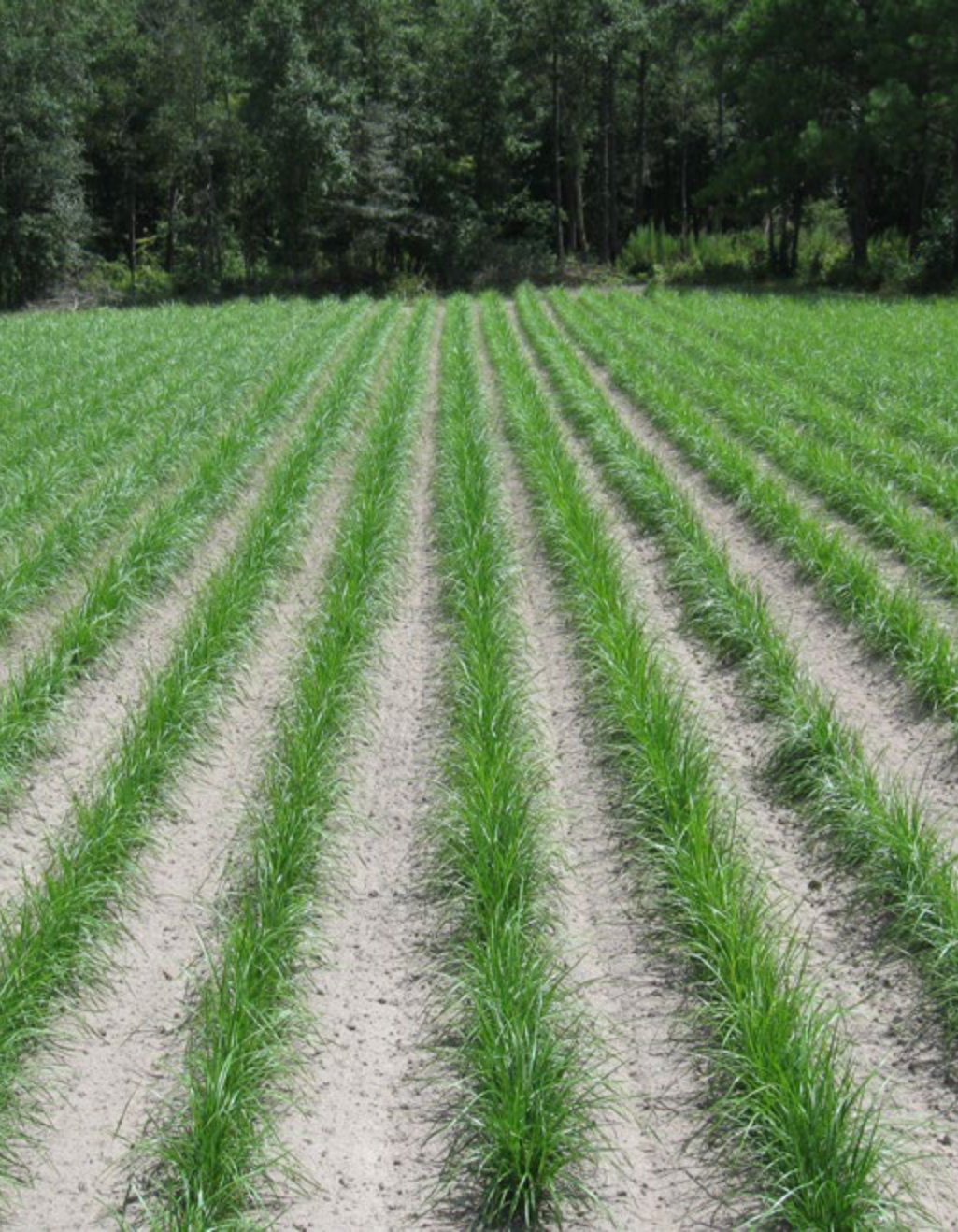
Chufa produces a fast growing yellowish main stem which is triangular shaped when cut in cross section. The bright green leaves attached to the stem can grow up to two feet long when chufas are planted in good soil. The edible tubers are produced on the ends of rhizomes (root like structures).
Soil Requirements
Finely textured, highly moist soils are ideal chufa growing sites. Chufas can be grown on a great many soil types but normally do best when planted in moist, silty, loamy and sandy soils. Clay soils also can produce chufas if the site is well broken prior to planting. When clay soil becomes packed it is much harder for turkeys to scratch up the tubers than it would be on looser, sandy loams. Chufas require a slightly acid to neutral soil pH of 5.0 to 7.5. Since chufas compete poorly with grasses and weeds, it is advisable to select fallow or new ground for plots versus a recently cultivated area. Log landings, right-of-way’s and abandoned logging roads that get plenty of sunlight are excellent spots. If chufas are put on recently cropped sites they should be planted in rows so weeds can be controlled by cultivation. Otherwise, chemical weed control will be required.
Plot Size
The real objective of growing chufas for wild turkeys is to grow enough so that there will be plenty left to attract turkeys during spring hunting season. Since the tubers are mature at the end of summer and many other species of wildlife like to eat chufas, fairly large plots need to be planted. Plots of one to five acres are needed where wild turkey populations are high. Tubers in plots that are less than one acre are usually gone by turkey season and even sooner in years of poor acorn production.
The number and distribution of plots will vary with turkey population size and other habitat features present on a particular tract. However, a good rule of thumb is one acre of chufa per 100 acres of turkey habitat. When growing conditions are normal, enough tubers will be produced to have some left to attract your turkeys during the spring season.
Planting Chufas
Planting Dates. The best time to plant chufas is the last two weeks in June. Planting at this time will assure that soils are warm enough for the tubers to sprout and there is plenty of time for the plants to mature before fall. The range of acceptable planting dates is from May 15 through July 10.
Preparing Plots. Begin disking plots about one month prior to your planned planting date. Early disking will cause weeds and competing grasses to sprout and then be controlled by repeated disking. If weeds continue to be a problem, a pre-emergent herbicide can be applied in advance of planting.
Fertilizing and Liming. Soil test well before planting. Lime and fertilize according to test results. Chufas grow best at a pH of 6.5, but tolerate a range from 5.0 to 7.5. General fertilizer recommendations without a soil test are to apply 300 to 400 lbs. of a balanced fertilizer like 10-10-10 or 13-13-13 per acre just prior to planting. When plants are 8 to 12 inches tall, side or top dress with about 100 lbs. of ammonium nitrate per acre.
Planting. Chufas can be planted in either rows or by broadcasting. Planting in rows has the advantage of allowing cultivation to control weeds and reduces planting costs because fewer tubers are used. Raccoons and hogs will often destroy a chufa planting in rows because of the ease of feeding down the rows. If raccoon and hogs are numerous in the area you plan to grow chufas, a broadcast planting is recommended. Rows should be 36 to 42 inches apart and chufas should be planted at a rate of 20 lbs. per acre. Planting depth is ½ inch deep. When broadcast planting, evenly distribute 30 to 40 lbs. per acre in a well- prepared seedbed and lightly disk to cover about ½ inch.
Maintaining Chufa Plots
Grazing and soil compaction by livestock is detrimental to chufa plantings and livestock should be excluded from patches. Chufas are classified as a perennial sedge, and production from a single planting can be extended for several years by disking and fertilizing in the spring. However, in areas where high turkey populations are present, few tubers may be left and poor stands result the following year. As a consequence, the best yields result from reseeding plots each year.
After three years, chufa plots need to be moved to a new location. Relocating is necessary to prevent damage from weeds and insects. The original plots should be allowed to go fallow for several years, then they will be ready to use again when chufas need to be moved again.
Introducing Turkeys to Chufas
In locations where turkeys have never been exposed to chufas it may be necessary to expose some tubers so the turkeys can try them. If turkeys are present in the area but are ignoring your chufas, pull up several plants at random locations across the plot or lightly turn a strip with a disk. When turkeys find this new food item and the acorns run out, the use of your plots will noticeably increase.
Regrowth
You will likely need to replant chufas every year. It is possible to get a decent volunteer stand from the previous year’s crop, provided that the turkeys do not eat it all. If you have enough chufa left in your field in late spring, apply 400 pounds of 10-10-10 or 13-13-13 fertilizer per acre and thoroughly disc to incorporate fertilizer and distribute chufa seed. After 2-3 years, rotate the chufa to another field to prevent potential problems with soil pests.

GREAT FOR WATERFOWL, TOO!
Chufas are also one of the best-kept secrets for waterfowl. Follow regular planting instructions when ponds/wetlands have been drawn down. After chufas mature in the fall, flood chufa with 10-14 inches of water. You will be amazed when you see your ducks swim past flooded corn and millet to get to your chufa!
References
National Wild Turkey Federation, Turkey Gold Chufa brochure
Wildlife Trends Journal – Volume 1, Issue 4
National Wild Turkey Federation, Chufa “Turkey Gold” Wildlife Bulletin, No. 7
FIVE STEPS TO SUCCESS
- The most important thing to remember is that chufa requires 90-110 frost-free days to mature. Plant chufas in the spring after danger of frost has past. It can be planted through August 1 with good success in the Deep South. Select an open area that receives full sunlight. Chufa will grow in a variety of soil types, but it does best in moderately-to-well-drained soils. Sandy or loamy soils with good soil moisture are preferred. Planting less than 1 acre could result in crop damage and over browsing.
- Prepare the seedbed by plowing or discing.
- If you cannot get the soil tested, use 400 pounds of 10-10-10 or 13-13-13 fertilizer and 1,000 pounds of lime per acre. It is best to use a no-till drill or row planter with peanut plates to plant the seed. You can also broadcast 40-50 pounds of chufas per acre. Cover seed with a minimum of 1 ½ inches of soil using a disc or harrow. Planting too shallow is worse than too deep.
- Weed control is critical to success. Chufa does not like competition.
For weed control use the following herbicides:
Pre-planting (incorporated into the soil)
Treflan-1 quart per acre OR
Prowl-1 quart per acre
For grass control after chufa is established (sprayed over the top):
1.5 pts. Poast + oil surfactant per acre OR
1.5 pts Fusilade + oil surfactant per acre
For broadleaf weed control after chufa is established (sprayed over the top):
1 to 2 pts. 2, 4-DB (sicklepod, cocklebur, etc.)
For most surfactants:
1 qt. per 100 gallons is the recommended rate.
Note: Always read and follow label directions