

Managing land for wildlife has become a popular trend for many outdoor enthusiasts. Hunters have always known that the more you do to improve your land the more game animals it attracts and holds. A win-win for wildlife and hunter alike!
Problem is, the more success you have the more managing you want to do. More management is a good thing for wildlife and for the manager. If you are a hunter there is more to hunt. If you are a birder there are more birds. There is literally no end to how much you can do to enhance your property for wildlife.
Often, the limiting factor is your budget. How do you justify the money you invest in your land to improve habitat? The size of the bucks you grow? The number of turkeys gobbling on a spring morning? The sighting of a rare bird? Success is in the eye of the beholder or landowner. It is as diverse and individual as the people who own the land.
For many, it all boils down to how to get the most bang from your buck. What pays the highest dividends? The options are many. Today, food plots are the cornerstone of modern wildlife management. Here again, the options are almost unlimited. Companies have developed seed blends that thrive in any situation, fertilizers that enhance the productivity of the planting and implements that put it all in play more efficiently. All these products combine to give the manager options.
Goals
Like most landowners, our goal is to provide the best food and habitat we can afford. Over the years we have learned what works best on our land and how to manipulate it for the best results. In the end, we have more turkeys, bigger bucks and more diverse wildlife populations on our property.
With that success has come the natural progression most landowners face. How much is enough? How big is a big buck? How many turkeys do you need to be satisfied? In reality, you have to be realistic. You, the landowner/manager, must realize that no one factor decides your success. Like baking a good cake, it is a combination of ingredients carefully measured, mixed and baked that make the best desert.
The same principle applies to managing wildlife habitat. Food + water + cover = more wildlife. Add age to that formula and you begin to see bigger racks and body weights on bucks, longer beards and spurs on turkeys and on it goes. Bottom line, there are no short cuts, no magic bullets and no other way to achieve the goal of bigger, better and more of them.
Food plots are the number one expense in our management program. They are the number one attractant to wildlife on the property. Naturally the bigger, better and more of them formula works here as well but when you max your budget and want more you have to improvise.
What to Plant?
Options available in seed blends on the market are almost endless. There are brassica blends, cereal grain blends, specialized cereal grain varieties and combinations of brassicas, cereal grains, and clover blends. Companies marketing these seed blends will tell you each fits a specialized purpose. Some are designed for heavy soil types while others are for sandy soils. Some blends are more suited to partially shaded areas while others require full sun. One blend will perform better in high pH soils while another will thrive in low pH soils. Some blends are marketed as superior antler producers while another promises to attract more turkeys. On and on and on!
If you examine the label on many commercially marketed seed blends you find a combination of cereal grains, brassicas and clovers. The reason for this choice of seed varieties is obvious.
They each offer something desirable to wildlife and combined they provide a reliable food source for an extended period of time.
Another benefit of planting combination seed blends is that one plant will be more attractive to deer and turkeys while the other plants are less attractive. This is a desirable characteristic for several reasons.
Just after emergence, cereal grains such as wheat and oats are very palatable to deer and turkeys. The tender shoots provide succulent nutrition and are easy to target. At this time brassicas and clover are emerging and are not as attractive to wildlife. This allows these plants to grow and establish themselves while the cereal grains are getting hammered. This is not a bad thing for the cereal grains either. The constant nipping and browsing of wheat and oat plants causes them to branch out at the base and create more stems. This branching provides more palatable food for the wildlife.
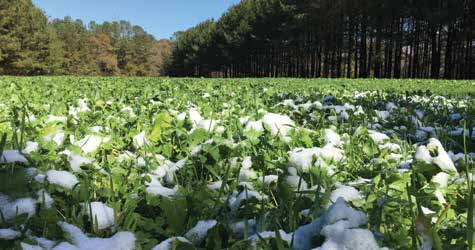
Later in the season comes colder weather and sub-freezing temperatures. Frosts and freezes cause brassicas to release sugars from the roots into the leaves of the plants. Suddenly, the lush leaves of brassica plants that have had freedom from browsing pressure become very palatable and attractive to deer.
Clovers in the blend have also had time to establish a root system and begin to grow rapidly. Up to this stage deer have not pressured the clover plants simply because they are not as big and not easy to target.
When native browse freezes it enters a dormant state and there is no more new growth. Wildlife soon utilize most of the natural food available and begin to rely more and more on food plots. In high density deer areas food plots soon show the pressure of constant browsing and offer less and less food. These are the lean times for wildlife.
Plants that Keep On Giving
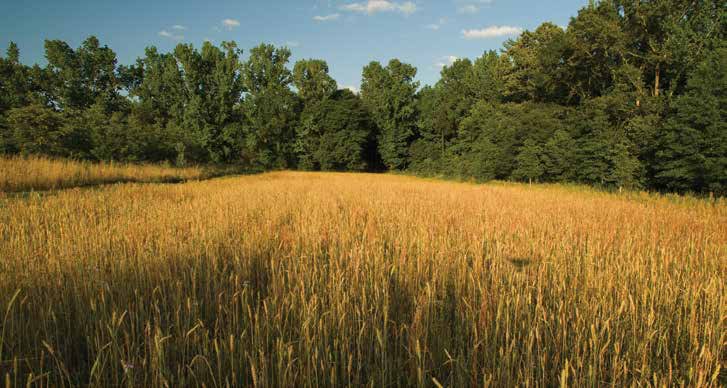
There is very little if any difference in cereal grain varieties. Wheat and oats are the standard cereal grains used in most food plots. They provide tender browse for deer and serve as an early season distraction that draws the attention of deer and turkeys. This protects more delicate clovers and brassicas in your seed blend while they establish root systems and foliage. Oats may be preferred by deer but wheat is heartier and less vulnerable to cold weather. Wheat, when properly managed, will produce seed heads in late spring that are very attractive to deer and turkeys.
Brassicas provide more than just leaves to the food chain. Rape, kale, radishes and turnips are very attractive to deer and produce a large bulb at the roots. Deer utilize the bulbs in late winter when green above-ground vegetation and other food sources have disappeared. It often takes deer several years to recognize the value of these bulbs but in time they learn to pull up the plants and eat them.
Clovers are also an important part of a good food plot seed blend. Again, the varieties available are numerous and some perform better than others. Often a mixture of clover varieties provides the best results. Our preference is a combination of Dixie Crimson, (a red clover), with Yuchi Arrowleaf (a white clover). The crimson clover outgrows the Yuchi early and withstands the heavy browsing throughout fall and winter. In early spring the Yuchi begins to grow and thrive as the crimson matures and dies. The Yuchi continues to grow well into late spring and early summer and often reaches heights of 3 feet or more.

Bridging the Gaps
This article focuses on how to get the most from and extending the productivity of fall food plots. Several factors play critical roles in achieving this goal. It begins with the right combination of seeds planted and fertilizing them properly. On our farm the combination of wheat at 100 pounds per acre, crimson clover, rape, turnips at 3 pounds per acre and Yuchi arrow leaf clover at 5 pounds per acre produce reliable and palatable forage from October through June.
This combination of seed is best suited to well drained light sandy loam soil. Poorly drained clay soils do not produce as well, especially the clovers. Soil tests should be performed and fields with pH levels in the 6-7 range are ideal. Soil pH can be adjusted with the application of lime at the recommended rate and fertilized with 250 pounds 17-17-17 per acre.
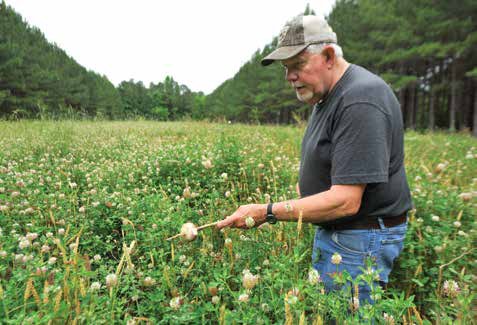
Yuchi Arrowleaf clover begins similar to crimson clover. Later in its life cycle Yuchi produces branching limbs that attain 24-40 inches in height. Stems are often purple and become fibrous and hard near maturity. Leaf petioles are 3 to 8 inches long with long white stipules narrowed to a point. The leaves are typically 1 1/2 to 3 inches long and 1 to 1 1/4 inches wide and are very attractive to deer and turkeys.
The real beauty of Yuchi is the fact that after the other seed in your blend are done, Yuchi is just beginning to dominate and produce forage with a crude protein content of 24-29%.
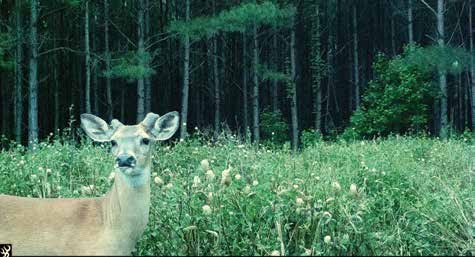
In April and May, the wheat, rape, turnips and crimson clover matures and begins to fade, offering less nutrition for wildlife. The rapid growth of Yuchi combined with a good browsing tolerance produce forage yields exceeding a ton per acre in good moisture situations.

In mid-May, Yuchi begins to mature and produce seed but still produces forage desirable to deer through June. Flower heads are conical, often exceeding 2 inches in length and 1 1/4 inches in diameter. Each flower head contains 150-170 individual florets. Each floret produces 1-3 seeds making Yuchi a prolific re-seeder.
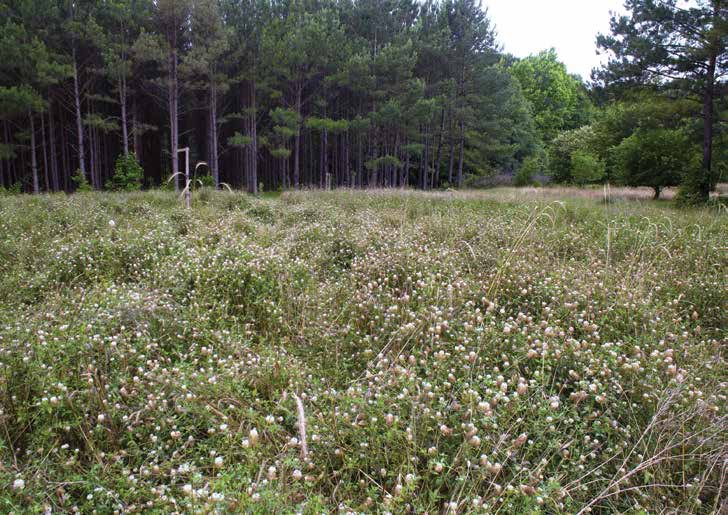
If you are like us and want to extend the effectiveness of your fall food plot investment, give this combination of seed a try. Commercially available seed blends are convenient and make the process of choosing the right seed for a given situation less complicated. They all provide food for wildlife after emergence for a given amount of time.
Planting your own mix of seed varieties allows you to choose plants that do best on your soil. It provides a smorgasbord of vegetation that always has something to offer wildlife and in most cases is cheaper than commercially marketed seed blends. The addition of Yuchi extends the effectiveness of your food plots through late spring and early summer when poults are dependent on bugs and tender forage, when does are approaching birth of fawns and lactation, and bucks are growing antlers.
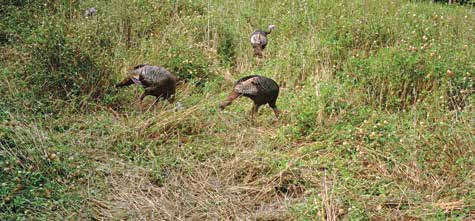
It is a simple equation of proper soil type, soil preparation, choosing the right plants, adequate fertilization and moisture that extend the production life of your plots. Food plots that offer a variety of plants desirable to wildlife for a longer period of time create a win/win situation for wildlife and land manager alike.
Topping Tips
Most landowners and managers depend on food plots as a major part of their management effort. The natural growth cycle of the plants chosen for a blend provide nutrition for wildlife from time of emergence until they mature and produce mature seed. At this time most food plot varieties become woody and tough offering little palatable nutrition.
As a manager, there are a few things you can do to extend the life cycle of food plot plants to make them attractive to wildlife for a longer period of time.
Mowing strips through your food plots does several things to improve them for wildlife. We call it topping. This is done by carefully monitoring the height of the mower to ensure that only the tops of the plants are affected.

Where wheat has matured, topping shatters the grain and spreads it in the mowed strip. This seed is very attractive to turkeys. Hens are attracted to these strips and bring poults as they gather the bounty. An added benefit to turkeys is the abundance of insects found in the clovers. Poults depend heavily on insects for survival in the first three weeks of their lives. The mowed strips provide easy walking for small poults and the plants not mowed on either side of the strip offer easy escape from predators. The standing wheat heads are consumed by deer and birds once they begin to mature.
By this time, usually May in our area, the brassicas are eaten to the ground or have lived their life cycle. The rape and turnips in the blend have produced bulbs and topping makes them easier for deer and other wildlife to access. Many times, it takes several years before deer recognize the food value of these bulbs and begin to eat them. Once they learn the bulbs are food they begin to utilize them, especially in late winter when other food sources have been depleted.
Topping clover delays the seeding process and stimulates new growth on clover plants. This new growth is especially attractive to deer and turkeys because it is tender and succulent. Crimson clover, even after topping, matures, produces seed and dies before the Yuchi.
Yuchi, however, is just beginning to bloom and produce seed when the crimson clover has run its course. In May Yuchi grows to a height approaching 40 inches in well-drained, properly fertilized soils. Deer are highly attracted to the tender foliage produced by fast-growing Yuchi plants. Turkeys will also take advantage of the tender leaves and abundant insects.
Depending on moisture availability, Yuchi begins to mature in June and can provide attractive browse for deer as late as July, long after the other varieties in your blend have matured, extending the benefits of your food plot into early summer.
Take Advantage of Yuchi’s Seed Production
Yuchi Arrowleaf clover is a prolific seed producer and easily produces enough seed to populate next year’s food plot. For the best results there are a few steps you need to take.
In late July/early August, the Yuchi plants have run their course and turned brown. Competing weeds and grasses have emerged and begun to thrive. At this time, apply glysophate at one quart per acre. This application will take down unwanted weeds and grasses. After the unwanted weeds and grasses are completely dead, normally two to three weeks, mow the plot as low to the ground as possible.
This mowing takes down all the standing plants while shattering and scattering the mature Yuchi seeds. In September your plot should be void of most new growth. If there is thick debris on the ground, run a fire through the plot to remove excess debris as soon as the debris will burn. With adequate moisture and cooler temperatures, Yuchi seeds germinate and populate the plot along with some crimson clover. This practice yields a clover only plot that yields high volume, protein rich forage from late October through the following June.

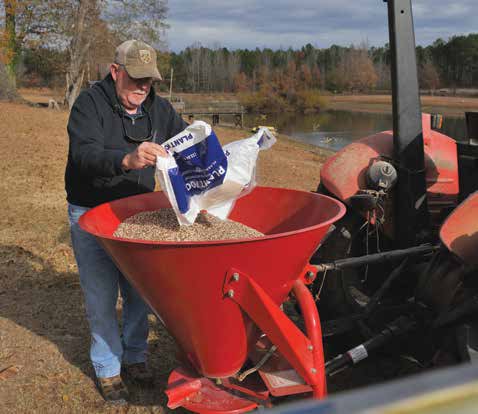
If you want to duplicate the plot from the previous year, top-sow wheat at 100 pounds per acre and disk the plot lightly taking care to not cover existing seed more than one inch. After disking top-sow rape, turnips and crimson clover at a rate of 3 pounds per acre. Fertilize with 250 pounds of 17-17-17 per acre and wait for rain to germinate the seed. This process eliminates the need to plant Yuchi and the expense of seedbed preparation. The one drawback is the Yuchi will be very thick and often out-compete the other varieties in the blend. This process can be repeated for three years before you will need to thoroughly till the plot and reseed with a blend that includes Yuchi.