
In his book “Little Pink House: A True Story of Defiance and Courage”, author Jeff Benedict tells the story of one woman who had the audacity to take on a powerful government.
“Suzette Kelo was just trying to rebuild her life when she purchased a falling down Victorian house perched on the waterfront in New London, CT. The house wasn’t particularly fancy, but with lots of hard work Suzette was able to turn it into a home that was important to her, a home that represented her new found independence.
Little did she know that the City of New London, desperate to revive its flailing economy, wanted to raze her house and the others like it that sat along the waterfront in order to win a lucrative Pfizer pharmaceutical contract that would bring new business into the city. Kelo and fourteen neighbors flat out refused to sell, so the city decided to exercise its power of eminent domain to condemn their homes, launching one of the most extraordinary legal cases of our time, a case that ultimately reached the United States Supreme Court.”
Hunters and outdoorsmen have a similarly deep connection to the land. For their land to be involuntarily taken is a great offense, even if compensation is paid. This article explores the limits of Constitutional authority when land is taken by governmental entities.
Eminent Domain is the inherent right of the government to take private property for public use or benefit. The term was coined by the Dutch legal scholar and philosopher Hugo Grotius in 1625 and was implicitly recognized as a right of government in the 5th amendment to the U.S. Constitution. Remember that the Bill of Rights limits the power of government. This Amendment limited the taking to matters of public use, and also required just compensation. So, even the founding fathers recognized that this process was a necessary function of government.
Eminent domain is reserved for situations in which there will be public purpose, rather than a private purpose. However, over time the concept of public use has been transformed into that of public benefit.
TYPES OF EMINENT DOMAIN CASES
A straight forward condemnation of an entire property is perhaps the most simple exercise of a taking. However, when only a portion of the property is taken, the property must be valued both before and after the taking to determine the loss. A further variation is the taking of some, but not all, of the rights associated with the property, for example the right to build a building on the property. For some properties, the owner may consider this paramount to a total taking. As these situations become more nuanced, the better approach would be to avoid arguing there is a partial taking of the whole. Instead, one would have a better outcome arguing a total taking of a part.
More controversial are instances where the government plans on taking the property in order to redevelop it and possibly sell it to a developer. 210 years after Lewis and Clark’s expedition opened up new land, it is ironic to see government convey to private citizens only to retake the property and then reconvey it to a different citizen. In Kelo v. New London (2005), the City of New London, Connecticut used eminent domain to acquire private homes for a redevelopment project which would include private offices and parking. The owner claimed that no public use was involved, and of course he was right. But he also argued there was no public benefit. The U.S. Supreme court, in a closely watched decision, ruled that when the government presents a comprehensive development plan that has a public benefit, and is not just pretextual, the courts should use a “rational basis” like test to determine if the public benefits of the taking satisfied the public use requirements of the Constitution. This means the government usually wins.
The terms “eminent domain” and “condemnation” are sometimes confused. However, condemnation is the process the government uses to take the property and to pay just compensation. It also affords the private citizen the opportunity to demonstrate that there is no public use or benefit to be derived.
While condemnation usually refers to takings by federal, state or local governments, these rights usually reserved to government entities have been delegated by properly enacted statutes to entities such as utility companies, universities and even railroads. In fact, condemnation processes are sometimes used by private individuals to remedy landlocked parcels.

PREREQUISITES FOR CONDEMNATION
While each state has its own method for condemnation, this article will focus on the procedures for Alabama. Be sure and contact your attorney for specific advice in your situation. The process usually begins with a letter from a condemning authority requesting permission to survey the area for possible condemnation. By this time, the project is well underway and budgets are being set.
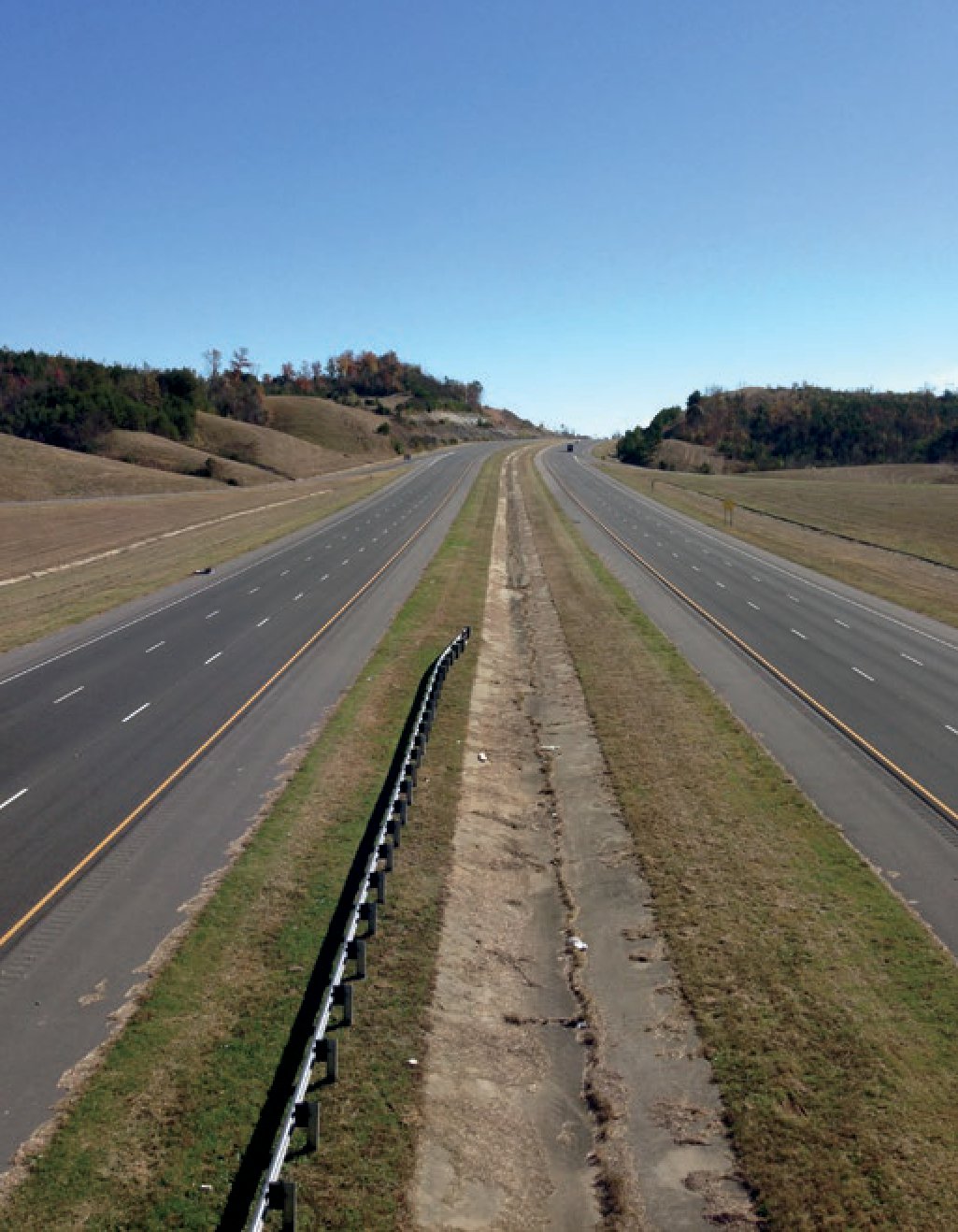
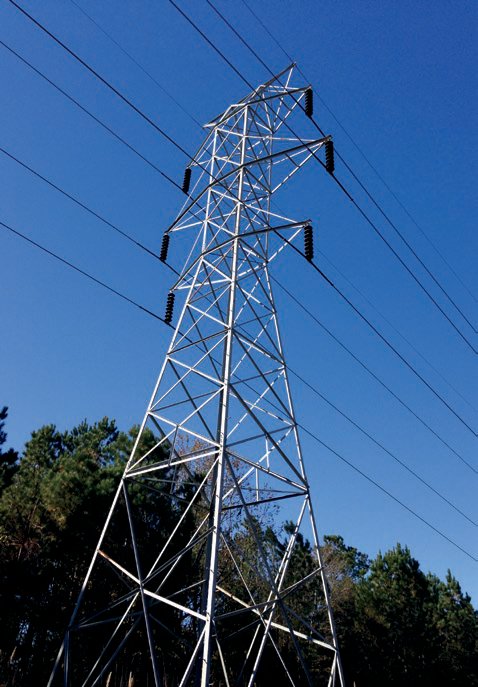
Next, an offer is made in writing from the condemning authority with a specific description of what is being taken. For power lines, gas lines and new roadways, this usually is described as a centerline with distances on either side, for example “50 feet on either side of a centerline described as follows….” In the case of power lines, permanent structures cannot be placed within this area, but allowances are usually made to plant under power lines and drive across this area. One cannot interfere with the utility structure located within the right of way. The description of the land to be condemned describes the right of way that will be cleared of brush and debris, but that is not the end of the taking.
The condemning authority must make a reasonable attempt to determine the value of the taking, offer to purchase the interest in the property and also deal with any uneconomic remnant. Some states such as Alabama allow the landowner to be given a reasonable opportunity to accompany the appraiser. In cases where the taking renders another part of the property an “uneconomic remnant”, the condemning authority must also offer to purchase that remnant.
OTHER RIGHTS CONDEMNED
Included in the text of a utility right of way is also the right to remove danger trees. These are trees outside the original right of way that, should they fall, would come within a certain number of feet from a conductor (power line). This danger tree area is difficult to define because it changes over time. This area partially depends on the height of the conductor because the conductors are not level. They sag between towers, so they are not at a uniform height. Because this area is determined by tree height, it also depends on the age of the tree and site conditions, so there is not a single width for this zone. These areas may be used for growing trees, but when a tree becomes too tall, the utility company has the right to cut an individual tree. For this reason saw-log timber production in these areas is unlikely. Depending on the site, this area may be wider than one side of the original right of way.

Also, there is an intangible taking with the right of the utility company to maintain the right of way. Be sure to define whether the right of way comes with the right to enter your property at certain points to access the right of way. If so, the utility company will use these access points whenever they perform maintenance which could coincide with your other activities.
FILING OF A CONDEMNATION CASE
If no agreement is reached at that stage, a complaint for condemnation is filed in the Probate Court in the county where the land is located. A hearing is set within 30 days but is often rescheduled to give the defendant time to retain counsel. A map must be attached to the complaint to accurately show the area to be condemned. The interest owned by each defendant must be identified. A lis pendens is filed at the time the complaint is filed which is a notification to a potential purchaser that a lawsuit exists which could affect title to the property.
A property owner may avoid the necessity to participate in the suit if he files a disclaimer. This notifies the Court that he claims no interest in the property and is entitled to no compensation and therefore the suit may proceed without him.
INITIAL DETERMINATION
Condemnation is usually carried out in two parts. The first part is to determine whether the complaint is valid and the condemning authority has shown a public benefit. There is no jury trial in a condemnation action while in Probate Court. The case begins with the condemning authority giving its basis for the taking.
A preliminary objection may be raised for issues such as the right to take and for procedural deficiencies. The property owner bears the burden of proof in such instances. The landowner may present his reasons for objecting such as there is no public benefit. The Court has the authority to dismiss the action, or conditionally dismiss the action if the Plaintiff does not correct the deficiencies. If the defect is not reasonably excusable, litigation expenses may be awarded. If the condemning authority prevails, the court enters an Order of condemnation. Within 10 days of the condemnation Order, the Probate Court appoints three commissioners to assist in determining value.
VALUATION DETERMINATION
The next step is usually a separate hearing to determine value. Neither party has the burden of proof in determining value. Value is first determined in the Probate Court by commissioners appointed by the Court who are required to be citizens of that county, possess the qualifications of a juror and not have any interest in the property. These commissioners are allowed to visit the property and separately determine its valuation. They will hold a hearing to receive any evidence presented by the parties. Thereafter, they will report within 20 days of their appointment. Within 7 days of their report, the Probate Court will make a determination as to value.
The determination of value is the difference between the fair market value of the land before the taking minus the fair market value of the land after the taking. Except for public roads, water or sewer lines, any increase in value because of the taking may not be considered. Valuation is determined as of the date of the condemnation Order.
In other types of litigation, the report of an expert witness is usually discoverable. However, in condemnation cases in Alabama, applicable statutes prohibit disclosure of either parties’ valuation of the property. The private party usually has the original offer, but the testimony at trial by the condemning authority’s expert may be entirely different. Likewise, the private landowner’s expert may testify without prior disclosure of his valuation opinion.
When an award is made, the condemning authority must pay the award within 90 days unless there is an appeal to Circuit Court, in which case it must pay the award within 60 days of the final disposition on appeal.
There is a right to appeal the Probate Court determination to Circuit Court which must be made within 30 days and where a jury demand may be made. This is a new trial and does not depend on the outcome of the hearing in Probate Court. Parties may offer additional testimony or different witnesses. After a final determination in Circuit Court, there may be an appeal to the Court of Civil Appeals or the State Supreme Court, depending on the amount of the award.
USE OF CONDEMNATION BY PRIVATE PARTIES
Interestingly enough, a similar process is used by parties who have landlocked parcels. While no public use must be alleged, a party must show that he has no access to a public road.
The private condemnation case is first brought in Probate Court. The width of the right of way cannot exceed 30 feet, a width not typically sufficient for a public road. A difference of opinion exists whether this right includes the right to improve the road by adding utilities such as water and power.
The location of the private right of way must be to the nearest and most convenient public road. The route cannot cross a person’s yard, garden, orchard, or outbuildings without his consent. The convenience of each landowner is considered and the party requesting the condemnation has the burden to prove he has no adequate access to the public road.
Similarly, compensation is required and commissioners are appointed. There is a similar right of appeal and opportunity for a jury trial in private road condemnations.

CONCLUSION
Suzette Kelo lost her case. She lost her home and her neighborhood. But she won something almost as enduring: the preservation of her values as a citizen. The city of New London spent 80 million dollars acquiring and demolishing the homes. However, the redevelopment project never became a reality. Pfizer, the main beneficiary pulled out of the New London project. Today the lots where the homes once stood remain vacant. Eminent Domain is a necessary part of government, but when it is misused the consequences are shameful.