

If you meet one of us “addicts” in passing on any given afternoon in late April, you will quickly recognize the symptoms; sleepy bloodshot eyes, disheveled hair, wrinkled work clothes, and the various other signs of stress that obviously come from trying to squeeze in daily responsibilities to our bosses, wives, and clients, while living strung out for weeks on end, each and every spring. The drug responsible for our pitiful condition is not a powder, liquid, or substance that is smoked, but a sound; the thrilling, haunting, and perfectly wonderful sound of a wild gobbler drumming in the spring turkey woods. When it comes to pursuing these creatures, I often hear people warning, “If you haven’t tried it, don’t start it.” Probably good advice for some folks, but I honestly cannot imagine letting all those beautiful still early mornings unfold without being out there to witness the awakening of the world; inhaling the cool fresh air, anticipating that magical two or three seconds following every cawing crow, hooting barred owl, or laughing pileated woodpecker.
Indeed, turkey hunting is now a passion and a lifestyle for millions of folks across the country. However, it hasn’t always been that way. It was really not that long ago when turkeys were rare across much of the nation. In fact, around the 1930’s the species was even facing extinction. Fortunately however, just like the white-tailed deer, the wild turkey was brought back from the brink of extirpation and is now flourishing across the country. In this article we will examine the biology, range, and recent population trends of each of the subspecies of wild turkey in the U.S., and give insights to the significance of this bird with regards to recreational hunting. Before we dive into the story of the North American birds however, let’s contrast this success story with that of a similar, but separate, species to our south.
The Other Turkey
As you may know, turkeys are not unique to North America. There are actually two species of turkey in the world, our North American wild turkey (Meleagris gallopavo), and the ocellated turkey (Meleagris ocellata) of the tropics. The ocellated is native to the Yucatan region of southeastern Mexico, and the northern portions of Guatemala and Belize. This colorful species is significantly smaller, on average, than any of our races, with males averaging from 12 to 14 pounds, and females averaging 6 or 7 pounds. Wing feathers of the ocelated have more white and bronze coloration than North American birds, and the body plumage is generally much more iridescent and is more reflective of hues in the green and bronze ranges. Both sexes have tail feathers of bluish gray, bronze, and gold, that resemble those of a peacock. At the distal end of each tail feather is a bi-colored iridescent spot that resembles an ocellus, a term used to describe small light gathering organs on the heads of some insects and other arthropods. In Latin, this term means “little eye”. From these ocelli, the name of the bird was derived. Ocellated turkeys have no beards but they do have long spurs; much longer on average than our wild turkeys. The male’s song is somewhat gobble-like but is at the same time very different from that heard in our birds. Gobbling (singing) typically begins in late February and peaks in March, about the same time the hens start laying their clutch of about a dozen eggs. General diet and biology is similar to that of the northern species, although the habitats in which the ocellated occurs is quite different and ranges from arid savannahs to old growth rain forests.
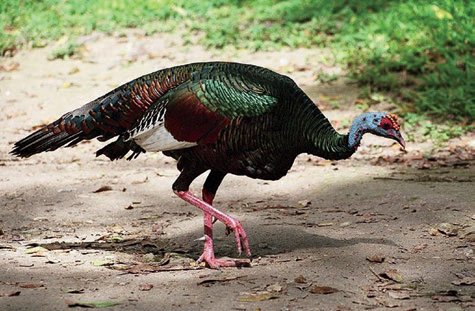
The entire current ocellated population is thought to be less than 50,000 individual birds. Since the ocelated has a relatively small native range (about the same size as the state of Mississippi), the species is much more susceptible to population decline than the North American wild turkey. In fact, that is what is happening in many parts of its range. Ocellated ecology is not nearly as well understood as northern wild turkeys but the biggest factors that appear to be contributing to the decline over the past couple of decades are uncontrolled market hunting and widespread habitat manipulation. Although the sport hunting pressures for the birds are minimal, the local people do harvest a lot of ocellated turkeys each year, especially during the breeding season. They are often eaten by the locals but are also commercially sold to restaurants and markets. Conversion of mature forest habitats is also appearing to have a negative effect on populations. This trend is a bit different than with timber operations of the southeast U.S., for example, where some turkey habitats can be maintained throughout the process of reforestation. Once large tracts of tropical forests there are logged, they are typically farmed for only a short while (due to the thin soils) and then the highly erodible land often transitions into a dense tangle of low vegetation that is largely unusable by the turkeys. These conditions often persist in the degraded state for several decades. The politics of game conservation is much different in that part of the world and although organizations like the National Wild Turkey Federation (NWTF) and others have tried to lobby for sustainable management, multiple challenges obviously exist.
North American Wild Turkeys
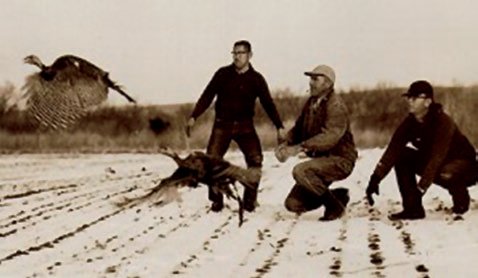
The threats the ocellated turkey faces today are very similar to those our wild turkeys experienced in the early 1900s. Widespread habitat manipulation and unregulated subsistence hunting, especially in the eastern U.S., were the major contributing factors to the drastic population decline. Wild turkeys were extirpated from much of their original range by the mid-1930’s, when the Virginia Cooperative Wildlife Research Unit started an effort to bring the birds back in the East. Soon other states joined in the effort, but wild turkey knowledge and research was limited at the time and it took a while to get things on track. In areas where habitats had been restored to adequate conditions, re-stocking began. Initially, re-stocking efforts used pen-reared turkeys. However, just as we often see in pen-raised quail, survival in those captive brooded turkeys was very low. This is because although some behaviors of birds in the phasianidae family are instinctive, many important behaviors (including several of those involving feeding and predator evasion) are acquired and honed during wild brooding. The released turkeys were not equipped with the skills they needed to survive, simply because they had not learned them from a wild adult when they were poults. This problem went on for years while researchers scratched their heads. Finally the pieces of the puzzle fell into place and the answer to the problem came in the form of the cannon-net. This device uses explosive-propelled weights attached to a large net, making it possible to capture entire wild flocks of turkeys. The cannon net trapping and translocation of wild-reared birds was a huge success and has been used over the past sixty years to repatriate wild turkeys to huntable population levels in every one of the lower 48 states, and even into Hawaii where the species is not native. In the past 25 years alone, over 12,000 wild turkeys have been moved to establish new populations in uninhabited areas. Today, it is estimated that there are over 6.5 million North American wild turkeys. Prior to European colonization the population may have been as high as 10 million birds.
The Eastern Race
The most widespread of the North American wild turkey subspecies is of course the Eastern wild turkey (M. gallopavo silvestris). The Latin name translates to “Forest turkey”. Its population is currently up to around 5.2 million individuals. This race is obviously native to the eastern half of the country and ranges from the northern half of Florida, north into southern portions of Canada. It has also been established outside the native range in pockets of California, Oregon, and Washington, although some biologists have warned of the potential ecological consequences of the introduction of turkey subspecies into areas where they did not naturally occur. This is because hybridization and “genetic trumping” can sometimes alter the native genetics of a local population over time.
The Eastern is one of the larger wild turkey subspecies, with toms ranging from 16 to 23 pounds or more, and hens averaging from about 8 to 13 pounds. Other distinguishing characteristics of the race include dark chestnut tail feathers with a broad black band and narrow brown band at the tip. Breast feathers of gobblers have black tips while breast feathers of hens are tipped with brown. Easterns are generalists and can make a living in farmlands, hardwood bottoms, swamps, and thinned pine plantations. Nesting generally occurs in thick herbaceous or brushy vegetation. Examples of common Eastern wild turkey nesting habitats include cutover timber stands, bluestem grass-dominated understories, overgrown food plots or agricultural fields, scrubby utility rights of way, or shrubby undergrowth in regenerating forests or plantations. An average of 10 to 12 eggs are laid over a period of a couple weeks before the hen begins incubation, which generally takes another four weeks. Like quail, the Eastern wild turkey and the rest of the subspecies are precocial, and are quickly out of the nest and following the hen on which they have imprinted. By the end of two weeks they are beginning to test their wings and can usually begin roosting in trees by the end of the third week. The first significant molt replaces juvenile plumage soon thereafter and by six weeks poults have the ability to effectively evade predators. Food items of Easterns vary, of course, depending on the local habitats they occupy, but their diet commonly includes insects and other arthropods, acorns, beechnuts and other hard mast, seeds, berries, various green plant materials, agricultural grains, and even small reptiles. Contrary to popular belief, limiting factors in most of the Eastern’s range are not typically related to winter forage or mast availability, but are more often quality nesting and brood-rearing (weedy, early successional) habitats like the open herbaceous understory of a frequently burned pine stand or the native grass succession of an old-field for example.
The Eastern is the most hunted turkey in the country. In my opinion, in some locations (namely public land in the Southeast) they are also the smartest. Hunters spend over 300 million dollars per year pursuing eastern wild turkeys, providing a significant source of revenue for many rural areas. Upwards of 25 million dollars can be generated annually in states with abundant turkey populations, and fortunately that list of states is growing long. It is difficult to accurately estimate turkey populations of individual states. Populations can change drastically due to factors such as predator densities, food availability, or weather conditions (especially in the spring) in a given year, or over a number of years. Warm, dry springs generally increase the likelihood of a high reproduction year and resulting population increases. The state of Missouri was thought to be home to as many as a million Eastern birds in the 80’s. However, due to a balancing event from a combined force of disease, predation and habitat limitations, populations leveled off to a more sustainable number of around 600 thousand in the years thereafter. From 2001 through 2009, poor hatch years reduced populations across several regions of the state and only in the last three or four years have turkey populations increased in the state of Missouri. In the fall of 2010, the estimated population was just over 500 thousand. During the 2012 season in Missouri, the total number of spring turkey hunters was 138,372. Total number of harvested turkeys was 44,766 for that spring in the “Show Me” state.
Alabama boasts a similarly high population of Eastern wild turkeys with a recent population estimate of also around 500 thousand. That means the state of Alabama averages more than 9 turkeys per square mile. Harvest numbers for Alabama average around 60 thousand turkeys annually. Other states with high concentrations of Eastern turkeys include Tennessee, Pennsylvania, Kentucky, Vermont, and Georgia, with densities ranging from about 5 to 7.5 turkeys per square mile.
Florida Wild Turkeys
The Osceola wild turkey (M. gallopavo osceola) is found only in peninsular Florida, roughly those areas south of Gainesville. Geographically, and more specifically, the Florida Fish and Wildlife Conservation Commission recognizes only the turkeys “within or south of the counties of Dixie, Gilchrist, Alachua, Union, Bradford, Clay and Duval,” to be of the Osceola subspecies. The Osceola was named after the famous Seminole Indian chieftain in the late 1800’s. This race is most similar to the Eastern but is generally smaller and darker in appearance. Wing feathers are also darker and have significantly less white barring than in other races. Toms also have on average slightly longer spurs than the others. Osceolas typically inhabit palmetto scrubs, pine flatwoods, oak hammocks, and cypress swamps. They’re no stranger to having wet feet and I have chased many of them as they gobbled through the sopping, humid palm-cypress swamps of south Florida, where finding any dry part of a friction call on which to scratch was hopeless. Osceolas, like the Eastern race in pressured situations, are not dumb and are also usually a challenge, especially when hunting them on public lands. Gobbling sometimes begins in late January for Osceolas in the southern portions of the state, where the spring season usually opens the first week of March, earlier than any other region.
The current population of the Florida subspecies is estimated at 80 to 100 thousand wild birds. The 2012 spring-harvest total reported for all turkeys in the state of Florida was just over 21,000 birds but it is likely that half or more of these were Easterns. The Florida race is highly sought-after since the availability and geographic range of these birds is relatively limited, and prices for private hunting leases and guided trips have increased significantly over the past decade.
Great Plains Rios
The Rio Grande wild turkey (M. gallopavo intermedia) is native to the dry brushy central plains regions of the U.S. and northeastern portions of Mexico. Most are found in the states of Texas, Oklahoma, and western Kansas. This race is similar in appearance to the Eastern but it is typically a little smaller and has much longer legs for its size and large thick toes. Rios also differ from the Eastern and Osceola in that they have buff-colored edges on the tail coverts and tail feathers. This subspecies is adapted to life in arid environments and common habitats include prickly pear-mesquite scrublands, pine-oak scrub, improved rangelands, and prairie edges. Roosting trees are sometimes limited in these regions and Rios are commonly found using the tallest trees available, which often are found in riparian areas and are less than 40 feet. The race has a varied diet and studies in the Rolling Plains region of Texas indicated preference for the following food items: animal matter (including insects and small reptiles), little barley, bristlegrass, hackberry, Texas cupgrass, milk vetch, croton, skunkbush, littleleaf sumac, prickly pear, squirreltail grass, white beggarticks, grama, panic grass, and wild mercury to name a few. Water is also a common limiting factor in many parts of the Rio’s range and construction of guzzlers or ponds is sometimes used in their management.
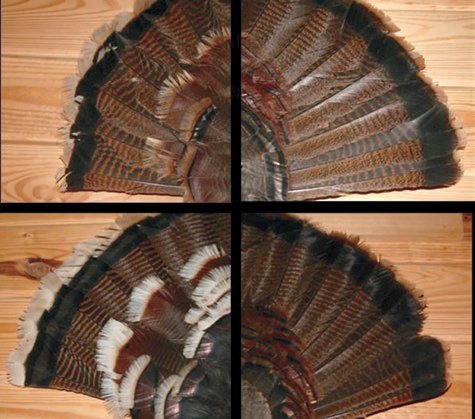
The current population of Rio Grande wild turkeys in the U.S. is estimated at just over one million birds, but this number can vary from year to year with weather conditions and other factors. Many of these turkeys reside in the south and central portions of Texas, where turkey densities can easily exceed 20 birds per square mile. Rios behave much differently than the Eastern and Osceola races and in some areas they seem to be easier to outwit, but not always. Although it is a sin among purists, “bushwhacking” is sometimes used in hunting Rios since most of the areas where they occur have no baiting restrictions. Rios have a habit of gobbling often in the evening, especially on the roost; a tendency that also often gets them killed.

Merriam’s Wild Turkeys
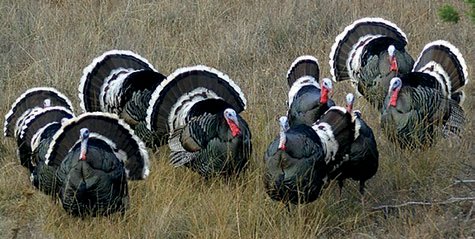
The mountains and ponderosa pine-dominated ecosystems of the western U.S. is where one would find the Merriam’s subspecies (M. gallopavo merriami). The native regions are believed to be portions of Arizona, Colorado, and New Mexico, but it (like the Eastern and Rio) has been introduced into other parts of the country, including Utah, Wyoming, Nebraska, the Dakotas, as well as the Rockies and Pacific Northwest. Merriam’s appear blacker than Easterns and Rios, and have broad creamy-white edges on the tail coverts and tail feathers. Since this species lives primarily in mountainous regions, it often seasonally migrates to lower elevations in winter and moves back to higher altitudes during warmer months. The Merriam’s subspecies seems to be more sensitive to habitat manipulation than eastern races. Studies have shown that overgrazing and wide scale timber harvest can negatively impact populations in ponderosa pine-Gambel oak forests. The current Merriam’s population is about 330 to 350 thousand birds. Merriam’s behavior is similar to that of the Rio Grande subspecies, and during the spring, Merriam’s toms also frequently gobble the evening hours.
The Gould’s
The Gould’s (M. gallopavo mexicana) is found only in southeastern Arizona and southwestern New Mexico in the U.S., and southward down through the Sierra Madre Occidental mountains and central valleys of western Mexico. Their habitats are generally found from 5000 to 9000 feet in elevation, and are often steep and rocky. The Gould’s is the largest race of wild turkey and is similar in appearance to the Merriam’s, but with longer legs. Less than a thousand birds are estimated to inhabit the U.S., but in Mexico they are locally abundant. No population data could be found for the Gould’s that are residents of Old Mexico, but the highest densities are reported to be in the upper elevations of Chihuahua, in oak–conifer habitats. Since they are so scarce in the U.S., only a handful of hunts are offered for Gould’s wild turkeys within the states of Arizona and New Mexico. However, Gould’s hunts are available south of the border for hunters pursuing a Royal or World Slam.
Ancestor of the Domestic Turkey?
Although it is not common knowledge, there is actually a sixth subspecies of North American wild turkey. Little is known about the South Mexican wild turkey (M. gallopavo gallopavo), which once occupied large portions of southern Mexico. The Aztecs and other indigenous tribes domesticated this race of turkey and used it for food and trade. After that it was sailed across the Atlantic by Spanish conquistadors in the 16th Century. Until recently this subspecies was thought to be the sole genetic ancestor of the domestic turkey which is now found in the poultry industry all over the world. Fossil DNA studies by Speller, et. al. (2010) however, suggest that turkeys were actually domesticated twice; once in southern Mexico and again in the southwestern U.S. (likely Rio Grande or Eastern) sometime in the past. The South Mexican race is considered to be extinct in the wild today, although there may be remnant populations that still exist in the wilds of southern Mexico.
Summary
The comeback of the North American wild turkey is one of the most successful conservation efforts in the history of the nation. Through wide scale habitat management and improvement, harvest regulations, and re-stocking programs, all five of the extant subspecies have enjoyed increasing or secure populations over the past few decades in the U.S. Thanks to local, state, and federal agencies, conservation groups like the NWTF, and the millions of hunters who love and pursue this bird, the species’ future appears bright. Hopefully the conservation efforts, research, and lessons we have learned in the process can support the conservation and management of the ocellated turkey in Central America.
References
Missouri Department of Conservation. 2012. Missouri Wild Turkey Harvest and Population Status Report. http://mdc.mo.gov/sites/default/files/resources/2010/04/2012_missouri_wild_turkey_status_report.pdf
National Wild Turkey Federation. 2010. North American Wild Turkey Management Plan. http://www.nwtf.org/NAWTMP/
Speller, C.F., B.M. Kemp, S.D. Wyatt, C. Monroe, W.D. Lipe, U.M. Arndt, and D.Y. Yang. 2010. Ancient Mitochondrial DNA Analysis Reveals Complexity of Indigenous North American Turkey Domestication. Proceedings of the National Academy of Sciences 107 (7): 2807-2812
Taylor, C., H. Quigley, and M. Gonzalez. 2002. Ocellated Turkey (Meleagris ocellata). Wildlife Bulletin No. 6. National Wild Turkey Federation. http://www.nwtf.org/conservation/bulletins/bulletin_6_9-09.pdf
Texas Cooperative Extension. 2007. Rio Grande Turkey in Texas. http://www.nwtf.org/NAWTMP/downloads/Literature/Rio_Grande_Wild_Turkey_Texas_Biology_Management.pdf
Wild Turkey Report. 2011. Turkey Factories. http://www.wild-turkeyreport.com/turkey-hunting/turkey-factories