

No fish in the United States has been studied more than the largemouth bass. It is also documented as the most sought after fish species in the United States. Wanting the largest, fastest growing species in ponds and lakes has become common among lake owners, managers and even state agencies across the country and the world.
There are many species of bass lumped into the black bass category including the largemouth bass, smallmouth bass, shoal bass, redeye bass, Suwannee bass and additional less common species only located in isolated areas around the country. The sub species everyone wants to start with is the Florida strain of Largemouth bass (Micropterus salmoides floridanus), originally found in 1949 in the lower two-thirds of the state. Largemouth bass were discovered long before that date, but at that time it was discovered that those bass were genetically different than its northern cousin which lives longer, has a more ravenous appetite, but does not get as large as the Florida largemouth bass. The Florida largemouth bass has been stocked in several states by state agencies and in other countries to get them established to provide the largest largemouth bass possible for anglers to target and catch. The current World Record largemouth bass according to the International Game Fish Records (IGFA) is two fish – 22 lbs 4 oz., caught in Montgomery Lake, Georgia near Jacksonville, Florida in 1932 and the other from Lake Biwa, Shiga, Japan in 2009. The Florida strain of largemouth bass has become so important to the Florida economy and its anglers that the state passed a law that only pure strain Florida bass can be stocked in certain parts of the state, reducing infringement of the Northern gene on the Florida bass. If your property is south and east of the Suwannee River in Florida, you have no choice but to stock only pure strain Florida largemouth bass. It is now illegal to stock northern strain largemouth bass or any genetic cross between the two in that area described.
Pond and lake owners have choices as to which genetic strain of black bass they can stock and manage. Some are indigenous to that area, some are brought in from far away and others are genetically enhanced (a cross) that some managers and lake owners feel fits their management goals and objective needs. It is not my intention to promote one genetic strain over another, but help you make an informed decision that fits your particular situation.
The three most common species of largemouth bass to stock are Florida, Northern and a cross with a Northern male and Florida female. A few differences are the Florida can reach the biggest size, but has a shorter life expectancy than the Northern. The Northern lives longer, doesn’t get as big as the Florida, but does tend to feed more than the Florida making it more susceptible to catch. The cross was developed to obtain the best of both worlds where you have a bass with a ravenous appetite and grows exceptionally quick while being slightly easier to catch since it is always feeding. However, over time, the cross reverts back to more the Northern strain. This cross naturally occurs in areas where both genes are present such as North Florida and South Georgia. Where you have a mixing, there are Northern males and females, Florida males and females, and crosses of males and females with each parent combination. Maybe the World Record caught in southeast Georgia was a female with a Northern strain father and Florida strain mother, but more likely it was a pure strain Florida with lots of forage throughout its life.
There are many factors to consider prior to stocking your bass and which type should be placed in your lake.
First, can fish enter or escape your waterbody? If local fish can freely move back and forth, then stocking any other sub species other than what occupies the surrounding area may be a lost cause, as local fish will cross breed with stocked fish and eventually turn your population into whatever is in the area. If your waterbody is land locked and the genes stocked will remain uncontaminated by surrounding populations, some of the previously mentioned options may be possible. You may get either the Florida or the Florida/Northern cross, which has several names such as Tiger Bass and Gorilla Bass. Another consideration is forage availability. The Florida/Northern cross has been documented to grow fast like the Florida, but is always hungry like the Northern. If enough forage cannot be supplied supplementally through forage stocking or a naturally reproducing forage population, their growth rate will be far less than anticipated. How hard will you work at reducing bass numbers as prescribed by your Lake Manager or Biologist? If you foresee not enough time and effort being put forth to remove bass, then growth rates again will be disappointing from the cross or the Florida. Depending on where you are located, fish being shipped in from far away may cost much more than if purchased from a nearby local hatchery that probably uses bass stock from local waters. Where you are located may also dictate which option is best for you by the length of the growing season. Largemouth bass feeding slows down in winter. The longer the winter, the less growing the fish will do simply because they are not consuming large amounts of food during a longer time period compared to bass in warmer climates. How big is your waterbody? The expectation for the number of big bass that you can grow needs to be realistic for the size of your waterbody. Big bass consume lots of forage and the forage needs to fit the size of the predator. Ten pound bass do not reach those sizes consuming minnows and small bream after they reach about three pounds. As the bass grow, larger forage needs to be available.
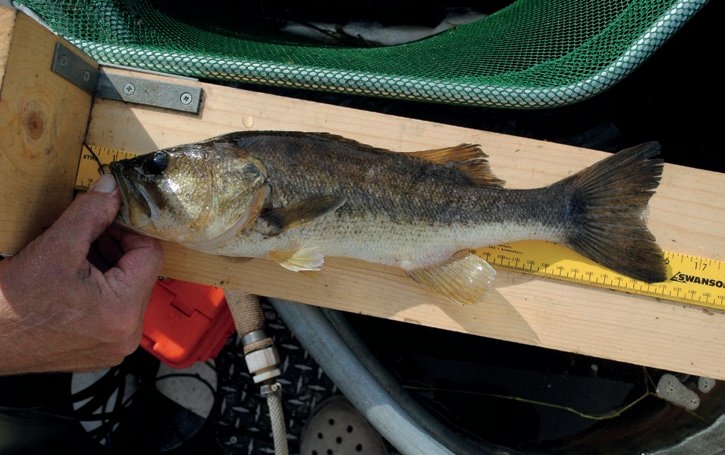
The largemouth bass life history is similar throughout the Southeast, but there are subtle differences as you move north. Life expectancy is a good example. While a 12 year old Florida largemouth bass is near the end of her life, another one in Maryland near 20 years of age is not uncommon. Spawning begins around 60°F and continues into the low 70’s during the spring. I know from personal experience that around 68°F is peak spawning temperature in Florida, but is slightly cooler as you go north into Georgia. The male creates the nest in 3-8 feet of water (depending on habitat and water visibility), coaxing the female to lay her eggs. She will lay between 30,000 and 50,000 eggs and it has been documented some have produced 100,000 eggs. Once a female reaches approximately age six she will begin producing fewer eggs. After fertilization the male will remain on the nest and guard it until the eggs hatch and stay with the school for a few days until they disperse. The question is always asked, “Does fishing beds hurt the population?” This depends on the number of large fish you have in the population and how frequently hooking mortality occurs. Once the bass hatch, cover becomes very important for largemouth bass survival from predation and where small organisms grow for young bass to consume. Females after age two grow faster than males and are the trophies. Males have been documented up to about five pounds, but most are small, under three pounds. Both males and females reach sexual maturity (start spawning) around two years old. They have been documented as young as one and as late as three years old to reach sexual maturity. The color of largemouth bass varies greatly depending on the type of water color where it lives. It ranges from a pail greenish yellow with no markings to almost black markings and dark green body.
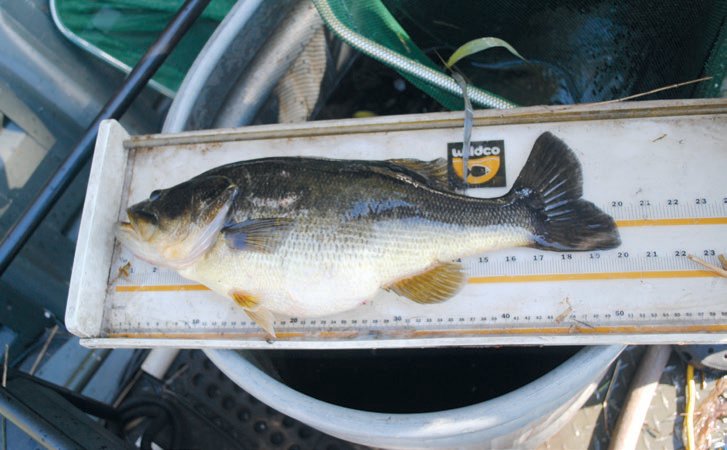
Growth rates vary immensely from geographic areas and are dictated by genetics, forage and cover availability. The Florida strain of largemouth bass may take 8-10 years to become a double digit fish, while there are claims of the Florida/Northern cross reaching weights of four to six pounds in two years, but they may not or barely reach double digit weight before dying. The Northern largemouth bass can and do reach double digit size, but may take 15-17 years or more to reach that weight. Whatever the genetic makeup of your largemouth bass population, abundant forage and cover availability are required to grow big bass.
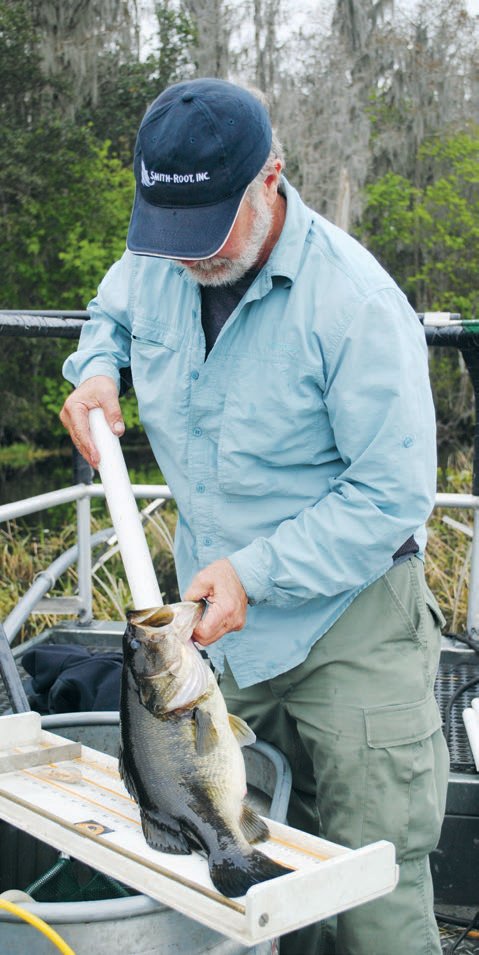
When stocking largemouth bass for the first time in a new or renovated lake (starting over), forage (the size required by the size bass being stocked) must be available. Some forage needs to be larger than the stocked bass can consume for repopulating the forage. On new waterbodies, we recommend stocking forage 6-12 months prior to bass stocking. If stocking bluegill/bass, a rate of 750-1,000 bream/panfish per 100 bass per surface acre is recommended. If cost is a concern, 500 bream/panfish per 50 bass per acre can be stocked. Ideally, stocking bream/panfish in the fall and the largemouth bass the following late spring/early summer is best. In addition, some type of minnow (like fathead minnow) can be stocked six months prior so fingerling and juvenile bass have an abundance of food. Also, start feeding forage fish as soon as they are stocked to accelerate growth and promote spawning as soon as possible. The more forage available when bass get stocked the better. They will eventually reduce the forage numbers and you will need to start removing fish. To grow quality bass, it’s always better to have too much forage and fewer bass than too little forage and too many predators (largemouth bass). There is almost never a situation where bass should be added to a population, unless a fish kill has occurred. Many lake owners make the mistake of adding bass to an existing population because not enough big fish are present, when it’s actually the opposite; no big fish are present because too many small bass are present. If your waterbody is one acre or smaller you may want to consider not stocking largemouth bass because managing numbers in such a small waterbody becomes difficult. An alternative might be the Morone Hybrid (sunshine bass, palmetto bass or whipers) that does not reproduce and numbers can be managed. Then when they are depleted, simply restock.
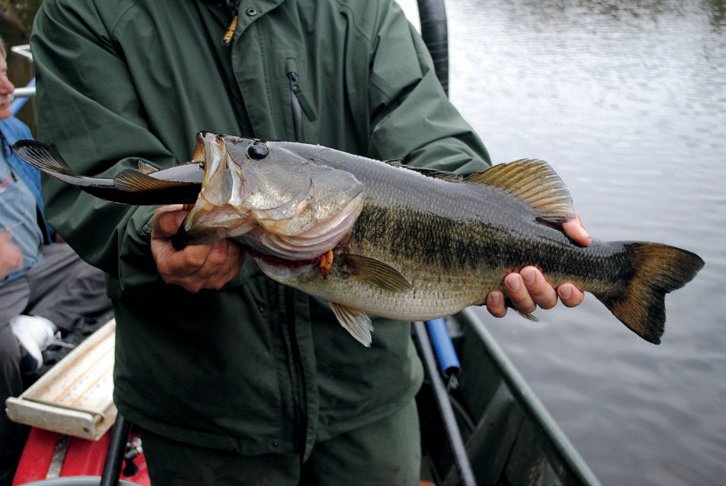
In most situations, managing largemouth bass in ponds and lakes requires the removal of some individuals to prevent overpopulating and encourages fast growth rates. Your Lake Manager or biologist should provide you with a size and number to be removed every year to allow the bass population to reach its full potential. Generally, the target size is between 10 and 16 inches, and between 15 and 30 bass per surface acre should be removed. The sizes and number to remove are unique to each waterbody and may be modified in the same waterbody as the population dynamics change over time. This is the number one mistake lake owners and non-professional lake managers make – not removing enough largemouth bass every year. It can be taxing and time consuming, the larger the lake and more productive the waterbody you have, the harder it is to reach the annual goal. You remove fish from a slot where the bottle neck is, which is caused by lack of forage and too many individuals in that size group to keep fish growing through a certain size range. A combination of providing forage for all life stages and sizes of largemouth bass and reducing bass numbers so the remaining individuals have ample forage to continue optimum growth throughout their life is desired. If you regularly catch large numbers of mid-range (12-16 inch) bass that are skinny with large heads, then you have too many fish and not enough forage. Check your state’s regulations because some states have no daily harvest regulations or size limits on private lakes and some states require fish to be removed within their regulations of daily bag and size limits, which can make removing 300 bass 12-14 inches long from a 10 acre lake difficult, but not impossible. We recommend inviting friends, family and youth to come help a few times in the spring to remove bass and achieve your goal. Have a community fish fry afterwards or invite local law enforcement to help as a reward for protecting your property from trespassers and/or poachers. Make it clear that no fish above the target size range are to be removed without your approval.
Catching bass is fun, but can be tricky in certain situations, such as small impoundments with high angling pressure. Largemouth bass can definitely become hook smart if the pressure on a small waterbody is excessive. I have only seen this on public fishing lakes and never witnessed it on a private lake. We have seen drained lakes full of quality or trophy bass that no one knew were there because they never bit an artificial lure or worm, however they did regularly hit live bait such as shiners or bream/panfish. Also, be aware of hooking mortality in small waterbodies. Be aware of certain rig types that are more susceptible of harming the fish than others. Live bait fishing is one of the worst methods for big bass to swallow the hook. Another type is plastic worm fishing if you let them have it for too long before setting the hook. Both types of angling can be done in ponds but we recommend using circle hooks like saltwater anglers use to reduce swallowing the hook and hooking mortality. You will miss a few more fish but you will have fewer deaths from hooking mortality. Top water and crank bait lures also work well on uneducated fish and have a low probability of being swallowed. Should a big fish swallow the hook, it is usually better to cut the line at the eye of the hook and leave the hook in the fish than try to dig it out.
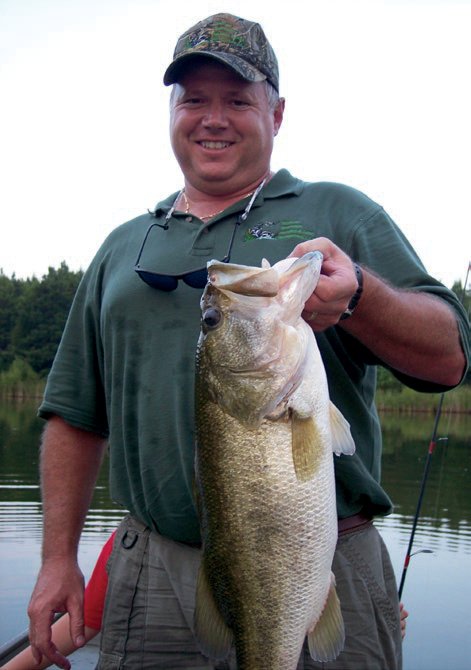
Lastly, on small impoundment bass fishing, if you catch a trophy (which is defined by the person who caught it), take measurements and quality photos from different angles in good light to get a replica mount made, as opposed to killing the fish and removing it from the population. Measure your fish from the tip of the mouth (closed) to the tip of the tail (slightly pinch down). Do not measure to the fork, you want a Total Length. Measure the girth of the fish at its deepest point, usually just before the dorsal fin (underneath towards rear). Multiple photos can capture the colors and patterns for replication. Who knows, a mount of the same fish may be done a year or two later and the fish is a pound or two heavier and an inch or longer than when previously caught!