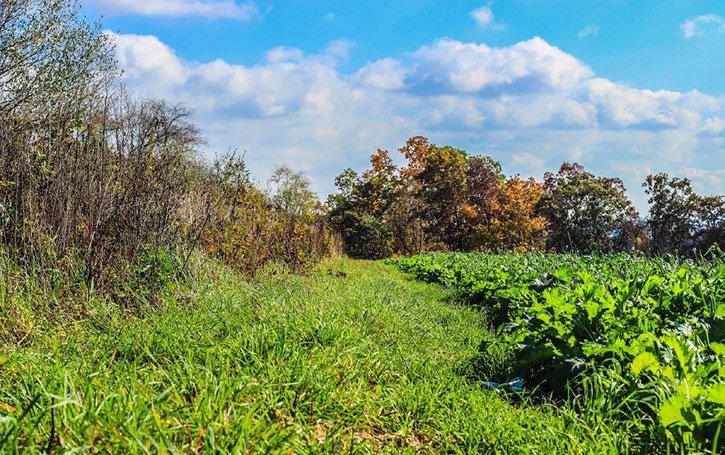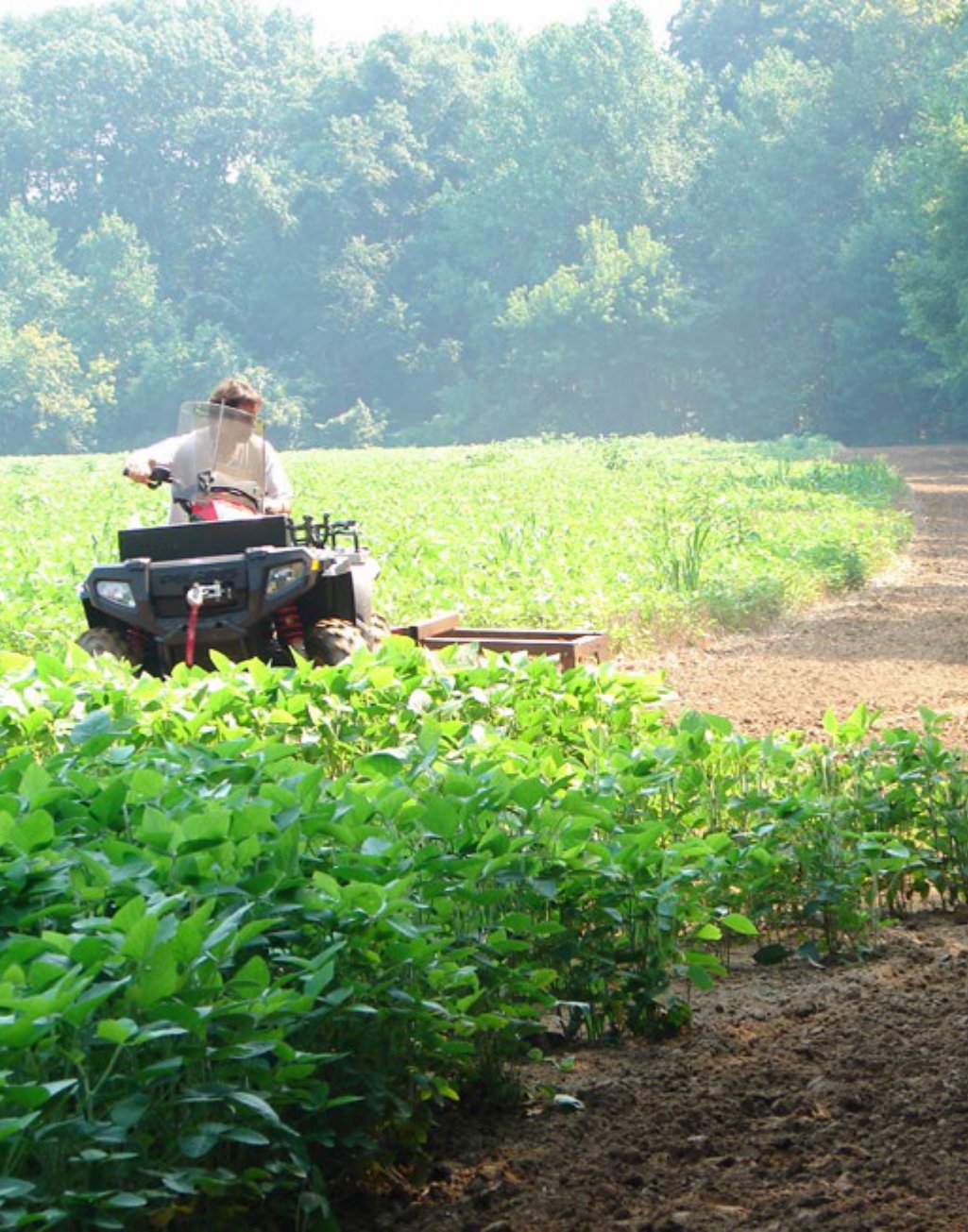
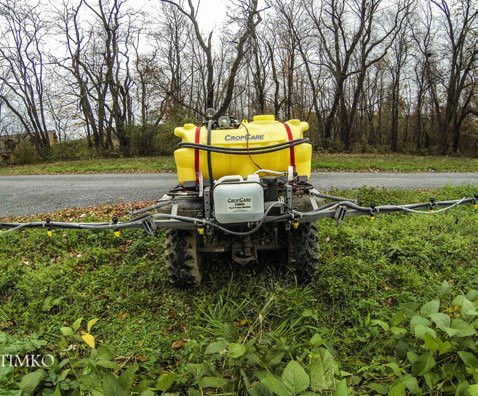
If seeing and killing more deer this fall interests you July is the time to develop honey hole food plots. I make it an annual goal of mine to kick off my fall food plotting season on my Pennsylvania farm just prior to the July 4th holiday celebrations. I do this every year by spraying a broad spectrum herbicide (Glyphosate) on all of the plots I plan to fall plant. July 4th is a big holiday for us so I enjoy the brief break and then I’m back at it spraying one more time just prior to planting. This annual commitment to my schedule affords me with weed free seed beds just in time for August 1st, when I prefer to plant my fall plots. My clients have enjoyed consistent success while following some simple steps each summer.
As a private wildlife consultant, my job is to produce targets-rich environments. Let’s cut to the chase so you know if you should continue reading or not. This is not another article on large-scale, agricultural food plots and you certainly won’t need to be an agronomist to put these fall attraction techniques into practice. This article was written to help you kill more deer. You don’t need control over a bunch of ground, just an option to carve out a couple acres of strategically located deer dirt for a fall hunting plot. This is an article about using well-timed, attractive and succulent forage to kill the buck you had in mind when you bought that tricked out, wicked fast compound bow. Forget those highly visible, massive velvet racked bucks that you see swallowed up by huge agricultural fields on your way home from work. Odds are they won’t die anywhere near that field where everyone else applies pressure by throwing up last minute stands with high hopes. This pressure will coincide with a dietary shift that happens every year in the late summer months. If you play your cards right in the months of July and August you will inherit those bucks when the shift is on.
What follows are the steps I employ with clients who want more deer activity at their honey hole fall food plots. Contrary to what some writers want you to believe you don’t need 1,000 acres to consistently kill mature bucks. It’s absolutely feasible to wreak havoc in your local whitetail neighborhood by being “that guy” who consistently kills mature bucks. Hundreds of my clients are more than happy to “lose” deer and their associated grocery bills during the spring and summer months only to attract and kill them during the first week of bow season. It also works for me as a consultant since a lower, year-round grocery bill and a more consistent buck harvest equates to happy clients with more cash in their pocket!
Wide-spread habitat management has its rewards; however, most of us are not “holding” any more than a few individual deer within our invisible property boundaries. Make no mistake; while other bowhunters are bass fishing or mowing the grass in July and August the bowhunter who spends one or two weekends preparing a fall food plot will incur more taxidermy bills.
Think Like McDonalds
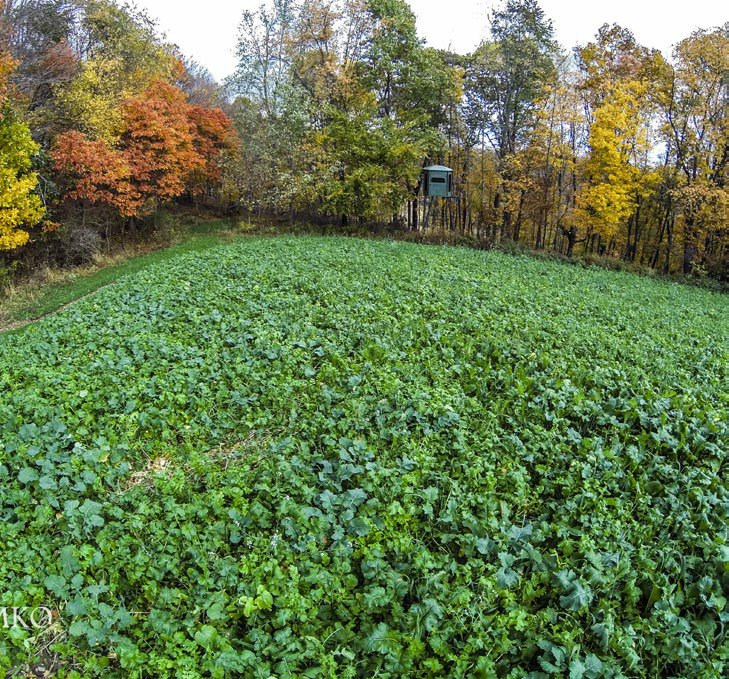
Ray Croc, the founder of cheese burger selling giant McDonalds once said he was not in the business of selling burgers. Instead, he suggested he was in the real estate business. If you haven’t noticed the well-planned location of every golden arch in the world, take your eyes off your fries for a minute. When planting smaller bow plots think like McDonalds: location, location, location. If you are setting up a one to two acre cool-season mix of brassicas and winter peas to be planted in August you should seek woodland plots with “soft edges” in the form of thick transition cover that makes deer feel comfortable traveling to the edge of our plots to stage. If no such habitats are available, create it by slowly transitioning your food plot edge by promoting thick transitional edge cover such as saplings, brush, tree tops, or planted pines. We kill them before they leave the wood lots and enter the “safe areas” of the thick transition zone. These plots work like a charm in mixed agricultural/woodlot settings.
The proximity of these plots to large agricultural fields provides the deer with an alternate food source when agricultural soybeans lose their appeal and are consumed by combines. One homerun strategy we’ve used for a decade now is to custom blend forage soybeans right in with our Brassica blends (see sidebar for Drop-Tine Seed Co. fall blends). As the Brassicas are growing and producing tonnage for November, December and January our freshly fall germinating forage soybeans are an ice cream treat to transition the deer away from mature soybean fields and into our cool season annuals plots. Deer will continue to use the soybeans into hunting season while the adjacent cool-season annuals become established.
Soil Quality
The quality and attractiveness of your food plots is a direct function of the quality of your soils. After working with landowners across the whitetail’s range I’m fully aware of the fact that most of them own hunting and recreational land where the soils are not exactly grade 1 agricultural land! Because of this we’ve spent several years testing commercially available products, many organically based, that aim to improve soil conditions by boosting organic matter, stimulate plant growth, improve the physical and chemical health of the soil, increase availability of key micronutrients, improve moisture retention, and help produce drought & pest resistant plants. AKA: steroids for your soils. In addition, make sure you’re dumping on plenty of lime so soil nutrients are “plant available”. You can lime at any time!
Applying granular bagged lime is convenient with the use of an ATV/UTV or small garden tractor. One “cheat”, calcified seaweed also known as Maerl, is a tool we use especially when developing first year, calcium deficient plots at the last minute. New clients typically want food plots with little or no waiting time. Many clients get busy and forget to send in soil samples and order lime/fertilizer before local farmers get on the list. Maerl grows on the ocean floor and takes 7-10 years to become calcified. It is then vacuumed from the ocean floor and processed to develop a micro-ground source of true available calcium (approximately 23%). One of the primary benefits we experience is its rapid reaction time in the soil. We’re all familiar with the 6-8 month minimum timeframe for limestone to react in the soil. Since you are reading this in August you don’t have that kind of time. During the processing phase Maerl is micro-ground four times finer than limestone and combined with 32 bio-available trace elements such as nitrogen, sulfur, magnesium, boron, copper, zinc and manganese: all key to soil and plant health. The final product is approximately half the size of a pencil eraser for easy broadcasting in the field. One manufacturer (See sidebar for Timac Agro) reports that 400 lbs. of their Maerl based product has the same buffering capacity as 2 tons of lime. They further report that it would take 10-13 tons of lime to match the amount of available calcium in 400 lbs. of Maerl. After using their products for a decade and seeing soil samples taken after my clients utilize it I’m sold.
What to Plant and Why
There are several go-to crops that we consistently plant for fall food plots. The Brassicas like turnip, radish, rape, kale and canola immediately come to mind. Cereal grains including wheat, oats, rye and triticale are used for fall bow plots just as extensively and oftentimes mixed with the Brassicas. The cereal grains and Brassicas are excellent selections for a few reasons: namely their ability to germinate and grow rapidly minimizing weed problems. Add these selections to your weed free seedbed and plenty of lime & fertilizer and you have the perfect environment to outcompete aggressive weeds. The key to those large leafy greens, softball sized turnips and a giant radish is plenty of nitrogen fertilizer (250#/acre) applied when you plant the seed. Nitrogen rapidly escapes the soil into the atmosphere so do not apply it before planting.
With their broad leaves, Brassicas shade out the seed bed prohibiting weed growth and minimizing soil moisture loss through evaporation. While working throughout the whitetail’s range I’ve identified some regions where the deer don’t favor the Brassicas as much as others (try more cereal grains here). However, when the cold weather hits there’s nothing that competes with the giant, sweet tasting greens produced in Brassica plots. Turnip and radish produce underground and aboveground bulbs that are high in much needed energy and offer attraction that is second to none. While developing fall blends for the Drop-Tine Seeds the first product that came to mind was Radish Rx™ (sidebar). The cereal grains wheat, oats, rye and triticale all germinate rapidly and provide succulent, well-timed forage just prior to and during archery seasons. Many of my clients prefer the high sugar content of fall planted oats for bowhunting whitetails. After receiving countless grip and grin pictures from them I understand why!

One of my favorite selections for bow plots is a blend of annual clovers and cereal grains. Annual clovers, unlike perennial clovers that establish extensive root systems and persist for many years, germinate quickly and produce succulent forage much quicker. Some of my favorites for the South are Berseem clover, Arrowleaf clover, and crimson clover. In the Deep South you can’t beat these options as the hot, dry summer months are not conducive to growing perennial clovers. In the northern climates I plant annual clovers like Berseem and Crimson clover.
Regardless of where you hang your stands, north or south, annual clovers mixed with the cereal grains like oats and wheat makes for a great plot. If you really want to liven up the attractiveness of this plot, throw in some winter peas as deer simply can’t resist this ice cream-like treat.
Planting Soybeans in September & October?
Several years ago, prior to establishing my own food plot company, I was invited on a bow hunt in Southern Illinois. The owners of the small, up and coming food plot company called Outfitter’s Choice, wanted to pick my brain about new fall food plot products. When I recommended incorporating fall planted soy beans they looked at me funny. We’ve done this for many years by default. The fact is, when managing food plots for clients across the country there are rarely times during the growing season that we are not planting new plots. In fact, I will plant my soybeans at different times throughout the growing season to offer diversity to the deer herd. One thing we noticed was forage soybeans planted in September tended to be very attractive to whitetails. Why not? This ultimately led me to develop a fall product for Drop-Tine Seeds called Greens & Beans™ that consists of a blend of Eagle forage soybeans and my favorite Brassicas (see sidebar for Greens & Beans by the Drop-Tine Seed Co.).
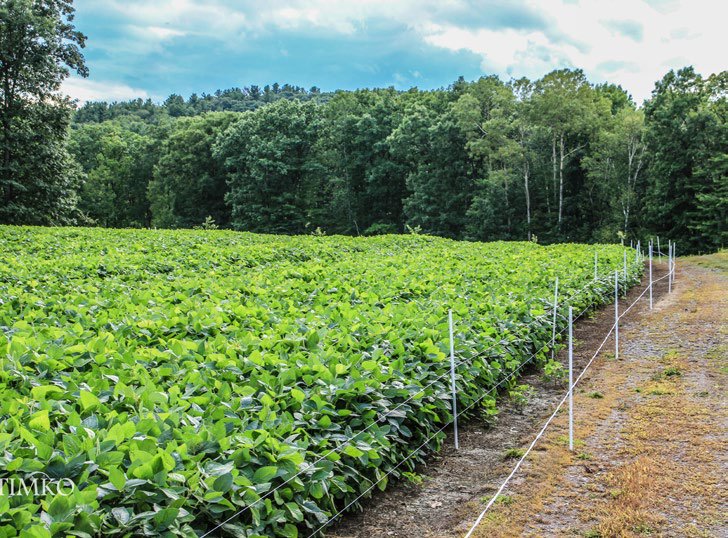
Delay Planting Time – Do you have too many deer for your local habitat conditions? Delay your planting to 30-45 days prior to your frost. The goal is to have food when you can drag that string back to the tip of your nose and loose a well-placed arrow. It’s one of the most common frustrations I hear from landowners and the irony is often laughable; to me anyway. An optimistic food plotter goes through all of the necessary steps of amending his soils, purchasing premium seed of improved varieties and then times his well-thought out planting methods just prior to a steady rainfall. Natural food quality bottoms out in late summer as the growing season winds down. Native ice cream plants like greenbrier, honeysuckle and pokeweed are wiped out and far from palatable. As a result the well-read food plotter hits a homerun and the deer are begging to devour the fresh growing cereal grains. Unfortunately, the well-placed ½ acre food plot designed for bowhunting is mowed down lip high and by September 1, prior to the highly anticipated opening day, the food plot is history. If this is the case you can obviously enlarge your food plot although not always an option. Many of my clients (me included) install an electric fence such as those made by Gallagher (see sidebar) to “bank” forage for a later date. For about the same cost of a tricked out modern bow you can protect a one acre food plot until you are ready for the deer to chow down practically ensuring success. If the cost of that insurance plan doesn’t appeal to you, others simply delay their planting date from August 1st to September, depending on your location.
Planting Methods
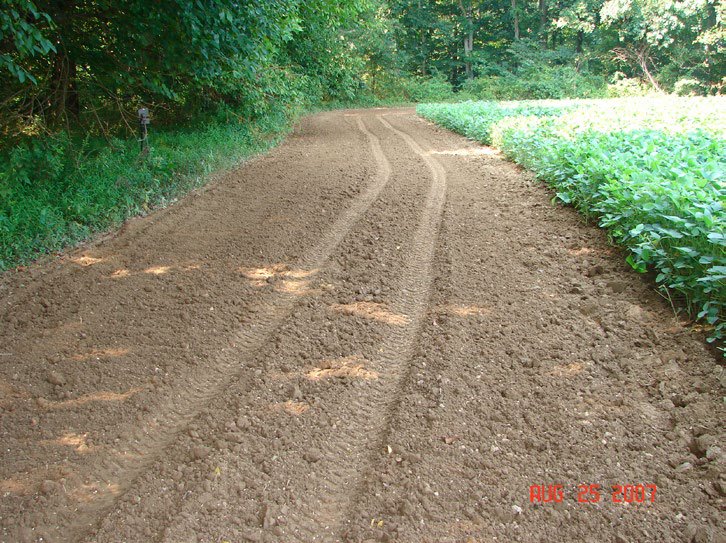
It doesn’t matter whether you’re broadcasting or drilling your fall plots, pay special attention to the quality of your seedbed and the depth you’ve planted your seeds. A seedbed should be firm but not compacted. I like to step in a prepared seed bed and see my boot print but not sink down deep enough that my sole is completely covered in soil. If your seed bed is too firm lightly disk it as the crops we’re talking about don’t need to be planted more than ¼ inch deep. If your boot sinks too deep, find a small cultipacker or take the roller you use for your lawn and firm it up. Many great fall plots are planted by simply broadcasting seed over a well-prepared seedbed and then rolling or packing just prior to a rainfall.
As a bowhunter I’m aware of the money we spend on bows, gear and accessories. The money and time invested in creating honey hole fall food plots is well worth it. My clients and I use the products in the sidebar accompanying this article and I can assure you with a little bit of work and capital you can gain more control over your bowhunting success.