
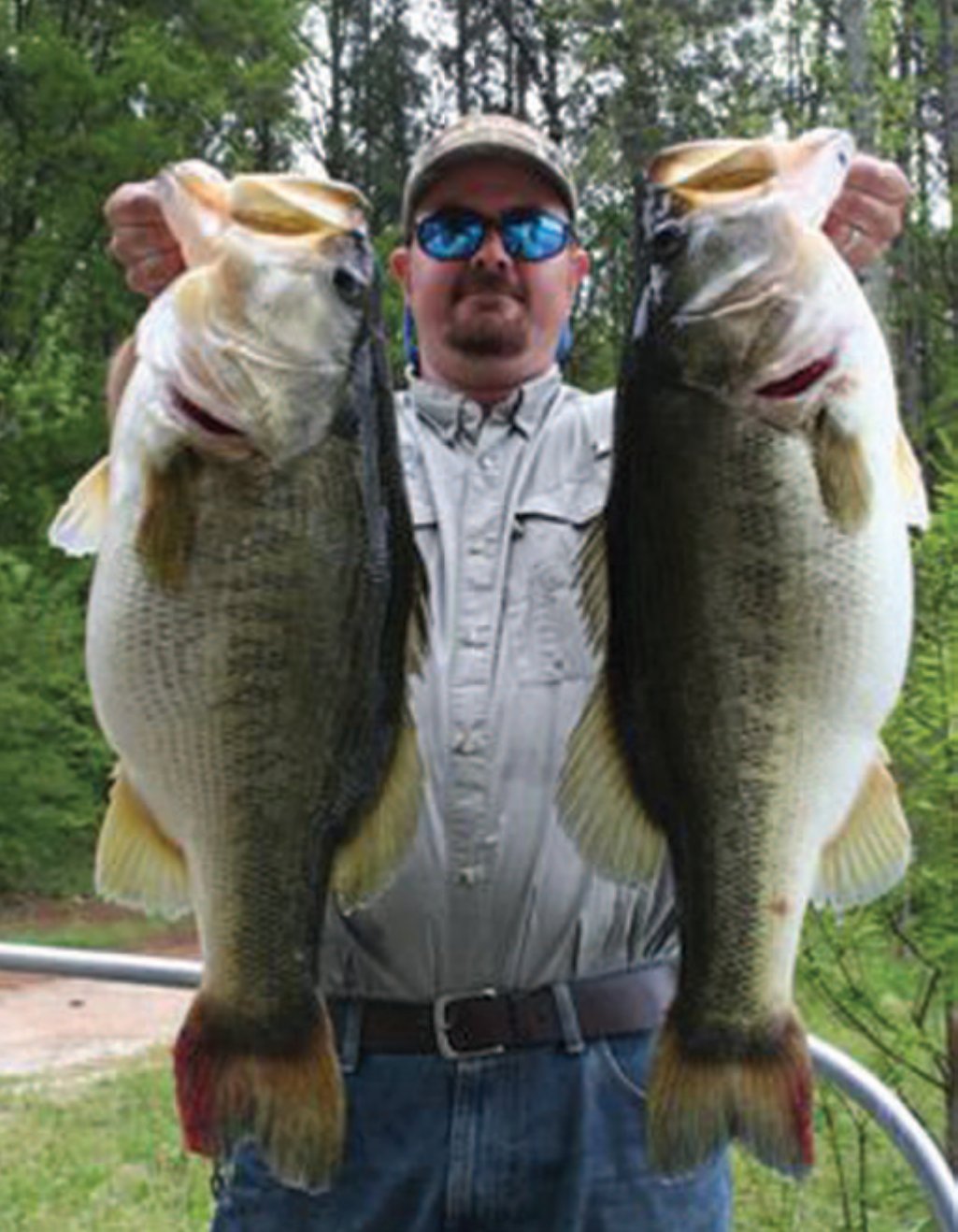
The summer that carried some of the longest streaks of extremely high temperatures has finally passed! So what’s the next step to keeping your pond scorching hot through the winter? With the fertilization and supplemental feeding programs coming to an end, it’s time to enjoy the spoils of your spring and summer labor. As the water temperatures fall into the 60’s, the bass move up from their summertime hideouts and begin to attack whatever swims near. This is just the type of activity that can turn an average day of fishing into a memory. These cooler water temperatures not only increase the fish activity, but it also allows opportunities to implement many management activities that can keep your pond or lake piping hot through the winter.
During this seasonal change, threadfin shad spawning goes into full swing and that leads to massive feeding frenzies as the bass move up from their summer time refuges. Just like with outdoorsmen, cooler weather signals the need to hunt and gather. Those infamous “bucket mouths” are thinking the same thing, eat everything in sight as fast as possible. If your pond is not teeming with a robust forage fish population (i.e. threadfin shad, coppernose bluegill and golden shiners), a fall stocking of any of these species is just the ticket to growing big fish! Bluegill spawn throughout the growing season; however their biggest or most productive spawns occur when water temperatures are around 65 to 70 degrees. This happens in the spring and again in the fall and stocking these individuals before their biggest spawn gives you as the pond owner the best bang for your buck. Over the last few fall seasons, I have been amazed at the abundance of small bluegill crowding around structure piles during an electrofishing evaluation. That last spawn of the season gives the bass population just the burst of forage it needs to get through the winter. The cooler water temperatures allow us the opportunity to safely stock any of these species, which is just in time to help directly increase your bass growths and also get you on your way to growing the trophy of your dreams.
The increased feeding and movement patterns of largemouth bass during the fall can also improve productivity for anglers trying to reach annual bass harvest quotas. Harvesting smaller largemouth bass is one of the most important management practices any pond owner can implement. Aside from early spring, the fall season can yield substantial harvest rates per fishing outing which will help reach the harvest rates needed to keep the pond in balance. In most fertilized ponds, smaller bass (less than 15 inches) need to be harvested up to 25 to 35 pounds per acre per year. Selective bass harvest ensures that the larger bass, and those smaller fish not harvested, will have the ample supply of forage fish needed throughout the year. If annual harvest rates are not attained each year, the bass population becomes too robust for the forage species to support and the bass can ultimately deplete their own food supply. In my experience, just about every lake is a little different and the best means for determining harvest rates and size limits in your pond is to have a trained fisheries biologist evaluate the fish population. We use an electrofishing boat to collect a sample of the fish population. The data we collect allows us to analyze the size distributions, health, and condition factors of both the predator and prey species. Based on this information we can then determine what sizes and poundage needs to be removed from the pond to either create more balanced conditions or create more potential for trophy-sized bass. In many instances during these evaluations, several harvestable-sized bass are collected and can be removed to help with the annual bass harvest quotas.
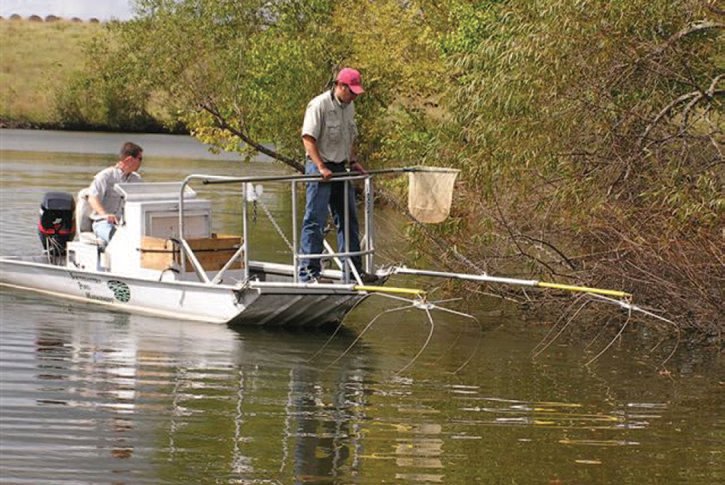
During each electrofishing evaluation we check the alkalinity and look at possible problem areas within the pond. The results from the evaluation are compiled into a comprehensive management plan and provided to the pond owner. If you have already had your lake evaluated, but haven’t had the time to “fish the little guys out,” then a fall electrofishing bass removal session can help. Many pond owners find that reaching their annual harvest goals can be a daunting task. Also some just can’t stomach throwing the smaller bass on the banks. That’s were we come in. We provide a service were we can remove as many bass as possible per hour using our electrofishing equipment. The fall is a great time for this service because many of the bass, especially the smaller bass, have moved back into the shallow water which makes them more susceptible to our gear. It also gives me the biologist and you the pond owner another glimpse as to how the lake is progressing with the management program.
Fall is such a great time to take advantage of the increased feeding activity in ponds; however, it seems as though as soon as the fishing gets hot, it cools off just as fast. For many anglers this slow down occurs just in time to wipe off the old bow and start slinging arrows again. However, for pond owners still “jonesing” for tight lines, stocking rainbow trout could be just the cure for those wintertime blues. That’s right, rainbow trout in southern ponds. The fish traditionally associated with pristine mountain streams are equally at home in bass ponds throughout the southeast from November through April. Rainbow trout require cool, oxygen rich water, which is exactly what southern ponds offer in the winter and early spring. We have been stocking trout in ponds for over 15 years and each year I am bombarded with pictures of clients holding 5+ pound rainbows caught from their own back yard! One of the most amazing things about rainbow trout is watching them annihilate the feed from an automated fish feeder as it goes off in a pond. If coppernose bluegill are described as feeding like a piranhas, then the rainbow trout are like that great white attacking the fake seal seen during “Shark Week”. It’s an awesome site and when you hook into one of these beauties, well, faint of heart best not apply! We normally stock the rainbows in early November and sizes are available from 12 inches up to 7 pounds or more. Not only are they great fun on light tackle, but because they don’t survive in ponds in the South during the summer, many of my clients harvest these fish after a few good fights and give them a frying pan burial!
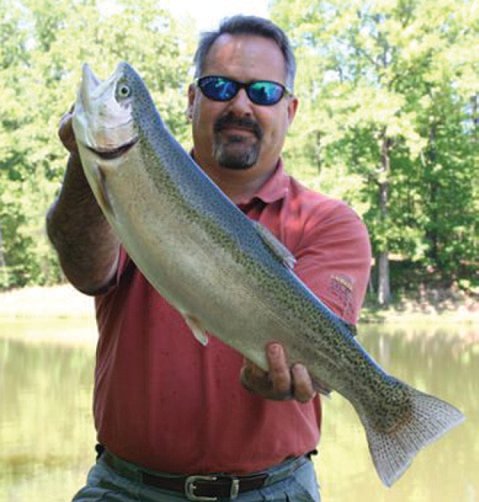
Most of the rainbow trout we stock in ponds and lakes are used mainly for recreation to remedy the winter-time fishing lull. However, I have had some clients take note of the growing popularity of stocking small trout as forage and implement this alternative in their ponds or lakes. Many of the largest bass caught recently throughout the country have been caught in lakes on the West Coast. A good portion of these lakes that are consistently producing double digit fish have been regularly stocking rainbow trout for years. These smaller rainbow trout make for a nice meal for the “lunkers”, especially in early spring as fish feedings are at their peak. I have seen a lot of interesting stuff sampling ponds, but one of the most impressive is pulling a 2 to 3 pound rainbow trout out of the gut of a 7 pound largemouth! Talk about a feast, the rainbow trout are like the fillet mignon of the forage species. Weather you have stocked rainbows as pleasure or as forage for your bass, it is a good idea to feed with fish food that has higher protein content than that used for bluegill. The higher percentage protein feed will help the rainbow trout increase in size during their time in your pond.
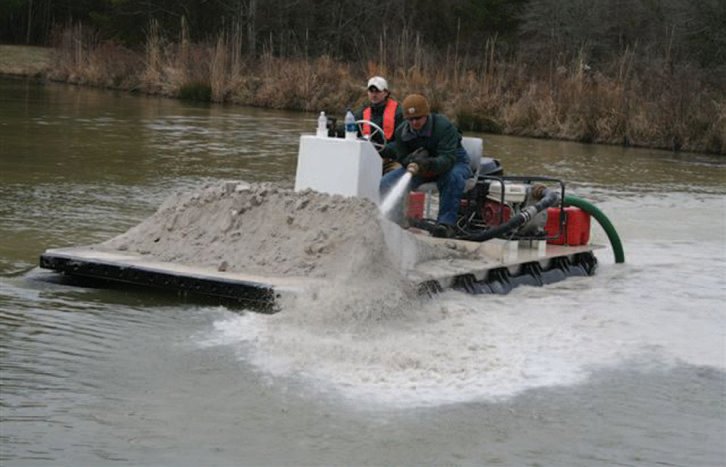
If the rainbows were not a part of your management plan this year, once the bluegill feeding slows down, which is usually around Thanksgiving, it is best to winterize your automatic fish feeders. A couple of other “house cleaning” items that should be considered during the fall/winter seasons include activities such as liming, adding structure, and pier and shoreline maintenance. Just as with food plots and vegetable gardens, agricultural limestone must be applied to ponds to ensure an effective fertilization program. If your pond is located anywhere outside the Black Belt region of Alabama, more than likely it was constructed in an area that has high acidic soil content and periodic applications of agricultural limestone is required. Adding lime to neutralize the acid thereby raising the pond’s pH is a widely accepted practice to enhance productivity in ponds and lakes. A simple titration test is used to measure the alkalinity in a pond and it can help determine if your pond needs lime. This type of test is usually performed by a biologist at the pond bank during the electrofishing evaluation. There exists no magic formula to determine the amount of lime required to increase and maintain total alkalinity within the desirable range. Many ponds in our region seem to require 1-2 tons per acre per year in order to maintain conditions favorable for fertilization. Several factors, including the type and composition of the liming material as well as the amount of water flow-through, determine specific lime requirements. In any case, ponds will not be adversely affected by applying lime at high rates. To a large extent, the more you apply, the longer it lasts. Given the fact that the application of bulk lime to ponds is labor intensive and creates somewhat of a mess, liming at the earlier described rates is advisable. Experience suggests that liming at rates of 3-5 tons per acre lasts an average of 3-4 years.
Now that you’ve had the lime applied, a winter draw down can help open up areas around the pond that may need a little facelift. Dropping the water level a few feet will expose and ultimately help kill any aquatic weed beds that may have gotten established along the shoreline of your pond over the summer. The lower water levels can also allow you access to cleanup along the shoreline and to inspect and repair any problems that may have occurred to piers or docks over the years. With the temperature a good bit cooler, shoreline maintenance is much more bearable and you don’t run the risk of running into a water moccasin or copperhead. It is always a good idea to inspect the dam and remove any new small trees growing along the face or backside of the dam. We usually recommend cutting all tress less than roughly 6 inches in diameter on either side of the dam. This will help prevent root growth into the core of the dam which can ultimately weaken the integrity of the dam.
It is also a great time to install shoreline structure and/or gravel beds which are beneficial to both the forage fish and the predators. Anything imaginable works to create structure in ponds. However, given their ease of installation and ability to hold fish, the Honey Hole brand of trees and shrubs work well as artificial structure. The discarded Christmas trees of friends and neighbors can also make excellent fish habitat for both bass and bluegill throughout the year. However, many natural structure piles, especially Christmas trees, tend to break down over time and adding them usually becomes an annual event. For this reason, I prefer the artificial structure piles over the Christmas trees.
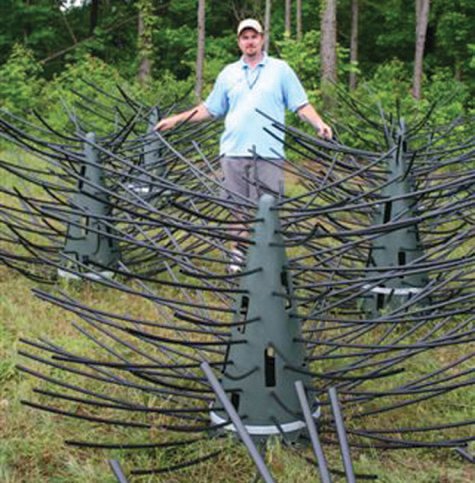
Whether you are installing structure or just trying to meet your annual harvest rates, the cooler temperatures of fall make a day on the lake much more enjoyable than those dog days of summer. Get out and take advantage of the nice breezy days and the bass moving into the shallows to feed and just maybe that big girl will decide that she likes what’s at the end of your line.