
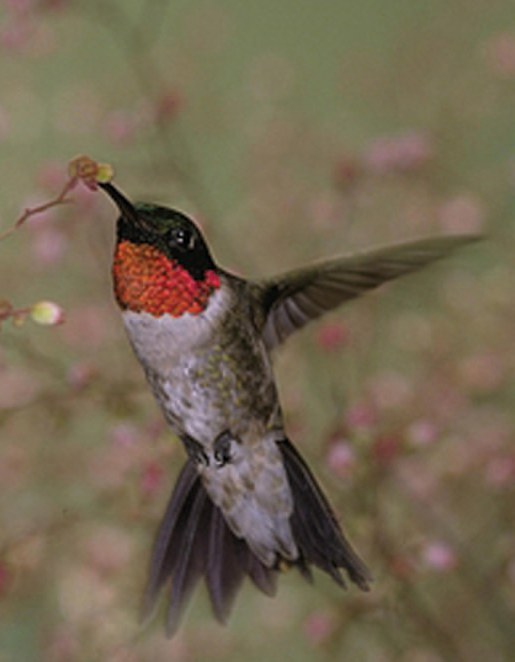
Don’t ignore the tiny buzz of a bee. If it weren’t for bees—and a variety of other insect species—many fruits and vegetables we enjoy wouldn’t exist. The game and non-game wildlife we cherish and the flowering plants and trees we love would be jeopardized as well. While foraging, bees inadvertently transfer pollen from one flowering plant to another, fertilizing the plants. Bees aren’t the only pollinators. Bee flies (bee mimics), flower flies, beetles, wasps, true bugs, butterflies, and moths are also important. In some instances, slugs, gnats, and ants can be pollinators, and there is even a male mosquito that is known to pollinate bog orchids. Other pollinators include hummingbirds, bats, and a dove species that pollinates the saguaro cactus. Just as there is a diversity of pollinator species, each has its own life cycle and habitat requirements. Some species are specialists, relying on a specific host plant to complete their life cycle. An example is the monarch butterfly whose larvae only feed on milkweed plants. Other species are generalists, using many kinds of plants for food or shelter. The relationship is not just one way. Some plants rely on specific insect species to reproduce. For example, the bottle gentian requires bumble bees for pollination to occur.
By far, insects are our most abundant pollinators. It is truly mind-boggling that the economic value all species of crop pollinating insects bring to the United States is estimated at $20 billion with approximately $15 billion coming from Eurasian honey bees (Apis mellifera), $4 billion contributed by native bee species, and other native insects rounding out the rest. To put it all in perspective, 87 of our US crop species need bees which further equates to 30% of the foods we eat or drink!
Worldwide, almost 80% of all flowering plants (roughly 250,000 species) depend on some kind of pollinator such as birds, mammals, or insects. As a group, pollinators are keystone species vital to agriculture and the perpetuation of native plants and the wildlife that depend on them. Even many of our medicinal plants, fiber crops, biofuels, and forage crops need pollinating insects. This is why when honey bees—our most reliable pollinators because of their great numbers and large foraging area—began to disappear in 2006, people began to take notice.
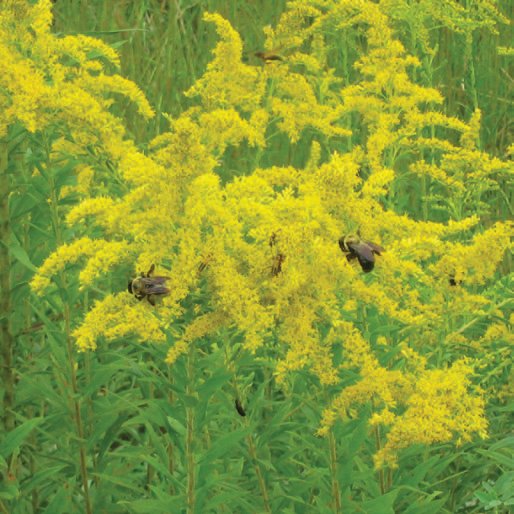
In particular, imported Eurasian honey bees have been disappearing by the billions, possibly putting food supplies at risk and driving up usage costs for the remaining managed colonies. Entomologists dubbed the mass disappearance, “Colony Collapse Disorder”, or CCD. Upon close inspection of an infected hive, little to no bees can be found where once it was buzzing with up to 60,000 bees. However, honey and larvae are still present in the honeycombs. No dead bees are found in or around the hive. It is as if they just flew away and never came back. That is what some researchers think happens. Something goes wrong in the affected bee and they cannot navigate home.
Possible causes that have been suggested include parasitic mites, a virus that affects the bee’s immune system, pesticide exposure, or nutritional stress. It may be a combination of all of the above. To date, approximately 1/2 of all US honey bee colonies have disappeared leaving us to fall back on our 4,000 native species, especially bumble bees, to do the job.

Thankfully, the native bees and other insects we have are very adept at pollinating both native plants and our crop species. That is because honey bees did not exist in the US prior to European settlers importing them in the 1600’s. Honey bees had already gone extinct in North and South America as indicated by their disappearance from the fossil record. The bulk of those native species presently pollinating our native plants and crops include bumble bees, mason bees, leafcutter bees, alkali bees, carpenter bees, tiny “sweat bees”, and many more. Each fill different niches since they all have different body sizes, tongue lengths for pollen extraction, foraging patterns, and flower species preferences. The European honey bee can forage up to three miles from the hive but often flies straight down crop rows. Bumble bees, like most native bee species, may only forage about 200 yards from their nest but they zig-zag from flower to flower. This increases the chances of out-crossings among plants. Bumble bees are also capable of “buzz pollination” which honey bees cannot do. The bumble bee vibrates its body in order to get the plant to release more pollen. In doing so, more pollen is inadvertently transferred to the bee and on to the next flower. This also tends to increase fruit production and size (e.g. blueberries) and is valued by many farmers. Another difference between honey bees and native bees is activity during inclement weather. Mason bees and bumble bees can forage in wetter and windier conditions than honey bees which rarely forage in temperatures below 55˚F or in rain or wind. In addition, bumble bees can forage later in the day than honey bees, making them a reliable partner in crop pollination.

Honey bees live in hives year-round with thousands of individuals and a queen. Hives can be man-made or hollow trees (feral bee colonies). Pollen is collected and made into honey and nectar is consumed on site. In contrast, bumble bees start their nests over every year when the ground hibernating female emerges in the spring. The colonies are small, numbering up to about 100 individuals, and are sometimes located under bunch grass tussocks, in old rodent nests, or even in abandoned bird nests. No surplus honey is produced; individuals simply provision the young and supplies are used up quickly. Many native bee species are not even social. For example, mason bees, leafcutter bees, and alkali bees are all solitary. The females gather pollen to provision the larvae while males usually mate and die, making them insignificant as pollinators. Two-thirds of all native bee species nest underground while the rest utilize beetle larvae tunnels in decaying wood, reeds, hollow stems, hay bales, and various other cavities or structures. Carpenter bees can excavate their own tunnels (much to the frustration of many homeowners with holes in their siding). In each case, brood cells are constructed with mud, flower, resin, or leaf partitions and a single egg is placed in each.
Bees need variety in their diet just like humans do. Nectar provides their main source of carbohydrates while pollen is high in protein and also vitamins, minerals, lipids, and sterols. One plant species cannot provide the variety of amino acids necessary for bee health. This is why a diversity of plant species is needed in pollinator habitat. In particular, native plants are preferred as the bees have evolved with these species and are adept at gathering nectar and pollen from them. Bees collect pollen on their legs or under their abdomens in “pollen baskets”.
As the agricultural and ecosystem benefits of native bee species are recognized, so too is the alarming fact that these bees are in decline. Native bees are not susceptible to CCD, but increased urbanization has destroyed or fragmented many habitats leading to population declines. Other threats include: invasive plants, introduced diseases and parasites, pesticides (direct contact or pollen poisoning), and intensive agricultural practices. Agricultural fields are huge and very little natural borders are left for flowering weeds and nesting substrates. Crops are seldom left to bolt which would allow bees to harvest additional pollen. The ground is tilled so frequently that ground nesting bees and overwintering queens are destroyed. Fertilizers are used instead of rotating crops with nitrogen-fixers such as clover or alfalfa which also bloom. Even climate change is affecting bee populations by initiating range expansions for warm temperature bee species and range reductions for cool temperature bees.

Private landowners can help offset these threats by making an effort to provide pollinator habitat on their property. Not only will it help the bees and other insects, but aesthetic value is added when native wildflowers are planted which attract butterflies and hummingbirds. The Pollinator Habitat Protection Act of 2007 added pollinators as a conservation target fundable through the Farm Bill. The Bill states that any conservation practice should encourage the development of pollinator habitat. The most commonly used programs for this purpose are CRP, CSP, EQIP, WHIP, and CREP. State level NRCS and FSA offices review applications and approve practices. Points are awarded for habitat enhancements such as providing/protecting nest sites, planting wildflowers, or simply providing vegetated dispersal corridors (such as half-acre “nectar corridors”) across the landscape to increase insect and plant genetic diversity. Planting or protecting native or culturally significant plants is encouraged. The points awarded for these simple practices can add up. For example, Madison County, Montana’s EQIP ranking sheet allots 20 points for implementing pollinator friendly practices. It states: “Sequentially blooming pollinator friendly plants are planted in pastures, field borders, buffers, or other areas and provide flowering plants throughout the growing season. Mix must be approved by NRCS.” A suggested list of commercially available plants is provided so the landowner simply picks which ones in each category (perennial/annual, spring/fall bloomer, etc.) he or she wants to use. If good native habitat is located near agricultural crops, a farmer may actually be able to rely solely on native pollinators.

A variety of flowering plants with different shapes and sizes will benefit the greatest number of pollinators. In general, bees and beetles tend to visit simple, open-faced flowers or bowl-shaped blooms and prefer the colors blue, yellow, and white. In contrast, butterflies use their long tongues to extract food from deep tubules of blooms in shades of pink and purple. Moths and bats are typically nocturnal and prefer white flowers with bold scents. Flies can visit any shape flower but often find the colors white, yellow, orange, or brown (meat color) appealing. Some flowers emit a putrid odor to attract and fool flesh flies into investigating and subsequently pollinating the plant. Examples include Jack-in-the-pulpit and paw-paw. Perhaps the best known pollinator whose preference is clearly observed is the hummingbird which prefers tubular blooms in shades of bright red and orange.

Pollinating insect habitat also functions as songbird, quail and turkey nesting and foraging habitat. Landscape improvements can also include simple modifications to standard agricultural practices. If pesticides must be used, spray in the late evenings when bees are not foraging. Also, minimize chemical drift by only spraying on calm, dry days. Some marginal areas can be left untilled to provide bare patches for ground-nesting bees (e.g. mining bees), and grasses such as Big Bluestem and Indiangrass can be retained so bumble bees can nest at the base. Reduce field size to 10 acres or less by dividing them up with buffer strips or hedge rows containing flowering species. Crops can be allowed to bolt before being plowed under, and crops with successive bloom times can be planted adjacent to each other.
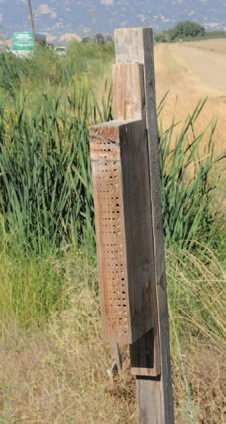
To create habitat specifically for nesting, downed logs and standing dead snags should be retained. Holes of differing depths can be drilled in rows into the wood beginning at a height of four feet to encourage native bees to use the tunnels for nesting. A 4″x6″ bee nesting block can be constructed for mason and leafcutter bees by drilling various size holes in a line across an untreated post and placing it in an open, sunny habitat. The holes should be drilled up at an angle to keep out rain water. Replace boxes every two years in the early spring after the new bees have hatched. Old boxes can have a build-up of parasites and diseases that can cause nesting failures. An excellent bee block template can be downloaded from the Bay Nature Institute at http://nocache.baynature.org. Untreated reed or bamboo bundles can be used as well. Mason bees, in particular, will benefit from the block or bundles. Plant or preserve species with pithy stems such as blackberry, raspberry, flowering dogwood, elderberry, and box elder to provide nest sites. Yearly pruning will expose the pith to the bees.
Good pollinator food sources include buttonbush, plum, crabapple, redbud, American beautyberry, cherry, pear, persimmon, red maple, tulip poplar, and sourwood. Native oaks, flowering dogwood, and paper birch also support the caterpillar forms of hundreds of moth and butterfly species. Of course, there are the myriad varieties of native wildflowers to choose from too when enhancing habitat with food sources.
For ground nesters, create or maintain patches of bare soil on sunny, south facing slopes and some on level ground. The best sites are well-drained sandy loams (35% sand component). Bees will tunnel up to three feet underground to construct their nests. Some broods remain in the nest for up to eleven months as they progress from egg to adult. Even an overturned tree with an intact, dirt-filled root ball will suffice. Native bunch grass borders that are at least five feet wide should be left for bumble bee nest sites (as well as for quail and other ground nesting birds and mammals). These areas can be mowed every two to three years in late winter. (Remember, the bumble bee colonies will have died for the year and the queen will be dormant underground.) Patches of clay or mud for brood cell construction are also beneficial to conserve. Leaf litter should be retained in places so that overwintering bee queens and butterflies have shelter. Rotational burning will destroy some colonies and individual bees and so should only be done over less than 30% of an area and at a frequency of only every three years to give the population a chance to recover.
As responsible land stewards, we have moved away from single species management and now focus on ecological processes at the landscape level. We now recognize the need to look at groups of species like pollinators and conserve them for their important role in the food chain. With the creation/preservation of quality pollinator habitat, bee numbers are increased as well as bee nutrition. Since many native bees tend to nest where they were raised, there is a good chance they will stay on site and continue to provide valuable services to local crops and native plants. It is a partnership we cannot afford to lose. Long live the queen [bee]!