
The past 40 years have witnessed quite a range of changes in white-tailed deer hunting, management, and population characteristics. Only 40 years ago, many areas in the Southeast still had relatively low deer densities: holdovers from the 1940s and 1950s when deer populations were extremely low across the region. Restocking efforts and conservative management by state wildlife agencies in the 1940s and after successfully raised deer densities to the point where antlerless harvest ultimately became necessary to prevent overpopulation. At the turn of the century, hunters and managers alike were basking in the glow of this wildlife management victory (resurrecting deer from the precipice of extermination), while promoting heavy antlerless harvest to ensure that the population pendulum didn’t swing too far the other way. Overall, everyone was starting to get comfortable with the fact that deer management was simple: combine one part hunter restraint, 3 parts antlerless harvest, throw in your own personal preference of habitat enhancement, mix thoroughly, and allow to broil for 3-4 Southeastern summers. The result was a healthy, balanced deer herd that produced good quality habitat and deer.
Deer managers and biologists were getting pretty comfortable with this. Personally, I thought this deer management thing was whipped and it was time to move on to bigger and more important questions. But, something had changed…
A New Player in the Game
To understand how everything changed, we need to step back about 150 years. The human footprint on the landscape was fairly evident at this time, with agriculture becoming widespread across Georgia, Alabama, and Mississippi. The same was true for northern states including Ohio, Pennsylvania, and lower Michigan. The result of this landscape change was that many populations of large mammal species were severely impacted. Habitat alteration and market hunting drove populations of white-tailed deer, elk, and other native large prey species to historically low levels (in some cases they were completely eliminated). This, combined with active eradication programs, resulted in the elimination of the wolf (gray wolves in the north and west, and red wolves in the Southeast from Texas to North Carolina).
What we didn’t realize at the time was that the wolf was probably the lesser of two evils. The coyote, not historically found in the eastern U.S., was patiently waiting in the plains and Ohio River Valley for us to eliminate the one thing that was keeping it from spreading further east: healthy wolf populations. As agriculture and development continued its westward March, so did eradication of the wolf. Eventually, the barrier to eastward expansion of coyotes was breeched as wolves were eradicated in Arkansas, Louisiana, Missouri, Tennessee, Kentucky, Pennsylvania and Michigan, and coyotes spread rapidly, all the way to the Atlantic.
The eastward spread of coyotes took place on two fronts. The northern expansion began in the early 1900s north of the Ohio River (the northern border of Kentucky) where coyotes were historically found at low densities. They spread into Michigan and Ontario in the 20s and 30s, made it to New York in the 40s, and had completely filled in the real estate vacated by the gray wolf north of Kentucky and West Virginia by the 1960s. The southern push of coyotes began in the 1940s and 50s in Louisiana and Arkansas. They had made it to Mississippi and Alabama in the 60s, Georgia in the 70s, and finally to Virginia, North Carolina, South Carolina, and Florida in the 80s.
Fawn Predation
The presence of coyotes in the Southeast is nothing new. They have been here for several decades, and have been predating fawns since the earliest days of their arrival. Research conducted on fawn survival in the Southeast during the 1980s and 90s yielded a wide range of results indicating that coyote predation was quite high in some areas and low in others. In most cases, coyote predation was considered to be relatively low, and probably not impacting deer populations.
Before describing these results in detail, it’s important to describe some general characteristics of white-tailed deer reproduction. First, in most healthy populations of white-tailed deer, you can expect an average of 1.7 fawns to be born per adult doe. This means that a population of 100 does will produce 170 fawns on average. These fawns will be born at an approximately equal sex ratio, so there will be approximately 85 buck fawns and 85 doe fawns. Of these 170 fawns produced by our 100 does, we can expect a lot of them to die due to natural causes. But, predation is only one cause of mortality for newborn fawns.
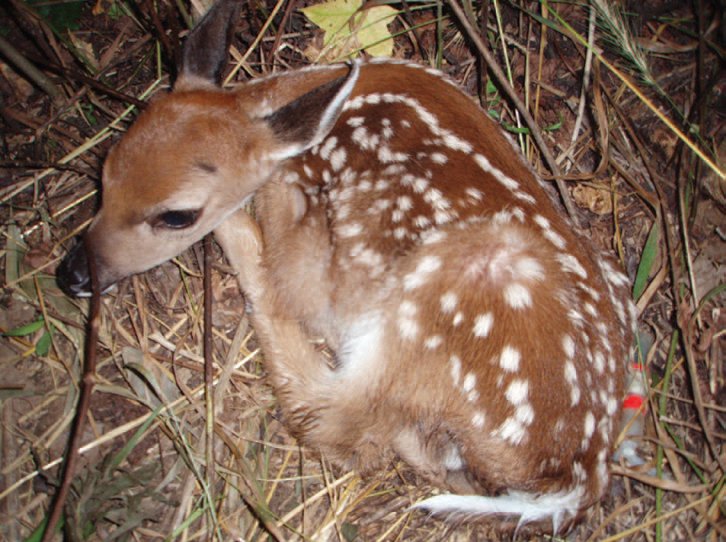
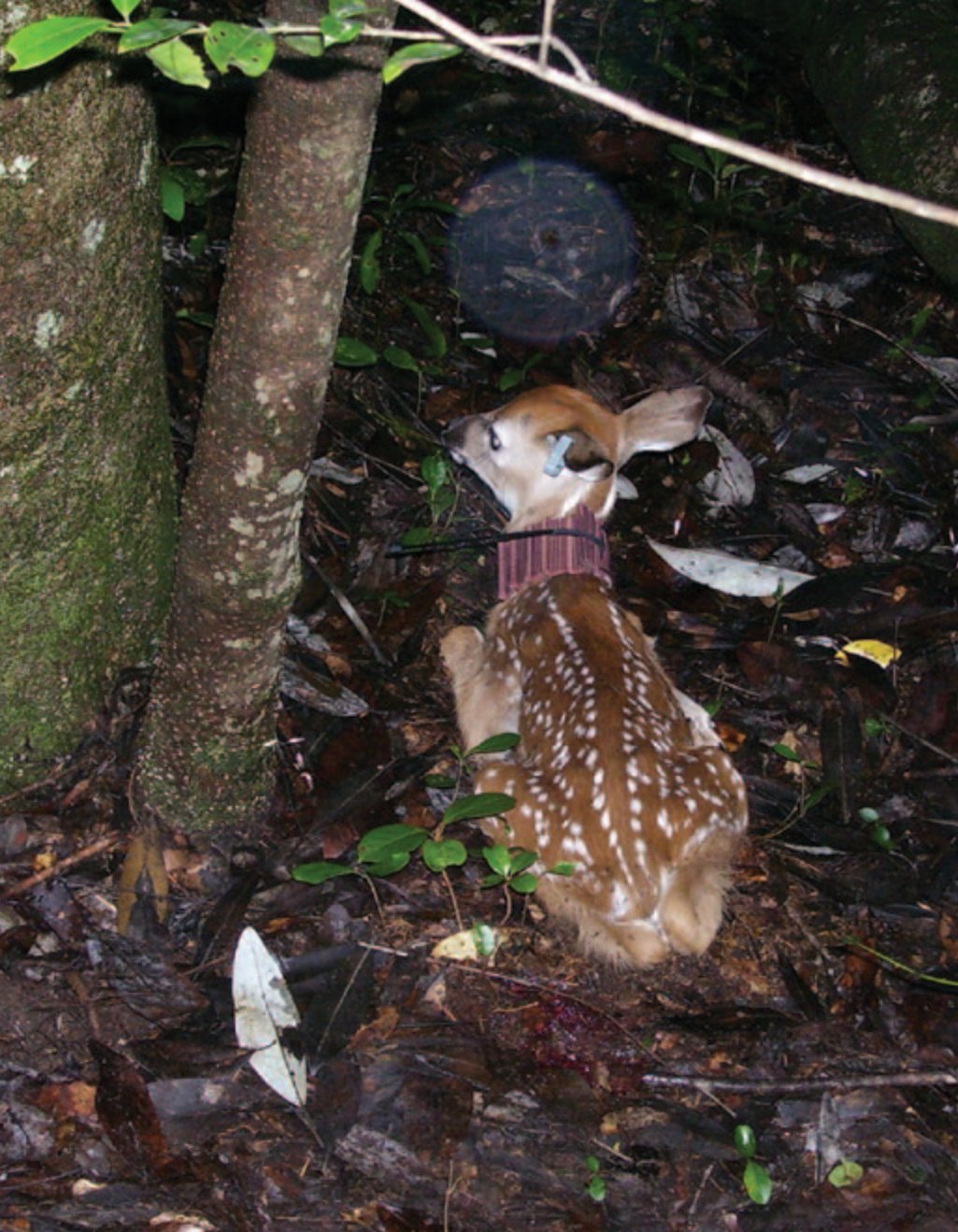
Considerable numbers of fawns die early in life, prior to ever encountering a predator. Some are just born weak and have difficulty nursing. Others are abandoned by their dams. One study we conducted in Auburn, AL found that rates of abandonment can be as high as 45% during individual years. I am sure that this estimate of abandonment is much greater than you would have guessed, as it surprised us as well. Still others fall to chance accidents. For example, one of our radio-collared fawns in 2005 fell into a 2-foot hole just a few hours after being born. It was unable to extricate itself from the hole and died from emaciation and dehydration after a few days.
A review study published in 1995 reported that of the previously published studies on fawn survival, mean annual mortality was 46%, although estimates among the summarized studies ranged from 27-90%. It has since been determined that because of technological limitations, these earlier studies likely underestimated rates of mortality, so it can be assumed that typical rates of mortality 20 to 30 years ago were likely in the range of 60 – 70% (e.g., this includes all forms of mortality…including predation). This means that of the 170 fawns born to our 100 does, we can only reasonably expect 50 – 70 to survive to 6 months of age. This estimate coincides well with published estimates of fawn recruitment (fawns:doe). Most healthy populations have anywhere from 0.5 – 0.7 fawns/doe 4 to 6 months after the birthing period.
More recently, a few studies have begun to confirm reports from the field that predation of fawns by coyotes may be abnormally high in some areas. A comprehensive study conducted at the Savannah River Site in South Carolina has documented significant levels of coyote predation on white-tailed deer fawns. Their data indicate that the coyote population on the area probably became established in the early 1980s, and the documented increase in coyote densities coincides markedly with a documented decline in fawn recruitment from approximately 1.0 to around 0.4 fawns/doe. In short, they believe that the increase in coyotes following their establishment has resulted in fawn recruitment rates much lower than those seen two decades earlier, and that this suggests that hunter harvest is not the only significant form of mortality for deer in the Southeast. They believe that fawn survival now needs to be incorporated into population models.

In a similar study that is currently underway at Fort Rucker, Alabama, a graduate student of mine is examining fawn survival on the area. Population surveys have suggested that fawn recruitment may be as low as 0.25, and harvest data indicate that while deer in the population are in excellent condition, hunter harvest has declined substantially since the late 80s. We collected our first year of fawn survival data in 2009. Although our sample sizes were low because of difficulty capturing animals (which we attribute to low density), the data seem to suggest that predation by coyotes was abnormally high. Of 7 fawns radio-collared, only 1 survived to 6 months of age, and 5 of the 6 mortalities were probable predation by coyotes. Our second year of research is not yet complete, but is showing similar trends.
Another study conducted in my lab in a suburban area of Auburn, Alabama documented 67% fawn mortality. While this number is not overly alarming, we were surprised that coyotes accounted for somewhere between 42 and 63% of all mortalities. Considering that the study was conducted in an area of high human residence, the fact that coyotes are found at densities great enough to have this impact on the local deer population suggests that they may be found at even greater densities in nearby rural areas.
What Does this Mean?
So, what does this mean? We can surmise from the data that has been accrued so far that coyotes are having a greater impact on survival of deer fawns than was documented 20-30 years ago. In fact, in the studies conducted at the Savannah River Site in South Carolina and at Fort Rucker, Alabama, the data seem to suggest that low fawn recruitment is resulting in depressed densities of white-tailed deer. It’s possible that predation, combined with antlerless harvest, is creating what is called a predator-pit.
A predator-pit is a theoretical scenario in which the combination of predation and another mortality factor combine to drive prey levels below carrying capacity. According to theory, once the density of the prey species reaches a certain level, it is very difficult for the prey species to return to previous levels without the removal of predation. However, a predator-pit scenario is only theory at this point. It’s an extremely difficult scenario to prove from a scientific perspective, and there are no previously documented scenarios on which to base future management plans. Unfortunately we can’t predict how either the deer or coyote populations will fluctuate naturally in the future, nor can we project with any level of certainty how deer populations will respond to alterations in management (antlerless harvest, etc.).
Is Coyote Trapping a Solution?
The “knee-jerk” reaction to high levels of predation is to remove the predator. Without question, elimination of coyotes would result in improved levels of recruitment in populations where predation is a serious issue. But, how effective is coyote trapping on fawn survival in areas such as these? Two recent studies in the Southeast illustrate just this.
In a study conducted in northeast Alabama by the University of Georgia, researchers documented fawn: doe ratios of 0.18 in September and 0.41 in February. Following removal of 22 coyotes and 10 bobcats from the 2,000-acre study area prior to the next fawning season, the researchers documented a marked increase in fawn:doe ratios: 0.24 and 1.20 in September and February, respectively.
Another study conducted by University of Georgia researchers in southwest Georgia found similar results. They divided their 29,000-acre study area into a treatment (predator removal: 10,400 acres) and control (no predator removal: 6,900 acres) area, with an 11,100-acre buffer between them. The area was deemed to have a low density of deer (5 – 15 deer/mile²) prior to the study. The researchers removed 23 coyotes and 3 bobcats from the treatment area in the spring and summer. During the year of the removal, they documented a pre-hunting season fawn:doe ratio of 0.68 in the predator removal zone and 0.07 in the control area.
Without question, predator removal, or coyote trapping, can be effective at reducing predation on fawns. It is theorized that removal efforts conducted prior to fawning are the most effective as it does not allow time for additional coyotes to move into the area. However, these victories are likely short lived, as coyotes will rapidly recolonize an area that has been heavily trapped. Additionally, intensive trapping efforts such as those employed in the previous studies are very expensive and require expert trapping skills for any measurable level of success. These efforts are too expensive for most landowners to undertake or sustain for an extended period of time. The result is that predator control is not a viable option in the vast majority of situations. Opportunistic predator removal (e.g., shooting coyotes when an opportunity presents itself) is the approach taken by most hunters, landowners, and managers because of the high costs of implementing a predator-removal program. While this approach helps to make the landowner, hunter, or manager feel better about their management program, the reality is that it does very little to effectively reduce coyote densities.
What Does the Future Hold?
The future is rather uncertain regarding the impacts that coyotes will have on deer populations in the Southeast. Currently, the overall impact of coyotes on fawn recruitment is somewhat unknown. While there are certainly areas where coyotes are having a measurable impact (enough of an impact to significantly reduce deer densities), there are also many areas where the impact of coyotes is negligible. For example, my lab has been intensively examining fawn survival and deer population dynamics on a 16,000-acre area in South Carolina less than 100 miles east of the Savannah River Site where coyote predation has been high for years. Yet, predation has had very little impact on our study population even though antlerless harvest is continually maintained at a very high level. It’s possible that some areas will never experience the levels of coyote predation that other areas are experiencing. Maybe habitat is not suitable. Maybe deer management prescriptions have not interacted with coyote predation to form the “perfect storm”, or a “predator-pit”.
We also don’t know how deer populations that have been negatively impacted by predation will respond. The reality is that white-tailed deer in the Southeast, as well as in every other region, evolved alongside a host of predators and had somehow managed to survive for thousands of years. It’s possible that deer in the Southeast are currently in a steep learning curve, and the predator avoidance strategies that served to reduce fawn predation by predators past are only marginally effective with coyotes. I suspect that over time we will see improved fawn recruitment in spite of continually high densities of coyotes, but I don’t have any guess as to when this might be. Skeptics will say that it will occur long after we’re dead, and optimists will look hopefully to the coming years.
The reality is that some areas are currently experiencing a problem. In those areas where fawn recruitment is indeed low and not just a perceived problem where a decline in deer sightings due to a heavy mast crop has caused hunters to scream “Armageddon!”, reductions in antlerless harvest can only help. The more fawns that hit the ground, the greater the chances of getting more to an adult age. But, this doesn’t mean that antlerless harvest should be discarded. Rather, antlerless harvest should continue to be incorporated into deer management programs using detailed information on local herd conditions, fawn recruitment, and age structure.
Some are suggesting that poor habitat quality may be contributing to declines in fawn recruitment. Without question, fawns need adequate cover for hiding, and a deficiency of suitable habitat could cause fawn predation to be elevated. However, I think that many people misunderstand the manner in which cover affects fawn survival. Several studies have documented that the greatest period of fawn mortality is from about 3-5 weeks of age. This is the period during which fawns are becoming more mobile and beginning to spend some time with their dams. However, they do not yet have the ability to out-run coyotes, and some will revert to instinct and immediately drop and hide when pursued. They are easy targets during this period, and are much more visible than during the first few weeks of life when they spend 95% of their time bedded and not moving. What this means is that efforts to increase quality of bedding cover will likely have little impact on fawn survival. But, practices that improve horizontal cover (2-3 feet off the ground) in areas where adults spend time feeding will allow fawns to follow their dams without being seen. A prime example of this type of habitat is the traditional longleaf pine forest, a climax habitat in the Southeast that is maintained by fire. Good management of pine habitats that results in a strong herbaceous understory may be more effective than anything at reducing susceptibility of fawns to predation.
At this time, I would say the jury is still out on what the future holds. Without question we now need to consider fawn predation as an important component in deer population models in the Southeast. But, I don’t believe that coyotes are going to eliminate the deer hunting heritage that is so important in the Southeast. Who knows…we all might look back one day and feel that the introduction of coyotes into the system was an improvement.
References
Howze, M. B., L. M. Conner, R. J. Warren, and K. V. Miller. 2009. Predator removal and white-tailed deer recruitment in southwestern Georgia. Proceedings of the Annual Conference of the Southeastern Association of Fish and Wildlife Agencies 63:17-20.
Kilgo, J. C., H. S. Ray, C. Ruth, and K. V. Miller. 2010. Can coyotes affect deer populations in southeastern North America? Journal of Wildlife Management 74:929-933.
Linnell, J. D. C., R. Aanes, and R. Andersen. 1995. Who killed Bambi? The role of predation in the neonatal mortality of temperate ungulates. Wildlife Biology 1:209-223.
Saalfeld, S. T., and S. S. Ditchkoff. 2007. Survival of neonatal white-tailed deer in an exurban population. Journal of Wildlife Management 71:940-944.
VanGilder, C. L., G. R. Woods, and K. V. Miller. 2009. Effects of an intensive predator removal on white-tailed deer recruitment. Proceedings of the Annual Conference of the Southeastern Association of Fish and Wildlife Agencies 63:11-16.