
With Spring just around the corner, my excitement for the upcoming fishing season builds. The thundering gobble of that old long beard lets me know my much regretted winter hibernation at the office will soon be over. We begin evaluating ponds in late February and that means hopefully seeing big bass. It also means answering tons of questions that pond owners have conjured over the past few months. From issues concerning using soft plastics to black spots in fish fillets, each question brings new challenges to my job. Thinking back over the years of shocking ponds, I have come up with a few of the most commonly asked questions about ponds and pond management.
Does it hurt to remove a trophy bass to have mounted?
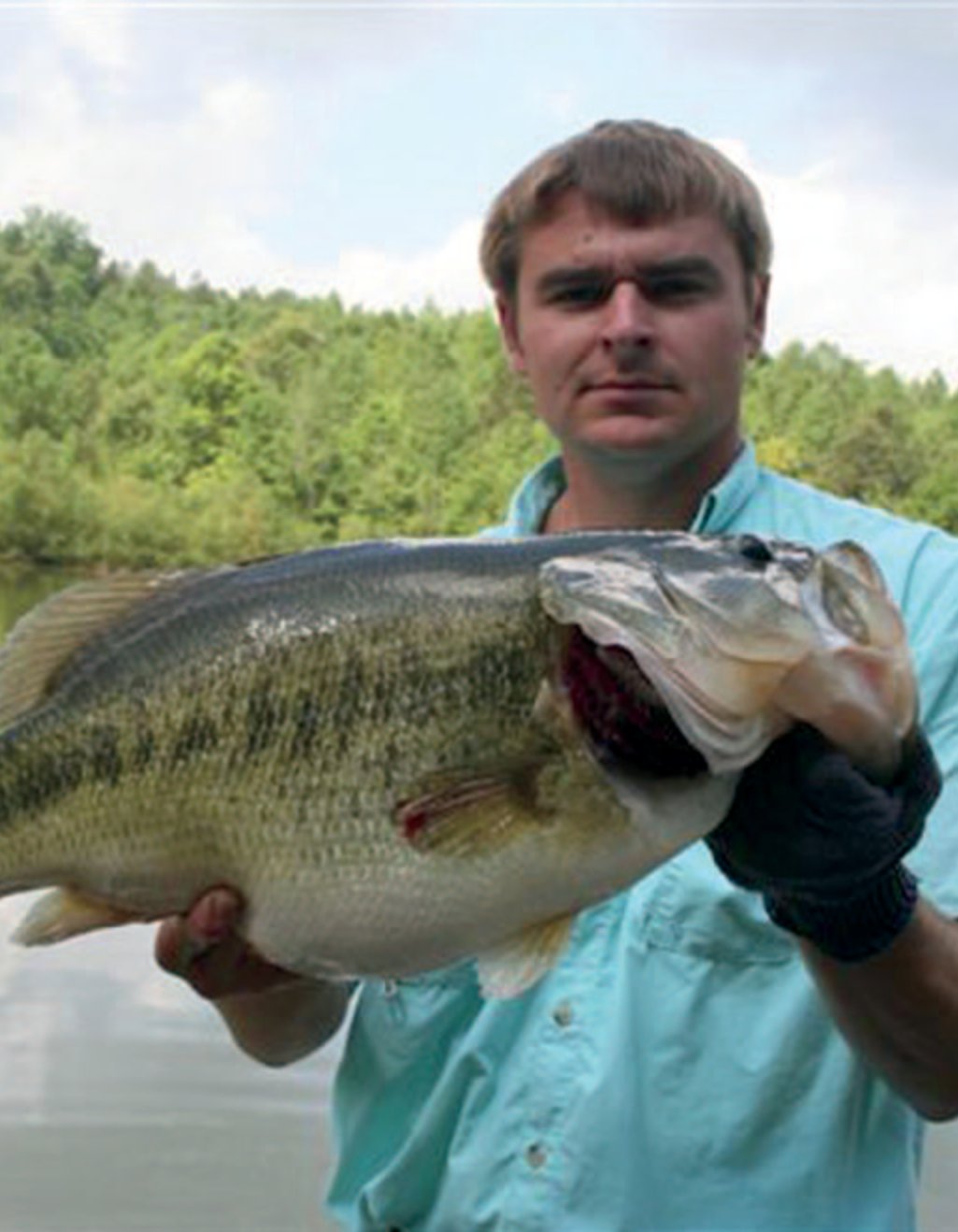
This question is probably one of the most asked and most debated questions in pond management. Some say you release “big mama” to have her to catch again. Others say the fish is old and is near the end of its life, so removing her doesn’t hurt the population. My answer is simple; if you only remove one or two of these trophy-sized fish per season, then the impact on the population is going to be minimal. Essentially you are removing a predator that consumes a good bit of the forage that would otherwise be available to another member of the population. Also, most trophy-sized bass, those exceeding eight pounds, are the older members of the population and the chances of landing that fish again are slim. It is not a bad management practice to occasionally remove these larger bass for mounting, however if removal becomes a common practice, then the impact on the population could be pretty devastating. The safest management practice if you are concerned about the removal of your larger fish would be to restrict all trophy-sized bass to catch and release only. If an angler wants a trophy for decorating their “man cave”, then encourage them take a good photo and get precise measurements because most taxidermists can create a pretty realistic replica mount and the big girl can be released.
Will shocking my pond kill the fish?
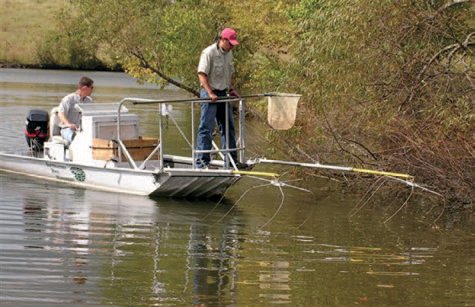
The answer to this question is NO; fish are not harmed if a trained fisheries biologist uses certified electrofishing equipment to sample your pond. However the use of the old “telephone” method or constructing a homemade electrofishing unit could possibly cause harm to the fish as well as the operator. I shock hundreds of ponds and lakes each year and very rarely, if any have I ever seen a fish harmed by electrofishing. During each evaluation we weigh and measure each fish and those fish over the harvest limit, are released back into the pond. The larger bass are usually tagged with a numbered SEPOND t-bar tag, which allows the pond owner the opportunity to keep track of the fish, its growth rates, and the number of times it gets caught each year. The fish sampled with our electrofishing gear always swim away unscathed after the data has been collected.
The actual process of electrofishing consists of using electricity which is generated from a boat that is especially designed for scientific sampling. The generator creates an electrical current which runs from the boat out to two anodes, which are position on the front of the unit. The electric current creates a high-voltage potential gradient which, in fish, causes uncontrolled convulsions or galvanotaxis. This draws the fish to the electric field where they can be collected and placed in the livewell. It is an interesting experience to see big bass roll, but you have to have a good netter because many fish are only stunned for a few seconds. During our evaluations we encourage the pond owner to ride along with us in the electrofishing boat and see these “pigs” roll up. If fish were harmed during our visits we probably would get invited back!
Is it ok to get bass or other fish from the local river or reservoir and stock in my pond?
I always tell pond owners that it is much easier to grow healthy, disease free fish when you know exactly where the fish are coming from and who is stocking your pond. The two major problems with introducing fish from a local reservoir is because of the possibility of spreading fish diseases and introducing invasive aquatic plants.
One of the major killers of larger bass in reservoirs over the last few years has been the spread of the LMBV or largemouth bass virus. Research showed that the larger bass were affected most and that this virus could spread easily from fish to fish. In the last few years I know of at least one pond where some of the larger bass were affected by the virus and I suspected a few others that I had been managing. There are also loads of other viruses and parasites that can get introduced by bringing in unhealthy fish, which could be detrimental to the fish population.
Another reason I stress not introducing fish caught at the local river or reservoir into your pond is the possibility of transporting an invasive aquatic plant. Many of the lakes and rivers in the South contain aquatic plants that if introduced into a pond would completely take it over. Aquatic plants, seeds, and sometimes just pieces can be transferred from lake to lake fairly easily and get established. Even in my days of fishing reservoirs, I can still remember seeing pieces of hydrilla in my livewell, all over my boat and on the bass I had cleaned. If I were to have stocked just one of those bass, which had just a small piece of the plant stuck to his fins for instance, then that could have caused me major problems in my pond.
Is it harmful to use live bait in my pond?
If you have ever watched anyone bass fishing in Florida on the Outdoor Channel, then you have probably seen some large bass caught on live golden shiners. So why do biologists warn against using live bait in ponds? “Hey, if they are catching them on TV, then why not use them in my pond?” Well, if you plan on using only bluegill or threadfin shad that were caught from the pond you are fishing, then yes using live bait is fine. However, live bait purchased from a bait store or caught at the river is probably not the best thing to use in the pond. The reason is not actually using the individual fish you just purchased, the problem lies with what is done with the leftover bait when it is time to go home. I know what you are thinking; just toss the rest of the bait in the pond for the bass to eat. It seems harmless and most often times it probably doesn’t hurt. However, I have seen rare occasions where a pond owner got an undesirable fish species established in his pond and this species impacted the population.

When bait is bought from a local bait dealer, most often times an angler is either getting golden shiners or fathead minnows (tuffies). Most adult fish are easily identified, but as juveniles many fish look similar, especially minnows and occasionally at the bait shop you get more than what you paid for. If all the minnows in the bait bucket get put on a hook, then using live bait in ponds is ok because these fish will eventually die. However, if they are not used and just tossed into the pond, then you run the risk of introducing an unwanted species. The best management practice in this case is to throw the extra bait in the woods and give a raccoon an easy meal.
What is the best type of structure for my pond?
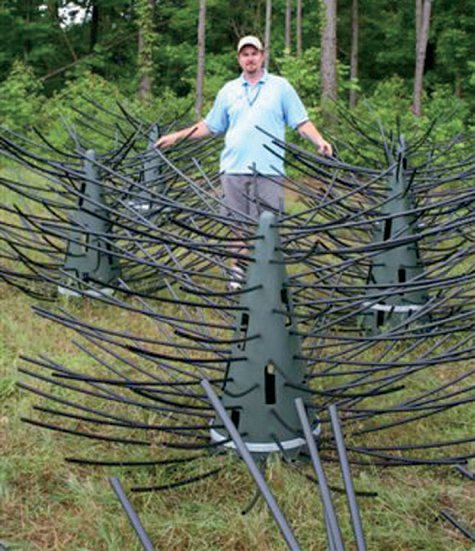
There are many different ways to create those gnarly hiding places so that a lunker can ambush prey and you as the fisherman can know where she lives. My favorite way to do this in a pond is to cut down a few trees along the pond back and allow them to fall into the lake. As a fisherman and biologist, I feel the taller trees that have fallen in a lake seem to hold more fish than any other type of structure I have fished. A fallen tree creates natural shadows from the branching limbs and this allows a big bass the ability to hide and ambush prey. Forage fish seem to hang out around these trees as well, either as a way to avoid predation or just to munch on insects that live in the decomposing tree. The “lay down” tree is my favorite but I have also used old Christmas trees as a form of structure in ponds. These are good for holding fish; however they usually need to be replaced about every one to two years. A good alternative to using Christmas trees would be to install artificial structure such as a Honey Hole Tree or Honey Hole Shrub. These two products look very similar to a real Christmas tree or brush pile, however they are made of durable plastic material and will not need to be replaced. I have placed these in several lakes and its ease of installation and its durability makes them worth the money. These are just a couple of my favorites types of pond structure, there are many more and just about anything, from sunken cars to concrete blocks, will work.
Are soft plastics bad to use in ponds?
Soft plastics are probably one of the most popular largemouth bass baits used these days. I know in my tackle box the old faithful bag of “junebug” colored lizards will never let me get skunked. Well, are those soft plastics really that bad to use in your pond? Most pond owners think the problem with soft plastic comes when a bass swallows the bait, is injured and eventually dies. Although this does happen, this is not the main reason for serious concern. The issue with using soft plastics comes from fishermen discarding the well-used worms and lizards in the pond. These discarded baits slowly sink to the bottom of the pond were they continue to look like prey. With just the slightest current, these baits flutter and dance just enough to draw the attention of a passing largemouth. Largemouth bass are opportunistic feeders and in most cases bite first and ask questions later. These discarded baits are consumed and cannot be digested which can ultimately affect growth. On several occasions we have collected skinny bass and after a little examination, found several plastic baits in the bass’s stomach. Many of which looked to have been in its stomach for a good while.
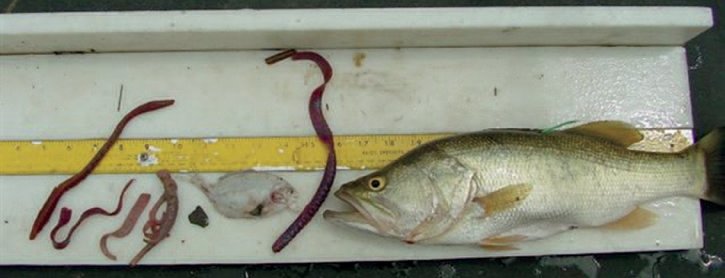
Clearly, soft plastics are a part of bass fishing and eliminating them from an angler’s repertoire is preposterous. So what can we do to protect our largemouth bass? There are two excellent solutions, either educate your fishermen about the dangers of discarding baits and/or change to more biodegradable plastic-like baits that are less harmful. Both solutions can have lasting effects in your pond and help prevent detrimental effects on bass growth.
Can turtles harm my fish population?
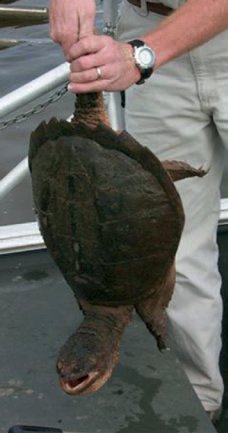
As a pond owner, there is nothing more annoying then watching a turtle feed on the floating pellets intended for your bluegill after the feeder goes off. I hate seeing my high protein food go to feed those lazy “log layers”. Aside from this aggravation, are turtles really that bad for ponds? Most turtles that inhabit ponds cause no detrimental effects to the pond or the fish population that exists within it. Turtles consume mostly aquatic vegetation and fish generally only account for about 3 % of there diet. Turtles are scavengers and mostly consume those animals and fish that are dead or dying. If you have ever kept fish on a stringer for a long period of time, then you have probably been robbed by one of these scavengers. I usually recommend removing turtles when they are either hindering the fishing or eating the pelleted food that is intended for your bluegill.
How often should I fertilize my pond?
Fertilization is one of the most essential management practices needed for maintaining well balanced ponds and growing trophy largemouth bass. Keeping a good phytoplankton bloom throughout the growing season is the key to growing big healthy fish and the question above is a very important one to ask. We fertilize all our ponds with Sportmax Pond Fertilizer eleven times a year from March through October. Sportmax is a water soluble pond fertilizer that can be broadcast directly onto the surface of the pond at rates of 4 to 8 pounds per surface acre. A good rule of thumb for applying fertilizer in ponds is to check the water clarity every two weeks and only apply the fertilizer if water visibility measures greater than 18 inches.
When should I start feeding my bluegill?
The rising temperatures and longer photic periods in the early Spring cause fish activity and feeding to increase. Getting your fish feeders filled and running during this time helps get the bluegill trained to the feeding times faster. The first week of March is usually when I make my first fertilizer application and also when I fill my fish feeder with food. Early in the season when fish are first training to the feeder, I program my feeder for only one feeding event per day. As the bluegill feeding activity increases, I change the settings to three feeding events per day at five second intervals. Generally, bluegill will feed throughout summer and only begin to slow down in late October to early November. To keep your feeders in good working order it is best to let the feed run out in November, remove the timer and battery and store them inside until the next spring.
I see black spots on my fish when I clean them, is that normal?
I remember the first time I noticed black spots in the fillets of some bass my dad and I caught in a local pond we had permission to fish. I was a little concerned about these spots and curiosity led me to ask my dad if they were harmful. His reply was not surprising, similar to many of his other answers, “don’t worry son, a hot pan of grease will kill whatever is in these fish.” Not your typical biological answer, but like many times in my life he was right.
The biological explanation for the occurrence of these spots in fish is because of the presence of yellow or black grubs. These grubs are larval stages of a parasite that has a pretty interesting life cycle in ponds. The parasite actually matures in fish eating birds such as a heron or egret. After maturity, the eggs of the parasite get deposited into the pond where they will hatch and take residence in its first intermediate host, the snail. The larva develops in the snail and eventually leaves to attach to a bluegill or bass. It burrows itself into the flesh of the fish and will remain there until the fish is eaten by a bird. Once in the bird, the cycle repeats itself and will continue to thrive as long as the three hosts, the snail, the fish and the bird remain in the pond.
So is it safe to eat these fish? Well, since I am still here writing articles and shocking ponds, I guess the hot grease did the trick. Seriously though, if these fillets are cleaned and cooked thoroughly the grubs are not harmful to humans. Total elimination can be difficult; however there are some management practices that can be implemented to help with control of this parasite. Reducing a pond’s snail population by eliminating available food (aquatic plants) and stocking predators (redear sunfish, AKA “shellcrakers”) can help reduce and prevent these parasite infestations. Also installing bird scare devices can be useful in ridding the pond of these fish eating birds.