

Anyone who spends their time in the outdoors with wildlife is sure to come across the bizarre from time to time. No, I’m not talking about glimpsing cryptozoology’s famed Bigfoot or the Chupacabra. I’m referring to real, North American animals that just don’t look quite right. These oddities can range from unusual coat colorations to females with male characteristics to outright bizarre deformities. If it exists, someone has probably seen it. The photos in this article have not been Photoshopped® and are real anomalies in the animal kingdom.
PIEBALDISM
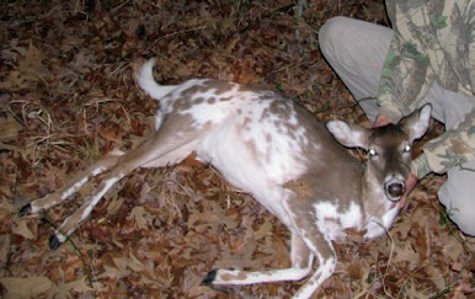
Probably the most common anomaly is piebaldism in deer. When we see a piebald horse, we don’t think anything of it, but when a white spotted deer walks out in front of us, we wonder what is going on in the herd to cause such a condition. Piebaldism is an inherited recessive genetic disorder where pigmentation (melanin) doesn’t develop properly in places. It shows up in deer populations at a rate of 1-2% making it rare. However, some researchers suggest that overcrowded deer herds may have a higher occurrence of the condition. Usually, the white patches are small and appear just on the legs or sides, but some deer are almost solid white. Unfortunately, with the disorder comes skeletal deformities and organ malformations. Some of the most common visable deformities include a curved spine, short legs, deformed feet, a “Roman” nose, and an overall “goatish” appearance.
Thankfully, the condition does not really affect the overall health of the deer herd. Most piebalds with severe defects in physical development die or are killed by predators. If a piebald mates with a normal deer, the genetic propensity for piebaldism can remain in the population and resurface any time. However, if two piebald deer mate, they do not produce offspring. Normal deer do not ostracize piebald deer. The take-home message for the deer herd manager or hunter is that piebald deer do not affect the overall health of the herd and are therefore not a threat. Also, the meat is perfectly edible.
ALBINISM AND LEUCISM
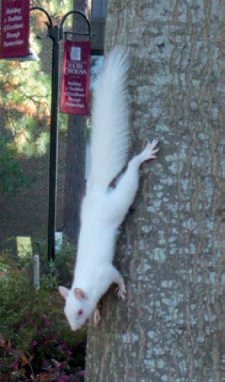
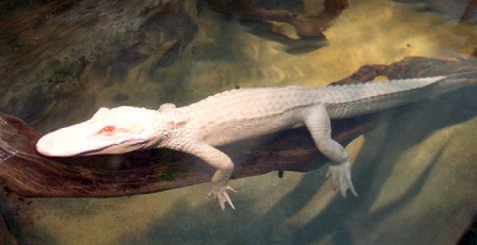
A similar condition involving loss of pigmentation is albinism. Birds, mammals, fish, amphibians, and reptiles can all be affected by this disorder in which melanin is absent in the skin, hair, and eyes (pupils). The affected animal appears solid white and the eyes pink due to the blood vessels in the back of the eye (retina) showing through. Sometimes blue eyes are present and this is due to other pigment anomalies. Reptiles are an interesting case because instead of one amino acid giving rise to melanin, there are three to five amino acids and other compounds that code for pigmentation. That is why you can find orange-on-white “albino” snakes for sale. Besides snakes, another reptile that is often displayed in zoos and theme parks is the white alligator. Only about 50 are known to exist worldwide. As for mammals, there are many sightings of white squirrels, raccoons, and deer nationwide. In fact, some estimates suggest that one in thirty thousand deer are albinos. A variation of the disorder in which the eyes, nose, and lips retain their color is called leucism. Both albinism and leucism are recessive traits. This is a good thing because being a solid white animal in the wild marks them as easy targets for predators. Other problems associated with the absence of melanin include skin vulnerability to UV light, photosensitivity, or even blindness which tends to be genetically linked to the disorder. Other genetic links to the albinism disorder include problems with the immune system, lungs, intestines, and neurological system. Therefore, most albinos in the wild do not live very long.
MELANISM
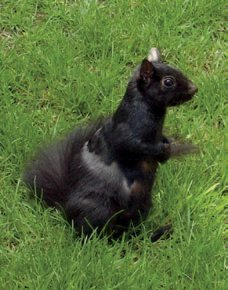
The opposite of albinism is melanism which can be a genetically dominant or recessive trait and is an over-production of pigment, making the animal darker than usual. The most well-known melanistic species is the jaguar which is sometimes referred to as the black panther. Many other mammal species can appear black; the most commonly seen are coyotes, squirrels, wolves, and even some insects such as moths. Researchers have found that the darker coloration may actually have an adaptive advantage in some cases. Not only do darker animals appear more camouflaged in their environment, but black felines, for example, have been suspected of having a better immune response to viral infections.
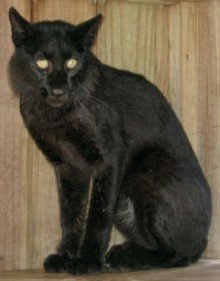
Often, oddly colored animals are misidentified as something else. In 2007 in Martin County, FL, rumors circulated for weeks of a “black panther” prowling through back yards and taking the occasional pet fowl. A local nuisance wildlife trapper was called in and he was able to catch a rare melanistic bobcat—a sixteen pound adult male that is now housed at Busch Wildlife Sanctuary in Jupiter, FL. Most “panther” sightings ended with the capture of this black bobcat. South and South-central Florida has had other reports of black bobcats in the past so this recent sighting lends credence to the assumption that many people misidentify common animals when there is an oddity involved.
SAMPSON FOXES
Another case in point is the Sampson fox. (If you know your Bible stories, you will quickly see the connection between the name and the disorder it describes.) This rare genetic condition occurs in less than 1% of the population of red foxes, grey foxes, and perhaps even coyotes and is defined by a lack of guard hairs all over the body. The undercoat is often matted or curly in appearance. Imagine a pointy-nosed dog breed that has been shaved down for the summer and you have the Sampson fox. A 2006 sighting of a Sampson (red) fox in North Carolina made it to National Geographic’s online news page and was dubbed the “Carolina Mystery Beast.” People speculated that is was some new species of canid or even an escaped exotic pet from Africa or Asia. This rare condition shouldn’t be confused with the more abundant examples of foxes with just a bad case of mange!
BEARDED HENS AND MULTI-BEARDED GOBBLERS
Some species even appear to suffer from a gender mix-up. Most turkey hunters have heard of, if not witnessed first-hand, a bearded hen. Although relatively rare, bearded hen occurrence rates are 10-20%. Despite sporting a male’s beard, the beard itself it typically thin, soft, and sometimes kinked but can thicken with age. Most female beards do not exceed eight inches in length. Some hens even sport short spurs but these are usually less than a half inch in length and typically occur only on one leg. Despite these male characteristics, these hens are still biologically functioning females that are able to reproduce normally.
Speaking of beards, there is another anomaly in which a male can have multiple beards. Less than 10% of male turkeys have this condition and usually no more than two beards are present. However, there are records of eight-bearded turkeys. Each beard grows from a different sheath and can vary in thickness and length. The reverse of this condition is the gobbler than never develops a beard at all. Why some hens produce beards and some gobblers multiple beards or none at all is still a question for geneticists to answer.
ANTLERED DOES AND PERUKE ANTLERS
Where gender identity gets really confusing, though, is in the case of antlered white-tailed deer does. Many states have specific rules and regulations to account for the shooting of an antlered doe by mistake, so it is a rare but noted occurrence. Some estimates suggest that one in nine-hundred white-tailed does have antlers. To understand how a doe can grow antlers, we have to understand how antlers are typically formed. When male fawns are born, increases in testosterone cause pedicles to develop on the skull. From these pedicles, antlers will grow as other hormones also contribute to their development. As testosterone levels vary over the seasons, antlers respond by growing, developing velvet, shedding the velvet, and antler casting. In female fawns, the rise in estrogen inhibits the development of pedicles and therefore future antlers.
However, sometimes females can develop pedicles and later—with just enough boost of testosterone—antlers. Sometimes adrenal cortex tumors are to blame as they may secrete testosterone. Also, there is a theory that suggests that twin fawns in the womb can sometimes experience a fusing of placentas so that if one fetus is a female and the other is a male, the male’s testosterone can cross over and affect the female’s reproductive system. Still other possible causes of antler growth include an unusually high amount of testosterone naturally present in a doe or even hermaphroditism. I am sure a confused hunter somewhere has killed an antlered deer only to find both male and female parts present within the same animal. For a doe to be a true hermaphrodite, a non-functional uterus must be present, plus undescended testes.
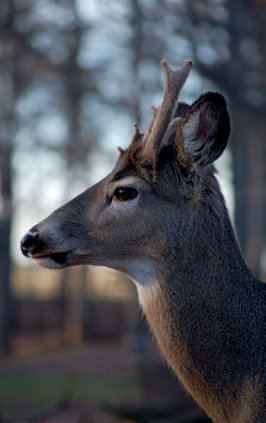
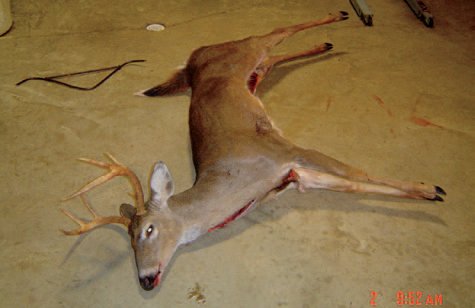
Antlered does typically only produce spike antlers, but with a greater hormonal influence, larger antlers can grow. Usually these females are infertile. Antlered does are rare and probably make up less than 0.1% of the population. Many of these antlers remain in permanent velvet as there is no further boost of testosterone to cause shedding or antler casting. Interestingly, those deer that have only experienced an initial dose of testosterone are still fertile and function as normal females. For example, an antlered doe studied by Penn State University has consistently produced twin fawns over the years (see photo). Other deer species that also have produced antlered does, though not to the extent of white-tailed deer, are mule deer and roe deer.
Even when antlers appear on the correct sex, they may not always be normal. When there is injury to the testicles or even full castration, antlers may experience uncontrolled growth, forming weird masses on the deer’s head. These masses can grow like bone cancer (sarcoma) and can invade the skull cavity or cover the eyes, resulting in death. When the growth takes on the appearance of a wig, it is called a “peruke” antler. Sometimes the antler is cauliflower-shaped or cactus-shaped. Basically, there is a loss of testosterone to the forming antler, causing it not to harden or shed the velvet or the antler itself. (For those of you readers that are Quality Deer Management Association members, the December 2009 issue has a great photo of a skull with peruke antler.)
POLYCEPHALY
In the immortal words of Monty Python…”And now for something completely different”…. There are some abnormalities that are just beyond strange, as in the case of polycephaly meaning having more than one head. The cause of the disorder is not unlike conjoined twins where monozygotic (one-egg) twins do not fully separate. Each head contains its own brain but they share all other organs and limbs. Although two-headed domesticated animals such as cows, pigs, dogs, cats, and sheep are known to be born from time to time, most wild animals born with multiple heads do not survive long enough to even be observed. The rare exception is some reptiles. In the case of turtles and snakes, there have been wild-caught specimens recorded over the years. (Some snakes have even been recorded with three heads.) Sometimes the heads fight with each other or there is no coordinated movement, creating a zig-zagging effect as they move. Obviously, these individuals struggle to survive, but when one head dominates, feeding, reproduction, and escape from predators can be accomplished.
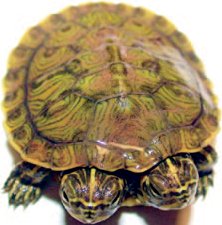

Typically, abnormalities that reduce the fitness of an animal lead to a short life in the wild. For those of us that are lucky enough to get a glimpse of a rare condition, it makes for a great story around the hunting camp. They say “truth is stranger than fiction,” and in the case of the above examples, I would have to agree.
References
Bennett, S. 2009. South Carolina Department of Natural Resources herpetologist. Personal communication.
Cook, R. L. and H. G. Gore. 1984. Learn About Turkey. A contribution of the Texas Pittman-Robertson Project FW-14-C.
Davidson, W. R. and V. F. Nettles. 1997. Field Manual of Wildlife Diseases in the Southeastern United States, 2nd ed. Southeastern Cooperative Wildlife Disease Study. University of Georgia, Athens, GA. 417 pp.
Eriksen, B. 2009. Wild Turkey Oddities: Weird Beards. Pennsylvania Chapter of the NWTF. http://panwtf.org/weird_beards.php.
Fitzgerald, S. D. 2009. Diseases and Pathology of Cervids (Deer). Michigan State University. www.cldavis.org/cgi-bin/download.cgi?pid=72.
Hall, M. 2009. South Carolina Department of Natural Resources wildlife biologist. Personal communication.
McKinley, W. 2009. Antlered Does: Understanding the Causes That Trigger This Rarity. Mississippi Department of Wildlife, Fisheries, and Parks. http://www.mdwfp.com/Level2/Wildlife/Game/Deer/Articles.asp?article=120.
National Geographic News. 2006. Carolina mystery beast is a rare abnormal fox, experts say. http://news.nationalgeographic.com/news/2006/03/0321_060321_tyco_fox_2.html.
National Wild Turkey Federation. 2009. All About Turkeys: What does a turkey look like? http://www.nwtf.org/all_about_turkeys/new_turkey_look.html.
Pennsylvania Game Commission. 2007. Wild Turkey FAQS: Turkey Oddities. http://www.pgc.state.pa.us/pgc/cwp/view.asp?a=466&q=172917. Also Biology. http://www.pgc.state.pa.us/pgc/cwp/view.asp?a=466&q=171916.
Perry, M. 2009. Natural History of Paxutent: The White Deer of Paxutent. USGS Patuxent Wildlife Research Center. http://www.pwrc.gov/history/whitedr.htm.
Quality Deer Management Association. 2009. One Weird Wig. Quality Whitetails, Dec. 2009 issue.
Ruth, C. 2009. South Carolina Department of Natural Resources wildlife biologist. Personal communication.
State University of New York. 2009. The Return of the Wild Turkey. www.tpwd.state.tx.us.
Weird, True, and Freaky. 2009. “Albinos.” Television presentation.
Wikipedia. 2009. http://en.wikipedia.org.