
If you have recently visited a wildlife-research lab, attended a wildlife man- agement-related conference, or even watched recent nature shows on television, you may have noticed that there is an ever-increasing emphasis placed on the role of genetics in wildlife ecology and management. Furthermore, within certain circles, this genetic research is the “talk of the town”. To many, the very idea of genetics conjures up thoughts of: a subject to avoid, vague notions of the disciplines’ applicability (to anything), something about fruit flies, peas with wrinkled or smooth skin or purple or white flowers (the experiments of Gregor Mendel), and distant memories of high school biology.
These are not often ideas we would associate with wildlife management – and, for many, these are not ideas that we want to associate with wildlife management.
Part of the problem lies in the fact that the scientific literature on the subject is usually technical and filled with jargon, statistical tests, lengthy and confusing methodology, and a hodgepodge of acronyms with dubious origins (mtDNA, DNA, SSR, VNTR, PCR, RFLP, AFLP, etc.). Additionally, it may seem to many of you that these studies have little direct impact on or applicability to either management practices or species being managed.
However, it is safe to say that genetic research among wildlife species is helping solve numerous problems that were previously hard or impossible to investigate. Furthermore, this research allows us to better understand some of the factors affecting population growth and persistence. These include social structure, breeding systems, kin-relationships, meta-population dynamics, translocation effects, and the effects of both habitat change and hunting, to name but a few.
In this article, we will attempt to review, in a non-technical fashion, some of the techniques and terminology associated with genetic research. Given some knowledge of these techniques, and their goals, you should be better able to understand their application to specific issues in wildlife management. We will cover several “case-studies” in the second part of this article that will build on the information presented here.
First, a bit of a review is necessary. We will try to shy away from peas and fruit flies, but skipping all of the terminology is virtually impossible.
Unavoidable Terminology
Back in high-school biology, we learned every individual cell in our bodies contains a nucleus, which, in turn, contains 2 sets of chromosomes (1 set from our mother and 1 set from our father). Our 2 sets of chromosomes help determine who we are by influencing the color of our skin, the color of our hair, our height, and other factors of our appearance and behavior (this is also known as our phenotype). These chromosomes contain what is known as nuclear DNA, which is inherited from both our mothers and our fathers.
However, our cells also contain what is known as mitochondrial DNA. Mitochondria float around within our cells, independent of the nucleus, and they help provide the energy we use on a daily basis. These mitochondria have their own DNA, it is called mitochondrial DNA, and mitochondrial DNA is only inherited from our mothers.
Among mammals, the term “genome” typically refers to nuclear DNA while the term “mitochondrial genome” refers to the DNA present in our mitochondria.
Genetic research depends on the examination, at some scale, of organismal genomes (nuclear and/or mitochondrial). Within these genomes, there is a fair amount of variation arising as a result of numerous factors. These factors include the origins and relatives of our mother and father, environmental effects upon their DNA, environmental effects upon our DNA, and a bit of luck, to some degree.
The extent of genetic research, particularly within the field of wildlife management, is the examination and analysis of this genetic variability. What we do is often as simple as that, although it can often appear vastly more complex.
Characterizing Variability – Genetic Markers
The means we use to characterize and understand this genetic variability are rapidly changing due to technological advances. This is one reason many people get confused: techniques and their names change rapidly. However, these techniques, at their core, are all doing the same things – assessing levels of and changes in genetic variability.
Commonly when you listen to a discussion about genetic research, you will hear the term “genetic markers”. This term often refers to one set of the tools we use to classify genetic variability in a population of animals. One important fact to remember is that these genetic markers take what is akin to a “snapshot” of the variability present within certain parts of either the nuclear or mitochondrial genome. In other words, we often look at several relatively small pieces of DNA (to make things more manageable), and we use these small pieces to make inferences with respect to the entire genome of the animal(s) we are studying.
As costs decrease and “ease-of-use” increases, we tend to look at either: (1) more and more of these small pieces or (2) larger and larger pieces. These increases in resolution allow us to get a better, perhaps more accurate, snapshot.
A fitting analogy, on several levels, is that of the digital photograph and digital camera: images with larger numbers of pixels give us more resolution. The technology used to acquire these images changes rapidly. These changes: (1) decrease costs and (2) increase the quality of our pictures.
We will now divide our discussion of genetics and wildlife populations into two distinct sections. The demarcation point between these two sections arose with the development of the polymerase chain reaction (PCR) process that we will describe more fully in a moment.
The “Early Days” of Genetic Research
Early in the history of wildlife genetics, John Avise and colleagues used genetic techniques to learn that pocket gophers throughout the Southeast exhibited what is known as genetic population structure.
For example, groups of pocket gophers in Brunswick, GA were found to compose a distinct population when compared to other groups of pocket gophers in and around Mobile, AL.
On the surface, you may not care much about pocket gophers. However, you might begin to imagine how this information can be helpful with respect to the management of any species – be they pocket gophers, deer, quail, or turkeys.
To clarify: the existence of genetically distinct populations (or groups, as described above) suggests there is some reason, perhaps ecological, that these populations are distinct. In many cases, the source of this distinction results from the fact that individuals from each population do not get the opportunity to interbreed. Interbreeding between populations tends to reduce or remove genetic differences. Therefore, the presence of a distinction between populations indicates that this interbreeding: (1) may not be occurring or (2) is occurring at an extremely low rate.
Several factors can contribute to this situation; often, geographic barriers such as mountains, rivers, or large bodies of water are its source. In addition to these ‘natural’ geographic barriers, more recent research has supported the notion that man-made barriers such as large roads/highways and urbanization may contribute to genetic differentiation. The important point is these two populations are now thought to be distinct, from a breeding stand-point, and each population may have certain attributes important to its survival that are not the same as those affecting the other population.
Livestock and plant breeders commonly implement knowledge of this outcome. They use their knowledge of beneficial traits within different populations of the same species to develop new varieties or breeds of agricultural plants or livestock.
As managers and biologists, we can use this information to help tailor management activities and research to each, specific group. We want to determine what factors may affect each group, we want to determine if these factors are different between groups, and we want to take management actions that either mitigate or take advantage of these factors in order to increase the production and persistence of individuals within each group.
As biologists and conservationists, we have a slightly different use for this knowledge: assuming that each group is a “healthy” unit, we want to maintain current levels of genetic diversity. This maintenance of genetic diversity helps ensure the species has the “tools” necessary to deal with ecological change which may occur soon or far into the future. On an evolutionary time-scale (hundreds of thousands of years), increasing levels of diversity between these groups may result in the formation of new species. Conversely, in areas where a population has low genetic diversity, the vulnerability of this population to changes in the ecosystem, such as a disease outbreak, may be increased due to the inhibition of their ability to genetically adapt to this source of ecological change.
We have referred to this earlier period as the “early days” of wildlife research for several reasons. Although these early studies were indeed revolutionary in both the fields of genetics and wildlife management, they were limited by their reliance on: (1) large amounts of DNA and (2) genetic markers that lacked the resolution necessary to answer more specific questions.
The reliance on large amounts of DNA was problematic because this often meant that individuals from a population needed to be killed in order to conduct the analyses. Therefore, they could not be released after being sampled and specific individuals could not be studied over time. And, although the genetic markers used in these studies allowed researchers to make certain conclusions, they did not have the power to determine the relationships between parents and offspring, the presence (or absence) of relatives in a group, or the ability to individually identify (or “tag”) individuals.
“Present-day” Genetic Research
During the past 25 years, significant changes within the field have helped to solve these problems. None of these developments were more significant than the invention of a process known as the polymerase chain reaction (PCR) in 1983 by Kary Mullis. In fact, this technique is so important to the conduct of genetic research that Mullis was awarded the Nobel Prize in Chemistry in 1993.
The PCR process allows the creation of unlimited copies of certain parts of either genome within a cell from incredibly small amounts of starting material. This method frees researchers from having to destructively or invasively sample tissues from animals. This means we can take tiny tissue samples from our study species, release sampled individuals, and later create many copies of the DNA in that sample. It is identical to making lots of photo-copies of a single original.
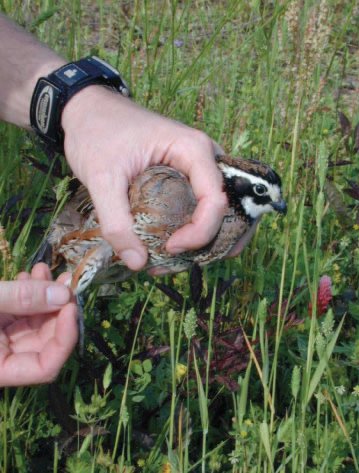
Another benefit of this technique is that it allows us to collect tissues from captured individuals (feathers, for example) in a manner that is less invasive than traditional sampling techniques (the collection of blood). In doing so, we can mitigate potentially adverse effects of capture, handling, and sampling on an individual. In some cases, we do not even need to capture the animal because the technique is so powerful we can use starting materials for genetic analysis that can be collected without ever capturing an individual. These include: feathers, feces, urine, or saliva.
In addition to the use of PCR, several advancements have been achieved with the types of genetic markers we use. These advances have both greatly increased the overall sensitivity of our analyses and their utility. Basically, new classes of markers have been developed that solve many of the “problems” associated with the “early days” of genetic analysis.
Presently, several types of genetic markers allow us to: (1) identify individual parents of offspring, (2) help us better determine the relatedness between members in a group, and (3) develop a genetic “fingerprint” or tag for an individual that guarantees identification. These new markers are often as helpful to wildlife researchers as they are to criminal investigators or those involved in paternity disputes.
An appropriate question, at this point, might be: how is this useful and why do I care?
In the second part of this series, we will provide several examples illustrating the use of the techniques described above. These will be “real-world” examples, taken from past and present studies among animal populations throughout the southeastern United States, and we will attempt to clarify both the scientific and management implications arising from the use of genetic techniques in the management of wildlife populations.