
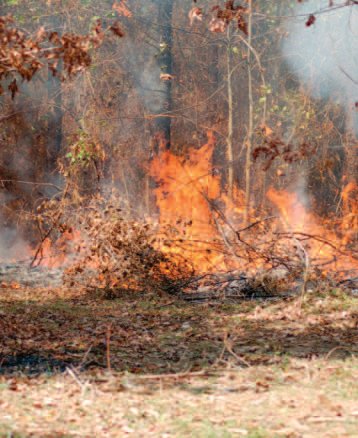
For some turkey hunters, black smut on their vest and pants is the norm. I can bet you the ones stained with this smut kill turkeys on a more regular basis than those that do not. It is pretty simple, gobblers and hens like burned areas in the spring. My first turkey, along with many more after, was killed in a burned pine plantation. As a good friend of mine, Steve Cotney, says in his article on turkey management in the May/June 2005 issue of Wildlife Trends, “Fire is the healing Torch for Wildlife.” Burning is a great tool to attract turkeys to your property. Second to Chufa, burned landscapes seem to blossom with more birds in the spring and summer than the unburned. So, why do these birds like burned areas and how do you burn for turkeys?
I believe turkeys use these areas in the spring for several reasons. One is that gobblers like to have areas that are open so they can see possible hens to mate and also protection from predators. There is nothing more paranoid in the woods than a testosterone-filled male turkey. His eye sight is keen and he looks for anything wrong or out of the ordinary. These areas simply make a gobbler more comfortable to do his thing in the wide open where he can see what else is happening.
Hens also like to forage in these areas. In most cases, burns occur in the winter and stimulate new plant growth for the spring and summer. Hens along with gobblers will use the new green forage in their diet. Along with this new growth, other seeds and insects are exposed after a burn allowing easy pick’ns for the soon to be mothers. The insects and new growth provide a sufficient amount of protein to help the hens produce a clutch of eggs.
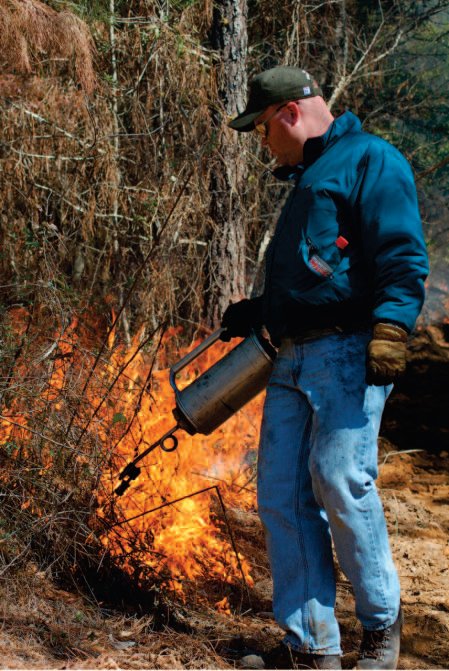
Burned areas can also border different types of habitat. In managing property, try to leave nesting habitat within or in close proximity to the area to burn. This allows hens to forage close to their nests. Plus, when the brood is hatched it will be near the new growth of plants. Young plants mean lots of bugs. Young turkey poults need plenty of bugs to make it through the early developmental stages of life. Good brood habitat is the key to getting turkeys established on your property. Burning is a great way to get to do this.
Areas need to be burned every 3 to 5 years, it is best to burn small areas on a rotating pattern. This burn rotation will allow for different stages of vegetation growth at any given time. This is very important in turkey management because turkeys need habitat diversity. Each stage will provide nesting, brood rearing, and breeding habitat. If you only have a small piece of property, burn it on a closer rotation. Burn areas every two years instead of using a three to five year burn plan. This will give you the crucial brood habitat and let’s not forget the breeding habitat to hunt, because that is why we do all this…to hunt.
Let’s talk about the areas to burn. You want to burn upland pine hardwood areas. You however, do not want to burn hardwood bottoms.
Hardwoods do not do well when burned. An exceedingly hot fire can really damage a hardwood forest. Also, the purpose in burning upland pine habitat areas is to kill some of the mid story hardwoods in the stands and promote new grasses and other legumes to grow. Pines and some upland hardwoods are designed to withstand fires and in the case of longleaf pines, burning promotes growth.
Thinned pine plantations are an excellent choice for burning. After these areas are burned, the mid-story is opened up allowing sunlight to penetrate the tree canopy and stimulate weed growth on the ground. However, when these stands are opened up a thick mid-story can occur. This thick mid-story can shade the ground beneath, depriving the weeds and legumes of the sunlight needed for optimal growth. I would recommend that you contact your local BASF representative and get them to give you a prescription for the herbicide called Arsenal. This herbicide is a great tool. It will not hurt your pines and will kill the mid-story of unwanted hardwoods like sweet gums that rob the forest floor of sunlight. Usually, 16 ounces of Arsenal per acre will remedy any mid-story problem you may have. If you are unsure if you have a mid-story in your pine plantations let me describe it. The mid-story is any unplanted tree that is from five feet tall to about 20. Most of the time the mid-story is Chinese Privet, sweet gum and other hardwoods that are not beneficial to the wildlife in that particular habitat. I would strongly suggest controlling it. The mid-story also robs your pine plantation of moisture and nutrients it needs to grow more wood.
You just can not go out and start burning your property at will. These days’ liability has made it hard for us to burn a piece of property due to the smoke that is produced during and after the burn. The first step is to have a plan written for the way you want the fire to burn and the weather conditions needed to get your desired results along with allowing you to control the fire and the smoke it produces. For instance, you do not want to set a fire with a north wind if you have an elementary school one mile south of your burn site. You want to burn when the conditions are right to get the smoke up and out of the area keeping the smoke away from smoke sensitive areas like schools, homes and highways. A fire is not just a flame; you have to control the smoke as well.
Landowners, in most states, have a right to burn, but need to follow some guide lines to protect themselves from a very costly lawsuit. The first step is to attain a permit from the state forestry commission and let them know the location of the fire. It is not permission to burn, just a way the state can keep up with which fires are controlled and which are in the need of fighting. To insure that you have all your bases covered, I would suggest that you take a prescribed burn manager course. This will help you learn how to burn, and decrease the liability if something should go wrong. If you are interested in taking this class, contact your local state forestry commission for details on when the next class is scheduled.
To keep the fire from getting out onto other rotation areas, and more importantly your neighbors property, you need to put in firebreaks or find other ways to keep the fire within the boundaries of the area you are burning. You can use creeks and roads to keep the fire inbounds. In most cases, firebreaks need to be installed with a disk, rake or a dozer. I prefer disks and dozers. This type equipment will build an excellent break along with providing future habitat in the break itself. When a disk or dozer turns the dirt, it scarifies seeds stimulating them to germinate. Much like what farmers find each spring when they work the soil, you get weeds. These weeds are bad for agricultural crops but excellent for brood habitat. Ragweed and partridge peas are usually the two dominate plants that grow. They start growing in late spring and will be full of bugs when the poults need them.
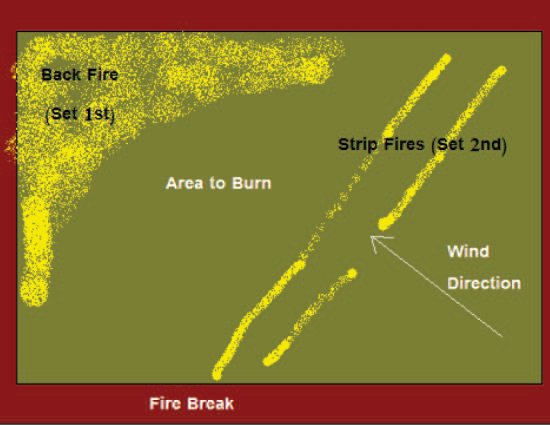
Now that we have gotten through all the red tape and are ready to burn, you need to know what type fire to use. In my experience, a slow backfire (a fire burning against the wind) with strip fires has been the most effective. However, I would suggest back firing the down wind side of the burn area. When the backfire has backed itself to a safe distance ( about 50 feet) that it cannot jump the break, you can set strip fires to burn with the wind consuming all the fuel for the fire on the ground fast. These fires can get really hot and burn fast, so be sure to let the back fire burn in at least 50 feet before you set the strip fire.
If you do not feel safe to burn on your own you can get someone to do it for you. The forestry commission and several private companies offer burning at a per acre charge. By hiring someone else, you can take the liability of the smoke off your shoulders and give it to someone that has the know-how and insured in the case of a mishap. If you plan to hire any of these groups you need to plan well in advance. Most of them make their burn plans in early December so when February arrives they are ready to burn. Burning is a planned event and is solely dependent on the weather so you have to get your name on the list. This provides that when the weather is right for your property, it gets burned.
Since God created the Southeast, he used fire to control the vegetation on the landscape. These natural periodic fires help keep the turkey population in a good condition well before over-hunting and fire suppression caused its fall. Turkeys respond very quickly, sometimes overnight, to areas that have been burned. I hope you can use burning as another tool to help you manage your property for turkeys.