
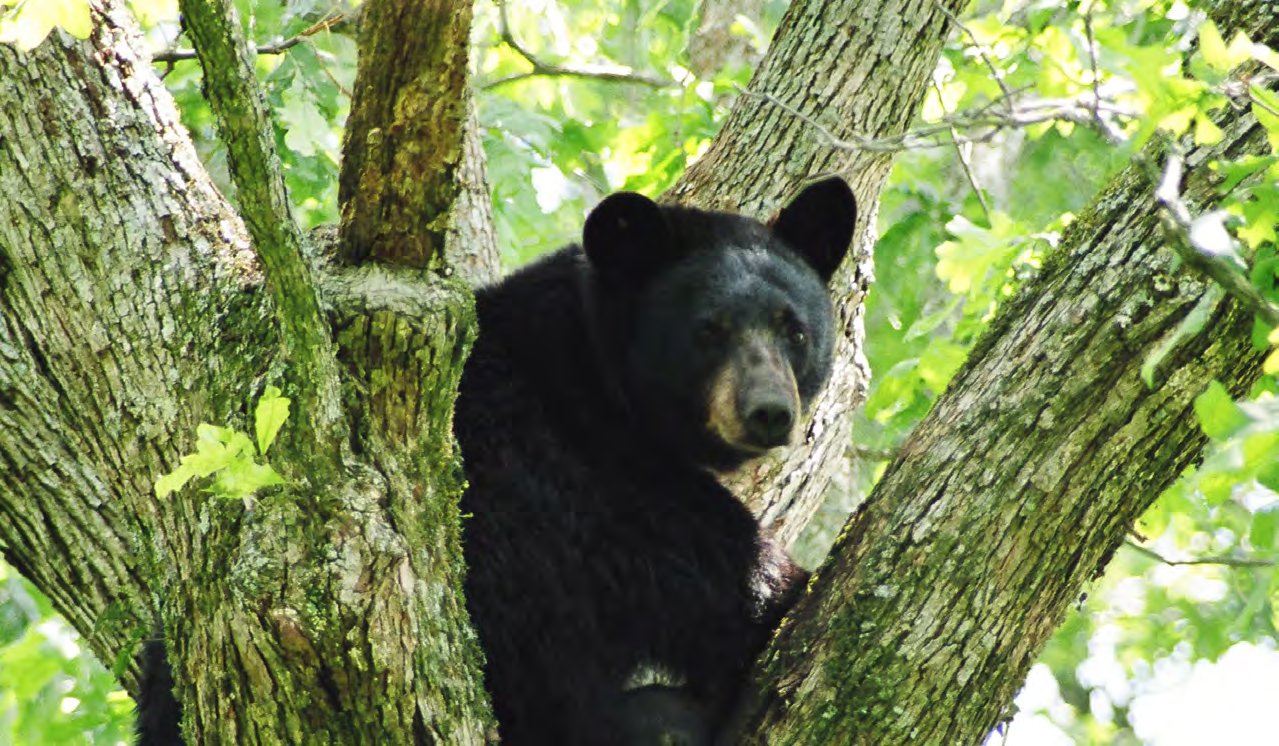
Bears are fascinating animals. They have been the inspiration for several famous cartoon characters through the years, as well as millions of cute and cuddly teddy bears. In the real world however, a wild bear is one of the toughest, strongest, and sometimes most dangerous creatures to roam North America. Bears have been a part of this continent’s natural history for many thousands of years. Right up until the relatively recent end of the last Ice Age (only about 12,000 years ago), the massive giant short-faced bear was fairly common across most of the United States, even in the Southeast. This purely carnivorous species stood 6 feet tall at the shoulders, almost 12 feet tall when on its hind legs, and weighed as much as a ton. With its huge crushing jaws (that could even access the bone marrow of its large prey animals), they fed on large herbivores of the Pleistocene era, including bison, caribou, mammoths, and ground sloths. It is no doubt that this large carnivorous animal struck absolute fear into the early native peoples who lived alongside the beasts, and they were almost certainly taken as prey from time to time. The short-faced bears began to die out rather suddenly, however, as the massive glaciers began to retreat, along with most of the other Pleistocene megafauna. Now they are gone.
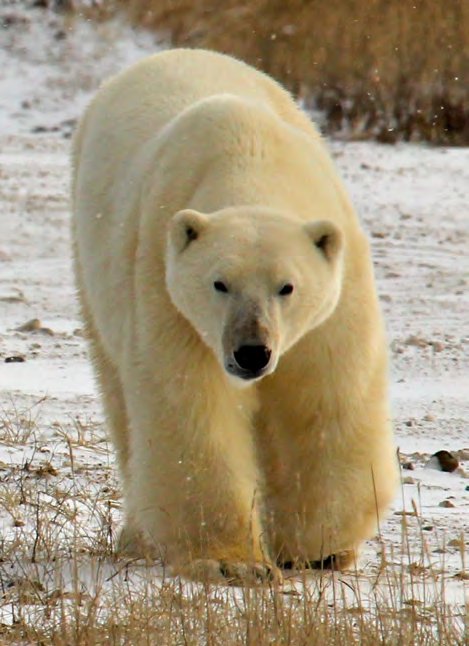
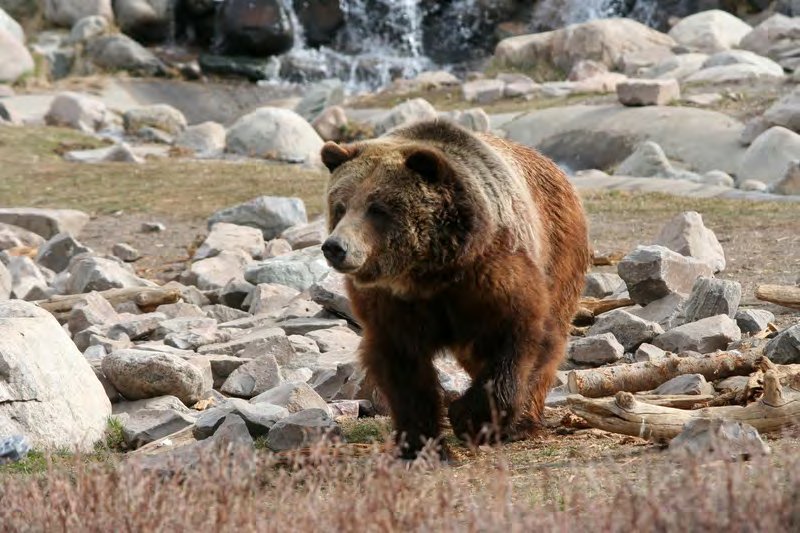
Only the bear species that were able to adapt to changing conditions and human competition survived. There are actually three extant species of bears in North America; the brown bear, the polar bear, and the American black bear. Brown bears are found mainly in western mountain states, Canada, and Alaska. They feed on a variety of prey items including deer, elk and bison calves, beavers, ground squirrels and other small mammals, berries, roots, seeds, herbs, grasses, and fish. Brown bears and grizzly bears are actually the same species (Ursus arctos) and grizzlies are just a subspecies of brown bear. Grizzlies typically live inland in dense mountain forests and meadows, as opposed to foraging along marine and coastal habitats. Coastal brown bears (which feed heavily on salmon during their spawning seasons) can weigh over half a ton, while grizzlies typically weigh less than 800 pounds. Kodiak bears are another subspecies of brown bear (U. a. middendorfii) and they are found only on the Kodiak Archipelago in southern Alaska. Kodiaks are the largest of the brown bear subspecies and, in North America, they are second in size only to the mighty polar bear. Polar bears (Ursus maritimus) are in fact the largest bear, and largest land carnivore, in the world. They can weigh as much as 1500 pounds and measure ten feet in total length. The polar bear (also called Nanook by many natives) is completely carnivorous and usually feeds on seals and other marine mammals. It has no natural fear of humans throughout most of its range, which makes it quite dangerous to people in those areas. Genetically, polar bears are more closely related to brown bears than American black bears.
The most abundant and wide-spread species of bear in North America is of course the American black bear (Ursus americanus). This species is currently found in 32 states and throughout the majority of Canada, as well as northern Mexico. They typically inhabit heavily forested areas but can be found in a variety of habitats including southern swamps and maritime forests along the coastal regions. They are usually absent in extensively open habitats, most likely because they were historically predated in those environments by the larger brown bears. This medium-sized bear species is typically all black in color with a tawny or brown muzzle, and rarely a white chest patch. Some black bears, however, have cinnamon or brown color phases and can potentially be confused with brown bears. But black bears do not have the prominent shoulder hump that is seen in brown bears. And the face (from the forehead to the tip of nose) is essentially straight in black bears while it is stepped down in brown bears. Interestingly, there are also white color phases of black bears. The Kermode subspecies, for example, which inhabits the central and northern coastal regions of British Columbia, can have all white pelage, and this morph is sometimes referred to as the spirit bear. It is estimated that only about 250 bears (about a third of the subspecies population) exhibit the white fur color (Bear Conservation, 2022). Black bears are smaller and less carnivorous than their brown and polar cousins. The average black bear male weight is from 120 to 550 pounds, and they average 4 to 6 feet in total length. Females are typically smaller, with weights on average from 100 to 200 pounds. Like the brown bear, this highly adaptable species also has several subspecies; sixteen in fact. Most of the black bear subspecies are very similar to one another in appearance and are chiefly split by regional boundaries rather than significant physical differences; like the Louisiana and Florida black bears in the East, and the New Mexico and California black bears in the West. Several other races, like the aforementioned Kermode bear, exist across the vast and varied habitats of the Canadian and Alaskan wildernesses. Some of the subspecies are rare, with the Louisiana race being listed under the Endangered Species Act as federally threatened from 1992-2016. Seemingly the only measurable differences, however, in this subspecies and the type subspecies are slight differences in skull and teeth morphology, and it has been argued by some biologists as genetically insignificant. The Asian black bear is even closely related to our American black bear.
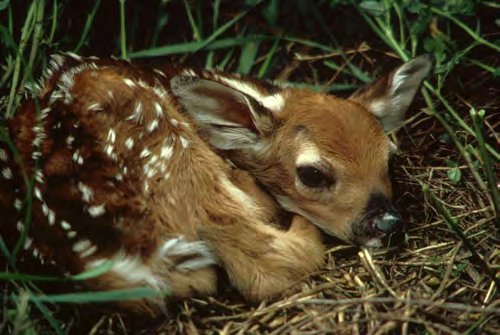
Black bears are generally a bit more omnivorous than brown bears. They can survive on a diverse and extensive list of foods including flowers, berries, nuts, seeds, grasses, tubers and roots, insects, fruits, acorns, fish, carrion, and a myriad of small and medium-sized animal prey items. They will also take moose and elk calves and deer fawns across parts of their range. The region and habitat type typically dictate the composition of their diet. Black bears are also notoriously able to adapt to whatever food source is available. In the Yellowstone National Park area, black bears are known to predate and feed on elk calves. But when elk become scarce, they can easily shift to alternative resources. Whitebark pine nuts were shown by a study by Kendall (1983) to be a primary food in the Yellowstone region when elk calves were unavailable. In turn, white pine appears to be readily replaced by false-truffles when the pine nut crops fail (Fortin et. al., 2013). Another recent study (in the Sonoran Desert of Arizona) examined the diet (using dissection of scats) of black bears living in riparian habitats along a perennial river. In this study cicada nymphs were the most common component (present in 90% of all scats found and 59% of the average mass, Lundgren et al, 2022). Surprisingly, even ants can sometimes make up a significant portion of their diet. As with brown bears in and around the coastal regions of Alaska and British Columbia, salmon are a major seasonal prey item for black bears. But they have been shown to avoid the most productive salmon runs where concentrated feeding by brown bears occurs. Black bears have also recently been documented to predate white-tailed deer fawns more frequently than once believed. Researchers with the Pennsylvania Cooperative Fish & Wildlife Research Unit in the late 2000’s, saw predation rates from bears as high as those caused by coyotes in some deer study sites. It is not clear to what extent this is happening in other regions where bear densities are lower. The species also has a sweet tooth. They are known to love doughnuts and other pastries. Many bear hunters use cracked corn, oats, and bread, sometimes coated with molasses, for bait. And the internet is filled with deer-cam pictures of them coming to deer feeders. Other hunters swear by beaver or other animal meat, even when it becomes rancid. The point is they are very versatile and can make a living hunting, fishing, foraging, or just digging through the trash can.
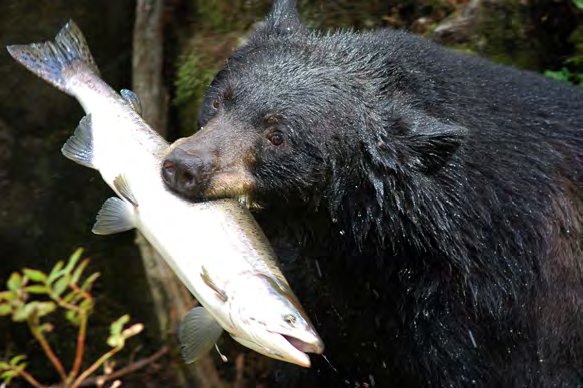
Black bears are very strong animals. They can dismantle a semi-rotten log like it is butter, as they lick up ants, beetle larvae, or termites. Although they might appear to be clumsy and sluggish animals, they are in fact capable of amazingly quick movements and can run at a sustained speed of 35 mph. They can quickly climb trees and their muscles do not seem to deteriorate or atrophy during prolonged hibernation. They are good swimmers, and they are equipped with strong recurved claws for climbing and foraging in logs, dirt, and other debris. Black bears, like all bears, have an extraordinary sense of smell. It is used both as a primary defense from predators (against other bears and humans) and as a critical sense for scavenging, foraging, and hunting for prey. A common misconception is that bears have a poor sense of vision. Biologists suggest they actually can see on about the same level as humans, and their sense of hearing is probably about twice as sensitive as ours and occurs over a broader frequency range.
Black bears reach sexual maturity at three to five years, with males lagging behind females for a year or so. Gestation is around 220 days. Mating occurs in the summer and the typical litter is two or three cubs, but sometimes as many as five or six, and they are usually born in a maternity den in winter. In colder climates this occurs during hibernation, but the mother bear becomes alert enough to birth and briefly care for the cubs before going back into the full hibernating state and slowing her metabolism and heartbeat. Populations in warmer climates typically have plenty of food resources and therefore do not need to hibernate. The cubs are weaned at around seven months old but remain for another year with the female before dispersing. Males will move a significant distance away from the maternal territory, but sometimes the young females will establish an overlapping territory with their mother. Other than this time with cubs, female black bears are typically territorial and solitary, as are the males. A female territory is normally 5 to 20 square miles, while males cover much larger distances (from 10 to 60 square miles). One adult Canadian black bear male’s home range was recorded at over 4000 square miles. This is not common, however, and in that case, it was attributed mainly to sparce food resources. Young males are also wanderers. They can travel hundreds of miles looking for a potential mate. Often these wandering males venture into areas that do not have established black bear populations. One such young male (presumably from the established populations in north Georgia or eastern Tennessee) was observed wandering through my small hometown in central Alabama in the summer of 2016. A few days later he wound up 60 miles west in a populated neighborhood in Opelika, Alabama. He was eventually tranquilized, tagged, and released in a nearby National Forest. He then retraced his way back north for about 75 miles before being illegally shot and killed and confiscated by authorities.

There around 800,000 bears in North America, with about 100,000 living in Alaska and more than 350,000 in Canada. Bear sightings are more and more common in many areas that have not seen established populations in many decades. This is most often due to the simple fact that bear populations are growing in many areas and spilling over into new uninhabited spaces. This is especially true in many eastern states where the original populations were extirpated, or nearly so, as European settlers colonized the regions. Arkansas is one such state. They began repatriation there in the 1950’s. With a current population of around 5,500 black bears (mostly in the Ozark and Ouachita Mountains), they now have a stable hunting season for the species and around 500 are harvested annually. It is believed that there were as many as 50,000 bears in Arkansas a few hundred years ago. Florida, (estimated to have a population of 4,000), has always managed to maintain viable populations in some areas but numbers are increasing in lower populated regions. States like Missouri (estimated at 800) and Georgia (estimated at 5,100) are also seeing increases. In Georgia healthy black bear populations occur in the mountains of the northern part of the state, along the Ocmulgee River drainage (in central Georgia), and in the Okefenokee Swamp area in the southeastern part of the state, but they can sporadically show up anywhere. Georgia also has an annual hunting season. Alabama hosts a small population of around 175 to 200 individuals, with the majority occurring in the southernmost part of the state in Mobile and Washington counties. The remainder occur around the Little River Canyon area. Other select southeastern states’ populations include Mississippi with only about 40 individuals, Louisiana with about 800, Texas with 5,000, Tennessee with 6,000, and South Carolina with 1,000 bears. North Carolina populations have expanded at about 6% per year over the past few decades to a whopping 15,000 bears today. This phenomenon is not unique to the East. Some midwestern and western states are seeing growth as well. California’s population, for example, has gone from around 15,000 in the 1980’s to about 40,000 today. These numbers indicate increased hunting opportunity in many states with black bear seasons, and possibly new seasons opening up in the not-so-distant future for some states that don’t presently have them.

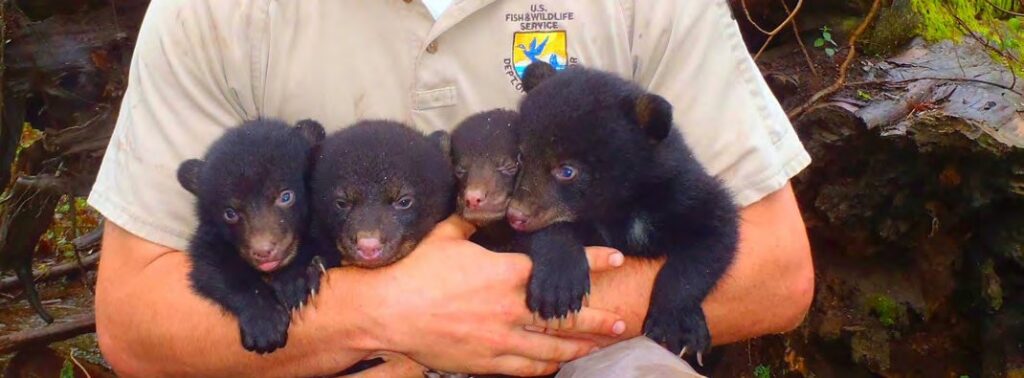
States with abundant bear populations can definitely have their share of bear-human conflicts. The overwhelming majority of interactions with black bears, however, are benign and result in no harm to either the bear or human life, limb, or property. According to the North American Bear Center (NABC) only 61 people have been killed black by bears since 1900. Black bears do have a habit of getting into trash cans, raiding bird feeders, and stealing food and they can wreak havoc on supplies or food caches if left out in bear country. They frequently come close to people in campgrounds in search of food scraps or handouts. But they can almost always be chased away by being loud or aggressive towards them, although that is sometimes easier said than done, especially when the bear is a big male. Contrary to popular belief, female black bears with cubs rarely attack when they encounter humans. Bear researchers, when capturing black bear cubs, report that the mother bear will usually show aggressive bluffs and growls, but she almost never attacks them unless she is cornered. This is not the case with brown bears, and they will aggressively attack and defend their cubs. Black bears evolved with short-faced bears, brown bears, and other larger predators, however, and so they typically are wary of potential attackers and will usually head for the trees when danger is near. Surprisingly there are no records in the past 120 years of a mother black bear killing a human in defense of her cubs. According to the NABC, the best practice is to stand your ground or slowly retreat if you encounter a black bear family, but do not climb a tree. Climbing a tree seems to evoke a defensive response in some individuals, and in a few cases the mother has been known to climb up after the person and bite them.
In summary, the American black bear is an intelligent and adaptable species. Black bears occupy a diverse assemblage of forested habitat types across North America, and they can shift to different plant and animal food sources as others become scarce. They are omnivorous but can play a significant predatory role in the ecosystems they inhabit. Many local populations are expanding, and the species has reclaimed territories in some areas that have been void of bears for more than a hundred years. These trends suggest that this iconic mammal species will be more prevalent, and visible to humans, in the future.
References
Bear Conservation. 2022. Kermode bear or spirit bear, website. Accessed online http://www.bearconservation.org.uk/kermode-bear-or-spirit-bear
Costello, C. M, S. L.Cain, S. Pils, L.Frattaroli, M. A. Haroldson, F.T. van Manen. 2016. Diet and Macronutrient Optimization in Wild Ursids: A Comparison of Grizzly Bears with Sympatric and Allopatric Black Bears. PLoS One. 11:5
Fortin, J. K., C. C. Schwartz, K. A. Gunther, J. E. Teisberg, Mark A. Haroldson, M. A. Evans, C. T. Robbins. 2013. Dietary adjustability of grizzly bears and American black bears in Yellowstone National Park. J Wild Mgmt. 77:2
Kendall, K. C. 1983. Use of pine nuts by grizzly and black bears in the Yellowstone area. Pages 166–173 in E. C. Meslow, editor. Bears—their biology and management: proceedings of the Fifth International Conference on Bear Research and Management, Madison, Wisconsin, 10–13 February 1980. International Association for Bear Research and Management, Madison, Wisconsin, USA.
Lundgren, E. J., K. T. Moeller, M. O. Clyne, O. S. Middleton, S. M. Mahoney, C. L. Kwapich. 2022. Cicada nymphs dominate American black bear diet in a desert riparian area. Ecology and Evolution 12:3